
Where to stay in Nairobi: the 5 neighborhoods to know in 2026
In Nairobi, a neighborhood is measured in minutes by car, and the minutes change with the hour. At eight in the morning, Westlands is forty minutes from the center; at noon, ten. Nobody crosses the city on foot; you cross it in a ride-hailing taxi, so you sleep near what you came for: the offices, the KICC and the museums downtown, the restaurants and bars in Westlands, the embassies and Karura Forest in Gigiri, the giraffes and the baby elephants in Karen, to the southwest, on the edge of the only national park in the world that touches a capital. The city was born from a railway depot in 1899, at 1,800 meters, and its nights are cool all year round. A single member has left a review of the city, on a stopover before a safari, and it says what they did not expect.
Expect $12 to $21* for a bed in a dorm, $68 to $135* for a mid-range room in Westlands or Kilimani, three or four stars on the sign, and $210 to $400* in the grand houses of the center, Gigiri or Karen, more for a lodge on the edge of the park. Fifteen addresses, three per neighborhood, each with its open listing, its score and what travelers hold against it.
I have to admit I was not expecting such a modern city.
Compare hotel prices in Nairobi
In a hurry? Find the best accommodation deals in 3 clicks.
Compare live deals from Booking, Expedia, Agoda and other partners.
At a glance: our picks by traveller type
Pick the profile that suits you to head straight to the recommended neighborhood.
The neighborhood map in Nairobi
Get your bearings on the neighborhoods and must-see sights before choosing where to drop your bags. Click a name to jump to its description.
Downtown: Kenyatta Avenue, the KICC and the gardens CBD: Kenyatta Avenue, Kimathi Street, KICC, Parliament, City Market, Jeevanjee Gardens, Central Park, Uhuru Park, Railway Museum, university, Harry Thuku Road
for a first visit, the museums and offices on foot by day, by car at night
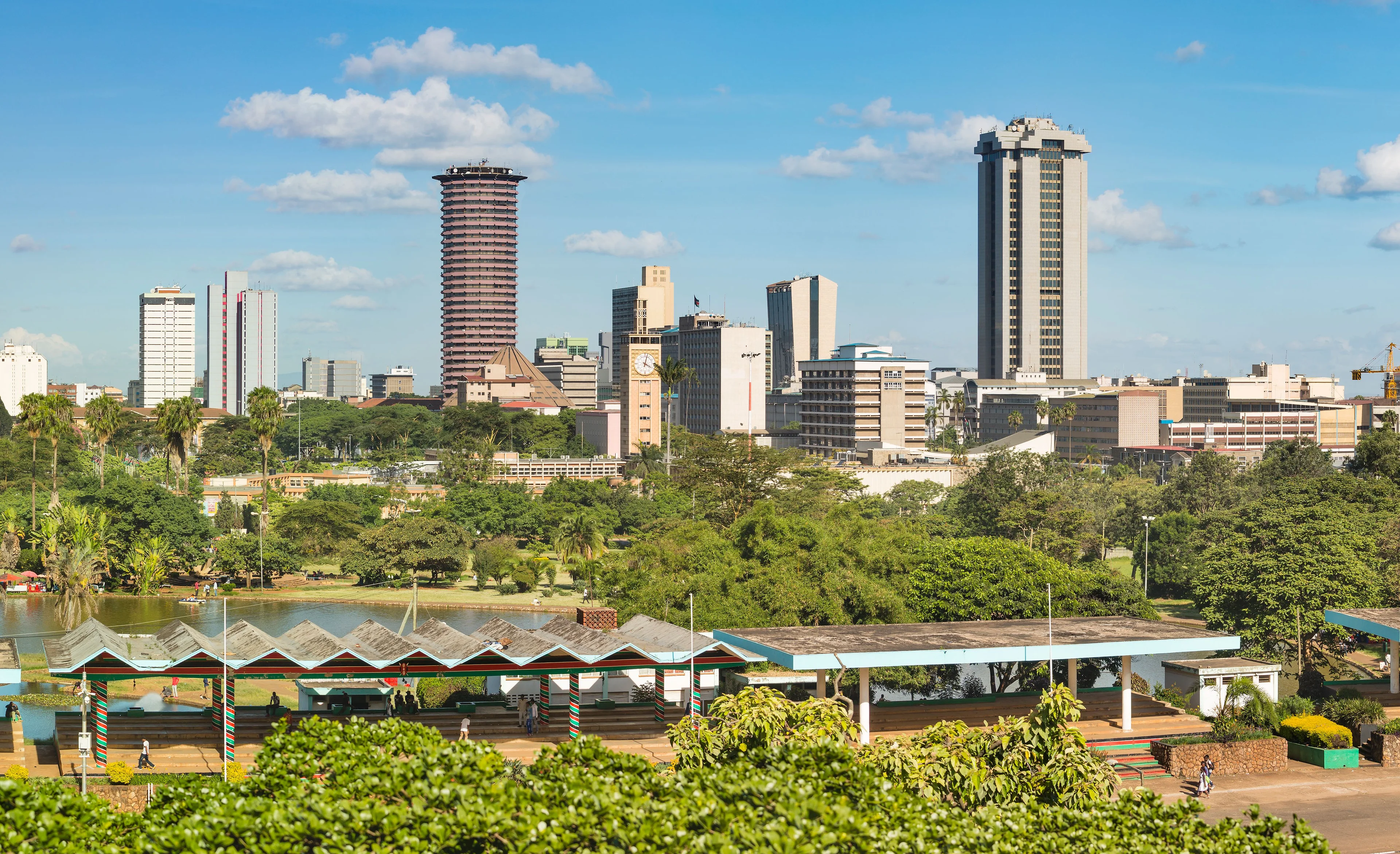
Downtown fits in a rectangle between Uhuru Highway and the railway line, and everything there is done on foot during the day: Kenyatta Avenue and its jacarandas, Kimathi Street and the Thorn Tree Café, where travelers used to pin their messages on an acacia, the KICC tower, twenty-eight floors from 1973 and a rooftop terrace from which you see the whole city and, to the south, the national park; Parliament and the Kenyatta mausoleum next door, the National Archives and their Murumbi collection, the 1930s City Market and its flowers, Jeevanjee Gardens, given to the city in 1906, and, behind the station, the railway museum, where the locomotives of the 1899 line sleep. To the south, Central Park, then Uhuru Park and its lake, where families rent boats on Sundays. To the north, the university, the National Theatre and the Norfolk, the 1904 hotel where it all began. The downside: at night the center empties and nobody strolls there; you go home by car, even for three streets, and the cheap hotels know it, locking their doors.
Where to stay in this neighborhood
Fairmont The Norfolk Luxury
On Harry Thuku Road, facing the university: the 1904 hotel, the oldest in the city, rooms over a tropical garden, a heated pool, the Lord Delamere terrace for tea, and an 8.7 on two hundred and sixty reviews, 9.4 for staff. The National Museum is a fifteen-minute walk.
Sarova Stanley Mid-range
At the corner of Kimathi Street and Kenyatta Avenue: the center's other historic house, founded in 1902, the Thorn Tree Café on the ground floor, a pool on the fifth-floor terrace, and an 8.6 on more than a thousand reviews, 9.2 for staff. The KICC is four hundred meters away.
Kenya Comfort Hotel Budget
At the corner of Muindi Mbingu Street, facing Jeevanjee Gardens: simple rooms with mosquito nets, a rooftop terrace, a sauna, and a flat 7 in the reviews, 8.2 for location. You come for the price and for the street, the reviews say, not for quiet.
Pros
- The KICC, Parliament, the museums and the gardens on foot during the day
- The city's two historic hotels, and the simple hotel facing the gardens
Cons
- A center that empties at nightfall, where nobody walks anymore
- Horns on the street-side rooms until midnight
Westlands, Parklands and Museum Hill Northwest: Westlands, Woodvale Grove, Sarit Centre, Parklands, Museum Hill, National Museum, Arboretum, Chiromo Road, Rhapta Road
for the restaurants, the bars and the city that goes out at night
Past the Chiromo bridge, Westlands is where Nairobi dines and goes out: Woodvale Grove and its bars, the rooftop terraces, the shopping malls, the Indian restaurants of Parklands, the neighborhood of families who came from Gujarat a century ago, and the new towers rising since 2015. On the hill that separates it from the center, the National Museum, opened in 1930, with the skulls of the first humans found by the Leakeys and the snake park next door, and, across the river, the 1907 Arboretum, thirty hectares of labeled trees where residents run in the morning. Hotels are more numerous here than anywhere but the center, from the palace on Chiromo Road to the chain hotel on Rhapta Road, and you walk home from dinner, a rare thing in this city. The downside: Waiyaki Way jammed morning and evening, and streets that, past midnight, are crossed by car like everywhere else.
Where to stay in this neighborhood
Villa Rosa Kempinski Luxury
On Chiromo Road, ten minutes from the center when the road is clear: rooms with balconies over the city, a spa with nine treatment rooms, a pool, an Italian restaurant and a café, and an 8.8 on eight hundred reviews, which talk first about the staff. The palace of Westlands.
Park Inn by Radisson Nairobi Westlands Mid-range
In the heart of Westlands, two kilometers from the center: a four-star chain hotel with neat rooms, a restaurant, and an 8.3 on nearly five hundred reviews, which talk about location and good value. The bars of Woodvale Grove are five minutes on foot.
ibis Styles Nairobi Westlands Budget
On Rhapta Road, two kilometers from the National Museum: compact, clean rooms, a rooftop with music in the evening, an airport shuttle on request, and a 7.7 on seventeen hundred reviews. A budget price with the comfort of a chain.
Pros
- The restaurants and bars on foot, the National Museum on the edge
- The widest choice of hotels after the center, and a walk home possible at night
Cons
- Waiyaki Way jammed morning and evening, the center forty minutes away at rush hour
- The bars of Woodvale Grove until the small hours on weekends
Upper Hill, Kilimani and Hurlingham Southwest: Upper Hill, Britam Tower, Hospital Road, Kilimani, Yaya Centre, Hurlingham, Argwings Kodhek Road, Milimani, Ngong Road
for a work trip, the quiet of the hills and a pool
Upper Hill is the hill the banks and embassies took from the center: Britam Tower and its two hundred meters, the tallest in the country, the head offices, the hospitals, and glass hotels with pools, ten minutes from the KICC when Haile Selassie Avenue is moving. Behind it, Kilimani and Hurlingham, the residential neighborhoods of the 1960s, low buildings, gardens, the Yaya Centre and its cafés, the restaurants of Argwings Kodhek Road, and, down Ngong Road, the golf course and the bars of Kilimani where the city goes out on weeknights. The sights are elsewhere, but this is where you sleep well: quiet rooms, pools, and the center as well as Westlands a quarter of an hour away by car, outside rush hour. The downside: nothing is done on foot, not even the corner shop, and the slope of Upper Hill discourages the last ones who try.
Where to stay in this neighborhood
Radisson Blu Hotel Nairobi Upper Hill Luxury
On Elgon Road, at the top of Upper Hill: vast rooms, two pools including an indoor one, a jacuzzi, a spa, free parking, and an 8.8 on two hundred and forty reviews, which mention the breakfast and the rooms. The national park is twenty minutes' drive.
Four Points by Sheraton Nairobi Hurlingham Mid-range
On Argwings Kodhek Road, a kilometer from the Yaya Centre: a heated outdoor pool, a Lebanese restaurant, free parking, bicycles to borrow, and an 8.2 in the reviews, 9 for staff. The former Best Western, taken over by the chain.
Kenya Comfort Suites Budget
At the corner of Milimani Road and Ralph Bunche Road, on the edge of the center: a pool in a garden, a steam room, a gym, rooms without luxury, and a 7.8 in the reviews, 9.3 for staff. The KICC is three kilometers away.
Pros
- Quiet rooms with pools, a quarter of an hour from the center and Westlands
- The cafés of the Yaya Centre and the restaurants of Argwings Kodhek Road
Cons
- Nothing to see in the neighborhood, and nothing on foot
- Business-district prices, and hotels full on weekdays
Karen, Langata and the national park Southwest: Karen, Karen Blixen Museum, Giraffe Centre, Sheldrick elephant orphanage, Nairobi National Park, Langata, Wilson Airport, Ngong Road, Ngong Hills
for the giraffes, the baby elephants, the park and a night on the edge of the bush
Fifteen kilometers from the center, Karen bears the name of the Danish woman who planted coffee here, and her house, at the foot of the Ngong Hills, where she lived from 1917 to 1931, can be visited with its furniture: that is the Karen Blixen Museum. Around it, red dirt roads, hedges, one-hectare gardens, cafés under the trees, and the two visits that bring the whole city out: the Giraffe Centre, where Rothschild's giraffes come to take pellets from your hand from a platform, and the Sheldrick orphanage, which opens one hour a day, at eleven, for the baby elephants' bottle. Behind the fence, the national park, one hundred and seventeen square kilometers since 1946, lions, black rhinos and giraffes with the towers of the center as a backdrop, to be driven through at dawn. The hotels are houses in gardens, cottages and tented camps, and Wilson, the airport for safari planes, is in Langata, on the way. The downside: forty minutes to an hour to reach the center, and nothing to do in the evening outside the hotel. The member quoted at the top saw it from their stopover.
Just a few minutes from the capital, you can already spot wild animals in a reserve.
Where to stay in this neighborhood
Hemingways Nairobi Luxury
On a quiet street in Karen, two kilometers from the Karen Blixen Museum: a white plantation house with vaulted-ceiling rooms, butler service, a pool, a spa, and a 9.1 on some sixty reviews. The most expensive in the city, and the farthest from everything, by design.
Karen Gables Mid-range
On Mbagathi Ridge, in a garden of six thousand square meters: a Cape Dutch-style house, a pool, rooms over the garden or the river, an airport shuttle, and a 9.3 on a hundred reviews, the best score in this guide. The Oloolua trail is two kilometers away.
Wildebeest Eco Camp Budget
On Mokoyeti Road, in Langata, away from the main road: tents on platforms, dorms under canvas, a pool, an African restaurant, a playground, and an 8.5 on six hundred reviews. The camp for backpackers between two safaris, quiet and guarded, the reviews repeat.
Pros
- The giraffes, the baby elephants and the Karen Blixen Museum in one morning
- The national park at dawn, ten minutes from the hotel, and the safari planes at Wilson
Cons
- Forty minutes to an hour to reach the center, more in the evening
- Nothing to do after dinner outside the hotel
Gigiri, Runda and Thika Road North: Gigiri, Village Market, United Nations complex, Runda, Muthaiga, Karura Forest, Thika Road, Kasarani, Kenyatta University
for Karura Forest, the embassies and a match at Kasarani
To the north, Gigiri is the neighborhood of the United Nations and the embassies: wooded avenues, high walls, the Village Market and its two hotels, and, across Limuru Road, Karura Forest, a thousand hectares that Wangari Maathai wrested from developers, with its trails, its waterfall and its bikes for hire, the only place in Nairobi where you walk for two hours without meeting a car. Runda and Muthaiga, next door, are the neighborhoods of villas and clubs. Further east, Thika Road, an urban highway from 2012, leads to Kasarani, to the sixty-thousand-seat stadium of the 1987 All-Africa Games, and to Kenyatta University: you only sleep there for a match, a concert or a garden hotel with a casino. The downside: a neighborhood without a center, where everything is twenty minutes by car, and a highway jammed from seven in the morning.
Where to stay in this neighborhood
Tribe Hotel Nairobi Luxury
In Gigiri, attached to the Village Market: one hundred and twenty-eight rooms of stone and wood, a pool, a gym open at night, a restaurant, and an 8.7 on a hundred and fifty reviews. The design hotel of the diplomatic district; its business twin, the Trademark, is in the same complex.
Safari Park Hotel Mid-range
In Kasarani, on Thika Road: twenty hectares of gardens, four-poster beds under mosquito nets, a pool, a casino, an acrobat dinner show, Italian and Japanese restaurants, and a 7.9 in the reviews, which talk about calm inside and traffic jams outside. The center is ten kilometers away.
Sportsview Hotel Kasarani Budget
Against the Kasarani stadium: rooms with balconies, a pool, two restaurants, parking, an airport shuttle, and a 7.7 on a hundred or so reviews. The address for a match or concert night, and for nothing else.
Pros
- Karura Forest on foot or by bike, the embassies and the Village Market
- Quiet hotels in gardens, twenty minutes from Westlands
Cons
- No center, everything is done by car
- Thika Road jammed from seven in the morning, and Kasarani far from everything
Our tips for booking the right place
- Nobody walks at night, you order a car: Nairobi is visited on foot by day, downtown as in Westlands or Karen, phone in your pocket and bag in front of you. Night falls at six thirty all year round, and from then on nobody walks, not even three streets: you order a ride-hailing taxi, Uber, Bolt or Little Cab, which costs a few hundred shillings, and the hotel calls one if the network fails. The matatus, the painted minibuses that make up the city's network, are taken by day, for the experience, with small change; the boda-bodas, the motorbike taxis, go everywhere and fast, without a helmet for the passenger most of the time.
- Count in hours of travel, not in kilometers: A neighborhood ten kilometers away is fifteen minutes at noon and an hour at six in the evening. The roads that block: Waiyaki Way toward Westlands, Mombasa Road toward the airport, Thika Road toward the north, Ngong Road toward Karen. The Expressway, the toll highway opened in 2022 on stilts above Mombasa Road and Uhuru Highway, links the airport to Westlands in twenty minutes for a few hundred shillings: taxis take it if you ask. For a morning flight, sleep in Upper Hill or downtown rather than in Karen or Gigiri.
- Nights are cool, and it rains twice a year: The city sits at 1,800 meters: days hover around twenty-five degrees, nights drop to twelve, and in July and August the sky stays gray and you pull out a sweater. The long rains run from March to May, the short ones from October to November, in late-afternoon downpours that turn the streets into rivers and the traffic into a parking lot: allow an extra hour. December to February and June to September are the dry months, those of the national park and the Masai Mara.
- There are two airports, and no train to the first: Jomo Kenyatta is fifteen kilometers southeast of the center, on Mombasa Road: thirty minutes by the Expressway, an hour and more by the ground road at rush hour, by ride-hailing taxi or hotel shuttle; no practical train or bus. Safari flights for the Masai Mara, Amboseli or Samburu leave from Wilson, the small airport in Langata, at the other end of the city: anyone chaining an international flight and a bush flight sleeps in Karen or Upper Hill, not in Gigiri. The train to Mombasa, the Madaraka Express, leaves from Syokimau station, twenty kilometers southeast, near the airport.
- A hotel on Mombasa Road or at the airport for anything other than a stopover: warehouses, a highway, and the center an hour away at rush hour.
- Downtown for going out at night: the restaurants close, the streets empty, and you take a car for three hundred meters. The nights out are in Westlands and Kilimani.
- A street-side room in Westlands on the weekend, on Woodvale Grove or around it: the bars close at dawn, and the reviews of the neighboring hotels say so.
FAQ: where to stay in Nairobi
Which neighborhood should you stay in for a first time in Nairobi?
Where can you stay cheaply in Nairobi?
How many nights should you plan in Nairobi?
Is Nairobi safe for a traveler?
How do you get to the center from the airport?
How much does a night in Nairobi cost?
 Keep exploring
Things to do in Nairobi
Keep exploring
Things to do in Nairobi
Comments (0)
No comments yet. Be the first!