Annaba, Where Saint Augustine Meets the Mediterranean
In 430 AD, a 75-year-old man dies in a city besieged by the Vandals. That man is Saint Augustine, one of the most influential theologians in Christian history, and the city is Hippo, today's Annaba.
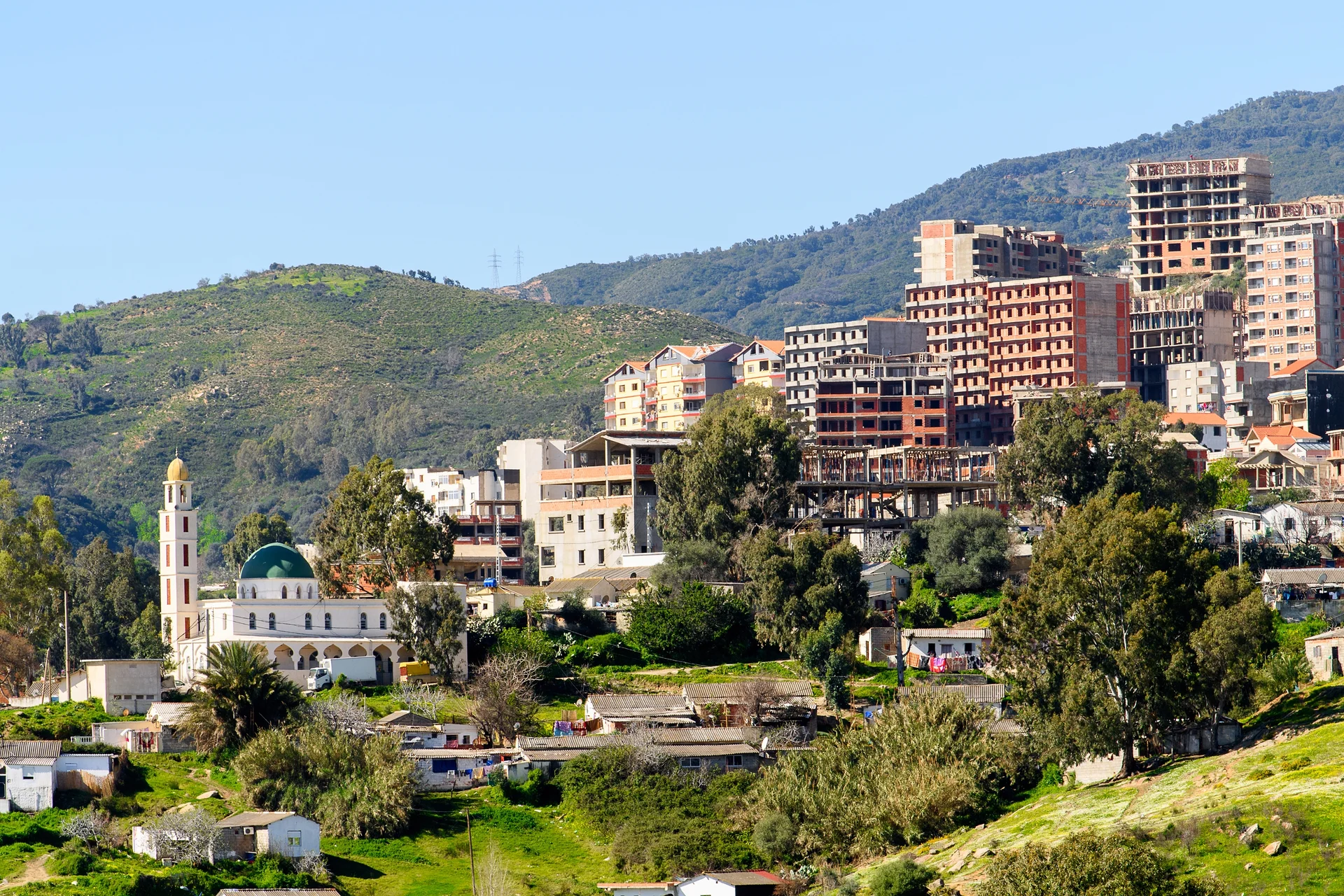
Sixteen centuries later, Algeria's fourth-largest city still has a knack for surprising the people who make the trip. Wedged between the cork-oak-covered Edough massif and a deep-blue Mediterranean bay, Annaba is not a classic destination.
It's a city you have to earn, with Roman ruins overgrown with rosemary, a seafront corniche where families stroll until late at night, and Haussmann-style streets that now and then recall a neighborhood of Marseille that time forgot.
Is This Destination Right for You?
Annaba suits curious travelers ready to leave the beaten path. This is not Marrakech or Tunis: tourist infrastructure is modest, English-speaking guides are rare, and entering the country requires a visa for most nationalities, US citizens included. Check current requirements with the Algerian consulate before you book anything. But for those who accept these constraints, the payoff is real.
Great for:
- Ancient history and religious heritage enthusiasts
- Fans of Mediterranean beaches untouched by mass tourism
- French-speaking travelers looking for an accessible coastal Algeria
- Hikers drawn to mountains that run right down to the sea
- Food lovers curious about eastern Algerian cuisine
Not ideal for:
- Travelers looking for lively nightlife and late-night bars
- Anyone who speaks neither French nor Arabic
- Tourists used to highly organized destinations with turnkey excursions
- LGBTQ+ couples looking for an open and welcoming destination
An Easy Budget for Western Wallets
Algeria remains one of the least expensive destinations in the Mediterranean basin. The exchange rate, around $1.10* = 145 DZD, works in visitors' favor. Here are the typical price ranges for one person:
| Expense | Price range |
|---|---|
| Night in a basic or 2-3 star hotel | $28 to $55* |
| Night in a comfortable 4-5 star hotel like the Sheraton | $88 to $165* |
| Quick bite (bourek, sandwich, coffee) | $2.20 to $4.40* |
| Sit-down restaurant meal with grilled fish | $8.80 to $17* |
| Transportation and activities for one day | $5.50 to $17* |
| Backpacker budget per day | $28 to $44* |
| Comfortable budget per day | $88 to $132* |
What to Know Before You Go
French is very widely spoken in Annaba, which makes getting around much easier. Algerian Arabic dominates on the street and in the markets, but you'll have no trouble being understood in French at hotels, restaurants, and shops. English, on the other hand, is not widely spoken, so a few French phrases will go a long way for most American visitors.
On the practical side, bring cash in Algerian dinars. International credit cards are accepted only at the big hotels and a few downtown businesses. The Mediterranean climate means hot summers and mild winters: the best windows are April to June, then September to October.
Is It Dangerous to Travel to Annaba?
Annaba is generally safe for travelers. The main risk is pickpocketing in busy areas like markets and public transit. After dark the city empties out quickly and street lighting can be spotty, so stick to taxis for late-night trips. The Yassir and InDrive apps work locally and are a reliable alternative to street taxis.
Traveling Solo as a Woman in Annaba
Algeria is a moderate Muslim country, but a woman on her own in public spaces, especially in the evening, is still unusual. Insistent stares and unwanted comments are possible, though it generally doesn't go further than that.
Wearing clothes that cover your shoulders and knees noticeably cuts down on attention. We recommend that solo women travelers go out with company after dark and use ride-hailing apps rather than flagging a taxi on the street.
Hippo and Saint Augustine's Hill
Any visit to Annaba logically starts with its ancient legacy. The ruins of Hippo Regius, spread across a rolling site south of the city, are among the most evocative Roman remains in Algeria. The forum, the baths, the villas, and above all the mosaics of the Christian basilica are worth the detour. The site is dotted with olive trees and wild rosemary, which gives it a charm that Timgad, more spectacular but more arid, doesn't have.
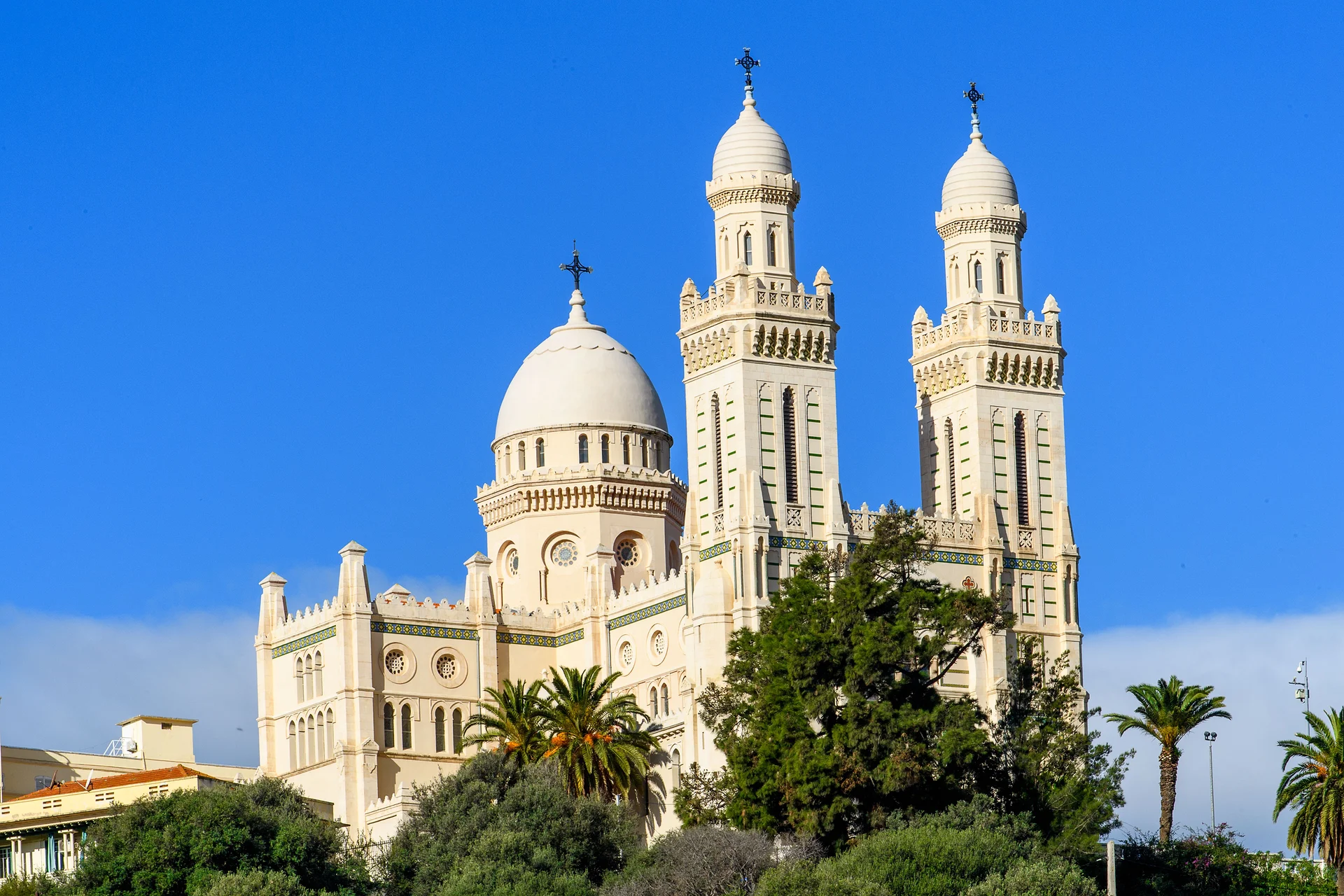
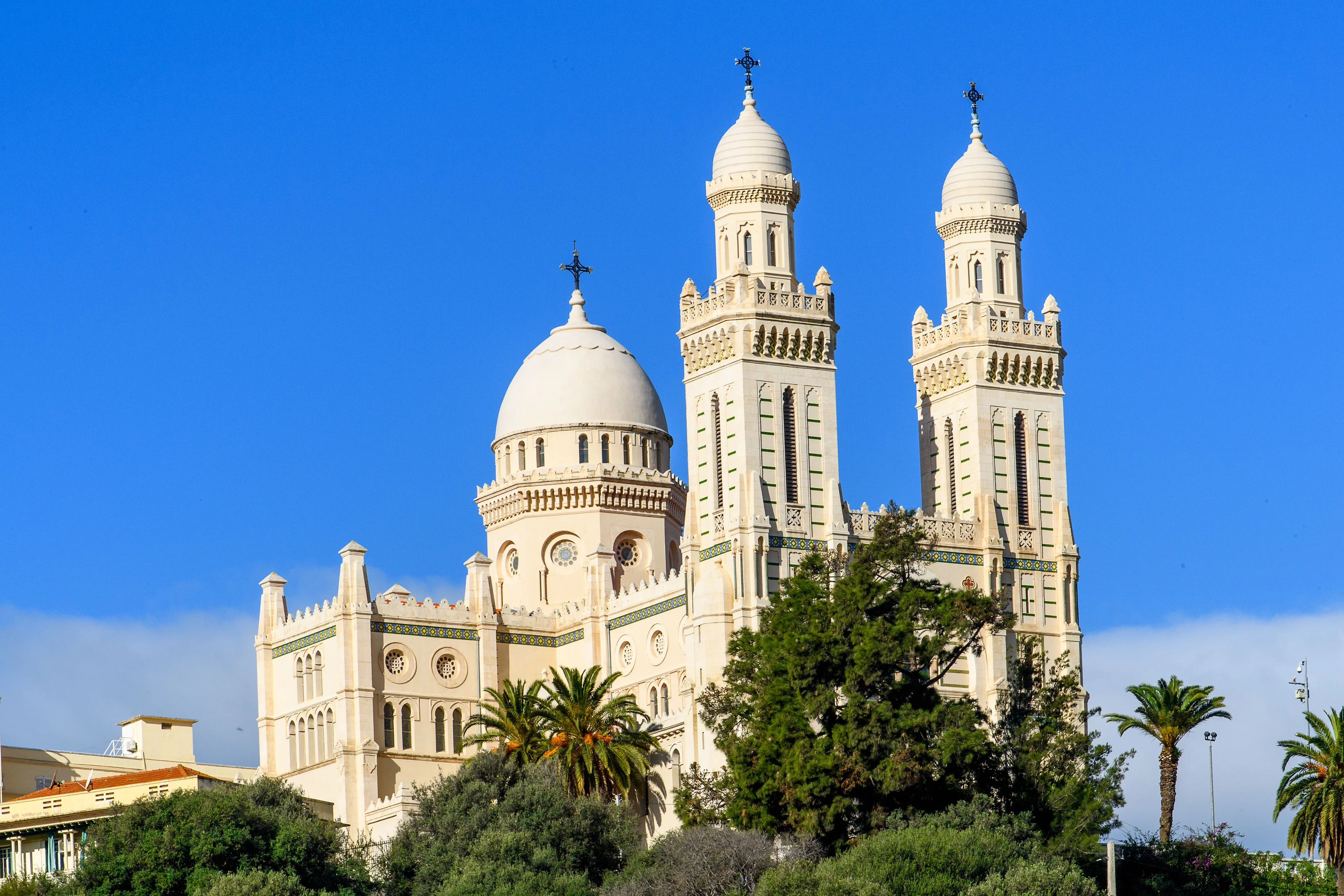
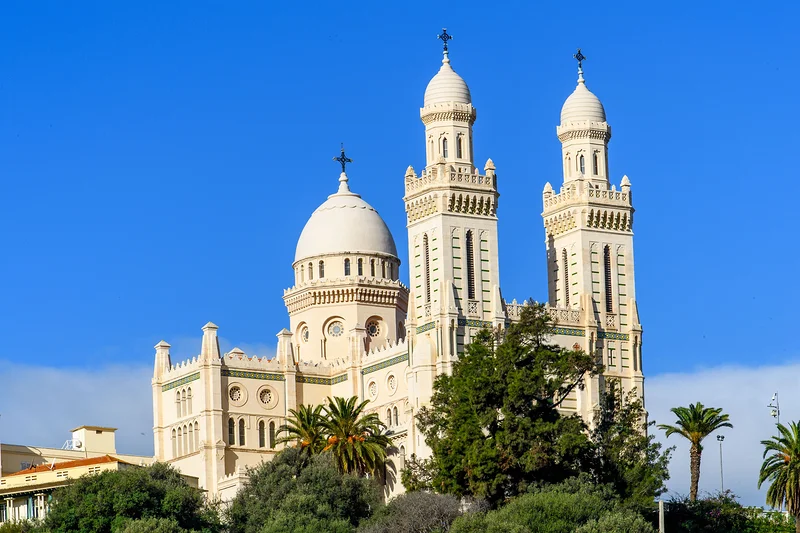
On the hill overlooking the ruins, the Basilica of Saint Augustine, built by the French between 1881 and 1900, dominates the bay. The Neo-Byzantine building recalls the Sacré-Coeur in Paris and houses a relic attributed to the saint: a bone from his right arm, sent from Pavia, Italy. The stained glass and the panoramic Mediterranean view are worth the climb on their own.
Friendly tip: the small Hippo Museum, on the neighboring hill, displays remarkable archaeological pieces found at the site, including Roman mosaics and statues. It's often empty, so you can take it in at your own pace. Plan on 2 to 3 hours for the whole site.
The Colonial Downtown and the Old Town
The Cours de la Révolution, which locals simply call "El Cours," is the beating heart of the modern city. Lined with century-old trees and Haussmann-style buildings, it's the place everyone ends up passing through. The Azzeddine Medjoubi Regional Theater, with its Greco-Roman-inspired frescoes, and the city hall, whose facade is decorated with statues, frame this lively promenade.
A few streets away, the old town and its kasbah offer a striking contrast: narrow alleys, old houses with weathered shutters, and remnants of 12th-century fortifications. The neighborhood is less spectacular than the Casbah of Algiers, but it's peaceful and gives you a sense of what the city was like under the Ottomans. The Sidi Bou Merouane Mosque, dating from the 11th century, is a fine example of medieval Islamic architecture.
Friendly tip: late in the day, grab a seat at one of the terraces on El Cours for a coffee or a homemade ice cream. Locals (Annabis) love this spot, and the atmosphere is especially nice at sunset.
The Corniche and the Beaches
The Annaba corniche stretches along the coast from Fellah-Rachid beach to Rizzi-Amor, which older locals still call "Chapuis." It's the evening promenade par excellence, lined with ice cream parlors, seafood restaurants, and cafés. In summer the buzz doesn't let up before midnight.
For swimming, the beaches closest to downtown are Ain Achir and Chapuis, convenient but packed by July and August. Those in the know head for the coves of Seraïdi, reached by a mountain road 13 km from downtown. Djenen El Bey beach there has crystal-clear water in an unspoiled setting. Farther west, Chetaïbi wins over families with its fine sand.
Friendly tip: drive out to the Cap de Garde lighthouse for spectacular views over the whole bay. The sea caves reachable by boat from the Seraïdi coves are also worth the excursion.
Seraïdi and the Edough Massif
At 800 meters of elevation, the village of Seraïdi is the city's pressure valve. When the summer heat becomes stifling down below, Annabis head up to breathe the cool mountain air. The cork oak forests and Mediterranean scrub offer hiking trails with sweeping views down to the coast.
The famous Hôtel El-Hawa, literally "the hotel of the wind," perched so high it sometimes pokes through the clouds, is a landmark every local knows. Thrill-seekers can also try paragliding from the heights of Seraïdi, run by the local sports club. And for a full day trip, El Kala National Park, an hour's drive east, has lakes, forests, and wetlands where you can see remarkable biodiversity.
Where to Eat and Drink in Annaba
Annabi cuisine stands apart from the rest of Algeria thanks to its strong maritime influence. The bourek annabi, a brik pastry sheet stuffed with ground meat or tuna, is the local specialty above all others. Annabis proudly claim theirs is the best in the country. Aslouka, an eggplant and chickpea ratatouille, often comes alongside the grilled fish served along the corniche.
For a heartier meal, look for chorba, a spiced soup with meat and vermicelli, or a lamb tagine with cinnamon. On the sweet side, ghribia, a shortbread cookie, is best enjoyed with mint tea. The seafood restaurants on La Corniche and at La Caroube beach are the best places to taste the freshest catch of the day.
Friendly tip: don't leave Annaba without trying the local pizza. Italian influence left its mark, and the thin, light pizzas served in Annabi cafés have nothing in common with their mass-produced cousins.
Where to Stay in and Around Annaba
Hotel options are limited compared with mainstream tourist destinations. The Sheraton Annaba Hotel, the city's only 5-star, has a central location steps from El Cours and generally positive reviews. For tighter budgets, the Hôtel Seybouse International and the Rym El Djamil offer decent mid-range rooms.
Apartment rentals through Airbnb are growing and offer some interesting options, especially in the northern district with Mediterranean views. For a quieter stay, the few lodgings in Seraïdi let you combine mountain air with easy access to the beaches.
How to Get to Annaba
Rabah Bitat Airport serves Annaba, with flights from Paris Orly and Paris CDG on Air Algérie, and from Marseille on Transavia. The flight takes about 1 hour 40 minutes from Marseille and 2 hours 30 minutes from Paris. Expect fares from $61* one way from Marseille when booked in advance, and around $270* round trip from Paris. There are also flights to Istanbul. From the US, there is no nonstop service: the usual routing is a transatlantic flight to a European hub such as Paris, then a connection to Annaba.
Within Algeria, the SNTF train connects Algiers to Annaba with a daily overnight train leaving the Agha station at 6:40 PM. A first-class sleeper ticket costs about 1,770 DZD, roughly a dozen euros. Rail links also exist with Constantine and Tunis. The drive from Algiers is about 600 km by highway. For those arriving from Tunisia, the land border is roughly a hundred kilometers away.
How to Get Around Annaba
Downtown and the corniche are easy to cover on foot. For longer trips, city buses cover the city at low fares. Taxis are everywhere and affordable, but negotiate the fare before getting in or use the Yassir and InDrive apps, which are more reliable on pricing.
A car is recommended for reaching Seraïdi, Cap de Garde, or El Kala National Park, about sixty kilometers away. City driving can be a contact sport: traffic rules are interpreted with some flexibility. Avoid driving at night outside the main roads.
When to go
The best time runs from April to June and from September to October, when temperatures are mild and crowds are still reasonable. July and August are hot and very lively: it's peak season for Algerian vacationers, with packed beaches and open-air concerts on El Cours. Winter stays mild but rainy, and the city slows to a crawl as far as tourism goes.