
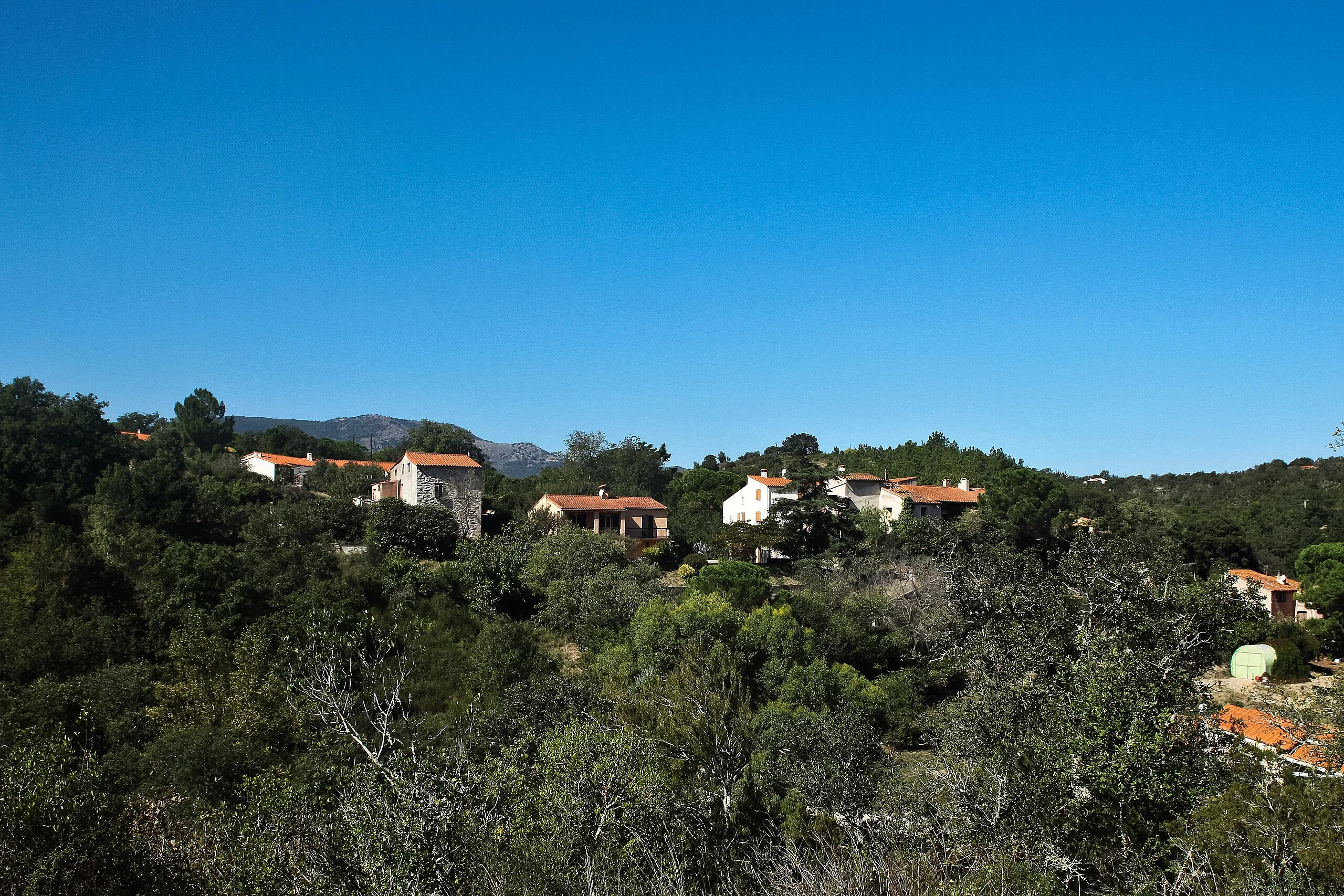
Aspres, Day 4: From Terrats to Montauriol
A curious legend, inspired by the "fairy chimney" rock formations above the Canterrane, claims that a city once stood here called Mirmande 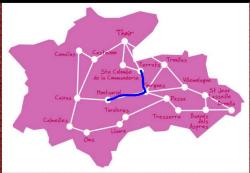 (Mirmanda). It was said to be older than Barcelona and a realm of the fairies before it was destroyed by a sudden, violent rise in sea levels.
The name Terrats first appears in 844, when Argila, son of Count Bera of Razès and Barcelona, sold two villas to his son Bera: the first, named Terrenum, which is likely Terrats, and the second, Furchas, which would be Fourques. Much later, well, okay, much later, a series of sales and donations turned Terrats into a lordship belonging to the Templars. If you’ve been following along, you’ll know that the Knights Templar made this entire region their "home base."
 A rather interesting document tells us that in 1208, Arnau de Llers sold all his possessions in Terrats to the Temple for the sum of 5,100 sous, specifically including the men and women living there. In other words, at that time, the inhabitants were not yet free from serfdom (a sugar-coated word for slavery, I’m joking, though not by much). By the second half of the 14th century (1378), Terrats had about fifty inhabitants. Were they already growing grapes? It’s hard to say. What is certain is that by the 18th century, a map shows a very extensive vineyard between the Canterrane and Fourques, and at Pla d'Amunt, heading toward Trouillas. Today, wine remains the village's primary economy.
The local church is dedicated, well, obviously, to two saints: Saint Julian and Saint Basilissa. (Hey, a female saint! Finally, a bit of gender balance!) Both are beloved, I’d even say venerated, in Roussillon. Legend has it they refused to consummate their marriage so they could each spread the Christian faith separately. It’s an 11th or 12th-century Romanesque church; take a look at the pink marble cross from the 16th century on the wall near the entrance. The church also houses a processional cross, you know, one of those tall, heavy, ornate ones.
From Terrats to Fourques…
Fourques covers 934 hectares, situated on the border between the Roussillon plain and the  Aspres, in the upper Calcerana valley. They produce wine almost exclusively here, with numerous private cellars and a product of exceptional quality.
In 844, the village of Fourques was sold by Argila, son of Count Berà, to his son Berà Junior (I added the "Junior" so you wouldn't get lost in the family tree, I'm so thoughtful, right?). But very quickly, through various sales and supposed donations, religious institutions came to own almost the entire territory: Saint-Genis des Fontaines in 981, Saint-Martin du Canigou in 1009 (the year of its consecration), and most notably the Abbey of Arles-sur-Tech, which gradually became the owner of almost the entire lordship and held its rights until the Revolution. At that time, the Abbot of Arles was the co-lord of Fourques, sharing his rights over the village with Joseph d'Oms de Tord, Marquis of Oms. These rights weren't just over the land, but also the people who were "sold" with the estates, the same "serfdom" we’ve seen in other villages. By the 19th century, the population of Fourques hovered around 600, a figure that hasn't changed much since.
Saint Martin is the saint to whom the church is dedicated; it was first mentioned in 994. It’s a single-nave Romanesque building, likely rebuilt in the 13th century and then heightened in the 16th. Note the carved tombstone to the right of the portal featuring the effigy of Guillem Gerard, a parish beneficiary who died in 1342. Head inside toward the sacristy to see a superb 16th-century marble fountain. Enjoy wandering through the charming surrounding streets, and make sure to visit the "Château." You can access it through a fortified gate located near the town hall. A few houses still retain remnants of painted eaves, though the paint has unfortunately been largely worn away by time.
From Fourques to Montauriol…
At one time, there was a "Montauriol d'Amont" in addition to this village. It was located upstream on the Montauriol river and had its own church dedicated to Saint Michael, as well as a castle of which only a square tower remains. The Abbey of Cuix had acquired some assets in both villages in the 10th century. A certain Oliba d'Oms was the local lord. Later, it was Father Bernat de Montauriol, and eventually, it became a lordship belonging to the Delpas de Saint-Marsal family, which grouped the two villages together and held the lordship until the Revolution. Even adding up all the farmhouses and hamlets, the population was never very large. It must be said that arable land was always scarce, and the resources from the woods and forests weren't enough to support many people. Over the last fifty years, the commune has seen new residents arrive who have renovated the houses and farmsteads beautifully.
As for the church, who is it dedicated to, you ask? Saint Saturnin, of course! If you go inside, you’ll find gilded, painted altarpieces. The center one depicts the Crucifixion, the two on the left represent the Annunciation and the Adoration of the Christ Child, and the ones on the right show scenes from the martyrdom of Saint Saturnin.
Alright, I’m going into "break mode." You have some free time until the next stop…

Comments (0)
No comments yet. Be the first!