
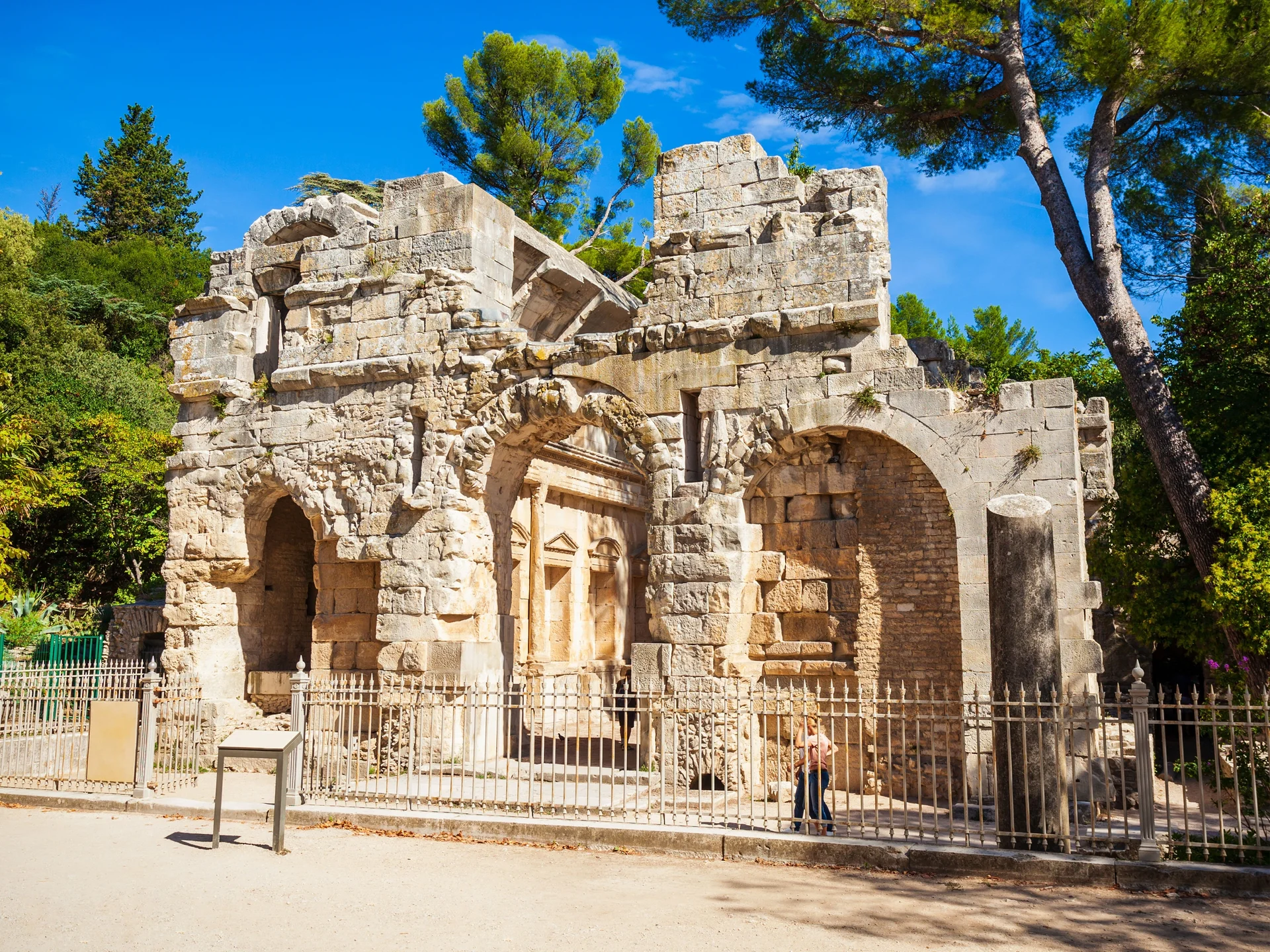
The Temple of Diana: The Stone Enigma of the Jardins de la Fontaine
At the heart of one of Europe's oldest public gardens, a romantic ruin has defied simple explanation for two millennia. The Temple of Diana in Nimes is likely misnamed. Archaeologists agree on one thing: this enigmatic building was never a temple. Was it a sacred library? A mystical dormitory for pilgrims seeking prophetic dreams? The mystery remains.
Why visit this overlooked sanctuary
Built in the 1st century during the reign of Augustus, this structure was part of the Augusteum, a sprawling imperial sanctuary centered on the sacred spring of Nemausus. The Volcae Arecomici people worshipped at this fountain long before the Romans arrived. Emperor Augustus claimed this holy site to establish a cult dedicated to himself and his family, creating a monumental complex unique in Gaul.
Its atypical basilica-style architecture sets it apart from traditional Roman temples. The vaulted main hall measures 14.52 meters by 9.55 meters. Its wall niches, which alternate between triangular and semi-circular pediments, heavily influenced French Renaissance architects. This unusual layout evokes the imperial libraries of Rome or Ephesus more than it does standard classical sanctuaries.
Fascinating theories on its true function
A library for sacred manuscripts
The twelve niches lining the side walls could have held papyrus scrolls. Two Roman libraries with similar dimensions support this theory. The building was lit only by a single opening above the entrance door, creating a dim environment ideal for preserving ancient texts. However, the immediate proximity to water and thermal baths raises questions, as the high humidity would have degraded such precious manuscripts.
A chamber for incubation and prophetic dreams
Nimes historian Alain Veyrac offers a bold interpretation. Pilgrims coming to consult the oracle may have slept in this dark room, waiting for the gods to send revelatory dreams. An inscription found on-site, dedicated to the Fates by one Valerius Tatinus, mentions a vow fulfilled after an instruction received in a dream. This practice of incubation was common in several Roman sanctuaries.
A miraculous survival through the ages
If the temple has lasted twenty centuries, it is thanks to its conversion into a Benedictine monastery during the Middle Ages. The monks of Saint-Sauveur de la Fontaine transformed the great hall into a church, ensuring its protection. This occupation saved the building from total destruction, even though a violent fire ravaged it around 1570, during the Wars of Religion.
In the 18th century, the romantic ruins captured the imagination of artists. The painter Hubert Robert immortalized the temple in several canvases held at the Louvre and the Thyssen-Bornemisza Museum. The Venetian architect Palladio created numerous sketches of it during his stay in Nimes, just years before the fire that left it with its current appearance.
Exploring it today
You can find the temple while walking along a path in the Jardins de la Fontaine, tucked behind a grove of pines. Access is free, allowing you to walk into the large vaulted hall and admire the carved niches up close. The ornate coffers that remain at the back of the room show the original refinement of the decor.
Take a moment to observe the craftsmanship:
- The barrel vault: an architectural feat using stone from Barutel and the Bois de Lens.
- The composite columns: engaged in the walls between each niche, blending Ionic and Corinthian orders.
- The side staircases: these once led to an upper level, likely a terrace that has since disappeared.
- The opus sectile floor: discovered during excavations in 1745, this polychrome marble pavement revealed the site's original luxury.
Friendly tip: Visit the temple in the late afternoon when the low light illuminates the sculptures in the niches. The atmosphere becomes particularly haunting. Afterward, continue your walk up to the Tour Magne at the summit of Mont Cavalier to get a bird's eye view of the entire Augustan sanctuary.

If you visit the Jardins de la Fontaine, do not miss this Roman temple. The monument is half in ruins and there is not much to see. However, this mysterious relic lost among the trees, whose function and origin remain unknown, gives off a unique vibe. I felt like I was transported somewhere else. The visit only takes a few minutes and access is free. Keep an eye on the kids though, because there are loose stones and alcoves where they might try to climb.