
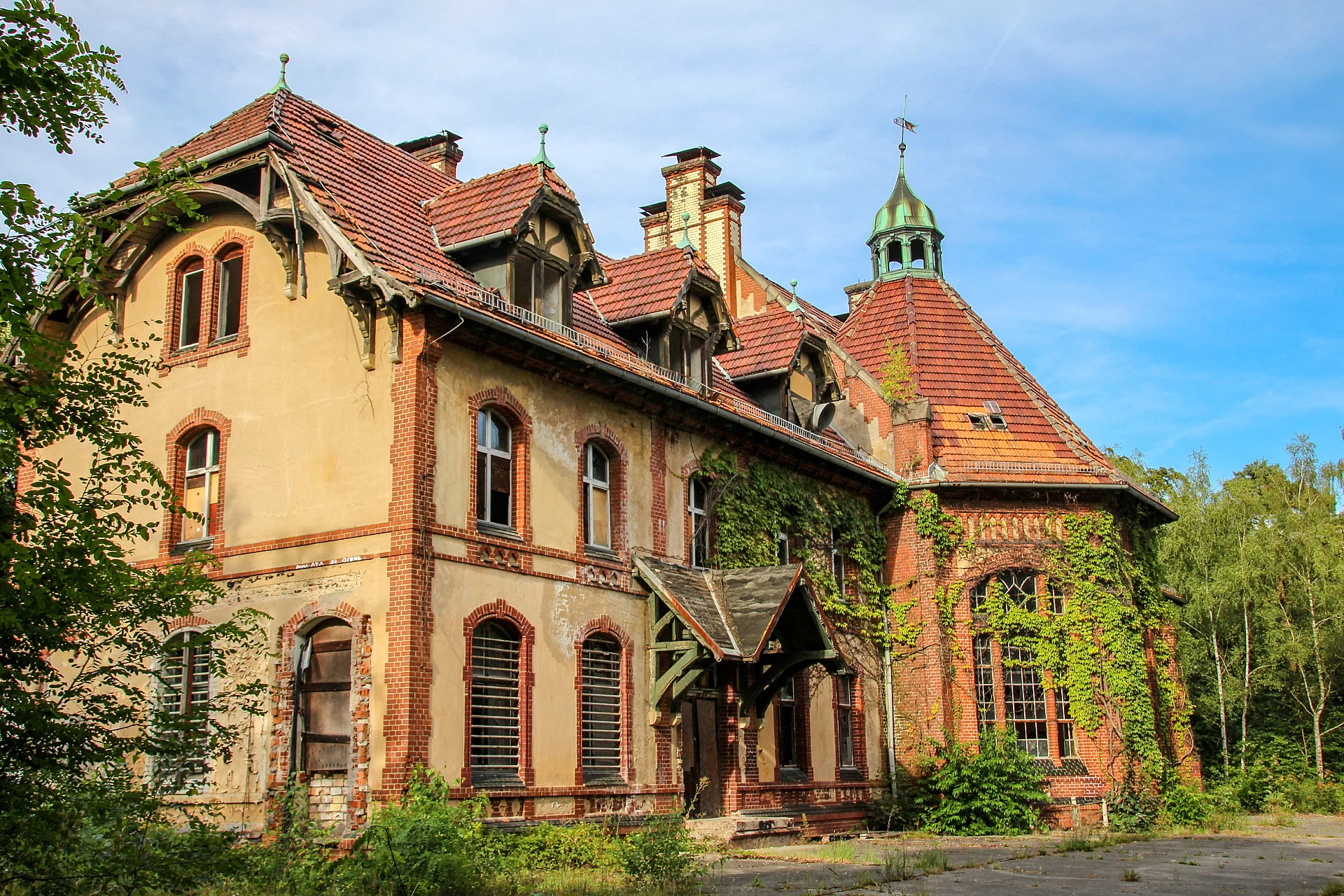
Beelitz-Heilstätten, the ghost hospital that treated Hitler and captivated Berlin
Gutted hallways where nature is reclaiming the space, red brick facades weathered by time, and a silence broken only by birds. Located about 20 miles southwest of Berlin, the Sanatorium de Beelitz-Heilstätten complex is one of the most expansive collections of abandoned buildings in Europe. It is a place where 20th-century German history seems frozen in stone.
Why visit the Sanatorium de Beelitz-Heilstätten?
Constructed starting in 1898 to treat Berlin laborers suffering from tuberculosis, the complex grew rapidly, taking advantage of the clean air from the surrounding pine forests, which was considered beneficial for lung patients. The site became a military hospital during World War I, where a young Adolf Hitler was treated in 1916 after being wounded on the Somme front, an episode local historians are quick to point out.
After 1945, the Red Army moved into the buildings and remained until 1994, turning the sanatorium into the largest Soviet military hospital outside the USSR. The withdrawal of Russian troops marked the beginning of the site's gradual abandonment, leaving it to nature and urban explorers for nearly three decades.
Art Nouveau architecture reclaimed by the forest
The buildings blend red brick, wrought iron, and Art Nouveau details still visible on certain facades, particularly around the former women's pavilion. Birch trees have pierced the roofs, hallways are covered in moss, and light filters through broken glass, creating shadows that are a favorite for visiting photographers.
Between guided tours and off-limits exploration
A portion of the site, notably the Alpenhaus, can now be visited in a safe environment via designated paths and walkways, with a suspension bridge offering a view of the canopy. Other buildings remain officially off-limits and under surveillance, which does not stop some urban exploration enthusiasts from risking entry despite the real dangers of collapse.
Friendly tip: Stick to the official guided tours rather than trying to explore the closed buildings on your own. Several organizations manage legal access to specific zones, the safety is guaranteed, and the historical context provided is far more informative than a rogue walk-through.
Pros
- Unique backdrop for photography and history enthusiasts
- Elevated walkway provides a prime vantage point of the grounds
- Quiet forest setting, far from the intensity of Berlin
Cons
- Unsecured buildings are off-limits and sometimes dangerous
- Access is difficult without a car from Berlin
- Ground is often muddy when leaving the main paths
Opening hours
Tree Top Walk (Baumkronenpfad) and guided tours:
Every day: 10:00 AM to 7:00 PM (last admission at 6:00 PM).
Closed on December 24.
Note: Hours may change based on weather conditions and private events. It is recommended to check the official website before visiting.
How long for this activity
Plan on 2 to 3 hours to explore the treetop walkway and the areas accessible via guided tour. Set aside a full half day if you want to dive deeper into the history of the site through the various thematic trails.