
Visiting Checkpoint Charlie
Checkpoint Charlie served as one of the border crossings allowing travel between West Berlin (FRG) and East Berlin (GDR) during the Cold War from 1961 to 1989. It was set up to handle the passage of diplomatic personnel, journalists, and foreign visitors, as well as prisoner exchanges between the Western bloc and the Soviet bloc. The name Charlie comes from the North Atlantic Treaty Organization (NATO) phonetic alphabet designation for the letter C.
The most famous border crossing of the Berlin Wall
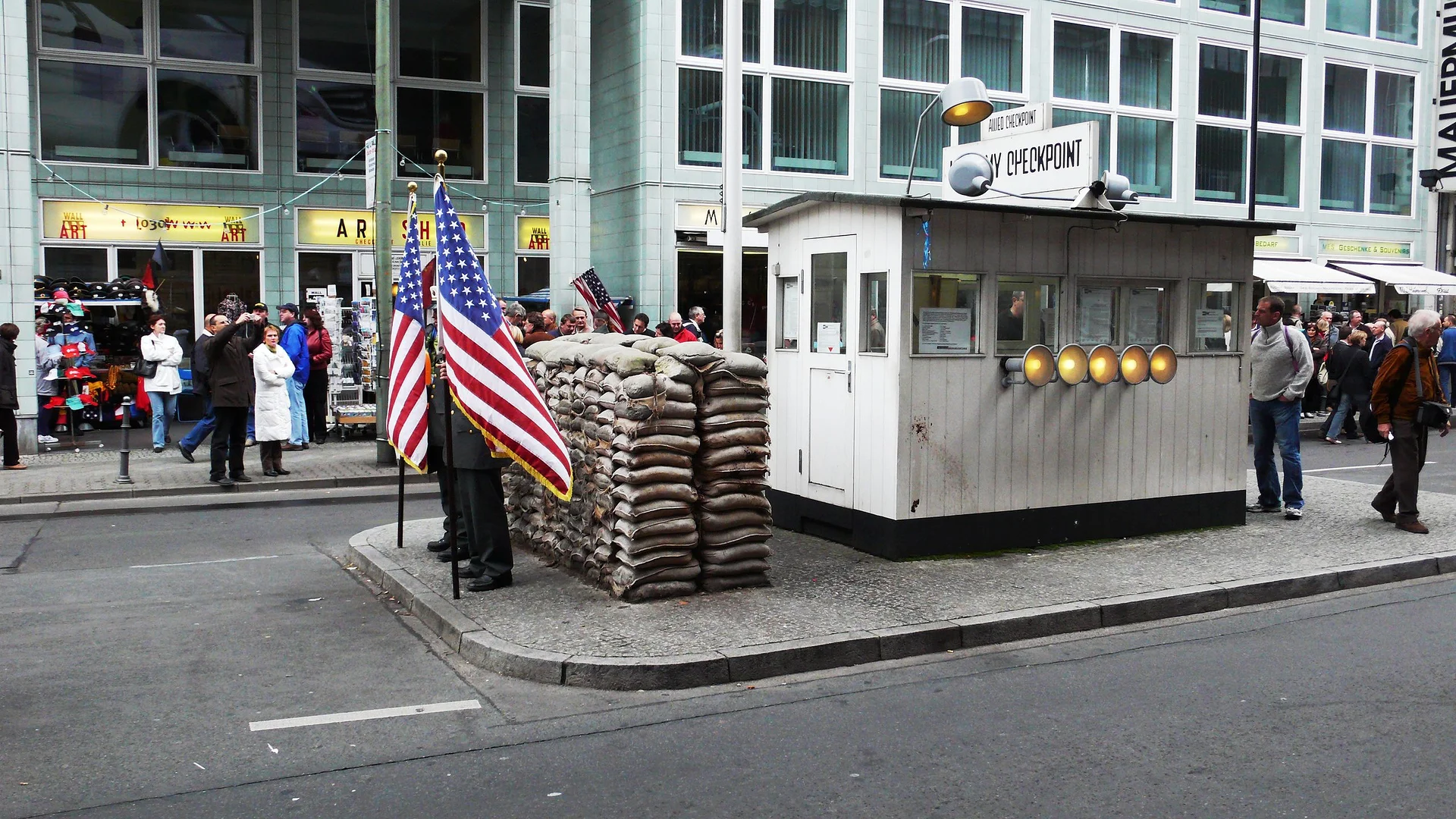
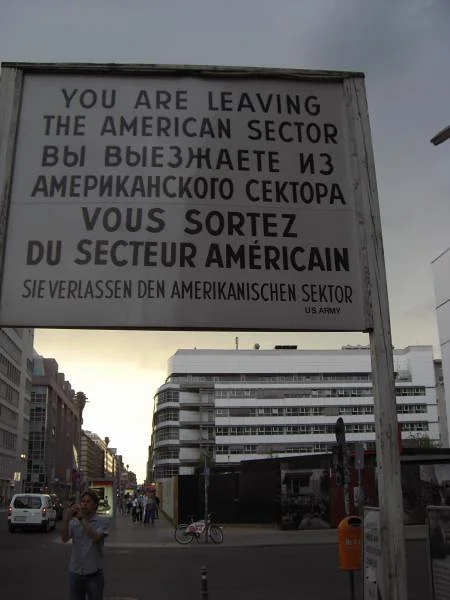
Checkpoint Charlie was established to allow specific officials who held a one-day visa for the GDR to cross. On the Soviet side, actual watchtowers were erected in the middle of a vast no man's land to monitor the border and enforce regulations. On the other side, only a guard shack and an informational sign were installed to mark the exit from the American sector. These elements have been reconstructed at the current Checkpoint Charlie site, while the original pieces are housed at the Allied Museum in Berlin as well.
One of the highest-tension flashpoints of the Cold War
In 1961, when the GDR constructed the wall, Checkpoint Charlie became a major friction point between the two Cold War blocs. The Soviets unilaterally decided to tighten entry requirements into the GDR for allied nationals, a move that violated existing agreements. Consequently, for nearly 16 hours, tanks and soldiers from both superpowers stood face to face in extreme tension, raising fears worldwide that a third world war was about to break out.

I found this checkpoint in every single guidebook and was really looking forward to seeing it. Even though it is a historic site, I was a little bit disappointed. The visit is very quick and the environment is not ideal for picturing the past. Plus, it is extremely crowded.