
The architectural phoenix of modern Berlin
In the heart of Berlin lies a neighborhood reborn from the ruins of history. Potsdamer Platz feels like nowhere else in the capital. This collection of futuristic skyscrapers and high-energy plazas has evolved into a district entirely its own. Every day, more than 70,000 people pass through, drawn by a mix of shopping, business, and historical gravity.
A dramatic metamorphosis
Back in the 1830s, locals wandered through a green space designed by architect Karl Friedrich Schinkel. With the arrival of the main railway station, Potsdamer Platz became a major transit hub. In 1924, it hosted the first traffic lights in Europe, a testament to the intensity of one of the continent's busiest intersections.
World War II left Potsdamer Platz in ruins. It later became a no man's land during the construction of the Berlin Wall in 1961. For nearly three decades, this urban scar stood as a symbol of division. On July 21, 1990, Roger Waters performed a historic concert of The Wall here to mark the reunification, turning a site of desolation into a stage for hope.
After the Wall fell, the area was completely replanned from scratch. Architects Renzo Piano and Christoph Kohlbecker won the primary design competition. Construction began in 1994, and for years, this was the largest building site in Europe.
The three iconic towers of the new square
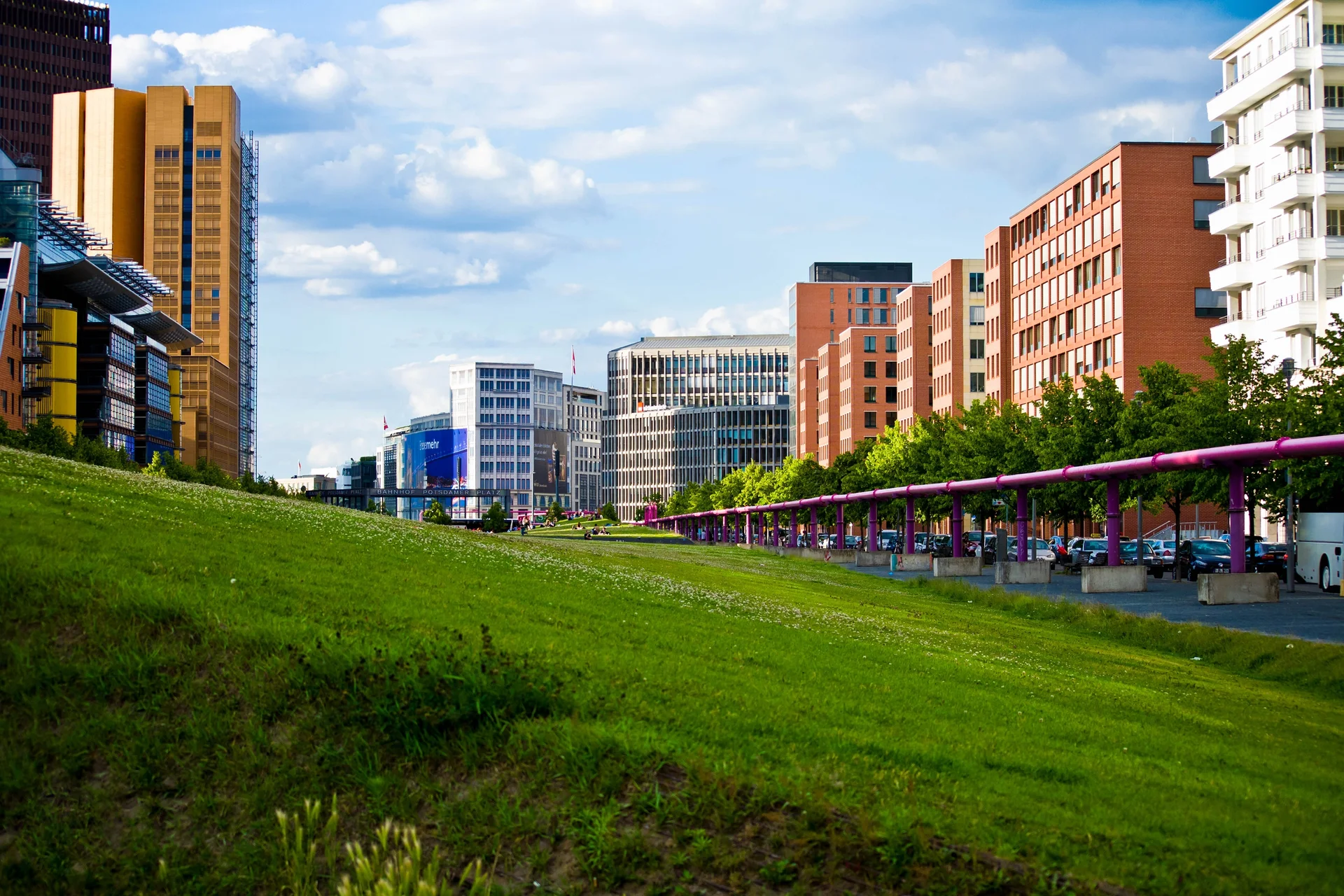
Three futuristic skyscrapers frame Alte Potsdamer Straße (Old Potsdam Street) and define the visual identity of the area.
The Kollhoff Tower and its high-speed elevator
Designed by Hans Kollhoff between 1998 and 2000, this dark red brick tower stands out against the surrounding glass facades. Its Panoramapunkt, reached by one of the fastest elevators in Europe, launches visitors to an altitude of 100 meters in just 20 seconds. It offers a clear view of Berlin. The open-air exhibition Berliner Blicke (Berlin Glances) uses images to trace the transformation of Potsdamer Platz.
The Sony Center and its iconic roof
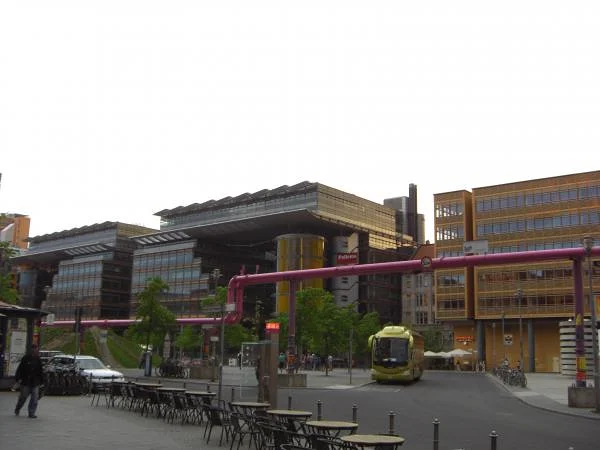
Architect Helmut Jahn designed this complex of seven buildings connected by a striking roof structure. The illuminated roof, a project by Parisian light artist Yann Kersalé, shifts between cyan and magenta to mimic sunset hues. At the center of the complex, a tent-shaped roof covers a courtyard filled with bars, restaurants, and the Kaisersaal, an opulent hall from the pre-war Hotel Esplanade.
Piano's Bahntower
The leftmost tower of the trio is the work of Renzo Piano. Its triangular shape points toward the center of the square like a compass needle. Its double-glazed glass facade showcases the signature style of the Italian architect.
Daily life at Potsdamer Platz
The neighborhood pulses with the pace of a modern metropolis. The Mall of Berlin, just a short walk away, offers hundreds of shops and dining options. Cinemas, theaters, fine dining restaurants, and luxury hotels form a complete urban ecosystem.
Every February, the red carpet rolls out in front of the Berlinale Palast to welcome stars for the Berlin International Film Festival, which moved its headquarters here in 2000. Marlene-Dietrich-Platz becomes the epicenter of European film glamour.
Friendly tip: You can still see markings on the ground today that trace the path of the Berlin Wall through the square. Follow this line for a striking journey between the past and the present.
Seasonal events
- Festival of Lights (mid-October): Seven spots across Potsdamer Platz transform into light art stages under the theme Let's Shine Together.
- Winterwelt (November and December): A 70-meter-long, 12-meter-high sledding run with a view of the Brandenburg Gate, lit up with disco lights.
- Cirque du Soleil ALIZÉ: The first permanent Cirque du Soleil resident show in Europe, held at the Theater am Potsdamer Platz, blending acrobatics and modern magic.

I didn't really like my visit to this neighborhood. It is mostly a business district with very modern buildings. It is not ideal for walking around or shopping. The main point of interest is the Sony Center. If you are only staying in Berlin for a few days, you can skip it.