
Where to stay near Mount Fuji: the 5 areas to know in 2026
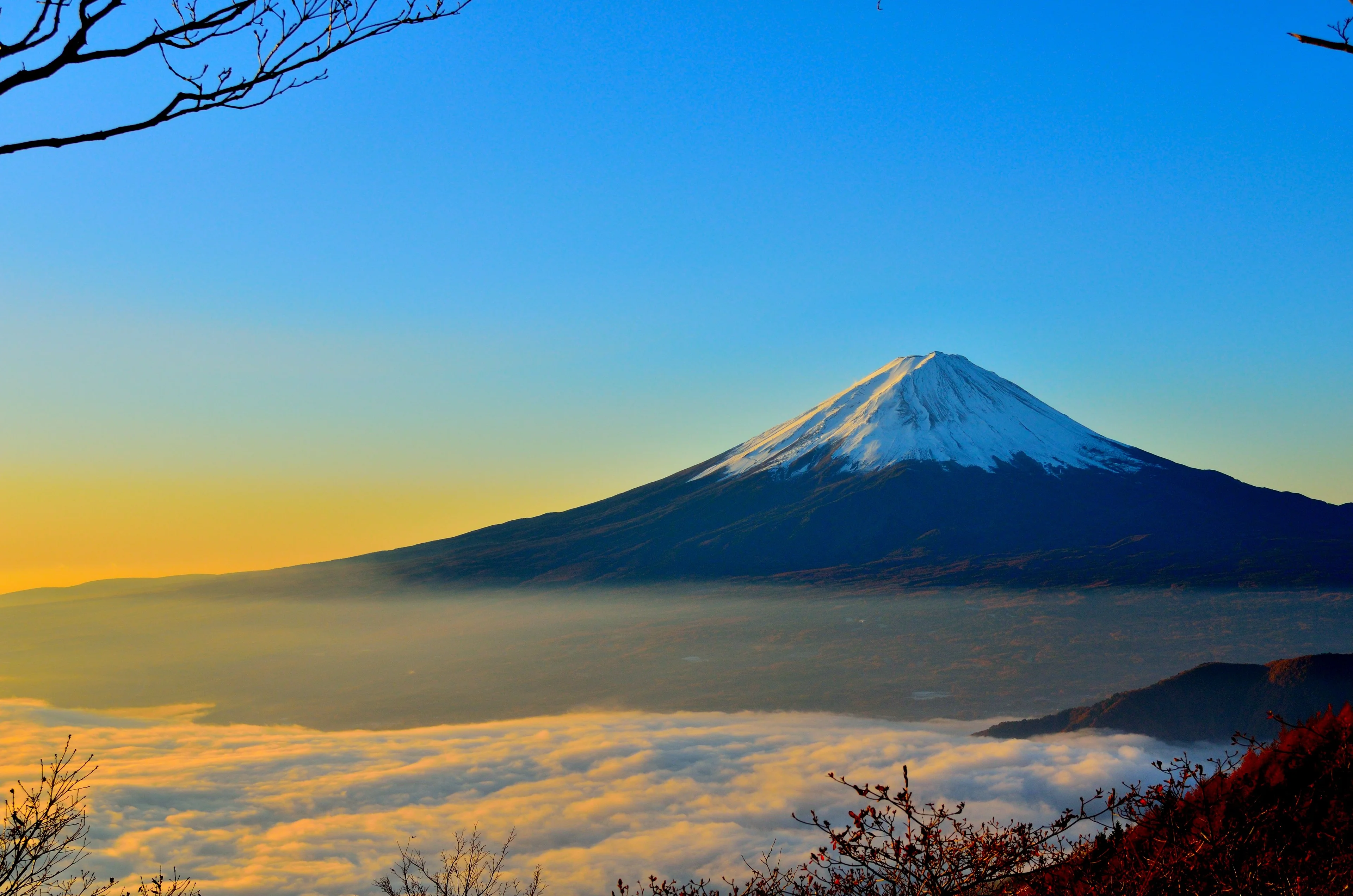
Mount Fuji has nowhere to sleep at its foot. It is an isolated volcano in the middle of a plain, and everything advertised as “accommodation near Fuji” actually sits ten, twenty or thirty kilometres away, split between two flanks that offer neither the same view nor the same holiday: to the north the Five Lakes, where the ryokans line their windows up facing the mountain; to the south-east Hakone and its hot springs, from which Fuji is seen from further off, across a lake.
So the question is not distance but what you have come to do. Climbing? The trail only opens in summer, and only the huts clinging to its flank let you set off before dawn. Looking? You have to pick a side, and accept that the mountain hides: the view a hotel advertises cannot be ordered. This guide sorts the accommodation into 5 areas, from the hut at the seventh station to the ryokans of Hakone.
Compare hotel prices near Mount Fuji
In a hurry? Find the best accommodation deals in 3 clicks.
Compare live deals from Booking, Expedia, Agoda and other partners.
The two ways to stay near Mount Fuji
Two flanks, two holidays. To the north, the lakes and the head-on view; to the south-east, the hot springs and the volcano as a backdrop. Settle it on what you want to bring home: a photograph of the whole of Fuji, or days of bathing.
| What changes | The lakes, to the north | Hakone, to the south-east |
|---|---|---|
| The view of the volcano | Head-on and whole, with a reflection in the water on calm mornings | From far off, across Lake Ashi, and only in clear weather |
| What else there is to do | The five lakes, a cable car, the shrines at the foot | Hot springs, open-air museums, boats and fumaroles |
| The climb | The road to the Fifth Station leaves from Fujiyoshida | The nearest trail is two hours away by car |
| From Tokyo | Direct bus from Shinjuku, 1 hour 45 minutes, $13* | Train from Shinjuku, then the town's local network |
| If the mountain hides | The day loses its subject | The programme holds without it |
| Who it suits | A night or two turned towards Fuji, or the eve of a climb | Two or three nights of resort life between Tokyo and Kyoto |
How long to the entrance, area by area?
Distances are counted from the crater, and they do not say everything: the direction a window faces counts for more, along with the road that leads to the trail. Journey times are those of the scheduled services.
| From | Time | How |
|---|---|---|
| The trail huts, for climbers | on the mountain | on foot from the Fifth Station Open from 1 July to 10 September 2026. The gate at the Fifth Station shuts from 2 p.m. to 3 a.m. |
| Lake Kawaguchi, the postcard view | 14 km | bus or train from Tokyo Direct bus from Shinjuku in 1 hour 45 minutes for $13*; by train, 2 hours 5 minutes with a change at Otsuki. |
| Fujiyoshida and Lake Yamanaka | 12 km | Fujikyuko train The same line as Kawaguchiko, one station earlier. The buses for the Fifth Station leave from here. |
| Gotemba, the southern flank | 20 km | train or motorway The Shizuoka flank, the most direct from the shinkansen line. |
| Hakone, the other flank and its hot springs | 32 km | train then local network A destination in itself, two hours by road from the first climbing trail. |
At a glance: our picks by traveller type
Pick the profile that fits you and go straight to the recommended area.
Map of the areas near Mount Fuji
See how the areas sit relative to one another before choosing your base. Click a name to jump to its description.
The trail huts, for climbers On the flank of the volcano, open from 1 July to 10 September
Those climbing to the summit who want to be there at sunrise
Sleeping on the volcano itself is only possible in the trail huts, wooden buildings anchored in the slope between the seventh and eighth stations. You sleep in a dormitory, on futons laid side by side, for a few hours, before setting off again around 1 a.m. to watch the sun rise from the summit. They open only during the climbing season, from 1 July to 10 September in 2026, and the summer places go as early as spring. The gate at the Fifth Station is also shut from 2 p.m. to 3 a.m.: without a hut booked, there is no climbing by night.
Even though Mount Fuji is very high, there is a marked trail that is relatively easy to climb. By easy, I mean you need to be in shape, but it is absolutely not necessary to be a mountaineer! All along the way up, and the way down, the views are top notch.
Pros
- Sunrise from the summit, impossible any other way
- A few hours of sleep on the slope rather than a sleepless night
- The only way onto the trail between 2 p.m. and 3 a.m.
Cons
- Two months of opening a year, and places taken by spring
- Dormitories, no showers, and comfort that is not a hotel's
Lake Kawaguchi, the postcard view 14 kilometres to the north, the shore where Fuji is mirrored in the water
Those who come to see the mountain, dine early and bathe facing it
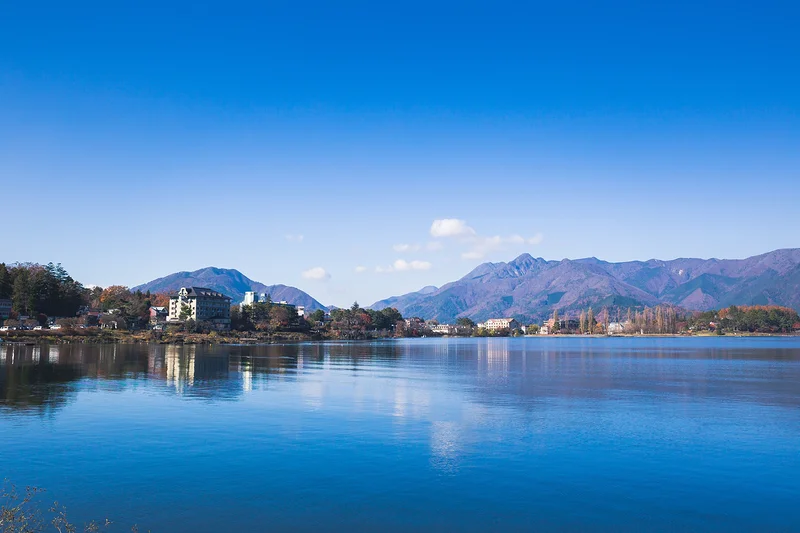
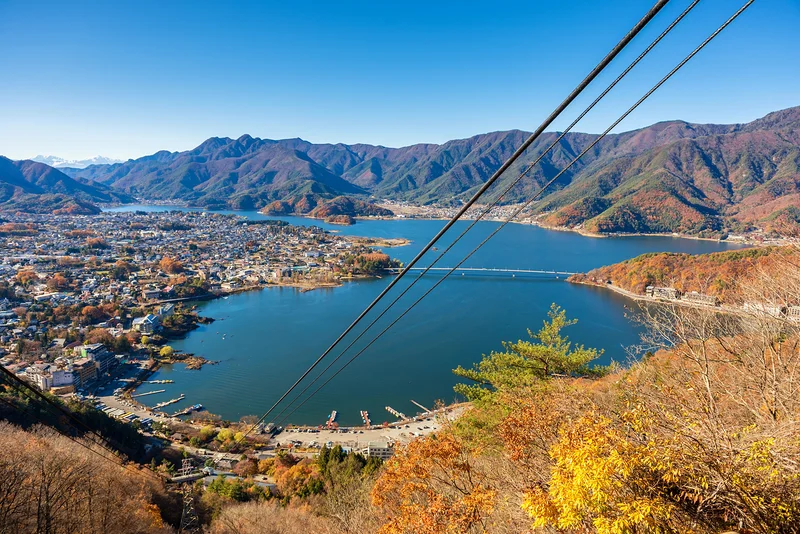
This is the shore everyone has seen in photographs: the whole volcano standing behind a lake, with a reflection on windless mornings. The ryokans of Lake Kawaguchi were built for it, windows to the north, hot baths turned south, dinner served early so that the dining room looks at the sunset. It is also the best connected area for Tokyo: a direct bus from Shinjuku in 1 hour 45 minutes for $13*, up to two an hour. Its drawback is the crowd: the shores fill up, a room looking at the volcano takes several months' notice, and the volcano itself sometimes stays hidden all day.
Other things to do in this area
Where to stay in this area
Fujikawaguchiko Onsen Konanso Luxury
The most polished house on this shore: tatami rooms, private baths on the upper terraces, kaiseki dinner served in your room. Reviews mention the service before the view, which is unusual here.
La Vista Fujikawaguchiko Mid-range
A more Western hotel, with balconies facing the mountain and a generous breakfast buffet. The upper floors have the view; the lower ones find it again in the communal bath on the top level.
Lakeland Hotel Mizunosato Budget
Set right on the bank, with an outdoor bath facing the volcano and futons in plain Japanese rooms. The entry level on this shore, for anyone who wants the view without the kaiseki.
Pros
- The head-on view of the volcano, with the reflection in calm weather
- Hot baths turned towards the mountain, in almost every establishment
- A direct bus from Tokyo, $13* and 1 hour 45 minutes
Cons
- A room with a view is booked long ahead, and it costs
- The mountain often hides: the view is down to the weather, not the hotel
Fujiyoshida and Lake Yamanaka 12 kilometres away, the town where the climb starts and the largest of the lakes
Those climbing the next day, or after the same view at a gentler price
The road to the Fifth Station begins here, and the area lives off the eves of ascents: you sleep early, you catch the first bus. Fujiyoshida is a real town, with its shopping street and its noodle counters, and Fuji stands at the end of the roads. To the east, Lake Yamanaka, the largest of the five, gives a wider view and hotels less besieged than at Lake Kawaguchi. The whole thing costs appreciably less, and in the evening you eat in rooms where the tourist is not the only customer.
Where to stay in this area
Highland Resort Hotel & Spa Luxury
The big hotel in Fujiyoshida, next door to the amusement park, whose tickets it hands its guests. Hot baths, a copious buffet, family rooms: the address for anyone not coming solely for the volcano.
Hotel Mt. Fuji Mid-range
Perched on a height above Lake Yamanaka, with a clear view of the volcano and an outdoor bath that makes the most of it. The building has aged, the view has not, and the reviews mention them in that order.
Fuji Matsuzono Hotel Budget
A simple address on the shore of Lake Yamanaka, with a communal bath and Japanese rooms. You sleep here the night before a climb, at a price the opposite shore no longer offers.
Pros
- The road to the Fifth Station starts here: first bus of the morning
- Gentler rates than at Lake Kawaguchi, for a comparable view
- A town that is lived in, whose restaurants open in the evening out of season
Cons
- Fewer ryokans turned towards the view than at Lake Kawaguchi
- Reaching Lake Yamanaka adds a bus, or a car
Gotemba, the southern flank 20 kilometres to the south-east, the foot of the volcano on the Shizuoka side
Those arriving by shinkansen, or heading back towards Kyoto
The southern flank sees fewer visitors, and that is its appeal: Fuji is just as close, the hotels less sought after and the logistics simpler for anyone coming from Osaka or Kyoto. Gotemba is known for its outlet centre, which has brought in recent hotels with hot baths facing the mountain. Two of the four fifth stations are reached by bus from the station, the one on the Gotemba trail and the one at Subashiri, both quieter than Yoshida.
Where to stay in this area
HOTEL CLAD Mid-range
A recent hotel attached to the outlet centre, with a large hot bath turned towards the volcano, visible when the sky clears. Tidy rooms, parking, and the Tokyo motorway at the exit: the efficient stop on the southern flank.
Pros
- The least busy flank, at an equal distance from the volcano
- The simplest access from Kyoto and Osaka, by shinkansen
- Two fifth stations by bus from the station, quieter than Yoshida
Cons
- Few places turned towards the view, compared with the lakes
- Nothing of a resort stay: this is a town you pass through
Hakone, the other flank and its hot springs 32 kilometres to the south-east, the spa town on Lake Ashi
Those who want a stay in its own right, with Fuji as a backdrop
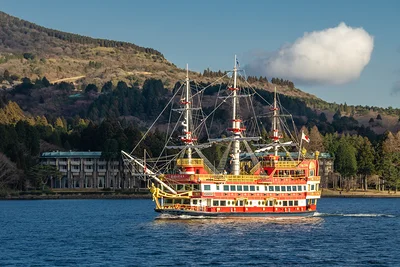
Hakone is not chosen in order to see Fuji: it is a destination in itself, made of hot springs, open-air museums, a lake crossed by boats and cable cars flying over a valley of fumaroles. The volcano is seen from far off, across Lake Ashi, and only when the weather allows: it is scenery, not the subject. People come for two or three nights of ryokan and baths, on the way between Tokyo and Kyoto. Our guide to where to stay in Hakone covers the town's districts.
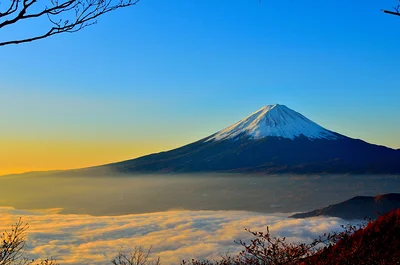
It is hard to miss the majestic Mount Fuji! Climbing it is one of my goals, but I have not had the chance to do it yet.
Where to stay in this area
Hotel Green Plaza Hakone Mid-range
The Hakone address people quote for its view: its outdoor baths look at the volcano when the sky clears, and so do some of the rooms. A copious Japanese dinner, a shuttle from the station, and a building that has lived.
 Stay in the city
Where to stay in Hakone
Hakone has its own guide: neighbourhoods, prices, our recommended hotels.
Pros
- A stay that stands up even if the mountain stays hidden
- Hot springs everywhere, and open-air museums
- On the road from Tokyo to Kyoto, without a detour
Cons
- Fuji is seen from far off, and only in clear weather
- Nothing of a climbing base: the nearest trail takes two hours by car
Our tips for booking the right place
- The view cannot be booked: A hotel can promise a “room with a Fuji view” and keep its word: the window does look at the mountain. But the volcano spends whole days in the clouds, especially in summer, and nobody can guarantee it. Winter and early spring mornings are the clearest, and the first hours of the day beat the afternoon. If the view is the point of the trip, plan two nights rather than one.
- Climbing means a hut, or a sleepless night: In 2026 the Yoshida trail is open only from 1 July to 10 September, the toll is $26* per person on all four trails, and the gate at the Fifth Station stays shut from 2 p.m. to 3 a.m. for anyone without a hut booked. The cap is 4,000 climbers a day on Yoshida, of which 3,000 places are to be reserved beforehand: the climb is planned in spring, not the week before.
- Pick the flank before the hotel: The lakes to the north and Hakone to the south-east cannot be visited in the same trip without half a day of travel. One gives the head-on view and the start of the climb, the other a complete spa town where Fuji is only distant scenery. Decide first what you want to bring home; the hotel comes afterwards.
- A “Fuji view” room held for a single night in the heart of summer: the summit hides more often then than at any other time of year, and one night leaves no second chance.
- Hakone as a climbing base: the nearest trail takes two hours by car, and the town's local network does not go that way.
- Setting off for the Fifth Station after 2 p.m. without a hut reservation: the gate is shut until 3 a.m.
FAQ: where to stay near Mount Fuji
Which side of Fuji should you sleep on?
Can you sleep on Mount Fuji?
How much does the climb cost?
How do you get there from Tokyo?
When is the mountain best seen?
Do you need a car?
Hotels available near Mount Fuji, on the map
Tonight's availability and prices, hotel by hotel, at the distance you choose.
Compare live deals from Booking, Expedia, Agoda and other partners.
 Keep exploring
Everything about Mount Fuji: reviews, photos, practical info
Comments (0)
No comments yet. Be the first!