
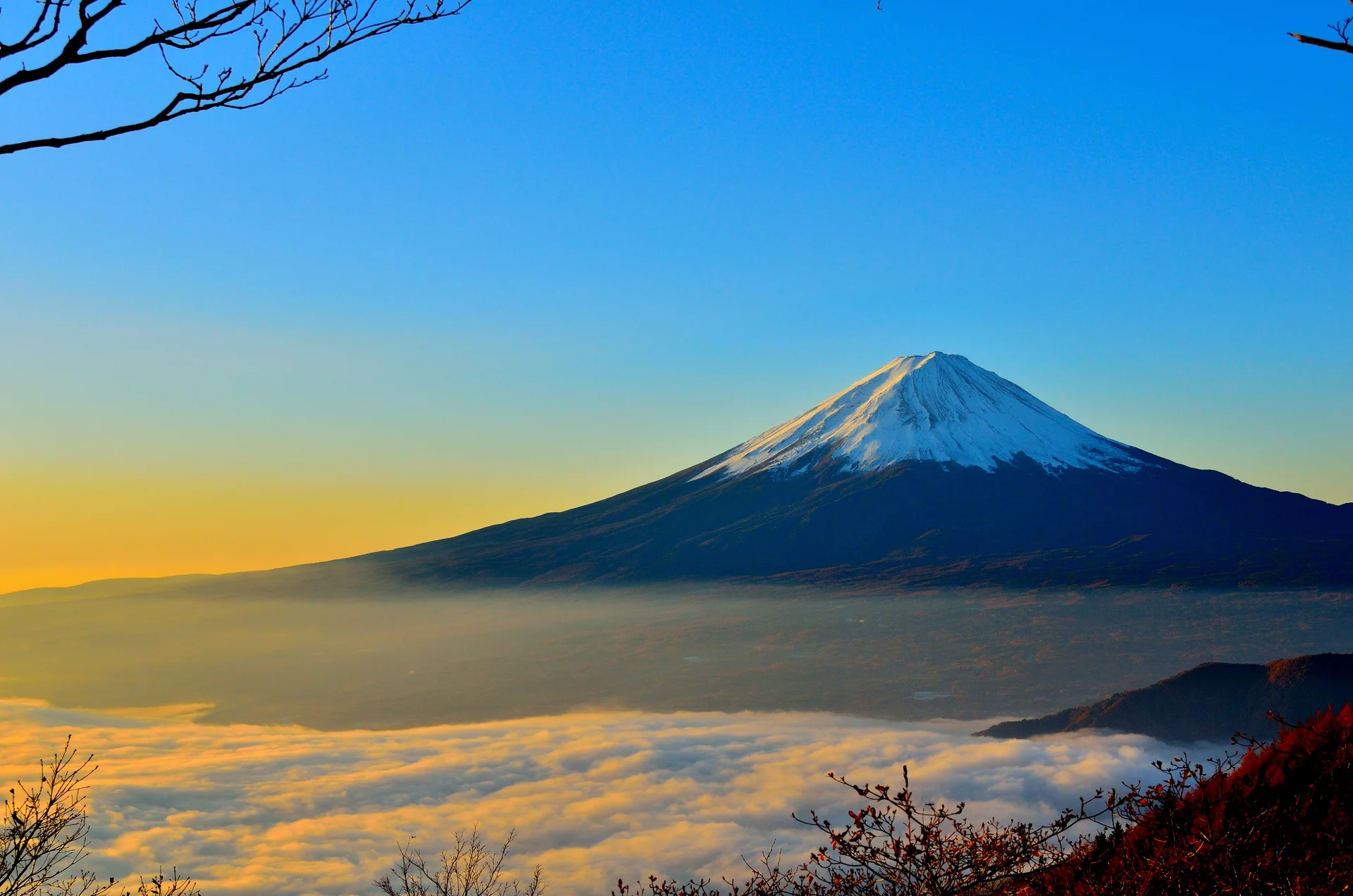
Mount Fuji, the silhouette that has captivated Japan for 1,300 years
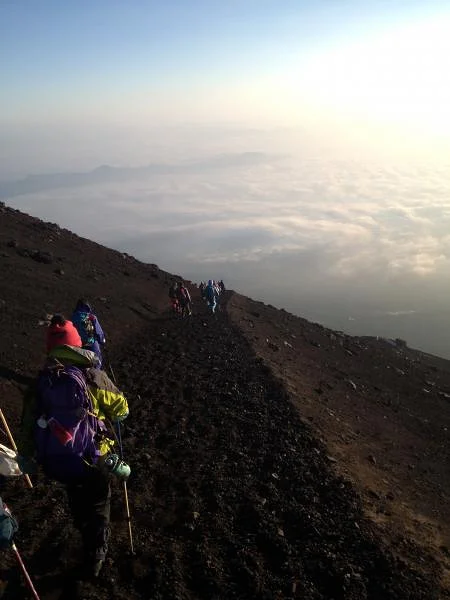
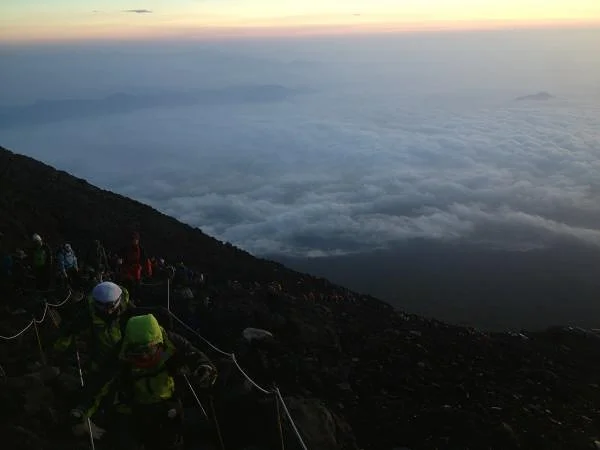
It is 4 a.m., and the freezing air bites at your cheeks at an altitude of 3,700 meters. Around you, hundreds of headlamps create a glowing procession on the dark flanks of the volcano. Then the sky shifts to pink, the horizon ignites, and suddenly you understand why the Japanese call this moment goraiko, the arrival of light. Mount Fuji does more than just stand as the highest mountain in the archipelago, it embodies the soul of Japan.
Why is Mount Fuji so fascinating?
Rising to 3,776 meters, this near-perfect conical stratovolcano has been considered sacred since the 7th century. Shintoists and Buddhists alike venerate Konohanasakuya-hime, the goddess of cherry blossoms, who is said to reside at the summit. Its symmetrical shape evokes the eight petals of a lotus for Buddhists. For centuries, women were forbidden from climbing its slopes, which were considered too pure for them. The ban was only lifted in 1872.
Designated a UNESCO World Heritage site in 2013 as a sacred place and source of artistic inspiration, Mount Fuji has influenced thousands of works. The Thirty-six Views of Mount Fuji by Hokusai, including the famous Great Wave off Kanagawa, left an indelible mark on global art history and influenced European Impressionists.
Climbing the roof of Japan
The ascent is only possible from early July to early September. Four trails start from the 5th station, halfway up the volcano. The Yoshida trail, on the Yamanashi side, remains the most popular due to its many mountain huts and a descent path distinct from the climb. Plan for 5 to 7 hours to reach the summit and 3 to 5 hours to descend.
New 2025 rules
- Mandatory entrance fee of 4,000 JPY (about $26*) on all trails
- Online reservation recommended via the official website
- Access closed from 2 p.m. to 3 a.m. without a mountain hut reservation
- Limit of 4,000 hikers per day on the Yoshida trail
Friendly tip: Avoid weekends and the Obon week in August. Aim for an early afternoon start with an overnight stay in a hut near the 8th station. You will reach the summit for sunrise without enduring the endless lines of those climbing through the night in one go.
Contemplating Mount Fuji without the climb
The volcano is only visible on 20 to 30 percent of days throughout the year. The Five Lakes region, to the north, offers the best chances to spot it. The Lake Kawaguchi allows you to photograph its reflection in the water at dawn. The Chureito Pagoda, in Fujiyoshida, provides the quintessential postcard view, especially in spring when cherry blossoms frame the snow-capped cone.
To maximize your chances, check the live webcams before heading out and prioritize winter, when the dry air clears the sky. A soak in an onsen (hot spring bath) with a view of Mount Fuji remains one of the most memorable experiences in Japan.
Opening hours
Trail access is available from 3:00 AM to 2:00 PM without a hut reservation. Mountain huts are generally open from mid-June to mid-September.
*Information subject to change

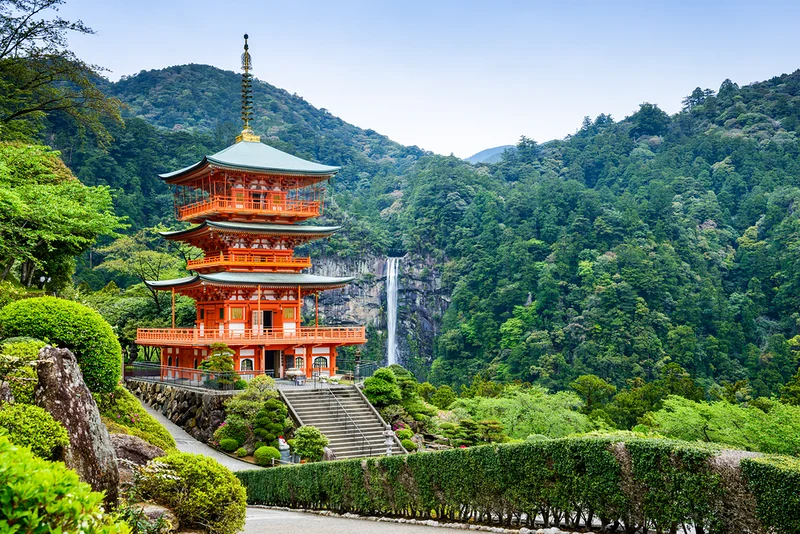
Whether you see it from afar or from the bottom, Mount Fuji is always impressive. You can really feel a unique atmosphere there, at once calm, soothing, and melancholic. I spent a long time observing it from the surrounding area, without necessarily making the trek all the way to the top. But that was enough to create a memory for me that I think will stay etched in my mind for a long time.