
Fátima, the esplanade where silence carries more weight than words
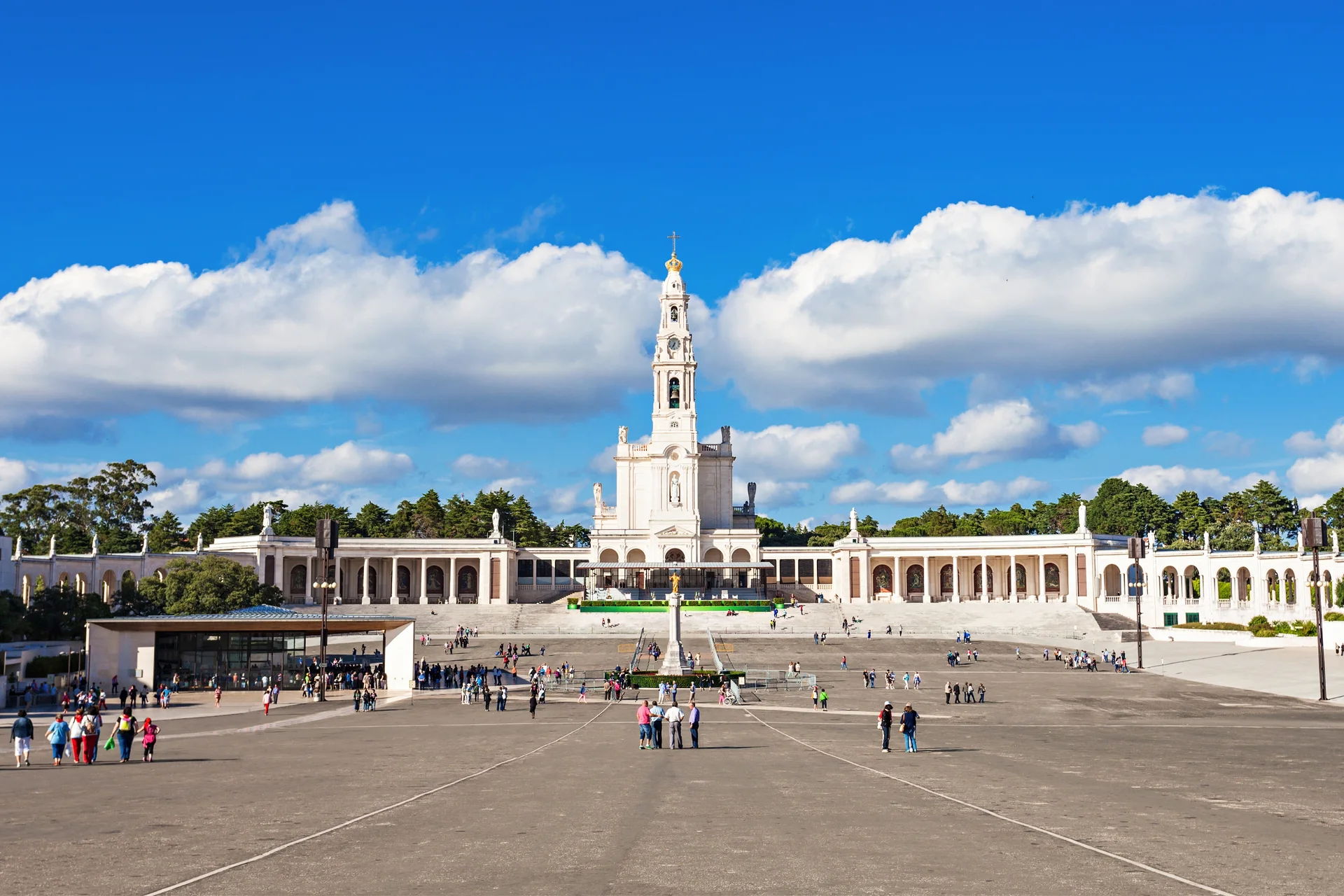
The initial impact is the sheer scale. A nearly 300-meter-long esplanade, capable of holding hundreds of thousands of pilgrims, stretches out before you under the often hazy skies of the Portuguese Estremadura. You do not need a crowd to feel the presence of the place: even when empty, the site commands silence.
Why visit the Sanctuary of Our Lady of Fatima?
It all begins in 1917. Three young shepherd children, Lúcia, Francisco, and Jacinta, reported seeing the Virgin Mary on six occasions near an oak tree at the exact spot now known as the Cova da Iria. Word spread, the Church officially recognized the apparitions in 1930, and Fátima grew into one of the most visited Marian shrines in the world, on par with Lourdes.
The site has evolved over the century by expanding outward while keeping its focal point intact: the small Chapel of the Apparitions, still standing and looking tiny amid the vastness that now surrounds it.
Two basilicas, two faces of the sanctuary
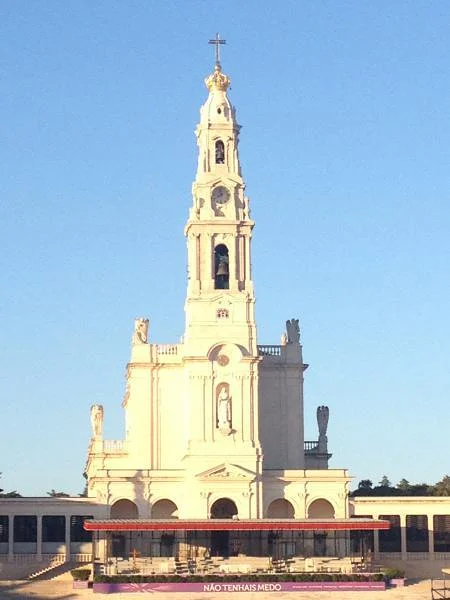
The Basilica of Our Lady of the Rosary, built between 1928 and 1953, dominates the esplanade with its white neoclassical facade and tall bell tower visible from miles away. Inside lie the tombs of Francisco and Jacinta, canonized in 2017, alongside that of Lúcia, who passed away in 2005.
Facing it at the opposite end of the esplanade, the Basilica of the Most Holy Trinity offers a striking contrast with its clean lines, circular shape, and seating capacity of nearly 9,000 people. Opened in 2007, it meets the needs of massive modern pilgrimages without attempting to aesthetically rival its century-old neighbor.
The Chapel of the Apparitions, the beating heart of the site
This is where everything centers. The small Capelinha das Aparições marks the exact location of the oak tree from the visions. Pilgrims frequently approach it on their knees across the stone paving, a display of devotion that strikes even non-believing visitors with its quiet intensity.
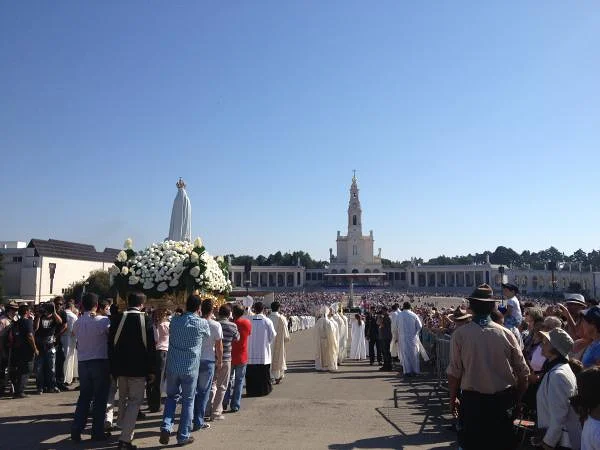
Friendly tip: on the 12th and 13th of each month, particularly in May and October for the anniversary dates of the apparitions, crowds peak with a candlelight procession on the evening of the 12th. If you prefer quiet reflection over collective fervor, visit on a regular weekday late in the morning instead.
Pros
- Free and open access to the entire site
- Two sharply contrasting architectural styles to compare
- Powerful emotional resonance, regardless of your beliefs
Cons
- Very heavy crowds during the May and October pilgrimages
- Open stone esplanade offers little shade in the middle of summer
Good to know:
- Modest dress is required to enter the basilicas (shoulders and knees covered)
- Adjacent museums (featuring wax figures and sacred art) help visitors dive deeper into the history of the apparitions
- Holy water fountains are freely accessible across the grounds
Opening hours
Basilica of Our Lady of the Rosary: daily from 7:00 AM to 7:00 PM.
Chapel of the Apparitions: daily from 7:00 AM to 9:30 PM (closing at 11:00 PM on Saturdays from May to October).
Basilica of the Holy Trinity: daily from 8:00 AM to 7:00 PM.
Exhibitions and museum spaces: daily from 9:00 AM to 6:00 PM.
How long for this activity
Allow at least half a day to walk across the massive esplanade and tour the various basilicas. Plan for a full day if you want to attend services and explore all the museums.
*Information subject to change

The Sanctuary of Our Lady of Fatima is one of the most impressive sites I have ever seen. It is truly huge. Plan on several hours if you want to see everything. It also has some very interesting museums. Just a heads up, there are huge crowds on certain days of worship. Try to check ahead of time.