
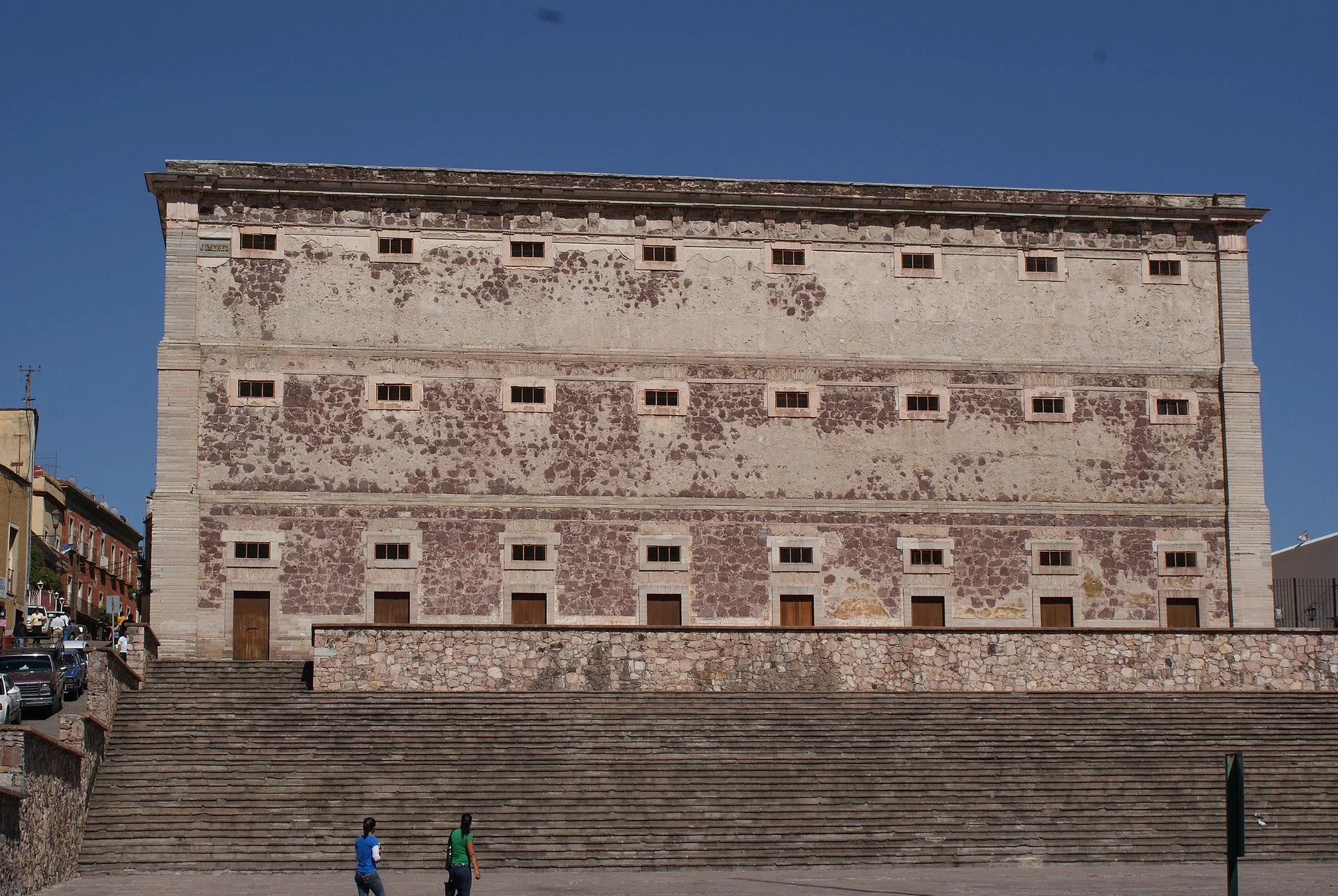
Alhóndiga de Granaditas: The Bloody Cradle of Mexican Independence
The thick stone walls of this fortress still bear the scars of bullets fired on September 28, 1810. On that day, inside what was then just a grain warehouse, the history of Mexico shifted forever. Today, the Alhóndiga de Granaditas occupies this architectural symbol of the struggle for independence, offering visitors more than a history lesson. It is an immersion into the foundational moments of a nation.
Why does the Alhóndiga still resonate in the hearts of Mexicans?
Built between 1797 and 1809 to store corn and wheat, this imposing Alhóndiga de Granaditas serves as a testament to the prosperity of Guanajuato at the end of the 18th century. Its clean but monumental neoclassical architecture hides a much grimmer function. In September 1810, Spanish royalist forces took refuge here with 300 soldiers against 20,000 insurgents led by Miguel Hidalgo.
It was then that a local miner nicknamed El Pípila became a legend. Protecting his back with a stone slab, he crawled to the main gate under a hail of gunfire and set it ablaze. The insurgents flooded the building. The first major victory of the independence movement was won at the cost of hundreds of lives. In retaliation, the decapitated heads of Hidalgo and his companions were displayed for ten years at the four corners of the building, a macabre warning to future revolutionaries.
The murals of José Chávez Morado, a vertical journey through time
Look up as you climb the stairs to discover the major work that transforms this museum into an artistic sanctuary. Between 1955 and 1966, Guanajuato painter José Chávez Morado spent over a decade covering the stairwells with monumental frescoes. Financed in part by 250,000 Mexican schoolchildren who each donated twenty centavos (less than 1 cent USD), these murals recount the epic story of Guanajuato from the colonial era to the Republic.
The fresco titled Abolición de la Esclavitud depicts Hidalgo freeing the enslaved, while Canto a Guanajuato celebrates the cultural richness of the state. The vibrant colors and dynamic compositions turn every flight of stairs into a journey across several centuries. Take your time, as these murals deserve a long look.
Insider tip: Visit the museum on a weekday, ideally Tuesday or Wednesday morning around 10:30 AM. You will have the stairs almost to yourself and can admire the details of the murals without being jostled by the school groups that generally arrive around noon.
Collections that embrace 3,000 years of regional history
Pre-Hispanic heritage and Chupícuaro ceramics
The museum houses an impressive archaeological collection assembled over 25 years by the artist couple José Chávez Morado and Olga Costa. The pre-Hispanic seals made of clay and stone, representing plants, animals, and mythical beings, constitute one of the most complete collections in the country. The room dedicated to the Chupícuaro culture (600 BC to 250 AD) exhibits a remarkable variety of pottery, including jars, tripod bowls, and vases that show the refinement of this little-known civilization.
The independence gallery and the colonial era
Several rooms retrace the colonial period and the wars of independence through period documents, flags, coins, and portraits of heroes. A replica of Hidalgo's banner sits alongside antique maps of Guanajuato and objects used in the silver mines. The atmosphere is solemn, almost pious. These rooms are to Mexicans what Lexington and Concord represent to Americans.
Regional artistic treasures
Three artists from Guanajuato shine particularly bright. Photographer Romualdo García, whose shots taken between 1887 and 1914 provide a precious social catalog of the city; painter Hermenegildo Bustos and his striking portraits; and of course the works of Chávez Morado. A room dedicated to regional crafts displays textiles, ironwork, ceramics, and traditional sweets that reveal local skills passed down for generations.
A living space at the heart of the Festival Cervantino
Each fall, the plaza in front of the Alhóndiga transforms into a stage during the Festival Internacional Cervantino. The austere walls of the fortress offer a dramatic backdrop for theatrical and musical performances that attract artists from all over the world. This contrast between the weight of history and the lightness of the arts serves as a reminder that this building is not just a mausoleum frozen in the past, but a cultural space resolutely turned toward the future.
Opening hours
*Information subject to change