
The Temple of San Roque, cradle of the Cervantino Festival
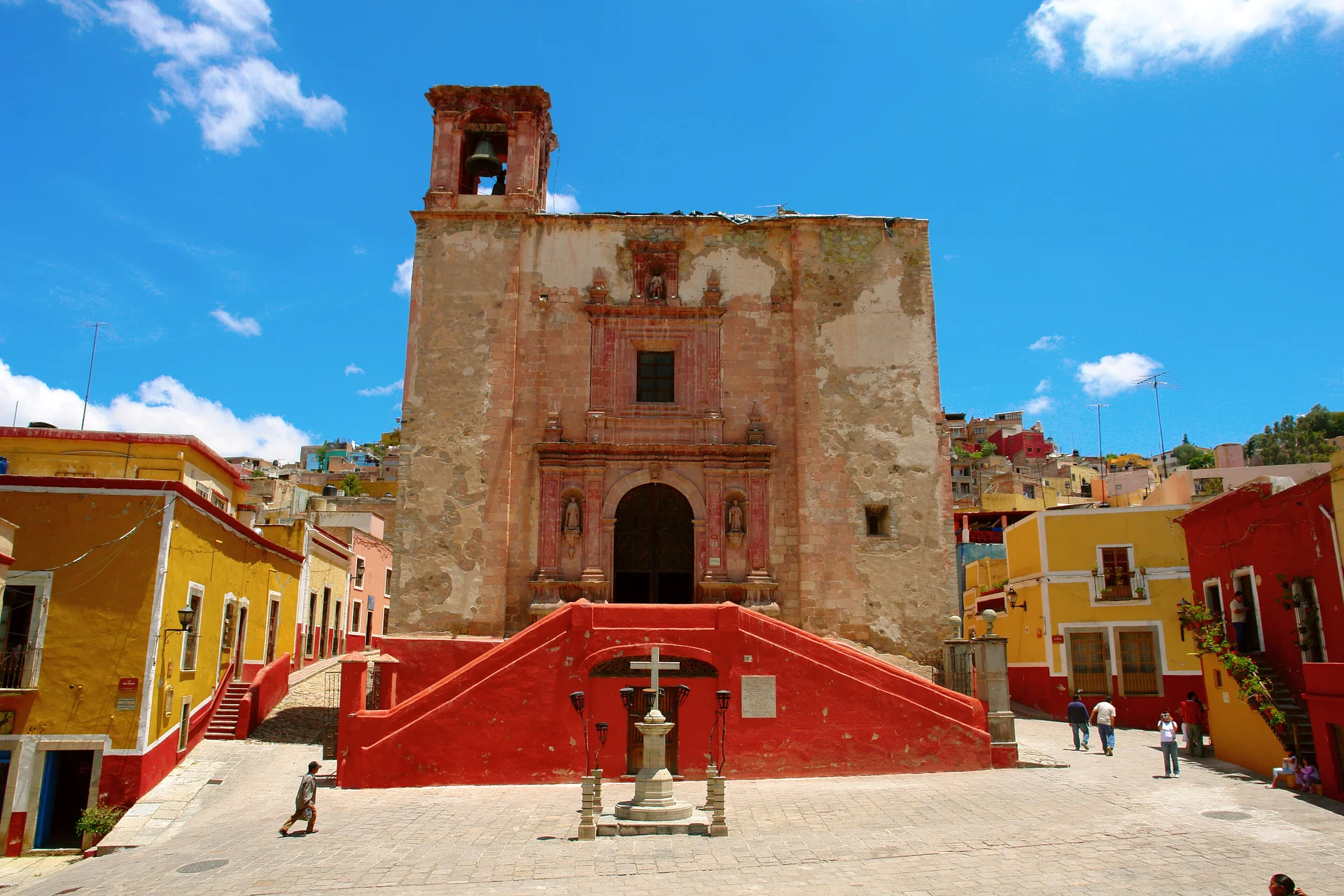
The pink stone warms up under the midday sun. In front of the temple built in 1726, the plaza feels transported from Seville, with its colorful facades framing a stone cross. Here, in the heart of the colonial district, religious history blends with live theater.
Why visit the Temple of San Roque?
The priest Juan Jose de Sopena y Cervera commissioned this church on the site of an earlier chapel built in 1651. Between 1746 and 1794, the building housed the Santa Escuela de Cristo (a religious brotherhood). The site carries a darker history as well. Beneath the flagstones of the plaza rest many victims of the attack on the Alhondiga in September 1810, the first clash of the Mexican War of Independence.
However, the Temple of San Roque is best known as a cultural stage. In 1953, Enrique Ruelas chose this plaza to present the Entremeses de Cervantes, short plays by the brilliant Spanish writer. These performances grew in popularity year after year and eventually gave birth in 1972 to the Festival Internacional Cervantino, which has become the most prestigious cultural event in Mexico.
Sober architecture serving as a theater backdrop
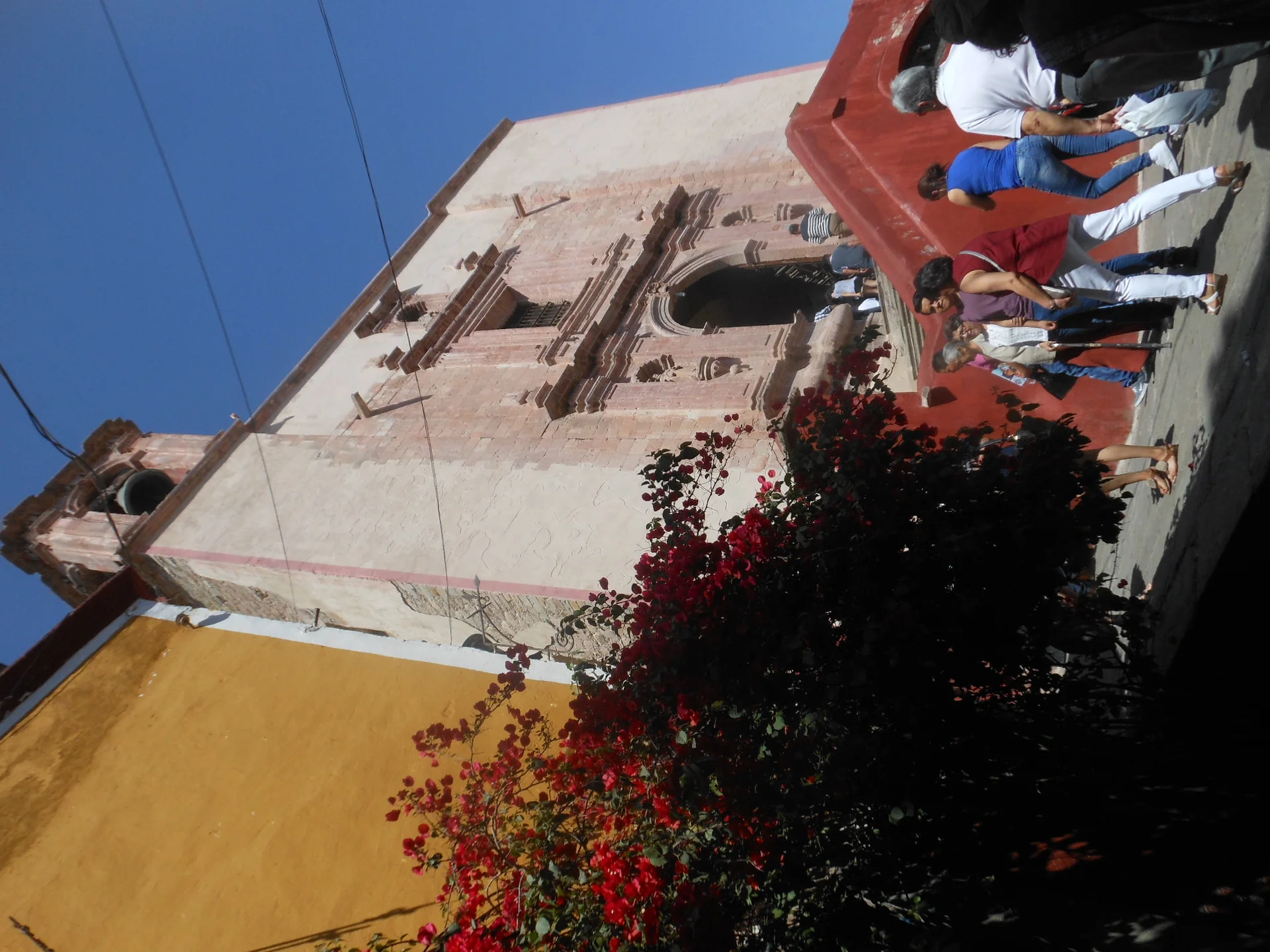
The baroque facade, while simple, features a double lateral staircase and a main door made of quarry stone. The towers were never completed, giving the structure a slightly unfinished silhouette. The church has only one tower, and its pink stone facade is divided into three sections, featuring a wooden door and a choir window.
This architecture, combined with the central stone cross and the surrounding colorful houses, provided Ruelas with the perfect setting for the Entremeses cervantinos. The plaza is shaped like a fan, creating natural acoustics ideal for open-air performances.
Artistic treasures inside
The main altar and its sacred figures
The main altar, painted in white and gold, houses the Virgin of the Rosary in the center, flanked by San Roque on one side and Santo Domingo on the other. The temple is characterized today by its neoclassical altarpieces, which reflect successive restorations.
Remarkable paintings and sculptures
On the right side, a life-size Christ draws the eye. On the opposite side, a large oil painting depicts San Padre, San Miguel Arcangel and San Roque. An altar to the Virgin of Guadalupe completes the ensemble. Along the aisles, a collection of oil paintings with gold leaf frames depicts scenes from the Stations of the Cross. These works date from the early 18th century and receive regular conservation care.
Plaza San Roque, a living stage
In the center of the square stands a stone cross surrounded by six wrought-iron lampposts, reminiscent of the cross in Cordoba, Spain. Each year, the plaza hosts the Entremeses Cervantinos, a tradition maintained by the Teatro Universitario of the University of Guanajuato. These short plays, La guarda cuidadosa, Los habladores and El retablo de las maravillas, are performed in their original staging, which has remained practically unchanged since 1953.
Friendly tip: If you visit Guanajuato in October during the Festival Cervantino, catch the Entremeses on this plaza. Shows typically take place in the evening around 8 PM to 9 PM. The atmosphere is unique, set against illuminated colonial facades and the energy of the local Guanajuato crowd.
Opening hours
Religious service hours vary. The church is typically open during scheduled services.
For the Entremeses Cervantinos during the festival in October, evening performances are held around 8:00 PM to 9:00 PM. The number of shows is limited, so check the official FIC (Festival Internacional Cervantino) program.

Pretty average monument, I wouldn't make the trip just to see it.