
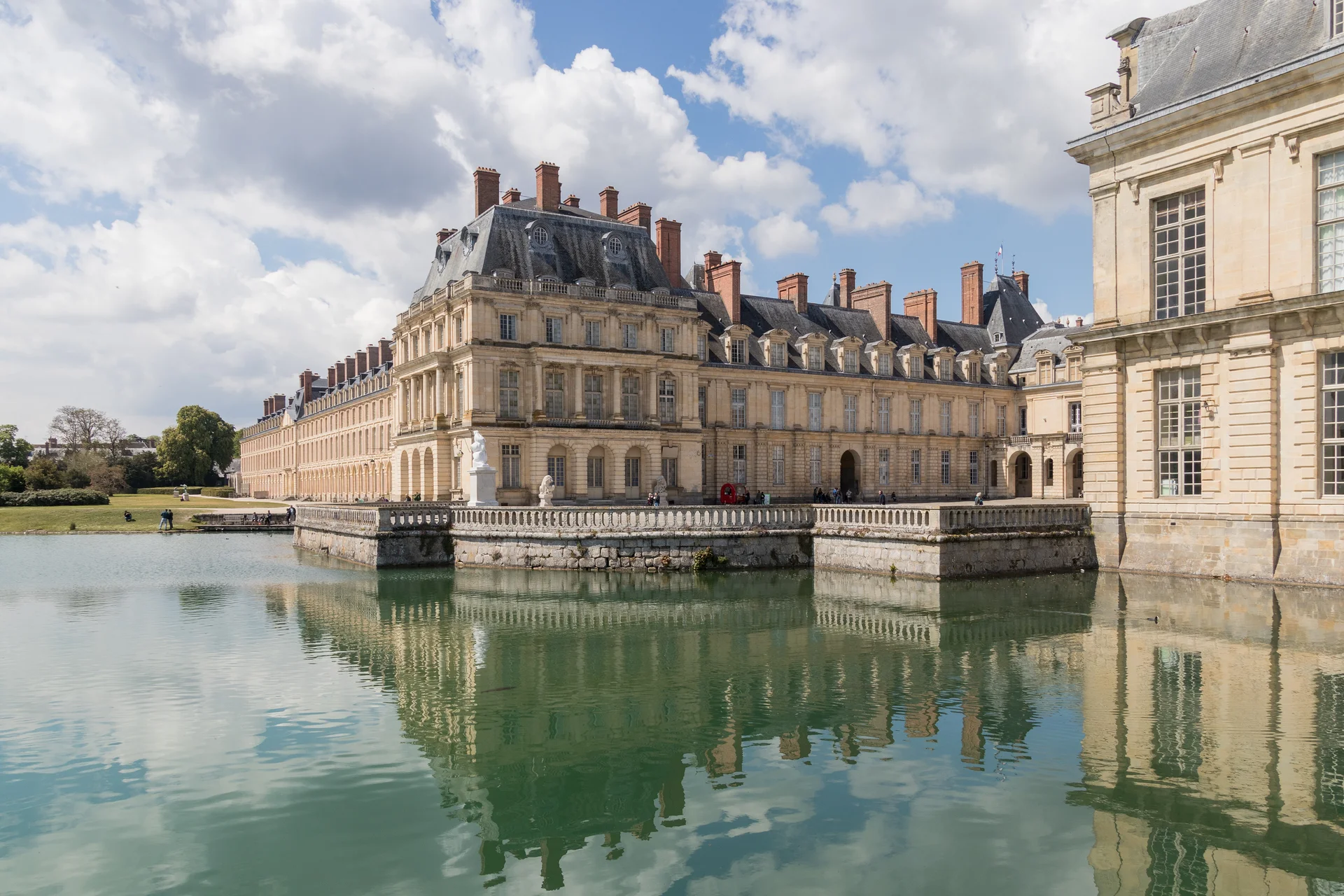
Visiting Fontainebleau Palace: 8 Centuries of Living History
Located about sixty kilometres south of Paris, Fontainebleau Palace unfolds like a memory palace where every room and gallery tells a chapter of French history. With its 1,500 rooms and 130 hectares of parks and gardens, this UNESCO World Heritage site recognized since 1981 is not the domain of a single ruler, but of all of them: 34 kings and 2 emperors left their mark here from the 12th to the 19th century.
What Makes Fontainebleau Palace Unique?
Fontainebleau stands out for its exceptional continuity, remaining the only palace inhabited by every French sovereign for over 8 centuries. François I, who fell in love with the game-rich forest, transformed the medieval hunting lodge into a Renaissance palace starting in 1528. He brought in leading artists from Italy including Rosso Fiorentino and Primaticcio, thus creating the School of Fontainebleau which would influence all of Europe.
The story does not stop there. Henri IV expanded it, Louis XIV frequented it, and Marie Antoinette furnished her private apartments here. Napoleon, who called it the true home of kings and the house of the centuries, had it entirely refurnished in just 19 days in 1804 to welcome Pope Pius VII. It is also here that he abdicated in April 1814, delivering his famous farewell to the Imperial Guard in the Cour d'Honneur, now known as the Cour des Adieux.
Architectural Treasures Not to Miss
The Galerie François I and Renaissance Rooms
The Galerie François I, a masterpiece by Rosso Fiorentino created between 1534 and 1540, perfectly illustrates the genius of the French Renaissance. Its lavish frescoes blend mythology and royal symbolism in a striking visual harmony. Do not miss the Ball Room either, with its coffered ceiling and monumental fireplaces, which witnessed the opulent festivities of the court.
Napoleon's Apartment and the Imperial Museum
The Napoléon I Museum houses a fascinating collection of the Emperor's personal belongings: his legendary bicorne hat, his travel kit, and official portraits. The private apartments preserve the only surviving Napoleonic Throne Room with its original decorations, immersing visitors in the solemn atmosphere of imperial power.
The Imperial Theater and Secret Apartments
Commissioned by Napoleon III and inaugurated in 1857, the Théâtre Impérial was forgotten for 150 years before being rediscovered and restored. Accessible only by guided tour, it rivals Versailles in refinement. Take the opportunity to also explore Louis XV's Petits Appartements and Marie Antoinette's Turkish boudoir, intimate spaces revealing the Ancien Régime fascination with the Orient.
The Gardens and Park: A Royal Stroll
The gardens of Fontainebleau bear the signature of master landscape architects. The Grand Parterre, designed by André Le Nôtre and Louis Le Vau, spans 11 hectares, making it the largest parterre in Europe. Stroll through the English garden, row boats on the Carp Pond, or explore the Jardin de Diane. For a unique experience, horse-drawn carriages offer a playful way to explore the grounds, and hot air balloon rides invite visitors to soar over the palace and forest.
Other spots to see:
- The horseshoe staircase: a 17th-century architectural feat that became a reference across Europe
- The Cour d'Honneur: setting for Napoleon's farewell, a moving starting point for your visit
- The Chinese Museum: a cabinet of curiosities created by Empress Eugénie featuring treasures from Asia
Friendly tip: Arrive by 9:30 AM and start your tour before 2:00 PM to avoid the crowds and fully enjoy the rooms, which begin closing progressively starting at 4:00 PM. The HistoPad, an augmented reality tablet available in 12 languages, turns the visit into an immersive experience that is especially popular with children ages 7 and up.
Opening hours
October to March: 9:30 AM to 5:00 PM (last entry at 4:15 PM).
April to September: 9:30 AM to 6:00 PM (last entry at 5:15 PM).
*Information subject to change

Fontainebleau Palace blends many different styles and has a slightly more intimate vibe than some of the other big palaces. The famous horseshoe staircase gives the Cour du Cheval Blanc a theatrical feel. Several French kings, as well as Napoleon, lived here, and you can really feel that in the varied decor. As is often the case with these castles, the gardens are part of the visit, and I highly recommend them.