
The Odeon of Herodes Atticus: Summer Nights in Antiquity
The lights go down. Five thousand spectators hold their breath in the warm Athenian night air. Above the tiers of Pentelic marble, the illuminated Parthenon watches over the stage. For nearly two millennia, the Odeon of Herodes Atticus has offered the exact same thrill: occupying the exact seat of a spectator from the year 161.
Why see a show at the Odeon?
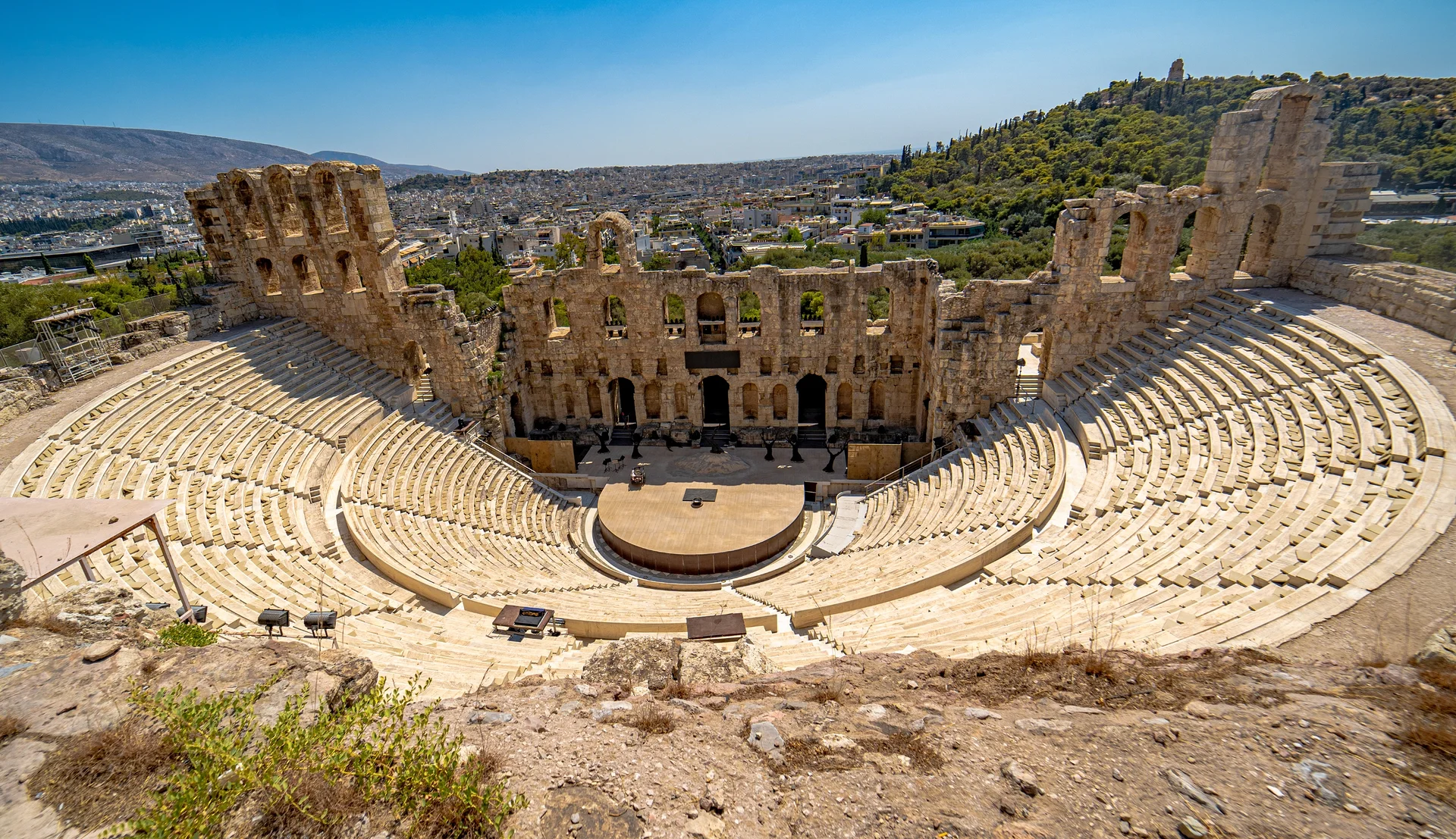
Herodes Atticus, a fabulously wealthy Roman senator and benefactor of Athens, had this theater built in memory of his wife Regilla, who passed away in the year 160. Construction lasted about a decade. Originally, a cedar roof covered the entire structure, making it a true odeon in the strict sense: a concert hall rather than an open-air theater.
Destroyed by the Heruli in 267, the monument slumbered for centuries before being restored between 1952 and 1953. Since 1955, it has hosted the Athens-Epidaurus Festival, one of the oldest performing arts festivals in Europe. Maria Callas, Frank Sinatra, Luciano Pavarotti, Elton John, and more recently Sting have all performed here.
Architecture: 5,000 seats carved into the rock
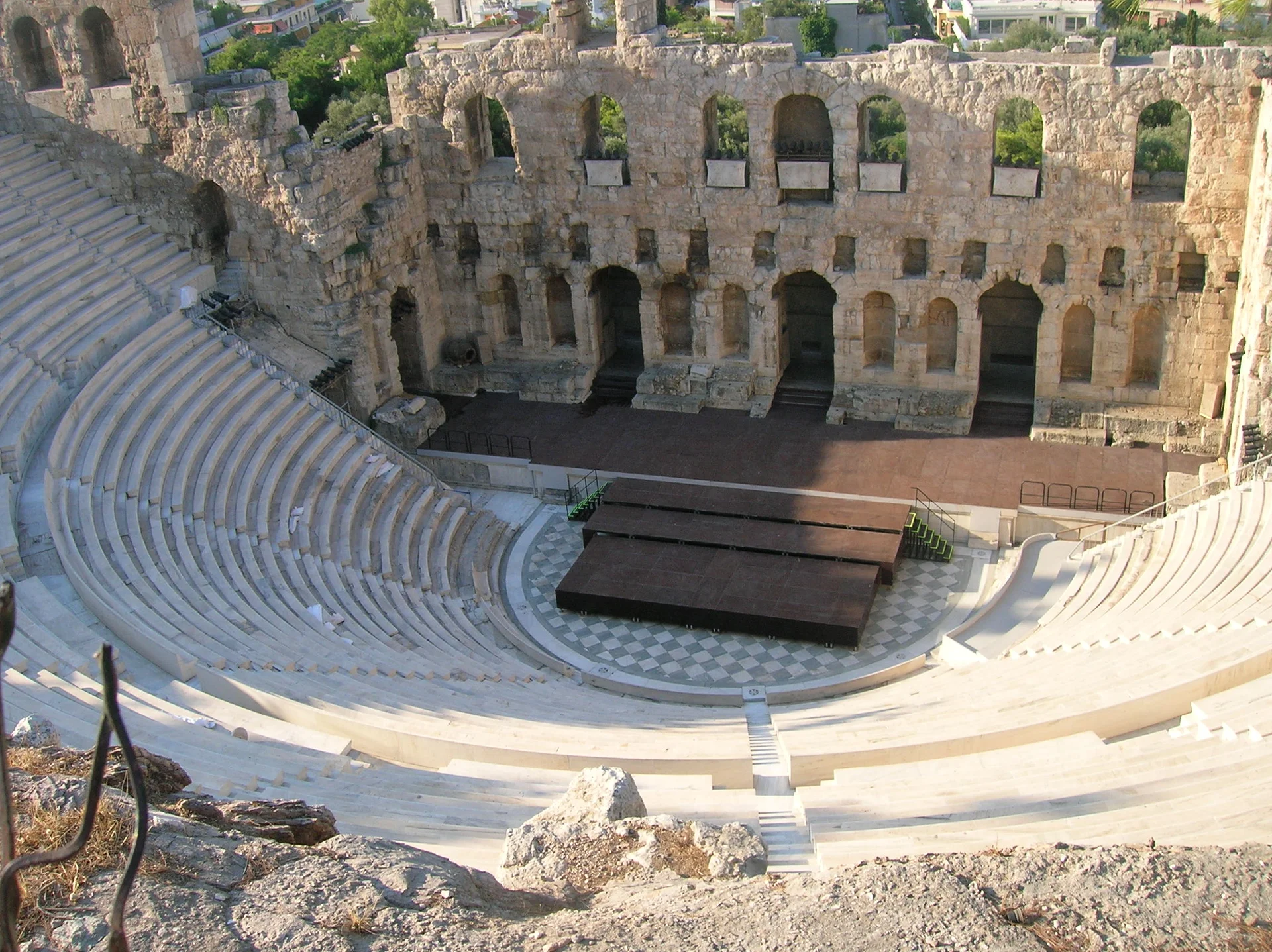
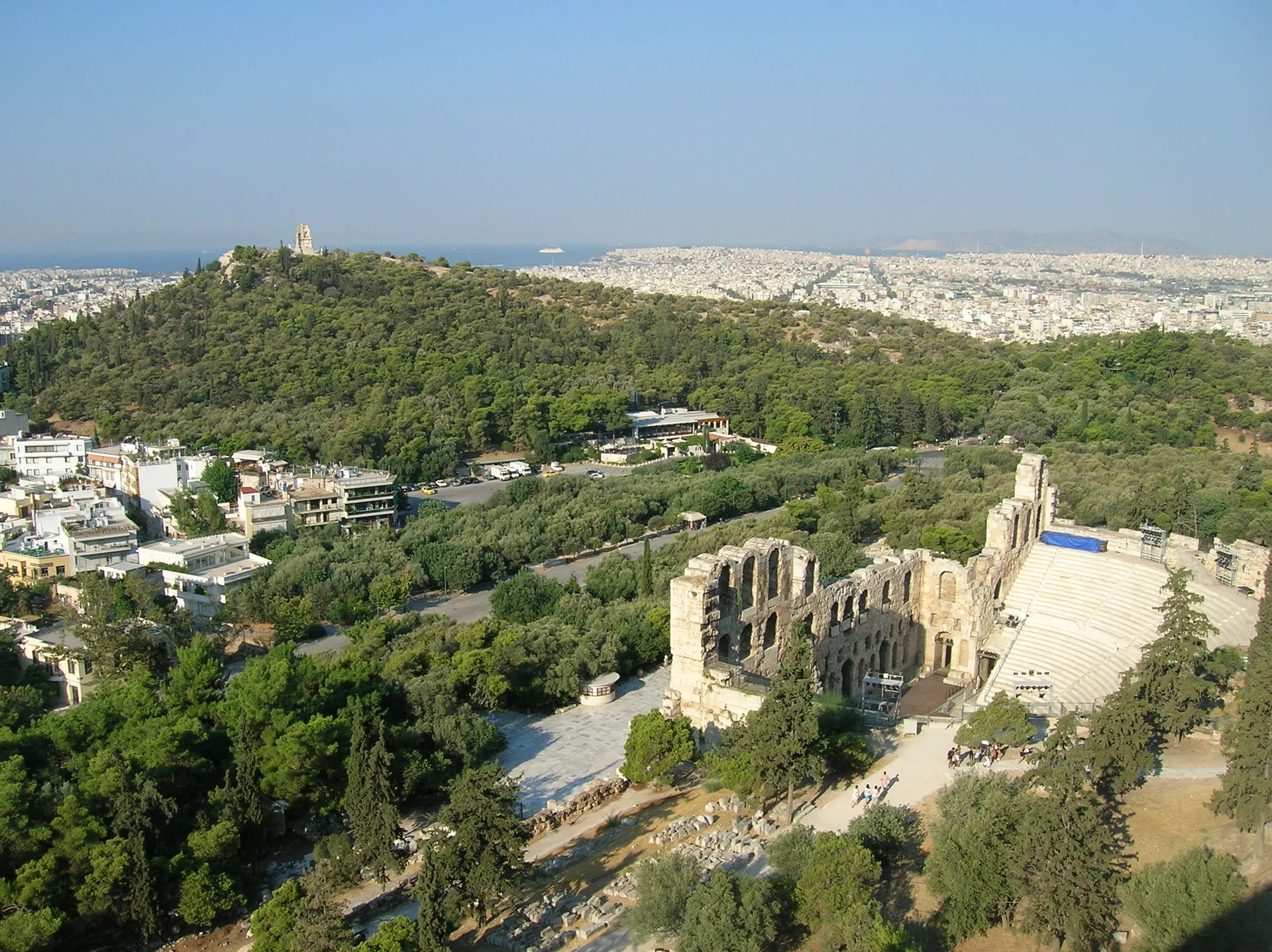
The cavea, measuring 81 meters in diameter, follows the southwest slope of the Acropolis. The white marble rows rise up to 28 meters in height. The stage is over 35 meters wide, and the remains of the three-tiered arcade facade hint at the outsized ambition of the original project.
The acoustics remain striking. Even sitting in the upper rows, every violin note and every line of dialogue reaches you with pristine clarity. Athenians have a saying: no matter where you sit, the sound will find you.
The experience: Before, during, and after the show
Before the show
The walk toward the Odeon is part of the ritual. The pedestrian street Dionysiou Areopagitou runs along the southern slope of the Acropolis. Artisanal jewelry vendors, street musicians, and the aromas of roasted corn and cotton candy accompany your walk under the glowing red Athenian twilight sky.
Friendly tip: heels are banned inside the venue to protect the ancient marble. Wear flat shoes. The seats have no backs and stay warm after the day, so a foldable cushion rented at the entrance can save your evening.
During the show
Performances generally start at 21:00, when the heat subsides. Most last between two and three hours, often without an intermission. Avoid the central seats far from the aisles if you think you will need to get up. Doors close at the start of the show, and entry is only permitted during an intermission if there is one.
After the show
Athenians keep the night going with a late dinner in the neighborhood of Koukaki, just a few minutes away on foot. Restaurants stay open past midnight and often later.
Programming: What can you see here?
The Athens-Epidaurus Festival offers a lineup every summer from June to October combining opera, ballet, ancient tragedies, symphonic concerts, and contemporary artists. The Greek National Opera regularly presents its major productions here. In 2025, the festival celebrated its 70th anniversary with a particularly rich program.
Note:
- Tickets sell out quickly for big names, sometimes in just a few hours
- Box office sales generally open in late April on the official festival website
- Prices range from $17* to over $113* depending on the show and seating location
- Subtitles in Greek and English accompany operas and tragedies
Opening hours
*Information subject to change

I discovered this monument during my visit to the Acropolis. It is not the best preserved part of the site, but the wall behind the stage is still impressive. On the other hand, the semi-circular tiers, which have been rebuilt, do not look authentic at all anymore. Unfortunately, to get inside, you absolutely have to buy a ticket for a show. It is a shame when you do not have the chance, because I imagine the acoustics are exceptional.