
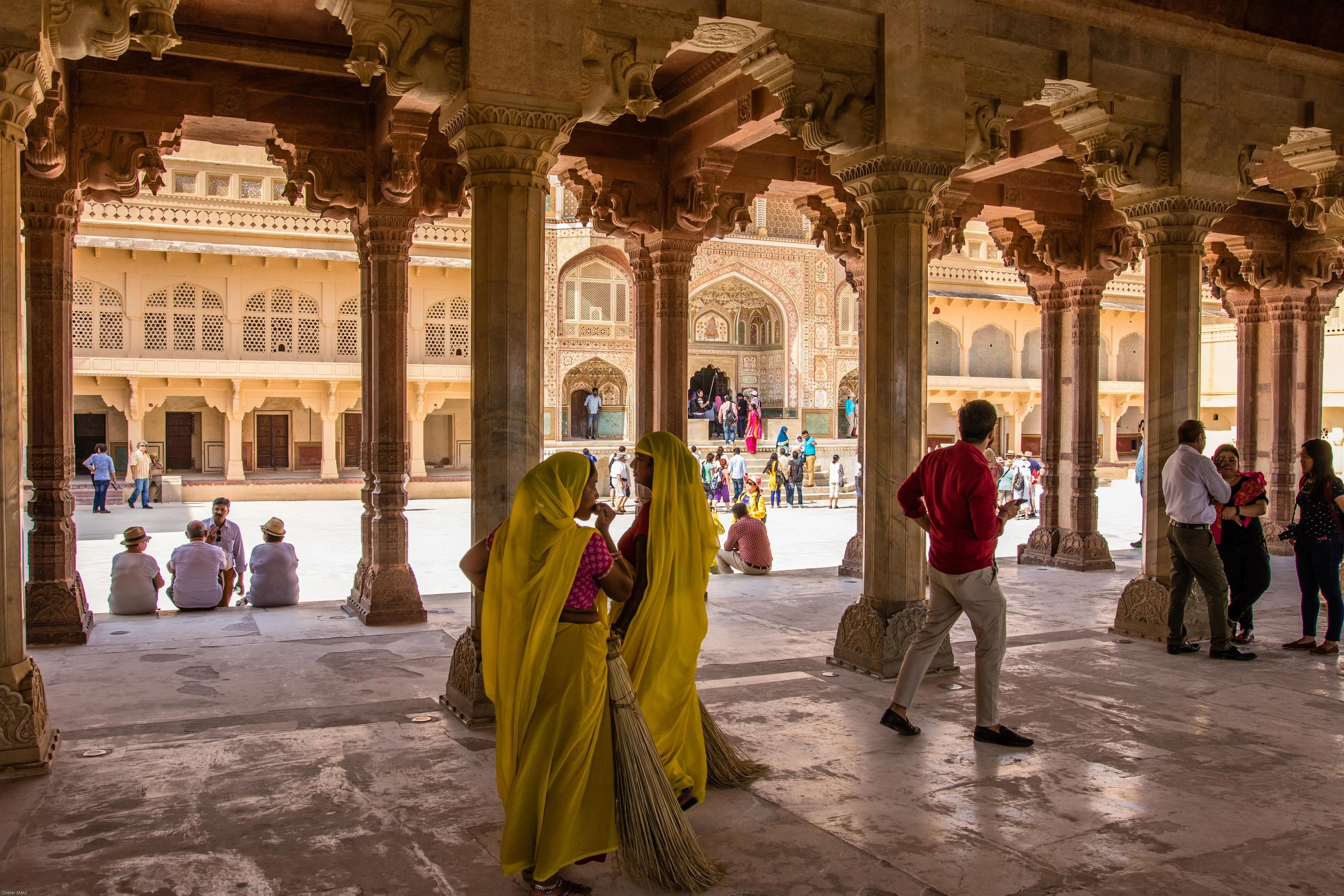



Why India requires a different approach to planning
India is not a destination you can wing like a weekend in a European capital. Distances between regions often translate to dozens of hours on trains or the road, infrastructure varies drastically from one state to the next, and certain zones like Kashmir or the northeastern border regions are subject to specific travel restrictions or permits.
An agency that knows the country well understands how to navigate local hurdles, including transit strikes, frequent rail delays, and site closures due to religious or weather-related events. This level of on-the-ground knowledge is what separates a seamless itinerary from a trip defined by logistical headaches.
Specialized agencies vs. generalists: how to choose
Two types of operators dominate the market for India.
Subcontinent specialists (who often also handle Nepal or Sri Lanka) build custom itineraries supported by a network of local contacts. They know the optimal weather windows for every region, understand exactly when to avoid a specific road during the monsoon, and typically provide a dedicated driver-guide for the duration of your stay.
Generalist agencies offer more standardized package tours, often centered on the Delhi-Agra-Jaipur circuit, with larger groups and less flexibility in the daily pace.
India specialist: the right choice if
- You want to venture beyond the classic circuits, such as off-the-beaten-path Rajasthan, Kerala, or the Northeast.
- Your trip spans more than 2-3 weeks and covers multiple regions.
- You want high-touch support, like a dedicated driver or private local guide.
Generalist: sufficient if
- You are doing a standard, short trip like the Golden Triangle, lasting 8-10 days.
- Budget is your primary concern.
- You are comfortable traveling in a structured small group.
The importance of your local driver-guide
In India, traveling with a private chauffeur is the most common way to handle multi-city circuits. This is a central component of both your budget and the overall quality of your trip.
A skilled driver knows the shortcuts, anticipates gridlock in major cities, and adjusts the pace based on the group's energy levels. A reputable agency will share the name or at least the profile of your assigned driver in advance and confirm if the same person stays with you for the entire journey.
Pro tip: Always confirm that your vehicle has air conditioning, which is essential for basic comfort outside of the cooler season from November to February.
Seasonality: the factor that changes everything
The Indian climate varies wildly by region. A competent agency must adapt your route to the time of year you are traveling rather than suggesting a one-size-fits-all itinerary.
- The monsoon season from June to September impacts the north and south differently and can make roads in Kerala or Rajasthan difficult to navigate.
- November through March is the peak season for the north, including Rajasthan, Delhi, and Agra, making it the most expensive time to travel and the most crowded at major sites.
- Southern India, including Kerala and Tamil Nadu, remains accessible for much of the year, following a different climatic rhythm than the north.
If an agency suggests the exact same itinerary regardless of your departure date, take it as a red flag.
Visas, paperwork, and health: how agencies can help
Most US travelers require an e-visa for India, which must be requested online before departure. While some agencies provide guidance or assistance with the application process, the responsibility remains yours.
Some agencies include advice on recommended vaccinations or malaria prophylaxis based on the regions you are visiting. While this is helpful information, it should never replace a consultation with a travel clinic or your primary care physician.
Typical costs for an India circuit
Prices vary significantly based on your level of accommodation, ranging from guesthouses to mid-range hotels or converted palaces, as well as the mode of internal transport and the length of your stay.
| Type of circuit | Estimated range |
|---|---|
| Classic 8-10 day circuit, mid-range lodging | 800 to 1,500 EUR (approx. $875-$1,640) per person |
| Custom itinerary with private driver, 2-3 weeks | 1,500 to 3,500 EUR (approx. $1,640-$3,825) per person |
| High-end stay (palace hotels, private dedicated guide) | From 3,000 EUR (approx. $3,280) per person |
These figures generally exclude international airfare, which is usually booked separately. Always verify if the price includes entrance fees for sites, as the Taj Mahal and various Rajasthan forts charge significantly higher rates for foreign tourists than for Indian citizens.
Frequently asked questions
Do I need a special permit to visit Kashmir or Northeast India?
How can I verify that the agency has a genuine local representative in India rather than just an office in France?
- Search for this name in independent traveler reviews
- Check if it appears in the legal notices on your quote
- Ask how many years they have been working together