
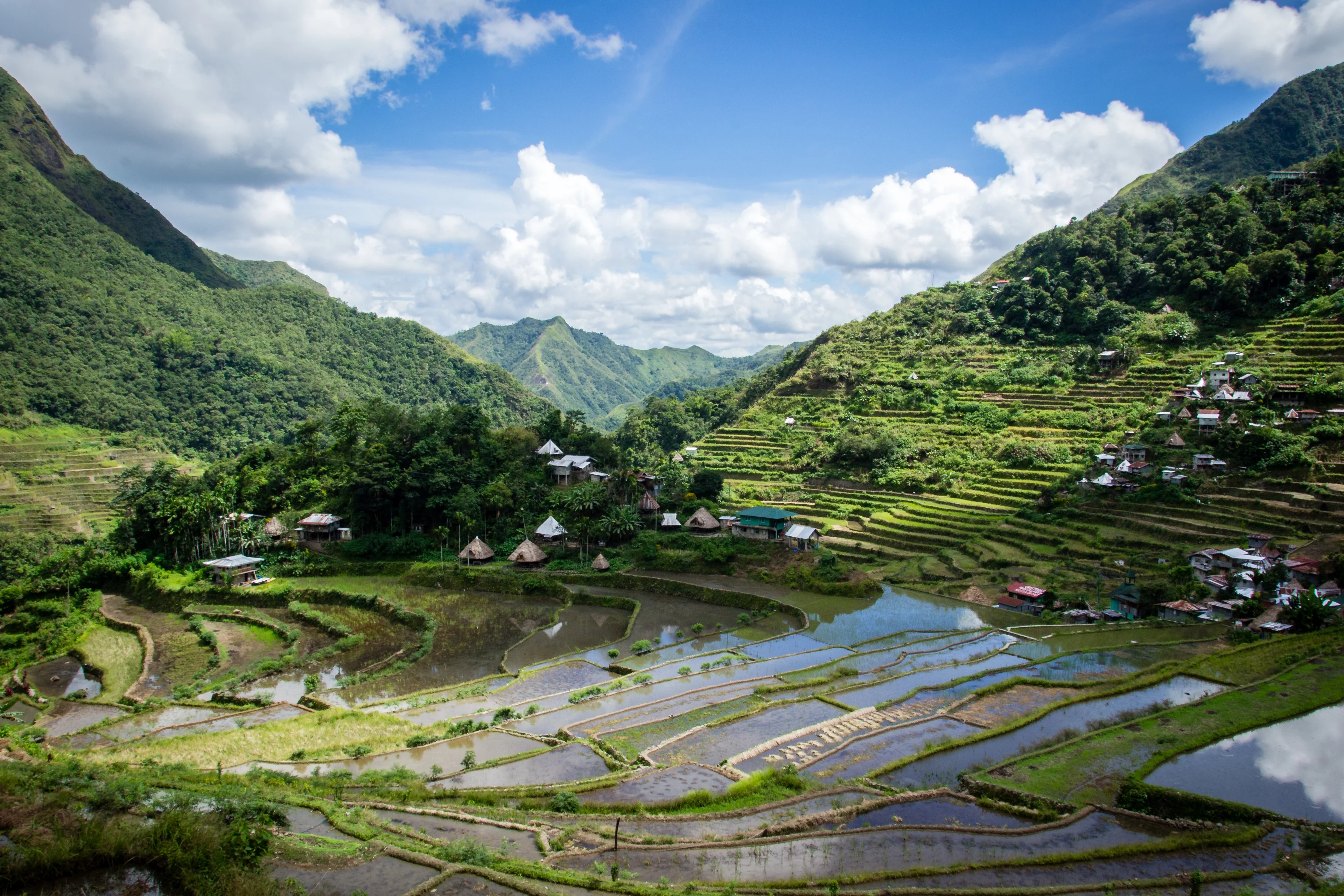













Rizières den terrasses de Banaue

Top 5 Travel Agencies for Asia Ranking 2026

Planning a trip to Asia is not like booking a weekend in Europe. You have to navigate complex visa requirements, massive travel distances, and regional language shifts. A travel agency specializing in Asian itineraries helps you avoid common rookie mistakes. On Avygeo, real feedback from travelers who have been there shapes these rankings to help you make an informed choice.

Partner

#1 Evaneos +21 recs 4.8/5

Custom trips designed by local agencies

Evaneos connects travelers directly with local agencies from Japan to Uzbekistan, including stops in Vietnam, India, and Bhutan. These agents live in their respective destinations and build custom itineraries based on your pace and interests. This approach to travel also keeps your spending within the local economy instead of funneling it toward large international organizations.

Read reviews View offers
Partner

#2 Agoda +18 recs 4.6/5

Born in Asia, the expert in Asian accommodations.

Founded in Singapore and later becoming part of the Priceline Group, Agoda built its reputation on deep knowledge of the Asian market. The site leverages local connections to offer an extensive selection of hotels across the region, backed by a best-price guarantee. Flights, airport transfers, and car rentals round out your booking options, supported by 24/7 customer service.

Read reviews View offers
Partner

#3 Comptoir des Voyages +5 recs 4.8/5

Total immersion is our travel signature.

Comptoir des Voyages crafts custom itineraries in Asia with country-specific specialists who remain your single point of contact before and during your trip. The agency prioritizes authentic lodging and local interactions over tourist-heavy traps. On the ground, the Luciole app (which works offline) and 24/7 support provide security at every step of your journey.

Read reviews View offers
Partner

#4 Ovoyages 0 rec 3.5/5

Curating the most beautiful destinations for over 20 years.

Ovoyages offers Asia through several formats, including resort stays, guided or private tours, and combination trips that pair beach time with cultural exploration. Thailand is a highlight of their catalog, with properties selected in Phuket, Khao Lak, and Bangkok. Customer service is available several days a week to assist with booking and trip support.

Read reviews View offers

#5 Shanti Travel 0 rec

Custom-tailored trips across authentic Asia

Shanti Travel is a tour operator specializing in custom trips to Asia, founded in 2005 by enthusiasts of India and the Asian continent. The company designs personalized itineraries, focusing on local encounters, authenticity, and responsible tourism.


Shanti Travel offers immersive experiences, far from standard tourist circuits, to explore Asia in a more human and flexible way.

Write a review View offers

Visa rules change drastically from one country to the next

Asia isn't a unified travel zone. A trip that crosses multiple borders often involves several different visa requirements.

Japan does not require a visa for short tourist stays for US passport holders, while China typically requires a formal consular application with supporting documentation. Vietnam and Cambodia operate on an e-visa system you must secure online before departure, and India uses a similar system but with its own specific processing timelines.

These rules shift regularly based on bilateral agreements. A travel agency that actually specializes in Asia should be able to tell you, country by country, exactly what applies to your nationality at the time of booking, rather than providing generic information copied from a website.

Keep in mind: If your trip covers three countries or more, ask the agency for a visa summary by stage, including processing times. This is often where the real risk of travel delays lies.

When to book to avoid the price spikes common in Asia

Monsoon and dry seasons in Southeast Asia

The monsoon hits a large part of Southeast Asia between June and October, which can cause disruptions to internal transport and certain excursions.

The dry season, from November to April, remains the most popular period and therefore the most expensive.

Peak seasons in Japan

In Japan, the cherry blossom season in spring and the fall foliage drive up rates for accommodations and high-speed trains. The Japanese Golden Week, which runs from late April to early May, also overwhelms local infrastructure.

The Lunar New Year

Another useful benchmark is the Lunar New Year (Vietnam, China, and parts of Southeast Asia), which causes many businesses to close temporarily and puts significant strain on domestic transportation. Booking a trip during this period requires an agency that understands these local constraints.

Generalist vs. Country-specific agencies: What is the difference?

Asia covers vastly different realities. Southeast Asia, East Asia, and South Asia do not share the same languages, infrastructure, or customs.

An agency positioned on a single country (Japan, Vietnam, India) often has a tighter network of local contacts and a granular knowledge of internal transport, which can be complex to combine on the ground (trains, domestic flights, ferries).

A generalist "Asia" agency may cover more destinations, but often with a shallower level of detail for each country. The right move is to verify how long the agency has been working in the area and if they have an English-speaking contact on the ground.

  • Check if the agency provides a local contact in case of an emergency, rather than just a customer service hotline in the US.
  • Ask if your guides speak English or only the local language.
  • Inquire about the planned mode of internal transport and its actual reliability during your chosen travel window.

Specific pitfalls for circuits in Asia

Distances are often underestimated. A journey marked as "close" on a map can represent several hours of driving or train travel, with a direct impact on the actual pace of your trip.

Another point of vigilance: domestic flights in Southeast Asia or India experience more frequent delays than standard domestic lines in the US. A trip scheduled too tightly between two stages leaves little room for error if there is a delay.

Finally, some rural or island accommodations apply single-room supplements that are higher than what you might see in the US, due to a lack of local alternatives. Have this point confirmed before signing, especially for small group or solo trips.

Local ground handlers: The advantage of on-site support

Unlike much of Europe, English is not always spoken fluently outside of major tourist zones. This language barrier makes local support particularly valuable in Asia.

Many international agencies work with a local ground handler, which is the agency on the spot that manages the logistics of your stay. Ask if this ground handler is explicitly named in your contract and how to reach them if you run into trouble once you arrive.

Frequently asked questions

What is the average cost of a two-week organized tour in Asia booked through an agency?
Expect to spend between 2,000 and 3,500 euros (about $2,150 to $3,750) per person, excluding international flights, for a guided tour in Southeast Asia or India. Japan is more expensive, often exceeding 3,000 euros (about $3,200) for the same duration due to the cost of high-speed trains and accommodations. A custom trip with a private guide and luxury hotels can easily double this budget. Always request a quote that details domestic flights, transfers, and meals, as these are often the factors that cause the final price to vary from one agency to another.
What travel agency scams should I watch out for specifically when traveling in Asia?
Watch out for websites charging for an e-visa at a rate significantly higher than the official government price, which is common for Vietnam or Cambodia. Another frequent trap is an agency that subcontracts to a local operator not identified in the contract, making them difficult to reach if you run into issues on the ground.
  • Check the official government website for the actual e-visa cost
  • Demand the name of the local operator in your contract documents
  • Avoid any deposit requested in cash or via direct wire transfer to an individual
Is specific travel insurance required for a tour in Asia?
Unlike the Schengen Area, no major Asian country requires travel insurance to issue a standard tourist visa. However, insurance that includes medical repatriation is strongly recommended. Private hospital costs can be high in Japan or Singapore, and medical evacuation from rural or remote island areas is expensive. Also, check if your itinerary includes transit through a country that requires a yellow fever vaccination certificate, a requirement for some travelers arriving from high-risk areas before entering India or Indonesia.
How far in advance should I book an Asia tour during peak travel seasons?
For trips during the Japanese Golden Week or the Lunar New Year, you should ideally book 6 to 9 months before departure. Japanese high-speed trains and domestic flights in China or Vietnam fill up very quickly during these periods. For the dry season in Southeast Asia (November to April), a lead time of 3 to 5 months is generally sufficient, except for the most popular accommodations. Outside of peak season, some agencies accept bookings 6 weeks in advance, but the best time slots for English-speaking guides go first.
What documents should I have ready before booking an Asia tour with an agency?
Most Asian countries require a passport valid for at least 6 months beyond your return date, which is a stricter rule than in Europe. You should also prepare passport-style photos that meet local standards for certain consular procedures, particularly for China, and sometimes proof of a return flight or onward travel. A reputable agency will provide a precise list for each country, as these requirements differ significantly between a Vietnamese e-visa and the more involved Chinese consular process.