Singapore, the City-State That Defies All Logic
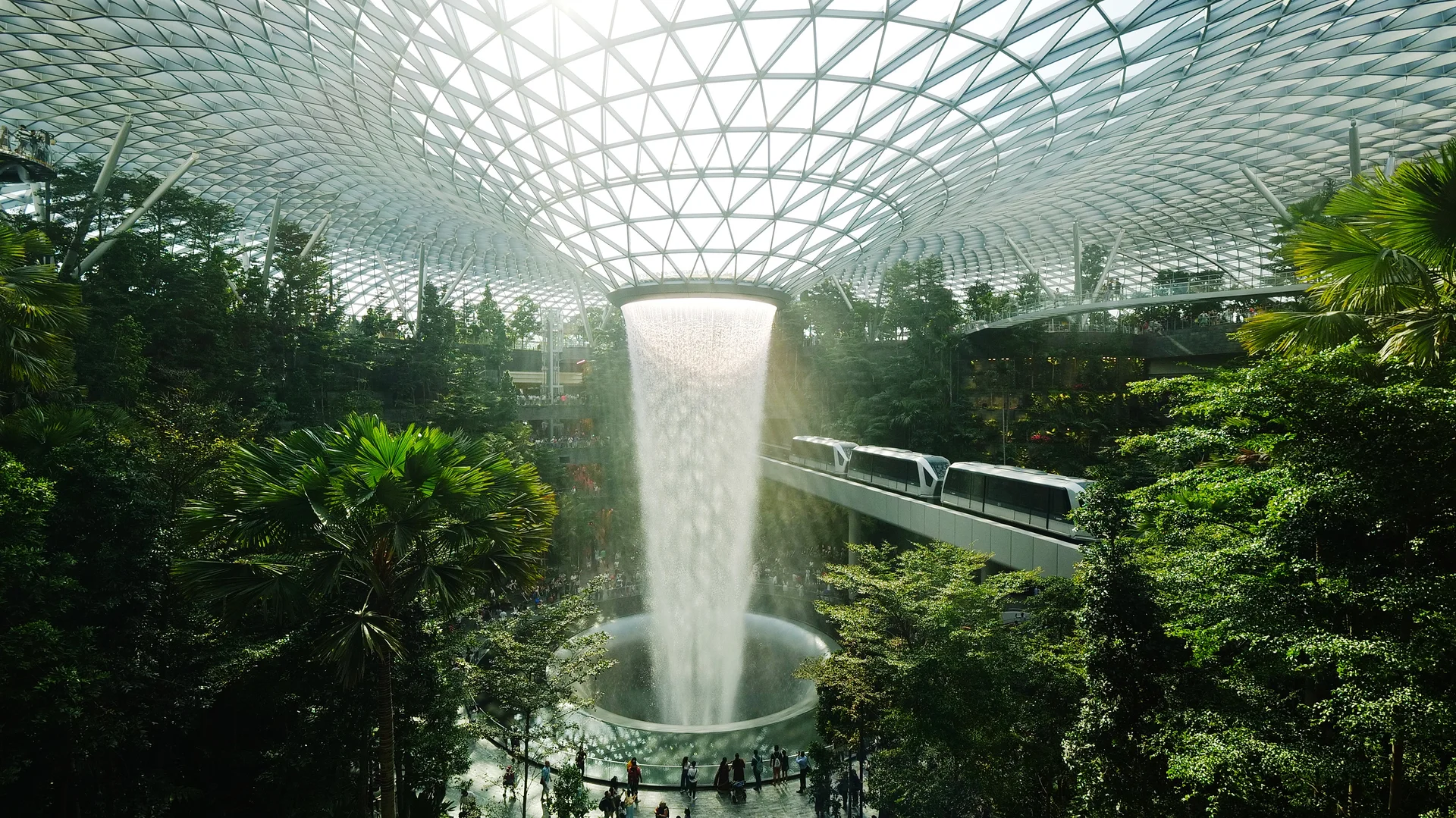
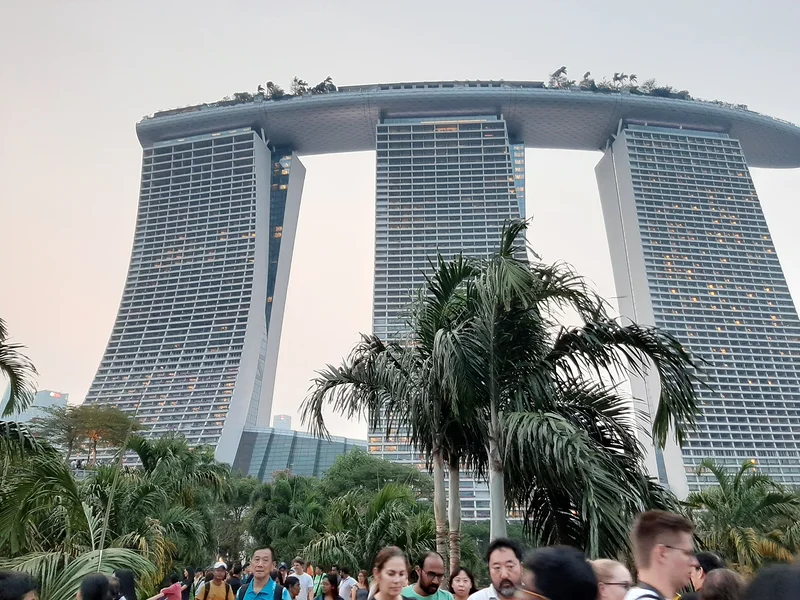
An airport with a butterfly garden and the world's tallest indoor waterfall. Fifty-meter metal trees that light up after dark. An infinity pool straddling three skyscrapers. Singapore looks like what the future would be if someone handed it to an urban planner with a perfectionist streak. This city-state of 730 square kilometers packs more than 5.9 million people into a space that never feels suffocating.
Singapore: Asia for People Who Don't Like Chaos
If you're after the raw energy of Bangkok or the unpredictable back alleys of Hanoi, Singapore isn't your city. It's the anti-backpacker destination. Everything works, everything runs on time, everything is spotless. Some people find that sterile. Others see it as the perfect entry point into Asia, especially for a first trip with kids or anyone who gets anxious about the unexpected.
Singapore is a natural fit for families, business travelers tacking on a few extra days, food lovers, and anyone obsessed with contemporary architecture. It will disappoint budget backpackers and travelers chasing off-the-beaten-path experiences. English is everywhere, the transit system is genuinely excellent, and the city is extremely safe. The one real obstacle: the heat and humidity are relentless and will slow you down considerably.
High Costs, Offset by Street Food
Budget around S$150 to S$230 per day (roughly $110-$170 USD) for a comfortable stay: a 3-star hotel runs about S$120-S$180/night ($90-$135), a meal at a hawker center is S$4-S$8 ($3-$6), and a sit-down restaurant will run S$25-S$50 ($18-$37). The MRT keeps transit costs low at S$1-S$2.50 per ride ($0.75-$1.85). Paid attractions add up fast: the Gardens by the Bay conservatories run about S$40 ($34*), and Universal Studios is around S$90 ($67).
The Future Already Has an Address
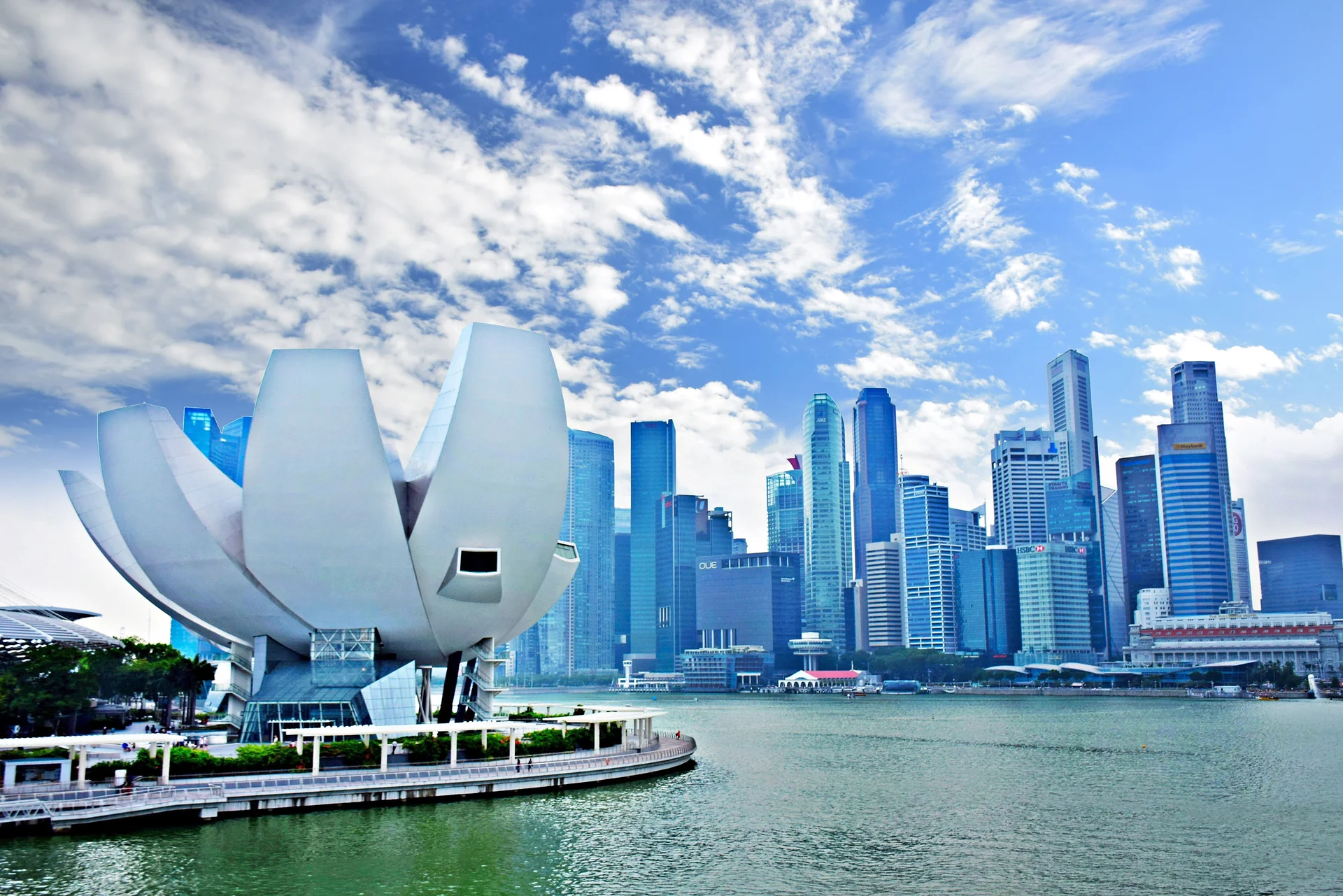
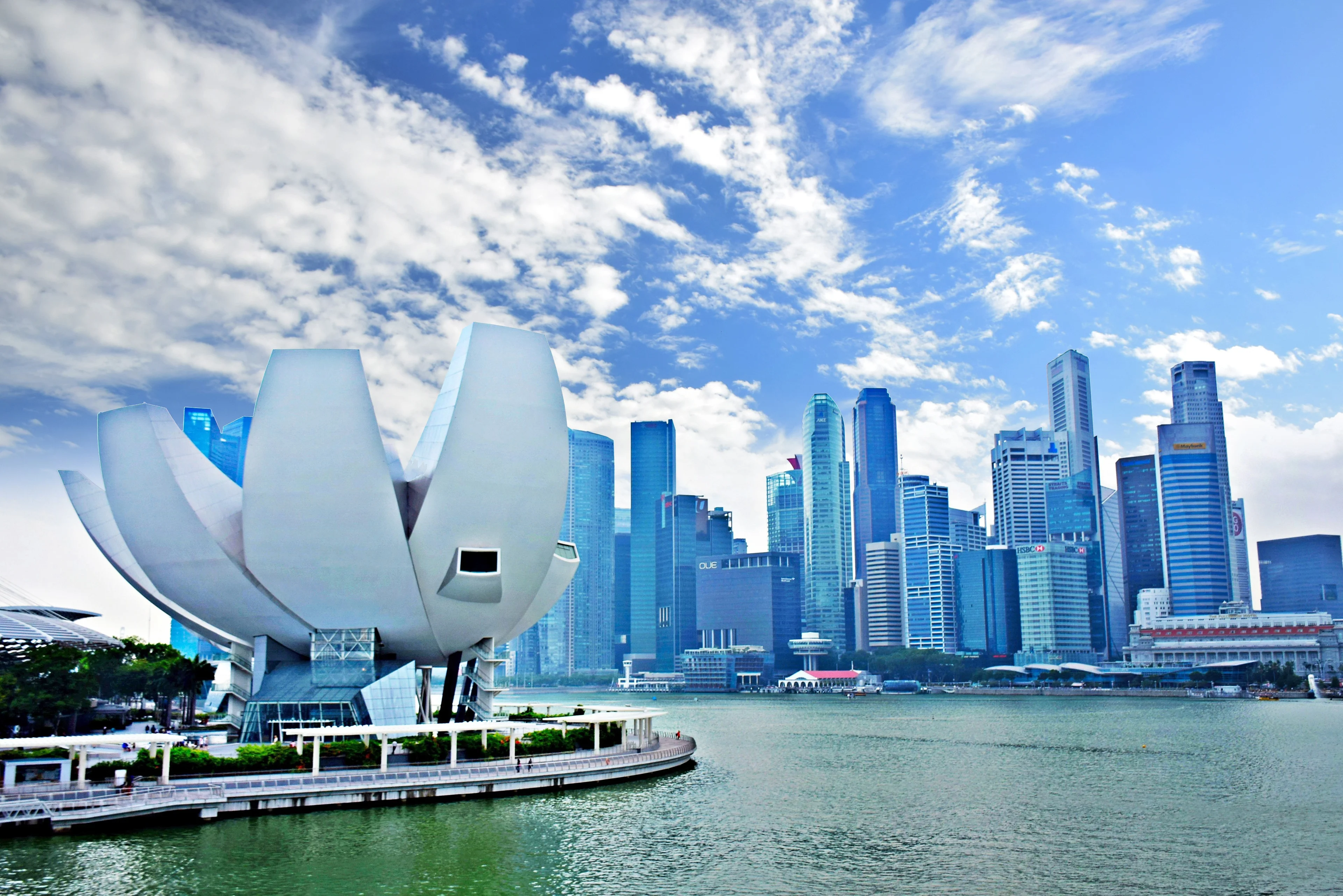
The Marina Bay skyline captures Singapore's outsized ambition. Three curved towers support a 340-meter platform that cantilevers 65 meters beyond the building's edge: Marina Bay Sands, designed by architect Moshe Safdie, looks like it shouldn't be standing. The infinity pool on top is reserved for hotel guests, but the SkyPark Observation Deck gives you the full city panorama for around S$65 ($48).
Below it, Gardens by the Bay is the physical embodiment of Singapore's "city in a garden" philosophy. The Supertrees, metal structures ranging from 25 to 50 meters tall and covered in living plants, generate solar energy and collect rainwater. Every evening at 7:45 PM and 8:45 PM, the Garden Rhapsody light-and-sound show turns them into something out of a sci-fi film. The OCBC Skyway walkway threading between the trees gives you a vertiginous view of the whole park.
The Air-Conditioned Conservatories
The Flower Dome, the largest glass greenhouse in the world, recreates a Mediterranean climate complete with centuries-old olive trees and African baobabs. The Cloud Forest houses a 35-meter indoor mountain draped in high-altitude tropical vegetation, with an artificial waterfall cascading down its face. When it's 95°F outside, stepping into these 73°F spaces feels like a genuine rescue.
Three Cultures, a Few Subway Stops Apart
The real pulse of Singapore isn't in its towers. It's in its historic neighborhoods. In half a day on foot, you'll move from a Chinese quarter to an Indian one to a Malay one.
Chinatown
Chinatown lines its colorful shophouses along Pagoda Street. The Buddha Tooth Relic Temple houses a 420-kilogram gold stupa. A few blocks away, the Hindu temple Sri Mariamman, the oldest in the city, presents a facade covered in sculpted multicolored deities.
Little India
Step off the MRT at Little India and the sensory shift is immediate: jasmine garlands, bright saris, pyramids of spices. On Sundays, thousands of migrant workers fill the streets on their day off, and the neighborhood takes on a completely different energy from the rest of Singapore.
Kampong Glam
Kampong Glam was once the sultan's quarter. The Masjid Sultan mosque, with its gold dome, remains the neighborhood's centerpiece. But it's Haji Lane that draws most visitors today: a narrow alley packed with local designer boutiques, coffee shops, and murals that make it the most photographed street in the city.
Friendly tip: Head to Little India on a Sunday evening to see the neighborhood at its most authentic. It's about as far from Singapore's polished image as you'll get.
Sentosa: The Entertainment Island
Sentosa, a former British military base and later a Japanese prisoner-of-war camp, has been fully reinvented as a leisure destination. Universal Studios Singapore is a compact version of the US parks, good for a full day. The Singapore Oceanarium, recently expanded, ranks among the largest aquariums in the world.
The artificial beaches are pleasant enough for relaxing, but don't compare to what you'd find in Thailand. The 450-metre zip line over Siloso Beach is a quick adrenaline hit if you're in the mood.
Eating in Singapore: The Great Flavor Mashup
Singaporean food reflects the three cultures that built the city. Hawker centers, open-air or covered food halls with dozens of stalls each specializing in one dish, are where locals actually eat. Maxwell Food Centre in Chinatown and Lau Pa Sat near Marina Bay are among the most well-regarded.
Hainanese chicken rice, poached chicken served over rice cooked in the broth, and laksa, a coconut milk and spice noodle soup, fight over the title of national dish. Char kway teow, flat rice noodles stir-fried with shrimp and Chinese sausage, shows the Hokkien influence. For something messier, chilli crab is eaten with your hands in a spiced tomato sauce. At breakfast, kaya toast (bread spread with coconut jam and served with soft-boiled eggs) pairs with kopi, a local coffee roasted with butter and sugar.
When to Go to Singapore
Singapore sits on the equator, which means temperatures hold steady around 86-90°F year-round with humidity rarely dropping below 80%. The monsoon season from November through January brings heavy afternoon downpours. February through April is slightly drier and generally the most comfortable time to visit.
Avoid the Formula 1 Grand Prix weekend in September if you're not attending the race: hotel rates spike 30 to 50%. Chinese New Year in January or February and Deepavali in October or November both bring spectacular energy to the ethnic neighborhoods, but also serious crowds.
Getting to Singapore
Changi Airport serves more than 100 destinations and has been ranked the world's best airport multiple times. Its Jewel terminal, featuring a 40-metre indoor waterfall surrounded by gardens, is worth a visit on its own. From the US East Coast, expect roughly 18-20 hours of total travel time (usually with one connection); from the West Coast, around 17-19 hours. Nonstop options from the US are limited, but Singapore Airlines is consistently one of the best carriers in the world for this route. Round-trip fares typically run $900-$1,800 USD depending on season and routing.
No visa is required for US passport holders staying fewer than 90 days. You will need to complete an electronic arrival card before landing.
Getting Around Singapore
The MRT covers the city across six lines, with stations roughly every 500 meters in the center. Fares run S$1 to S$2.50 ($0.75-$1.85) depending on distance. You can tap in with a contactless credit or debit card, or pick up a rechargeable EZ-Link card at any station.
Taxis and rideshares (Grab is the dominant app here) are reasonable by US standards: a cross-town ride runs about S$15-S$25 ($11-$18). Walking is the best way to explore the historic neighborhoods, heat notwithstanding.