Visiting Mallorca
Two islands in one. In the north-west, the Serra de Tramuntana, a Unesco World Heritage site, drops into the sea in cliffs, with olive terraces, dry-stone walls and villages of honey-coloured stone. To the south and east, the coast opens into coves of turquoise water between rocky points.
In between lies a plain of almond trees and windmills. And Palma, a real city, its cathedral set right on the harbour. You will come for the sea, and come back for the mountains.
You will love it if
- You want the sea in the morning and the mountains in the afternoon
- You miss a lively city after three days on the beach
- You enjoy walking among olive trees and dry-stone walls
Give it a miss if
- You are looking for a deserted island in August
- Hairpin mountain roads wear you out
- Big hotel blocks spoil a landscape for you
The must-sees
-
1 The Sóller train +7 recs
A wood-and-brass train has linked Palma and Sóller since 1912, in an hour, through thirteen tunnels and over a viaduct above the orchards. A ticket costs €23 one way and €30 return in 2026. Sit on the right going up: that is the valley side. In Sóller, an old tram runs down to the port through the orange trees.
-
2 The Serra de Tramuntana on foot Hiking
The GR 221, the Dry Stone Route, crosses the mountains from end to end, from refuge to refuge. Even without walking it all, keep a day for the stretch between Deià and Sóller, along olive terraces and old mule tracks. Walk from March to May or in October: in summer, the heat makes the mountains hard going by ten in the morning.
-
The north-eastern road ends at a lighthouse, above two hundred metres of cliff. From 15 May to 18 October 2026, it is closed to cars from 10 am to 10 pm: take the shuttle bus from Port de Pollença, or drive through before ten. The Es Colomer viewpoint, halfway along, gives the widest view of the peninsula.
-
4 Almond blossom February
In late January and February, the fields of the central plain and the south turn white almost overnight, as thousands of almond trees flower before their leaves. Drive between Santa Maria del Camí, Sineu and Petra, on the small inland roads. Hotels are at their cheapest of the year.
-
Beneath Porto Cristo, a kilometre of galleries hung with formations ends at an underground lake, Lake Martel. The visit finishes seated on tiered benches for a short classical concert played from a lit boat. Book a time slot: coach groups arrive from mid-morning.
The classic mistake
Planning a famous cove for the afternoon in summer. Caló des Moro or Cala Varques are full before ten in the morning in July and August, and the car parks are often full too. Set off early, or aim for the coves you can only reach on foot: you will have room, and clearer water.
Our itineraries in Mallorca
| Length | Route | What you see |
|---|---|---|
| Long weekend (4 days) | Palma › Valldemossa › Deià › Sóller | City, mountains, port |
| 1 week | Palma › Sóller › Pollensa › Alcúdia › Cala d'Or | Mountains, north, coves |
| 10 days | Palma › Sóller › Pollensa › Artà › Manacor › Santanyí | The whole island |
Mallorca is an hour and a half by road from end to end, mountains aside. Keep two bases rather than one: one in the west, in Palma or Sóller, and one in the east or north. You save the back-and-forth, and you see both sides of the island.
When to visit Mallorca
| Appeal | Season | Temperatures | Sea | Crowds and prices |
|---|---|---|---|---|
| WinterDec. to Feb. | 6 to 16 °C | 14 to 15 °C | Low | |
| SpringMar. to May | 10 to 24 °C | 15 to 19 °C | Medium | |
| SummerJun. to Sep. | 20 to 31 °C | 22 to 26 °C | High | |
| AutumnOct. and Nov. | 12 to 24 °C | 19 to 23 °C | Medium |
Our advice
Aim for May, June or late September: the sea is already or still warm, the coves have room to breathe, and the trails are not scorching. In winter, many coastal hotels close; stay in Palma or Sóller, which live all year round.
Getting to Mallorca
-
By direct flight The simplest
Palma airport, eight kilometres from the centre, has direct flights from London and most regional UK and Irish airports, in around two and a half hours. In summer, the choice doubles.
-
By ferry from Spain With your car
Ferries link Palma with Barcelona, Valencia and Dénia all year round, by day or overnight. It is the option if you are driving through Spain.
-
By bus to Palma The cheapest
A direct line links the terminal with central Palma in a quarter of an hour, and seasonal lines serve the main resorts on the coast.
Staying a week on the coast: a flight, a car at the airport, and you are at your cove within the hour. In July and August, book the car when you book the flight, as the fleet runs out.
Getting around Mallorca
Hire a car: buses link Palma well with the villages, but not with the coves or the trailheads. Away from the mountains, the roads are good and the island is quick to cross. In the Serra de Tramuntana, the road to Sa Calobra is one hairpin after another: allow twice the time shown.
Good to know
In Palma, you will want to leave the car in a car park: you will explore the old town on foot, and traffic there is restricted. In summer, if you want to see Formentor in the middle of the day, you will take the shuttle from Port de Pollença, as the road is closed to cars.
What to eat in Mallorca
- Ensaïmada: a spiral pastry dusted with icing sugar. You will have it for breakfast, plain or filled with pumpkin jam.
- Sobrassada: a paprika pork sausage so soft it spreads. On toasted bread, with a drizzle of honey.
- Pa amb oli: country bread rubbed with tomato and drizzled with olive oil, served with Mahón cheese or ham.
- Tumbet: layers of fried aubergine, potato and pepper, topped with tomato sauce.
- Frit mallorquí: a sauté of offal, potatoes and vegetables, the dish of market days.
- Hierbas de Mallorca: an anise liqueur with mountain herbs, served after a meal, dry or sweet.
At the table
You will dine late here, rarely before 9 pm. To eat like the locals, you will go to a village market on its fair day, Sineu on Wednesdays for example, and you will avoid the menus with photos along the seafront.
Where to stay in Mallorca
| Area | What to do there | Worth knowing |
|---|---|---|
| Palma | Old town, restaurants, nightlife | Lively all year round |
| Sóller and the Tramuntana | Hiking, villages, the train | Few beaches |
| Pollensa and Alcúdia | Bay, families, Formentor | Long sandy beaches |
| The east coast | Coves, caves, Cala Ratjada | Rows of big hotels |
| The south-east | Cala d'Or, Santanyí, Es Trenc | The finest coves |
How much does a trip in Mallorca cost?
| Trip | Length | Budget per person |
|---|---|---|
| Budget (hostal, buses, markets) | 7 days | €550 to €850 |
| Comfort (4-star hotel, car, restaurants) | 7 days | €1,200 to €1,900 |
| Luxury (5-star hotel, boat trips, fine dining) | 7 days | €2,800 to €5,000 |
- The season: July and August often cost twice the May price for the same room.
- The eco-tax: a tourist tax is charged per person per night at your hotel. It rises with the category and in summer, and halves from the ninth night.
- The car: essential outside Palma, and dearer if you book late in summer.
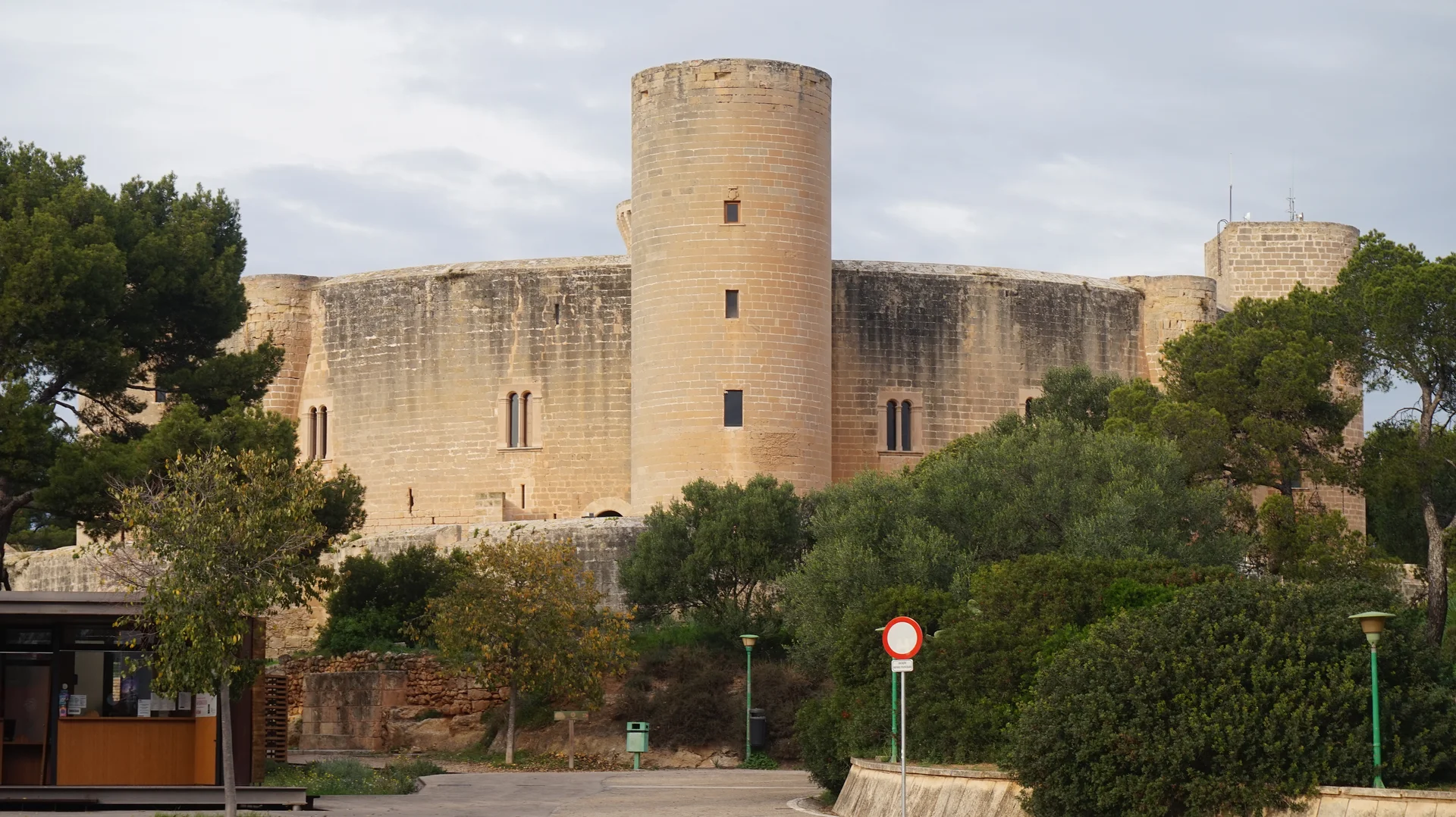
- Sights: the cathedral costs €25 including its terraces; Bellver Castle is free on Sundays.
- Meals: a lunchtime set menu in a village costs a fraction of a dinner on the harbour.
Traditions and way of life in Mallorca
People speak Catalan, in its Mallorcan form, and Spanish. A bon dia at the bakery always brings a smile. In January, the feast of Sant Antoni lights bonfires in the villages, with devils and music; in May, Sóller re-enacts a pirate landing at Es Firó.
The inland villages keep their market day and their windmills. The siesta is real: between 2 and 5 pm, many shops close.
Local custom
Do not walk around in swimwear or bare-chested in the streets of Palma and several resorts: it is frowned upon, and sometimes fined. Keep a T-shirt for leaving the beach.