
Where to stay in Almeria: the 6 neighborhoods to know in 2026
Photo : Petite-Terre
In Almería, four hotel beds out of ten are not in the city. They sit in El Toyo, five large seafront hotels built 13 kilometres from the cathedral. Booking on price and photos often leads there, and you wake up at the beach when you came for the old town.
The centre itself is tiny: 558 metres separate the cathedral from the Alcazaba, and the essentials fit between the two. It only rains 25 days a year here, which is to say the terrace will get used. Six areas follow, from the historic centre to the village of Cabo de Gata, which also belongs to the municipality.
Compare hotel prices in Almeria
In a hurry? Find the best accommodation deals in 3 clicks.
Compare live deals from Booking, Expedia, Agoda and other partners.
At a glance: our picks by traveller type
Pick the profile that suits you to head straight to the recommended neighborhood.
The neighborhood map in Almeria
Get your bearings on the neighborhoods and must-see sights before choosing where to drop your bags. Click a name to jump to its description.
The historic centre The old town
Monuments and tapas bars sharing the same streets
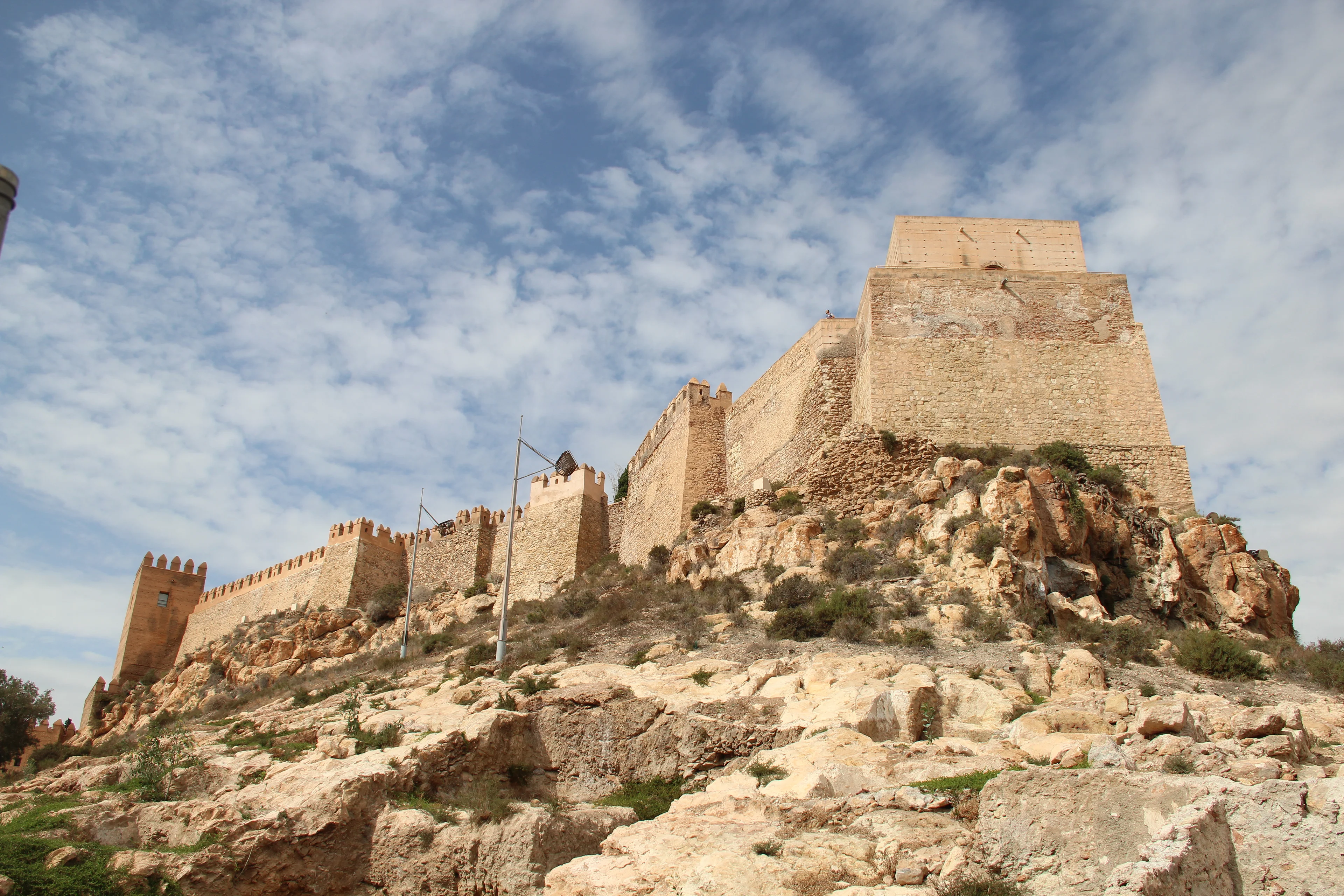
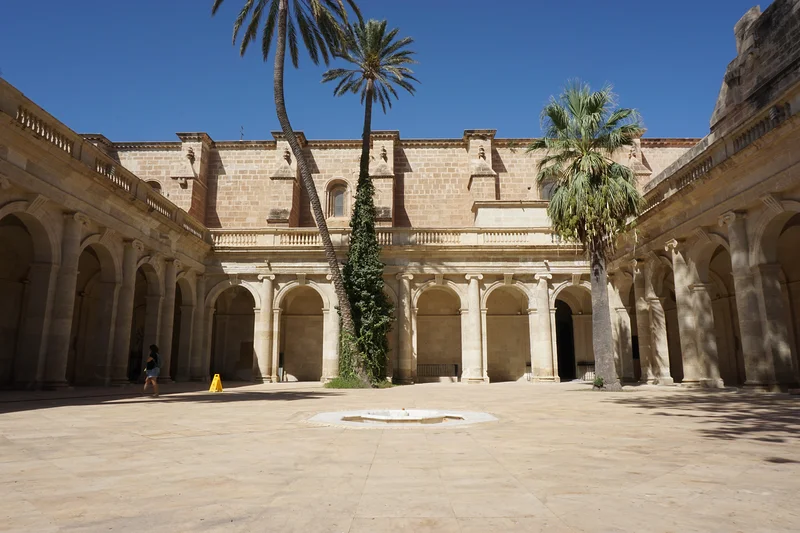
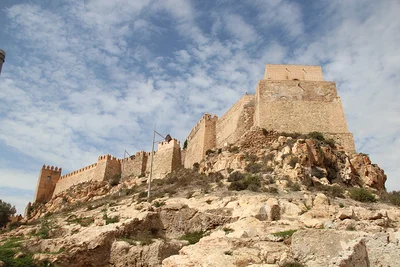
The cathedral is built like a fortress because it actually was one, designed to withstand pirate cannon fire. The Alcazaba watches over it all from its hill, 36 metres above the square. Winding alleyways packed with tapas bars weave between the two, stretching all the way to the Puerta de Purchena. The downside of the neighbourhood is its size, and it clears out on Sundays.
It is also where I was able to eat tapas with the best value for money between Malaga, Granada, Nerja and San Jose.
What to see & do in the neighborhood

Where to stay in this neighborhood
AIRE Hotel & Ancient Baths Luxury
A 22-room 4-star hotel on Plaza de la Constitución, featuring Arabic baths in the basement. The hotel is run by the bathhouse itself.
Hotel Catedral Mid-range
A 20-room 4-star hotel whose façade faces the cathedral's: just 29 metres separate them. Intimate scale, with the front desk facing the square.
Nixar Hostel Budget
The hostel opened in 2025 on calle Antonio Vico, with nearly 150 beds. It is the only one in the centre, and it sets no age restriction.
Pros
- Cathedral, Alcazaba, and tapas bars fit within 600 metres
- The widest range of places in town, from 1 to 4 stars
- The only hostel in the centre opened in 2025
Cons
- The neighbourhood clears out on Sundays
- The walk up to the Alcazaba is on foot, and it is a steep climb
- Parking here is paid
Oliveros, the train station, and the Rambla Around the train station
Arriving by train
The Rambla d'Almería cuts straight down to the sea as a long tree-lined avenue, with the combined train and bus station sitting right at its end. People stay here to catch an early departure or to skip renting a car. The archaeological museum marks the walk towards the centre, 1 kilometre away from the cathedral. The city centre's 1- and 2-star hotels cluster through these streets. Nobody books this neighbourhood for its looks.
Where to stay in this neighborhood
NH Ciudad de Almería Mid-range
A 4-star hotel with 138 rooms on calle Jardín de Medina, a size found nowhere else in this area. It has changed its name, and you may still come across it under the old one.
Hotel Embajador Budget
A 2-star hotel with 64 rooms on Calzada de Castro, operating since 1968. This is the family-run style of lodging from before the chains took over, located 5 minutes from the train station.
Hostal Estación Budget
A 1-star guesthouse with 18 rooms that lives up to its name, sitting right across from the docks. Open since 1966, it is the oldest place to stay in the city.
Pros
- Trains and buses leave from the same terminal
- The city centre's 1- and 2-star hotels are right here
- Flat terrain all the way to the cathedral
Cons
- A neighbourhood people pass through, with no particular charm
- A busy multi-lane avenue as your main view
- The archaeological museum is the only real sight here
El Zapillo, the city beach The seafront
The beach without leaving town
Zapillo is where the locals go for the sand, a long stretch backed by ordinary apartment blocks and fish bars. The public hostel run by the Junta sits 4 minutes from the shore, and 1.5 kilometres separate it from the historic centre. Nothing here is postcard-pretty, which keeps the rates low. You will not find upscale hotels here, as that is not what the neighbourhood is about.
Where to stay in this neighborhood
Albergue Inturjoven Almería Budget
The Junta de Andalucía hostel is on calle Isla de Fuerteventura. It offers rooms with 1 to 3 beds instead of dorms. It shows its prices upfront, which the town's hotels do not. The listed price is per person rather than for the entire night.
Hostal Delfín Verde Budget
A 2-star guesthouse with 14 rooms on calle García Cañas, open since 1995. It has no website of its own: you book by phone or online.
16:9 Suites Playa Mid-range
Kitchen-equipped apartments on calle Jaul, set up for a week-long stay. The management runs three properties in the city, with two located less than 800 metres from the sand.
Pros
- Just cross the avenue to reach the sand
- A public hostel that shows its prices
- Kitchen-equipped apartments for longer stays
Cons
- A seafront lined with characterless buildings
- No high-end hotels in this part of town
- The historic centre requires a 20-minute walk
Avenida del Mediterráneo The heights
The large hotels on the hill
This wide avenue is lined with hotels of 100 rooms and more, catering to conventions and families travelling by car. They sit high up at an elevation of 37 to 81 metres, compared to 19 metres at the cathedral. Walking back from the centre means a steady climb, which tells when the temperature rises. On the flip side, parking is straightforward.
Where to stay in this neighborhood
Elba Almería Business & Convention Hotel Mid-range
A 100-room 4-star hotel, the highest of the three at an altitude of 81 metres, which is 62 metres higher than the cathedral square. Geared towards conferences, with the meeting rooms to match.
Vértice Indalo Almería Mid-range
A 133-room 4-star hotel along the same avenue, and the lowest of the three at 37 metres. The walk back up from the centre is the most gradual here.
Sercotel Gran Fama Mid-range
An 88-room 4-star hotel right next to the shopping centre. The right fit when the car is part of the trip.
Pros
- Hotels ranging from 88 to 133 rooms, the largest in town outside El Toyo
- Each hotel comes with its own car park
- Direct access to the expressways heading north
Cons
- The walk back from the centre climbs 20 to 60 metres
- No monuments in the area
- 2 to 3 kilometres separate these addresses from the cathedral
El Toyo and Retamar 13 kilometres to the east
Resorts and swimming pools
Four out of every ten hotel beds in the municipality are here: five large properties built up from the sand between 2005 and 2008, with swimming pools and the beach right outside. It makes a comfortable base for exploring the natural park, but the streets are empty: a 20-minute drive takes you back to the old town. The sums are quick to do, depending on what you came for.
Where to stay in this neighborhood
Hotel Cabogata Beach Luxury
257 rooms and 5 stars: the only place in Almería at that level, and by far the largest in the municipality.
Barceló Cabo de Gata Mid-range
A 230-room 4-star hotel right on the beach, opened in 2005, the first of the five to set up here. Resort format, pools and buffets included.
Alegría Cabo de Gata Mid-range
A 210-room 4-star hotel open since 2007 on avenida Juegos de Argel. The next-door neighbour of the previous one, on the exact same strip of sand.
Pros
- Pools and the beach right outside your door
- The largest capacity in the city, and the only 5-star property
- The natural park starts just a few kilometres away
Cons
- Practically no street life outside the hotels
- The old town is a 20-minute drive away
- A neighbourhood built all at once, with no historic centre
The village of Cabo de Gata and the Salinas 21 kilometres away
Staying in the natural park
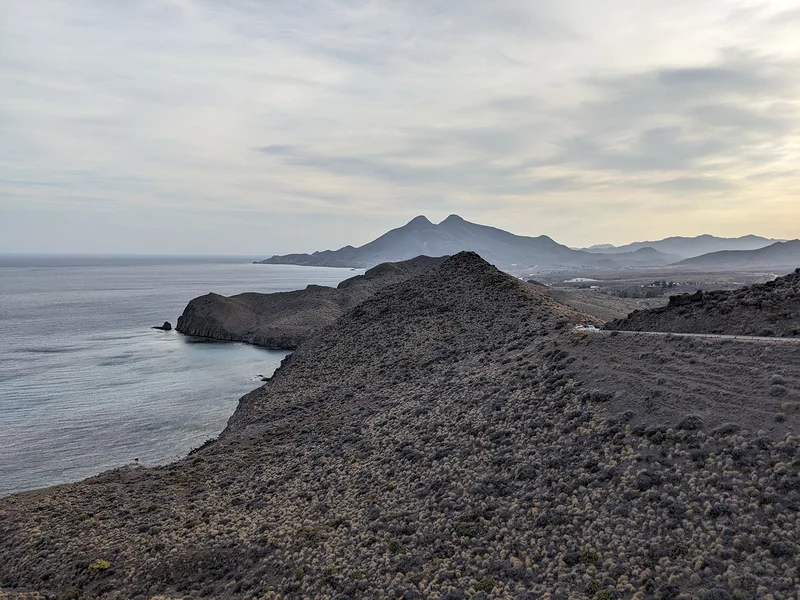
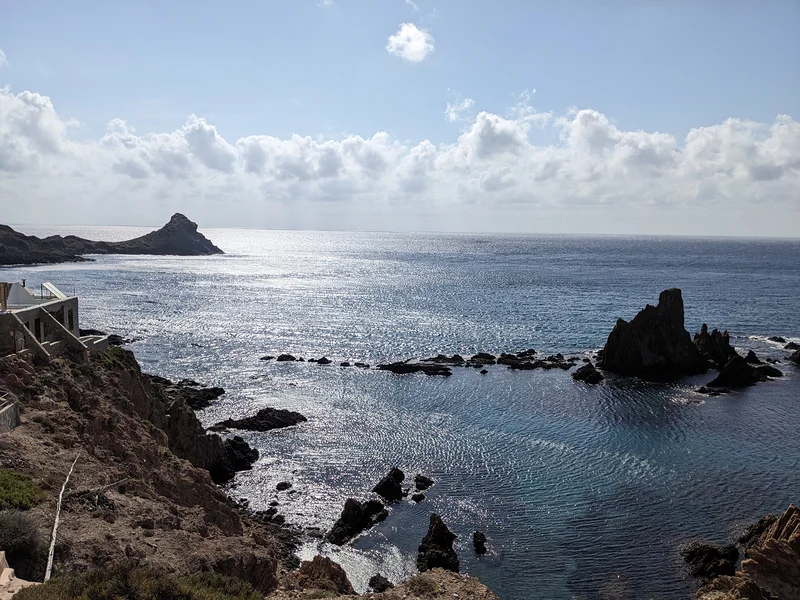
The village of Cabo de Gata belongs to the municipality of Almería, and the natural park starts right at its edge. In front stretch the salinas; behind, the road heads towards the lighthouse, 7 kilometres further south. The lodgings are small, simple, and open year-round. The downside is clear: no shade, few shops, and you need a car for every trip.
There are several beaches or coves where you can go snorkeling, with tons of fish to see, turquoise waters, fields of posidonia (I even ran into a moray eel), and so on. For those who like hiking, there are trails to explore, but be careful because it is very dry, so no trees and no shade!
What to see & do in the neighborhood
Where to stay in this neighborhood
Hotel Blanca Brisa Mid-range
34 rooms and 2 stars on calle Las Joricas, making it the largest option in the village. Open since 2000 and operating year-round.
Hostal Las Dunas Budget
A 1-star guesthouse with 14 rooms in Barrio Nuevo, open since 1994. The simplest lodging format in the village.
Camping Cabo de Gata Budget
Located 2 kilometres from the houses and open year-round, featuring plots from 70 to 120 square metres alongside bungalows sleeping 3 to 5 people. It displays 2 stars.
Pros
- The natural park starts right at the edge of the village
- A campsite open all year, with a swimming pool
- The park beaches are the least developed along the coast
Cons
- No natural shade along the walking trails
- Limited shops, with everything closing after peak season
- 21 kilometres separate the village from the cathedral
Our tips for booking the right place
- Whether you need a car depends on the area: From the historic centre to the Avenida del Mediterráneo, a car is a hassle: you walk everywhere, and parking in the centre is paid. Past El Toyo, the logic flips completely. An Avygeo member who spent ten days there is clear: exploring the park requires renting one. The beaches of Cabo de Gata are reached via dirt tracks, and nothing out there is set up for pedestrians.
- The sun, which is non-negotiable: Almería gets 2,994 hours of sunshine a year and 200 millimetres of rain, spread across just 25 days. In August, the average temperature sits at 26.7 degrees. For your booking choices, that means two things: a terrace or a patio gets used nearly year-round, and a hillside area means climbing hills during the hottest part of the day.
- The only two published rate sheets: From 1 to 5 stars, Almería's hotels only show a price once you have entered your dates. Only the Andalusian public hostel and the La Garrofa campsite display their pricing, because one is public and the other family-run. For a hotel, ask for the rate for your dates directly at the source.
- Booking in El Toyo thinking you are staying in town, when 13 kilometres and a car separate the two.
- Expecting a hotel website to show its prices up front: here, every one asks for your dates first.
- Choosing the village of Cabo de Gata to tour the city, when 21 kilometres separate them.
FAQ: where to stay in Almeria
Which neighbourhood should I stay in in Almería?
Where to stay on a budget in Almería?
How much does a night cost in Almería?
Do you need a car in Almería?
Can you stay overnight in the Cabo de Gata natural park?
When should you visit Almería?
 Keep exploring
Things to do in Almeria
Comments (0)
No comments yet. Be the first!