
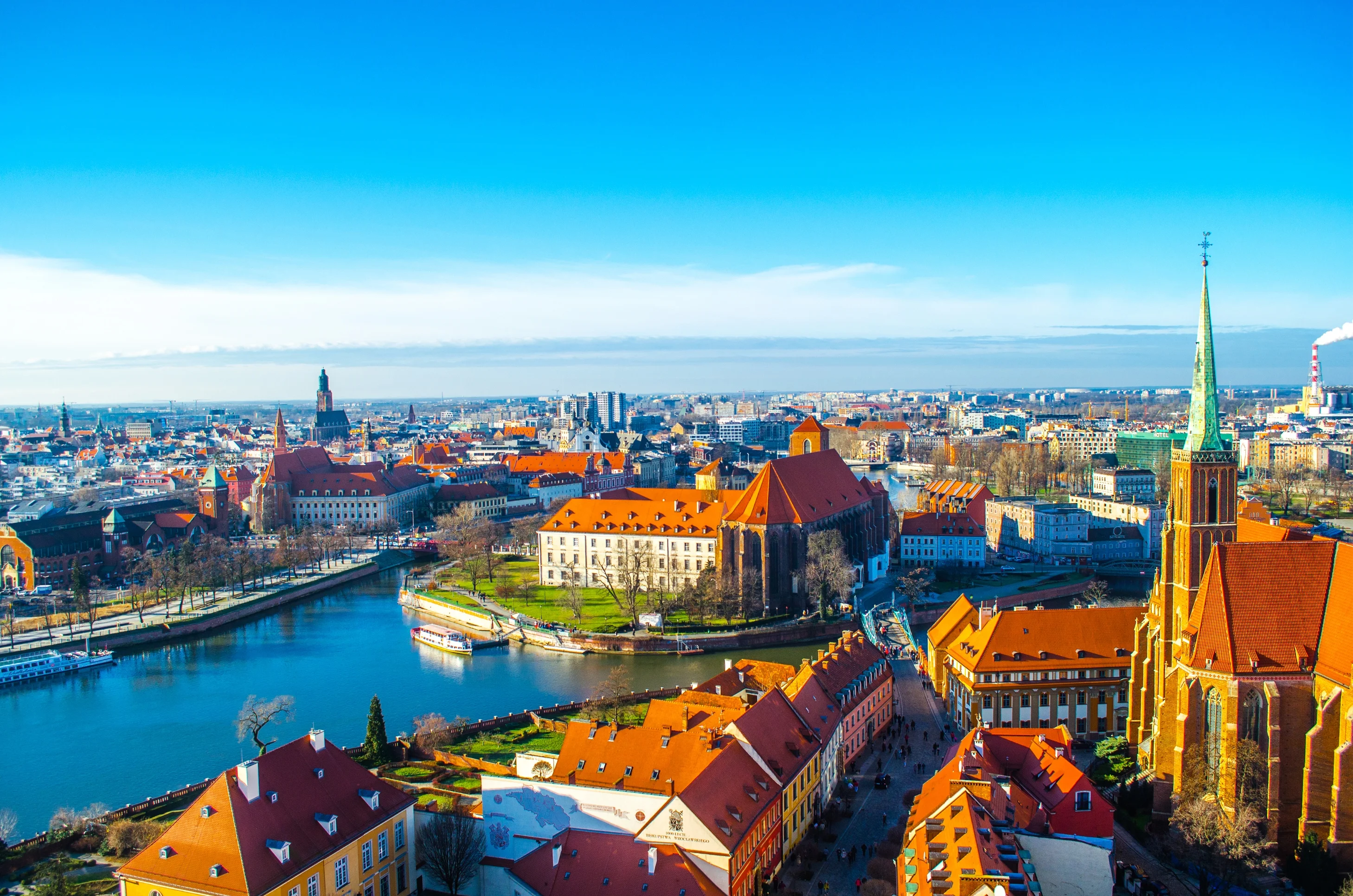
Wrocław: The City of a Hundred Bridges and a Thousand Bronze Dwarfs
Did you know that Wrocław has changed nationalities five times in a thousand years? Once Polish, then Bohemian, Habsburg, Prussian, and German under the name of Breslau before returning to Poland in 1945, the city was almost entirely rebuilt after the war using materials salvaged from its own ruins.
This fractured past explains much of Wrocław's personality: a market square with colorful facades restored stone by stone, islands linked by 117 bridges across the Oder River, and a cultural identity unlike anywhere else in Poland.
One of Central Europe's Most Underrated Destinations
While travelers crowd into Krakow or Warsaw, Wrocław handles visitors with a certain ease. Prices are still very low, student energy keeps the streets lively, and the architecture is impressive without being overwhelming.
Great choice for:
- Travelers looking for a major European city that is affordable and off the mass-tourism radar
- Architecture fans: medieval Gothic, Baroque, Art Nouveau, and Modernism
- Families with kids (bronze dwarf hunting across the city, the zoo, Hydropolis)
- Getaways with friends: a lively nightlife scene with craft beer, bars, and clubs
- History buffs, particularly regarding World War II and Central Europe
- Travelers who want to combine city culture with nature trips in Lower Silesia
Not ideal for:
- Those looking for beaches or mountains right on their doorstep
- Travelers who expect to get by in a language other than English: English works well, anything else much less so
- Fine-dining enthusiasts looking for a Michelin-starred culinary scene, as the local food is hearty rather than light
Budget: Excellent Value for Money
Wrocław remains significantly cheaper than Prague or Berlin for a comparable experience. Eating well for under $12* per meal and staying in a decent hotel for $45* is still very possible here.
| Expense category | Estimated range |
|---|---|
| Basic lodging (hostel, 2-star hotel) | $23 to $51* / night |
| Comfortable lodging (3-4 star central hotel, apartment) | $68 to $124* / night |
| Quick bites (bar mleczny, bakery, market) | $4.50 to $12* |
| Restaurant meals (traditional Polish cuisine) | $14 to $29* |
| Activities (museums, Racławice Panorama, boat cruise) | $5.70 to $17* |
| Total daily budget for backpackers | $45 to $73* |
| Total daily budget for comfort | $113 to $180* |
Practical Info: An Easy City, Especially in English
English is widely understood in Wrocław, particularly among younger people and in tourist areas. Polish is a challenging language, so learning a few basic words is appreciated but by no means essential. The streetcar and bus network covers the entire city efficiently.
Safety is good in tourist areas. As in any large city, standard vigilance in public transit and crowded spots is a good idea, especially at night around the Rynek. Wrocław does not have a particular reputation for danger for travelers.
The Rynek and Old Town: Perfect Reconstruction or Illusion?
The market square, known as the Rynek, is one of the largest and most colorful in Central Europe. Its Gothic and Renaissance facades were rebuilt after 1945 using preserved blueprints and photographs with remarkable care. In the center, the 13th-century Gothic town hall is the only original building, and it stands out with its turrets and sandstone carvings.
On the north side of the Rynek, Jatki street (the old shambles street) is one of the oldest in the city. Narrow colored facades now house small art galleries. At the end of the street, a bronze monument pays tribute to slaughterhouse animals, a touching installation that also helps explain why Wrocław has a particularly active vegan and vegetarian community.
Friendly tip: Do not miss Plac Solny, the square adjacent to the Rynek known as Wrocław's 24-hour flower market. At midnight or noon, bouquets of roses and tulips are sold here around the clock. It is a local quirk with plenty of charm.
Ostrów Tumski and the Islands: The Cradle of the City
Wrocław counts about twenty islands on the Oder River, linked by more than 100 bridges. The Ostrów Tumski neighborhood, the former cathedral island, is the oldest and most scenic. St. John the Baptist Cathedral, built in the Gothic style and rebuilt after the bombings, dominates the area. Its bell tower offers a panoramic view of the city.
The Tumski Bridge, a lovers' bridge built in 1892, used to be covered with 40,000 padlocks. Because their weight threatened the structure's integrity, most were removed, and mischievous gnomes now watch over the stone pillars.
Słodowa Island is the go-to spot for students in the summer: hundreds of young locals gather here in the evening to picnic, play the guitar, and enjoy the waterfront patios. It offers a more authentic, less touristy scene than the restaurant terraces on the Rynek.
Bronze Dwarfs and the Neon Museum: Wrocław's Playful Side
The history of Wrocław's dwarfs is political rather than purely decorative. In the 1980s, the Orange Alternative protest movement began painting gnomes on walls that the communist government kept erasing. In 2001, the first bronze statue was installed, and today there are over 400 scattered across the city.
Each dwarf tells a story: the firefighter, the homeless person, the retiree, the tourist. Hunting for dwarfs with kids can easily take half a day. An official map exists, but wandering around at random and discovering them by surprise is much more fun.
Equally unexpected is the Neon Museum at 46c Ruska Street. A local resident began buying up communist-era illuminated signs slated for destruction during the 2000s. The interior courtyard, with its thirty restored neon signs lighting up at dusk, is a sight in its own right.
Friendly tip: The Racławice Panorama (11 Purkyniego Street) is a circular painting 15 meters high by 114 meters long depicting the 1794 Battle of Racławice. The 360-degree rendering inside the rotunda creates a striking sense of depth. Plan for 45 minutes and book online during high season.
Nadodrze and Alternative Neighborhoods: Off the Beaten Path
The Nadodrze district, north of the Old Town, is Wrocław's bohemian quarter. Its multicolored interior courtyards, known as the Colorful Backyards, are covered in murals created by the residents themselves. The area is less visited than the Rynek and gives a glimpse into everyday local life.
This is also where you will find the Browar Stu Mostów craft brewery, one of the city's best-known. It offers a dozen beers brewed on-site, served in a converted industrial setting. Prices remain reasonable for the quality.
Where to Eat and Drink in Wrocław
Polish cuisine is unapologetically hearty. Pierogi, dumplings stuffed with potato and cottage cheese (pierogi ruskie), mushrooms and cabbage, or meat, are the national specialty. You can find them boiled, pan-fried, or baked depending on the spot. Pierogarnia Stary Mlyn (26 Rynek) is a reliable bet for trying them in a pleasant setting.
To eat very well on a budget, bary mleczne (milk bars, a legacy of the communist era) serve complete meals for under $5.70*. Rozowa Krowa on Kuźnicza Street remains a solid choice for an affordable and filling lunch. In the evening, the Nadodrze neighborhood gathers trendy cafes and restaurants with still-reasonable prices.
For drinks, Wrocław has an active craft beer scene. The Browar Stu Mostów brewery is the most famous. For vodka fans, downtown shot bars offer tastings of fruit-infused Polish vodkas, which is practically a rite of passage.
Where to Stay in Wrocław and Around
The most convenient area to stay is the perimeter around the Rynek and the Old Town. You will find all price points here, from well-run hostels to boutique character hotels. For short stays, staying within this radius lets you do everything on foot. The Art Hotel, right in front of St. Elizabeth's Church, is regularly praised for its location and value.
The Nadodrze neighborhood is an interesting alternative for travelers looking for fewer tourists and more local atmosphere, with slightly lower accommodation prices. Short-term apartment rentals are common there and very well-situated for walking.
How to Get to Wrocław?
From North America, reaching Wrocław means at least one connection through a European hub such as Warsaw, Frankfurt, or Amsterdam, with that final European leg frequently dropping below $113* round-trip in the low season. Wrocław-Copernicus Airport is located about 10 km from the center, reachable by bus and taxi in under 20 minutes.
By train, Wrocław Główny central station receives connections from Warsaw (about 3.5 hours) and Krakow (about 3 hours). From Western Europe, a train journey requires multiple transfers through Berlin or Vienna, making it a long but budget-friendly option for rail fans. The station itself, with its 19th-century neo-Gothic architecture, is worth a look.
How to Get Around Wrocław?
The Old Town is entirely walkable. The tramway network is dense and efficient for reaching outer neighborhoods or the zoo. A single ticket costs about $0.90*, and a day pass runs around $3.40*. The moBILET app makes purchasing transit tickets online straightforward.
Uber works well in Wrocław and remains cheaper than in North America for equivalent rides. Local taxis are available, but make sure the meter is turned on before setting off. A car is not needed to explore the downtown core.
When to Go?
Spring (May-June) and autumn (September-October) are the best times: pleasant temperatures and moderate crowds. Summer is lively with numerous festivals, including a major international street theater festival in July. December is worth the trip for the Christmas market around the Rynek, ranked among the prettiest in Poland.
Avoid January and February if you hate the cold, as the Silesian climate can be harsh.
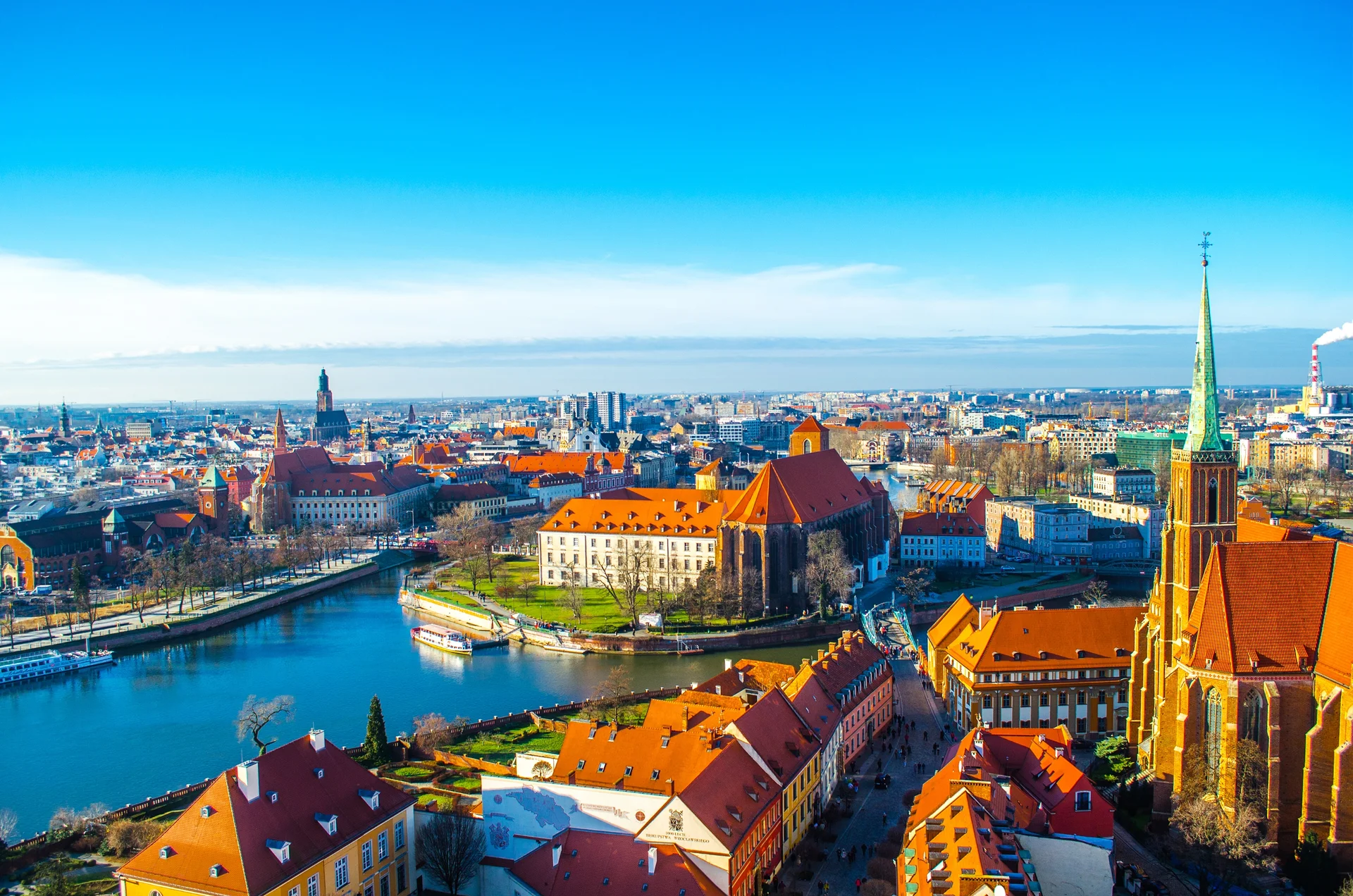
I didn't know about Wroclaw either, as it's less famous than Warsaw and Krakow. And yet, it really deserves some attention! It is an architectural marvel, and walking through the old city center, which has such a soul, is truly magical. Lots of cultural spots to visit, a monumental choice when it comes to food, and as for the nightlife... no doubt about it, the Polish know how to party! Honestly, it's a great place for a city trip with friends that feels a bit different!