
Krakow at a Glance
This is where the heart of Poland beats. Located 300 kilometers south of Warsaw, the country's cultural and historical capital gives its political and economic rival a serious run for its money.
Nonstop Street Life
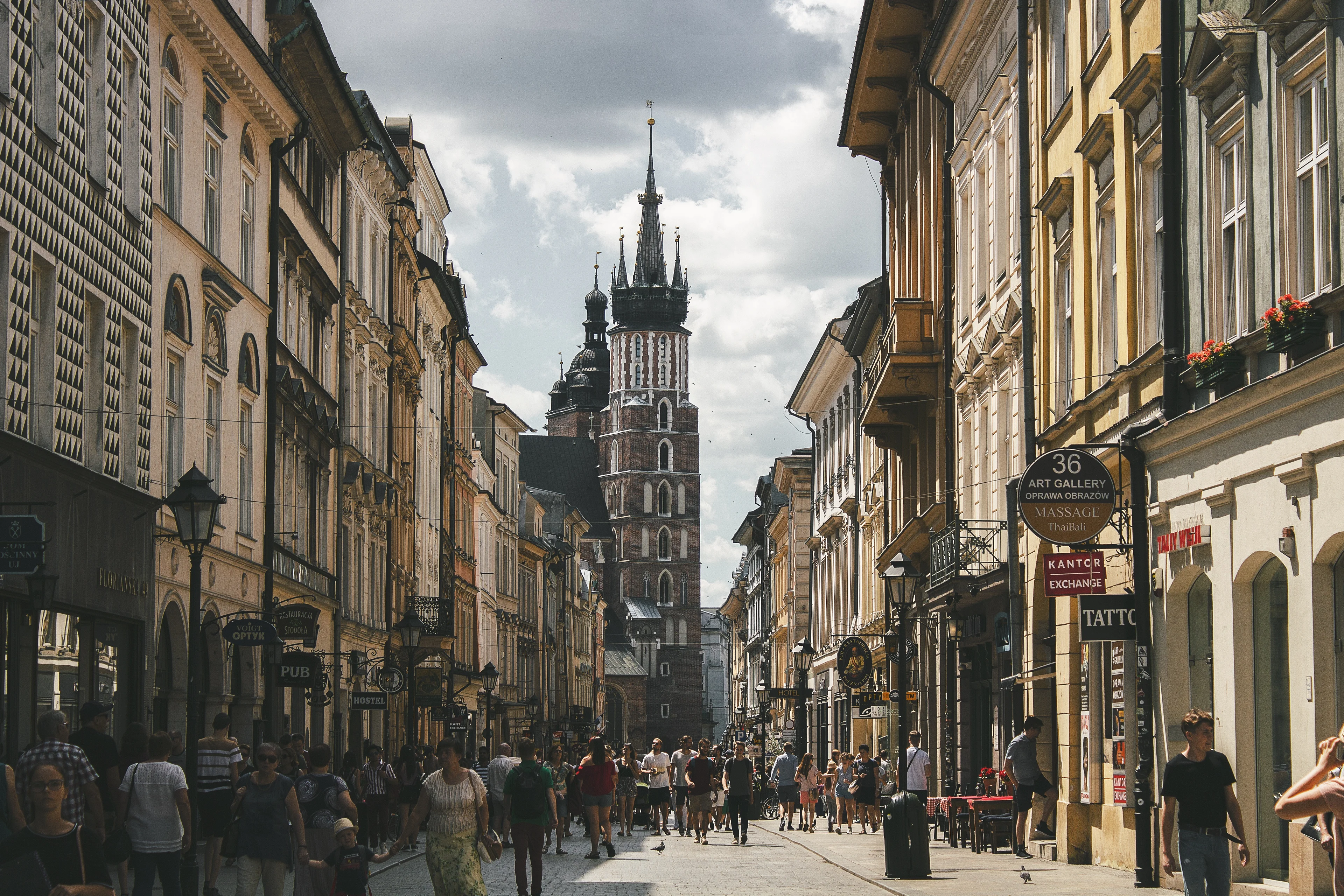
Founded in the 7th century, Krakow is one of Poland's oldest cities, boasting a remarkably well-preserved architectural heritage. Walk through the narrow streets of the historic center, which spreads out at the foot of Wawel Hill, home to the Royal Castle. If you decide to go inside, you can check out the Crown Jewels and the crypt where Poland's former kings are buried. Main Market Square (Rynek Główny) is the largest medieval square in Europe. Bordered by St. Mary's Basilica, instantly recognizable by its two Gothic towers, it serves as the ultimate landmark for getting your bearings.
Next, head over to the Kazimierz Jewish quarter, where art galleries sit right alongside the city's historic synagogues. Stop by Plac Nowy to grab a zapiekanka, a traditional open-faced toasted baguette, or a plate of pierogis stuffed with meat or cabbage. Krakow is a lively, high-energy college town, with cultural events running year-round. When night falls, head back to the fortified core and hit up one of the many clubs where local students and visitors mingle over loud music and bottles of wódka.
The Weight of Memory and History
While Krakow feels joyful, it still carries a painful past. Just a few kilometers northeast, you will find the working-class neighborhood of Nowa Huta, built by Stalin starting in 1949 as a prime example of Stalinist architecture.
Unlike Warsaw, where more than 84% of the buildings were destroyed, Krakow emerged from the war seemingly intact at first glance. Yet, an hour by bus brings you to the Auschwitz-Birkenau extermination camp. If visiting the camp is not on your itinerary, you can still confront this dark chapter of the country's history at the museum inside Oskar Schindler's former factory, devoted to Krakow under Nazi occupation, in the Podgórze district. The war claimed more than 5 million civilian victims, including 3 million Jews, wiping out roughly 15% of the population.
Finally, to explore a lighter side of Krakow's history, do not miss the Wieliczka Salt Mines, which have been operating since the Middle Ages. Descending into these subterranean chambers is an unforgettable experience.
When to Go
Krakow works as a destination year-round, so the right time to visit depends entirely on what you are looking for. Summer brings mild, sunny weather, while winter transforms the city with frost, snow, and holiday markets.
How to Get There
From North America, plan on a connecting flight through a European hub such as Warsaw, Frankfurt or London to reach Krakow. Frequent onward services keep ticket prices quite reasonable.
C'est effectivement ce que j'ai entendu sur cette ville. On m'a même recommandé de la visiter en priorité, à la place de la capitale Varsovie. Est-ce aussi ta recommandation ? Merci :)