
Where to stay in Wroclaw: the 5 neighborhoods to know in 2026
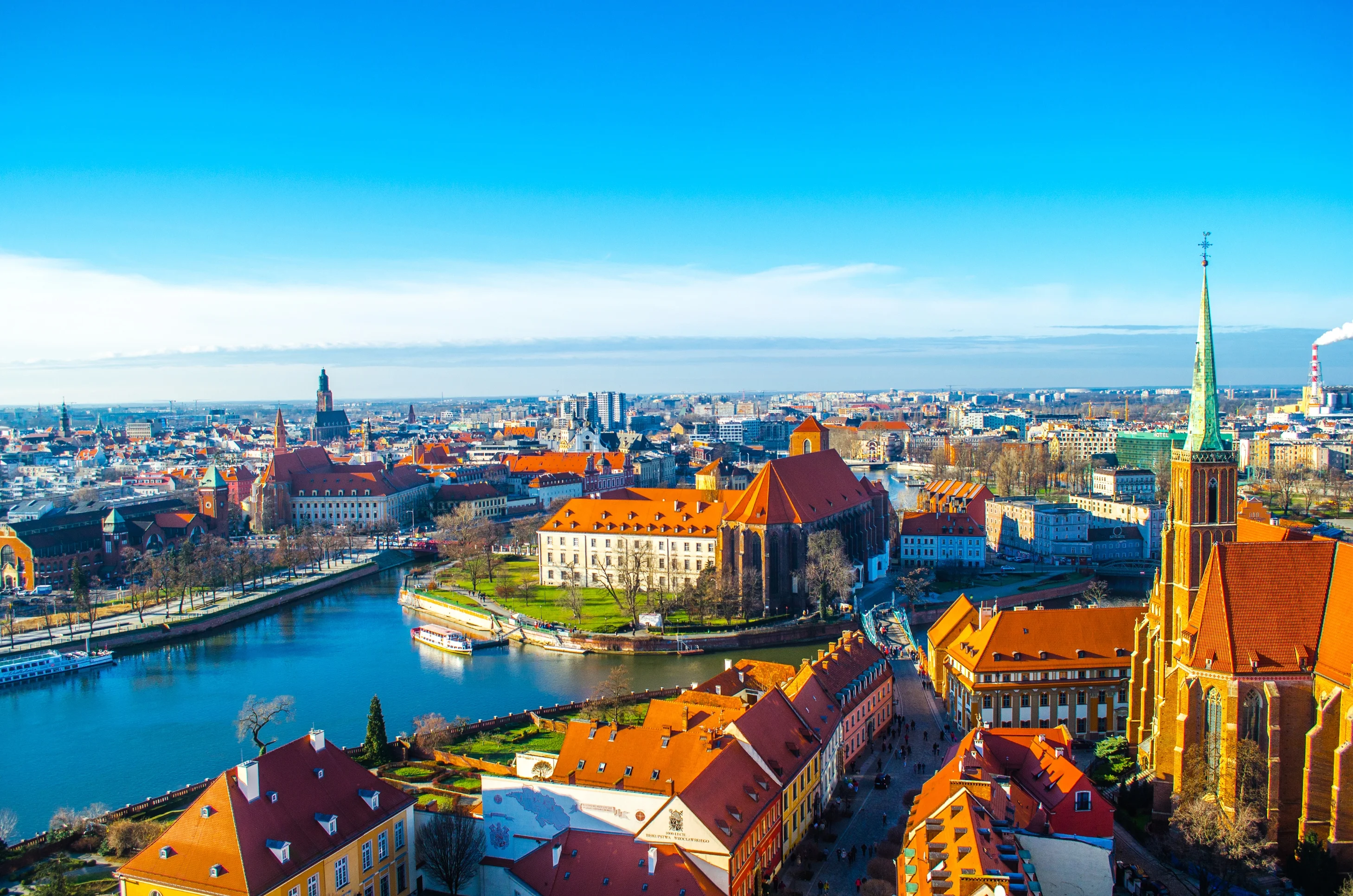
It is the fourth largest city in Poland by population, behind Warsaw, Łódź and Krakow, and the least known of the four. Wroclaw holds its centre on an island, between two arms of the Oder, and arranges it around a market square so vast that the town hall stands in the middle without touching the facades. The square, the cathedral, the university and the museums all fall inside a two kilometre circle.
What comes as a surprise is the bill. $40* for a decent room, $62* for this guide's benchmark three star, $124* for the address on the street of four faiths. And moving out brings nothing back: the budget address by the stadium, six kilometres away, asks more than the same chain in town. Leaving the circle is therefore pointless, and all that remains is choosing your bank of the river. The five neighbourhoods below read from the square outwards.
I didn't know about Wroclaw either, as it's less famous than Warsaw and Krakow. And yet, it really deserves some attention!
Compare hotel prices in Wroclaw
In a hurry? Find the best accommodation deals in 3 clicks.
Compare live deals from Booking, Expedia, Agoda and other partners.
At a glance: our picks by traveller type
Pick the profile that suits you to head straight to the recommended neighborhood.
The neighborhood map in Wroclaw
Get your bearings on the neighborhoods and must-see sights before choosing where to drop your bags. Click a name to jump to its description.
The Rynek and the Stare Miasto The market square with its Gothic town hall set in the middle, St Elizabeth's church and its climbable tower, St Mary Magdalene's church and the footbridge slung between its two steeples, the royal palace turned city museum, the Opera, the Współczesny theatre, the archaeology museum in the old arsenal, the Dominikańska mall for last-minute shopping
for a first visit, for never taking a tram, for the evenings
The Rynek is one of the largest market squares in Europe, and the only thing that matters on the first evening: the terraces hold out until dark, and the Gothic town hall rises in the middle of it, far enough from the facades to be walked all the way round. Around it, the Stare Miasto asks for no transport: St Elizabeth's and its tower are two streets away, St Mary Magdalene's and its footbridge three, the Opera five minutes. This is also where Włodkowica street runs, with a Lutheran church, a Catholic one, an Orthodox one and a synagogue inside three hundred metres.
It is an architectural marvel, and walking through the old city center, which has such a soul, is truly magical.
Where to stay in this neighborhood
Hotel Monopol Luxury
8.9 from more than two thousand seven hundred reviews, with 9.8 for location, 9.3 for staff and cleanliness, 9.2 for comfort and 9.0 for facilities, but 8.5 for value for money. It stands against the Opera, three minutes from the Rynek, and its name has been circulating in this city for a century. You pay for the address as much as for the room, and the reviews say so. Around $147*.
PURO Wrocław Stare Miasto Mid-range
9.2 from more than four thousand reviews, the largest volume in this guide, with 9.8 for location, 9.5 for cleanliness and comfort, 9.2 for facilities and 8.8 for value for money. It is on Włodkowica street, so in the middle of the four places of worship, seven minutes from the square. Around $124*.
Pros
- The square, the churches and the Opera without ever boarding a tram
- The Rynek terraces until dark, and the cellars underneath
Cons
- The guide's rates start and finish at their highest here
- On weekend evenings the noise climbs up to the upper floors
Ostrów Tumski, the university and the museums St John the Baptist cathedral and its two spires, the university and its baroque great hall, the mathematical tower and its terrace open over the roofs, the national museum, the Racławice Panorama under its rotunda, the botanical gardens behind the cathedral, Słowackiego park, the Ossolineum on University square
for the museums, for the Oder, for a quiet evening
This is the oldest part, and the only one reached by bridges. Ostrów Tumski lines up the cathedral and its two spires, the botanical gardens right behind, and gas-lit streets that somebody comes to light by hand as the day goes down. Walking back up towards University square, the baroque great hall and the mathematical tower are open to visitors, and three hundred metres further the national museum and the Racławice Panorama face each other. In the evening everything closes and the water takes over.
Finally, you head up to the astronomy floor to finish on a rooftop with a 360 degree view of the city.
Where to stay in this neighborhood
Great Polonia Wrocław Tumski Budget
7.9 from close to three thousand reviews, and the location holds 9.4, a point and a half above the overall score. The rest follows lower down: staff 8.7, cleanliness 8.0, comfort 7.8, facilities 7.5. The explanation is in the address, Słodowa island, on the bank of the Oder and five minutes from the cathedral: what you pay for is the island, not the room, and that is worth knowing before booking. Around $51*.
Pros
- Both museums and the cathedral inside the same kilometre
- Gas lamps lit one by one, and nobody about after ten
Cons
- Almost nothing open late on this side of the bridges
- A single address worth recommending, and not for the room
Plac Grunwaldzki and Szczytnicki park The Centennial Hall and its multimedia fountain, the zoo and its African building, Szczytnicki park and its Japanese garden, the Reagan roundabout and the towers of Grunwaldzki square, the technological university on the water, the Olympic stadium
for families, for the zoo, for a whole week
To the east the city changes scale. The Centennial Hall, built in concrete in 1913 and listed ever since, carries a sixty-five metre dome with a fountain playing in front of it. Next door, the zoo and its African building take up half a child's day, and Szczytnicki park keeps a Japanese garden laid out for the same exhibition. The neighbourhood lives on weekdays: students, blocks from the sixties around the Reagan roundabout, and trams every five minutes towards the Rynek.
Where to stay in this neighborhood
Stara Biblioteka Mid-range
The highest score in this guide: 9.4 from more than two thousand four hundred reviews, with 9.7 for staff, 9.6 for location, 9.4 for cleanliness, 9.3 for comfort, 9.2 for facilities and 9.1 for value for money. It is on Parkowa street, at the edge of Szczytnicki park, and not one of its six scores drops below 9. Around $68*.
Pros
- The zoo, the hall and the Japanese garden without boarding a tram again
- Tree-lined streets and real silence at night
Cons
- A quarter of an hour by tram to the Rynek, each way
- Few hotels: the area rents mostly to students
The southern suburbs, from the station to Krzyki The central station and its ochre battlemented front, the Polish theatre, the concert hall on Piłsudskiego street, the old Jewish cemetery on Ślężna street, the ethnographic museum in the Oława suburb, the Huby water park, the Oporowska stadium in Gajowice, the Partynice racecourse six kilometres south
for the trains, for the prices, for a night in transit
The central station looks like no other: an ochre battlemented front two hundred metres long, which at first glance passes for a castle. Behind it the suburbs begin, and there is nothing picturesque about them: wide avenues, tenement blocks, hotel chains. Two things are worth the detour, and they sit on the same side: the old Jewish cemetery on Ślężna street, left to the moss and the trees, and the Polish theatre. The rest is a matter of convenience, which is already a great deal when you arrive at midnight.
Where to stay in this neighborhood
Ibis Wroclaw Centrum Mid-range
8.8 from more than two thousand six hundred reviews, with 9.3 for staff, 9.2 for cleanliness, 9.1 for location, 8.9 for comfort, 8.7 for facilities and 8.6 for value for money. It is on Powstańców Śląskich street, at the foot of the glass tower, one kilometre from the station and a twenty minute walk from the Rynek. It is the guide's point of comparison: nothing further out costs less. Around $62*.
Pros
- Trains to Berlin, Krakow and Warsaw a short walk from the hotel
- The steadiest rates in the guide, and the Rynek at the end of one tram line
Cons
- Nothing old to see: you sleep here, you do not stroll here
- The approaches to the station turn dull once night falls
The west, from the Millennium bridge to the stadium The Millennium bridge over the Oder, the Pilczyce municipal stadium and its match nights, the MOSiR stadium in Gądów, the Muchobór technology park
for a match, for an early flight, for anyone arriving by car
You need a reason to sleep here, and there are two. The first is the municipal stadium in Pilczyce, six kilometres from the Rynek, whose match nights fill the handful of addresses in the area. The second is the airport, five kilometres further towards the south west: for a dawn departure that margin counts. For everything else the area has nothing to show: ring roads, the Millennium bridge, company lobbies, and the Oder you drive alongside without seeing it.
Where to stay in this neighborhood
ibis budget Wrocław Stadion Budget
8.1 from more than three hundred reviews, with 8.8 for staff, 8.6 for cleanliness and location, 8.1 for comfort and value for money, 7.9 for facilities. It is a nine minute walk from the stadium, and that is its only argument: it asks more than the city-centre address of the same chain, for six kilometres more. Around $68*.
Pros
- The stadium on foot on match nights, and the ring road to leave by
- Five kilometres saved on the road to the airport
Cons
- Dearer than the centre for the same chain: moving out gains nothing
- No old stone, and almost nothing open within walking distance at night
Our tips for booking the right place
- Two kilometres are enough, and that settles everything else: Before comparing neighbourhoods, measure the distance: from the Rynek to the cathedral is one kilometre, to the university five hundred metres, to the national museum a little more. Everything that brings people here therefore fits inside a circle crossed on foot in twenty minutes. Two exceptions, and they take a tram: the Centennial Hall with the zoo, four kilometres east, and the stadium, six kilometres west. It is that tightness which makes looking for something cheaper further out pointless.
- The dwarfs are there to be hunted, and it is the only free game in town: Small bronze figures some thirty centimetres high are set all over the centre, at the foot of doorways, on ledges, against bollards. You come across one within the first hour, and after that you stop looking at the streets the same way. Children take to it faster than adults, and the maps sold in the shops are not much use: the hunt works better without one.
- On Ostrów Tumski the lamplighter comes by as the day goes down: The island's street lamps run on gas, and somebody comes to light them one by one, with a pole, every evening. It lasts half an hour, it starts at dusk, so around four in the afternoon in December and around nine in June, and it is not announced: you have to be there. It is the best moment on Ostrów Tumski, and the only argument for sleeping on this side of the bridges rather than on the square.
- December for the market, July for the islands: Two seasons pull the city in two directions. From late November to the first days of January the Christmas market takes over the whole Rynek, the hotels in the centre fill up and the guide's prices no longer hold. In summer it is the other way round: the islands of the Oder, Słodowa first of all, fill with students sitting on the grass until dark, and the centre empties towards the water. Between the two, March and November are grey and crowd-free, which suits the museums very well.
- Booking away from the centre to pay less: the address by the stadium, six kilometres out, asks more than the same chain in town.
- Counting on a nearby airport: it is about ten kilometres west, and no central neighbourhood gets any closer to it.
- Choosing the Great Polonia Tumski for the room: its location score beats its overall score by a point and a half, and its facilities sit at 7.5.
- Turning up on the Rynek in December without a booking: the Christmas market takes the whole square, and the rates follow.
FAQ: where to stay in Wroclaw
Which neighbourhood should you sleep in in Wroclaw?
How much does a night in Wroclaw cost?
How many days for Wroclaw?
Can Wroclaw be seen on foot?
When is the better time to come to Wroclaw?
What can you see in one day in Wroclaw?
 Keep exploring
Things to do in Wroclaw
Comments (0)
No comments yet. Be the first!