
Where to stay in Genoa: the 5 neighborhoods to know in 2026
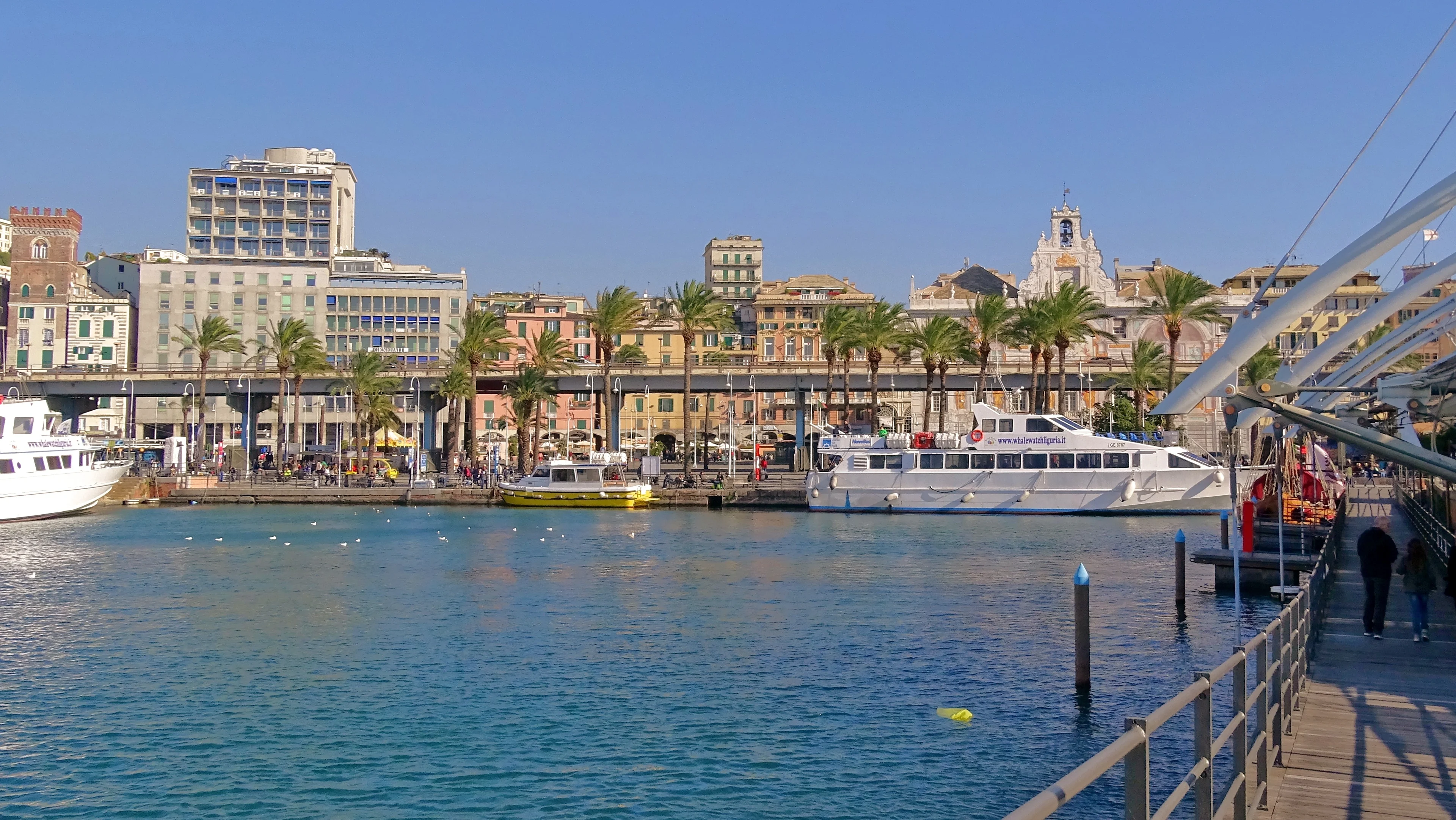
One traveller found the right word for Genoa: you cross it. The ferry, the coastal train and the motorway all pass through here and leave again, and what you see on the way is a port, cranes and a concrete flyover planted in front of the city since 1965. Behind that flyover begins one of the largest medieval centres in Europe, a maze of lanes six storeys high where the street is sometimes two metres wide.
So this guide does one thing: it helps you pick your side of the flyover, and tells you where to get under it. Prices run from $107* in the lanes to $220* at the 1905 grand hotel, and there is one figure to have in mind at the booking stage: on this page, the address charging most is the one its guests rate best for value.
Genoa is a wonderful surprise, raw and rebellious, this port city is passed through much too quickly! I was completely charmed by its old town, so well hidden behind its highway barrier.
Compare hotel prices in Genoa
In a hurry? Find the best accommodation deals in 3 clicks.
Compare live deals from Booking, Expedia, Agoda and other partners.
At a glance: our picks by traveller type
Pick the profile that suits you to head straight to the recommended neighborhood.
The neighborhood map in Genoa
Get your bearings on the neighborhoods and must-see sights before choosing where to drop your bags. Click a name to jump to its description.
The old port, from the aquarium to the Lanterna Italy's largest aquarium and the panoramic Bigo crane, both designed for 1992, the Galata maritime museum and its reconstructed galleys, the Antarctic museum and the children's city, the Palazzo San Giorgio with its frescoes facing the water, the Palazzo del Principe and its gardens, Piazza Acquaverde in front of the station with its monument to Columbus, and the Lanterna, a lighthouse from 1543 still lit
for the aquarium, for arriving by boat, for families
The marina was handed back to the city in 1992, for the five hundredth anniversary of Columbus's departure, and it is the newest part of the centre: the aquarium, the largest in Italy, the panoramic Bigo crane and the maritime museum occupy the old quays. The Palazzo San Giorgio, on the other hand, dates from the thirteenth century and carries its frescoes on the water side, where nobody looks. Further west, the Lanterna has been lit since 1543: seventy-seven metres of tower, with the flyover running past its feet.
Where to stay in this neighborhood
NH Collection Genova Marina Mid-range
8.5, three thousand six hundred reviews, and a location scored 9.4 against value for money at 7.8, the widest gap in this guide: it stands on the Ponte Calvi pier, so on the water, with masts under the windows. Comfort 8.9, cleanliness and staff 8.8, facilities 8.5. From $174*.
Pros
- Aquarium, maritime museum and children's city on the same quay
- The ferry terminal and Principe station on foot
Cons
- The weakest value for money in this guide, out on the pier
- The flyover runs overhead: the old town is behind it, not in front
The old town, San Lorenzo and the caruggi San Lorenzo cathedral striped in black and white and its treasury museum, the Doge's Palace and Piazza De Ferrari, the Carlo Felice theatre, Piazza San Matteo and its Doria family houses, the twelfth-century Porta Soprana, the church of Santa Maria di Castello and the Embriaci tower, the merchants' loggia, Piazza Matteotti, the fine arts academy and the Ligurian sculpture museum
for the lanes, for a first visit, for going out on foot
This is the neighbourhood the review talks about, and you have to walk into it to believe it: caruggi two metres wide between six-storey houses, where the light only arrives at noon, and every hundred metres a square, a church, a restored palace next to one still waiting. San Lorenzo cathedral is striped in black and white marble, and inside, in the right nave, a British naval shell from 1941 is displayed where it fell without exploding. The Porta Soprana, at the top, closed the city in 1155.
You have to take the time to explore its narrow streets lined with faded palazzos (some of which are being restored).
Where to stay in this neighborhood
Hotel Bristol Palace Luxury
9.1, five thousand seven hundred reviews, and the best score in this guide. Location reaches 9.7, staff 9.5, cleanliness and comfort 9.4, facilities 9.1, and value for money 8.9, the highest on the page for the most expensive address. It occupies a 1905 building on Via XX Settembre, two minutes from Piazza De Ferrari, and its elliptical staircase is worth a look up. From $220*.
Hotel Le Nuvole Residenza d'Epoca Mid-range
8.8 from more than twelve hundred reviews, set in a palace in the old town five minutes from the port: painted ceilings, high floors, and a door that opens straight onto a lane. This is the guide's entry price for sleeping inside the old town rather than in front of it. From $107*.
Pros
- Thirteen of this guide's fifty-five places inside the maze
- The best score in this guide, and its best value for money
Cons
- The lanes look alike and the phone signal comes and goes
- Some streets are deserted at night, others noisy until late
The Strada Nuova and the Rolli palaces Via Garibaldi and its sixteenth-century palaces, including the Palazzo Rosso, the Palazzo Bianco and the Palazzo Doria Tursi which form a single museum, the Palazzo Reale and the Palazzo Grimaldi a little lower down, the Spinola palace gallery, the city hall and the prefecture, the Chiossone museum of oriental art in the Villetta Di Negro park, and the university's main building
for the palaces, for the museums, for quiet above the lanes
Forty palaces belonging to Genoese families line four streets laid out in the sixteenth century to house the Republic's guests: that is the Rolli system, listed since 2006. On Via Garibaldi alone, three of these palaces have become one continuous museum, where you move from one collection to the next through courtyards and hanging gardens. Two streets down, the Palazzo Reale keeps its hall of mirrors and its terrace over the port. You are fifty metres from the caruggi and in another century.
Huge favorite for Via Garibaldi and its majestic palaces.
Where to stay in this neighborhood
Best Western Hotel Metropoli Mid-range
8.6, thirteen hundred reviews, and two scores at 9.5 and 9.4, location and staff. Cleanliness 9.0, comfort 8.8, facilities 8.6, value for money 8.3. It stands on Piazza Fontane Marose, which is to say at the entrance to Via Garibaldi: the three palace-museums are a hundred metres away. From $113*.
Pros
- Three palaces on one ticket, along a hundred metres of street
- Two of the best staff scores in this guide
Cons
- The palaces close early and several shut on Mondays
- It climbs: the Strada Nuova sits above the old town
The east: Albaro, the Nervi promenade and the coast The Nervi cliff promenade and its two kilometres above the water, the Nervi villas turned into museums, Luxoro, Wolfson and the Raccolte Frugone, the Villa Croce and its modern art in Carignano, the Acquasola park and Piazza Colombo in town, the natural history museum, the stadium and the exhibition centre
for the sea, for the villas, for a quiet stay
The city carries on eastwards for fifteen kilometres of coast, and that is where the Genoese go into the water. Nervi closes the run: a promenade cut into the cliff for two kilometres, with no cars, and three villas turned into museums in the middle of a park. Before it, Albaro and the fishing village of Boccadasse keep their boats pulled up on the shingle, twenty minutes by bus from the centre. The train runs alongside all of it, and stops everywhere.
And if you are ready to get around, there are some pretty places to visit on the surrounding coast.
Where to stay in this neighborhood
Hotel Esperia Mid-range
8.3 from more than twelve hundred reviews, a hundred metres from the Nervi promenade and two minutes from the sea, with the local station right there to get back into town in twenty minutes. This is the address for people who want the coast rather than the lanes. From $135*.
Pros
- Two kilometres of car-free promenade above the water
- Three villa-museums in the same park, at Nervi
Cons
- Twenty to thirty minutes from the centre depending on the stop
- Out of season the coast empties and the terraces close
The west and the heights: the forts, Pegli, Arenzano The Castello d'Albertis and its museum of world cultures on a hill in the centre, Fort Sperone at the top of the seventeenth-century walls, the Villa Brignole Sale and its park, the archaeological museum and the naval museum of Pegli in two villas nine kilometres out, the Cornigliano arena and the Arenzano golf course
for the forts, for the two Pegli museums, by car
Genoa is wedged between the sea and the mountain, and whatever would not fit along the water went up. The seventeenth-century walls run for thirteen kilometres along the ridge, punctuated by forts, and Fort Sperone holds the point: five hundred metres above the city, reached by funicular and then on foot. The Castello d'Albertis, closer in, is a neo-Gothic fantasy built by a collecting sea captain. To the west, Pegli keeps two museums in two villas. This guide keeps no address here, and says so.
Pros
- Thirteen kilometres of wall along the ridge, with a fort at the end
- The funicular climbs, and it is on the city ticket
Cons
- Nothing kept on these heights, and this guide explains
- The two Pegli museums are nine kilometres out, train required
Our tips for booking the right place
- The barrier is real: here is where you get under it: A traveller speaks of an old town "hidden behind its motorway barrier", and that is accurate: the Sopraelevata, opened in 1965, runs along the port for more than two kilometres between the water and the city. You get under it at three useful points: at Piazza Caricamento in front of the Palazzo San Giorgio, along Via San Lorenzo from the cathedral, and through the aquarium underpass. Anyone who steps off a ferry or a coach and stays on the quay side will never see the medieval centre, which begins sixty metres away.
- The public lifts and funiculars are transport, not attractions: The city climbs fast, and the urban network includes two funiculars, a rack railway and several public lifts cut into the rock, all on the same ticket as the bus and the metro. The Castelletto one comes out onto a terrace above the roofs; the Montegalletto one first travels a hundred metres horizontally before going up. For Fort Sperone, it is the Righi funicular and then half an hour on foot. Buy a day ticket rather than single rides.
- The 1941 shell is still inside the cathedral: In the right nave of San Lorenzo, a naval shell thirty-eight centimetres across sits on a plinth, at the spot where it landed on 9 February 1941: fired from the sea by a British battleship, it went through the roof and failed to explode. A plaque tells the story in two lines, and almost nobody stops. This is the sort of detail the city does not flag: the cathedral itself is striped in black and white marble because the Republic granted that privilege to families who had served it.
- Two seasons and one week to avoid: From May to September the coast is the argument: the Nervi promenade, the shingle at Boccadasse, the boats for the Cinque Terre and Portofino leaving from the old port. The rest of the year the city falls back on its palaces and museums, which do not depend on the weather, and pesto and focaccia are eaten in any weather. One week does need planning around, though: the boat show at the end of September, which fills the hotels across the whole city.
- Staying on the quay side: the old town begins behind the flyover, sixty metres from the aquarium.
- Crossing in half a day: a traveller on this page says the city is passed through far too quickly.
- Booking in the west or on the heights: this guide keeps no address there.
- Planning the palaces on a Monday: several museums on Via Garibaldi are closed that day.
FAQ: where to stay in Genoa
Which neighbourhood should you stay in in Genoa?
How much does a night in Genoa cost?
How many days for Genoa?
Can Genoa be seen on foot?
When is the best time to come to Genoa?
What should you see in Genoa in one day?
 Keep exploring
Things to do in Genoa
Comments (0)
No comments yet. Be the first!