
Royan, the coastal town that chose the future over nostalgia
On January 5, 1945, at four in the morning, 354 Lancaster bombers from the RAF wiped Royan off the map. Eighty-five percent of the downtown area was obliterated in two waves of bombs, while the German garrison holding the pocket, which surrendered only in April, was barely touched: the dead were mostly French civilians. This absurd tragedy gave birth to an unexpected destination: a coastal town redesigned as a manifesto of modern architecture, featuring concrete curves inspired by the Brazilian style of Oscar Niemeyer, colorful claustras, and villas with clean, sharp lines.
People come to Royan for its massive beaches, without a doubt. Yet they return for its fifties atmosphere, which is unique in France, blending fine sand and raw concrete in a way no other town on the Atlantic coast quite manages.
The ultimate destination for families and architecture lovers
Royan is tailor-made for families, couples looking for an accessible getaway, and fans of 20th-century architecture. The town offers five fine-sand beaches sheltered from the wind by the Gironde estuary, a compact downtown where everything is within walking distance or a short bike ride, and a dense lineup of water sports including surfing, paddleboarding, sailing, land yachting, and kayaking.
If you are looking for wild nightlife, trendy clubs, or big-city culture, look elsewhere. Royan remains a family beach town with a distinct seasonal rhythm. Off-season, many shops close up and the town empties out. That quieter period actually reveals a more melancholic, photogenic side that many travelers prefer.
Practical matters, what to expect
With a year-round population of 19,000 that swells to 90,000 in the summer, Royan is well-equipped with infrastructure. The CaraBus bus network serves the town and surrounding areas, bike lanes are plentiful thanks to the Vélodyssée trail, and parking is manageable except during peak August. The town is very safe. The temperate oceanic climate brings pleasant summers without punishing heat, though you should pack a windbreaker since the western breeze tends to pick up.
A reasonable budget for the Atlantic coast
Plan for between $57 and $79* per day per person on a budget: camping or modest rentals, picnics with goods from the marché central, and free public beaches. For a more comfortable approach with a 3-star hotel, sit-down dinners, and activities, figure closer to $90 to $124*. Summer lodging generally hovers around $102 to $158* a night for a decent apartment.
The beaches and waterfront, the beating heart of Royan
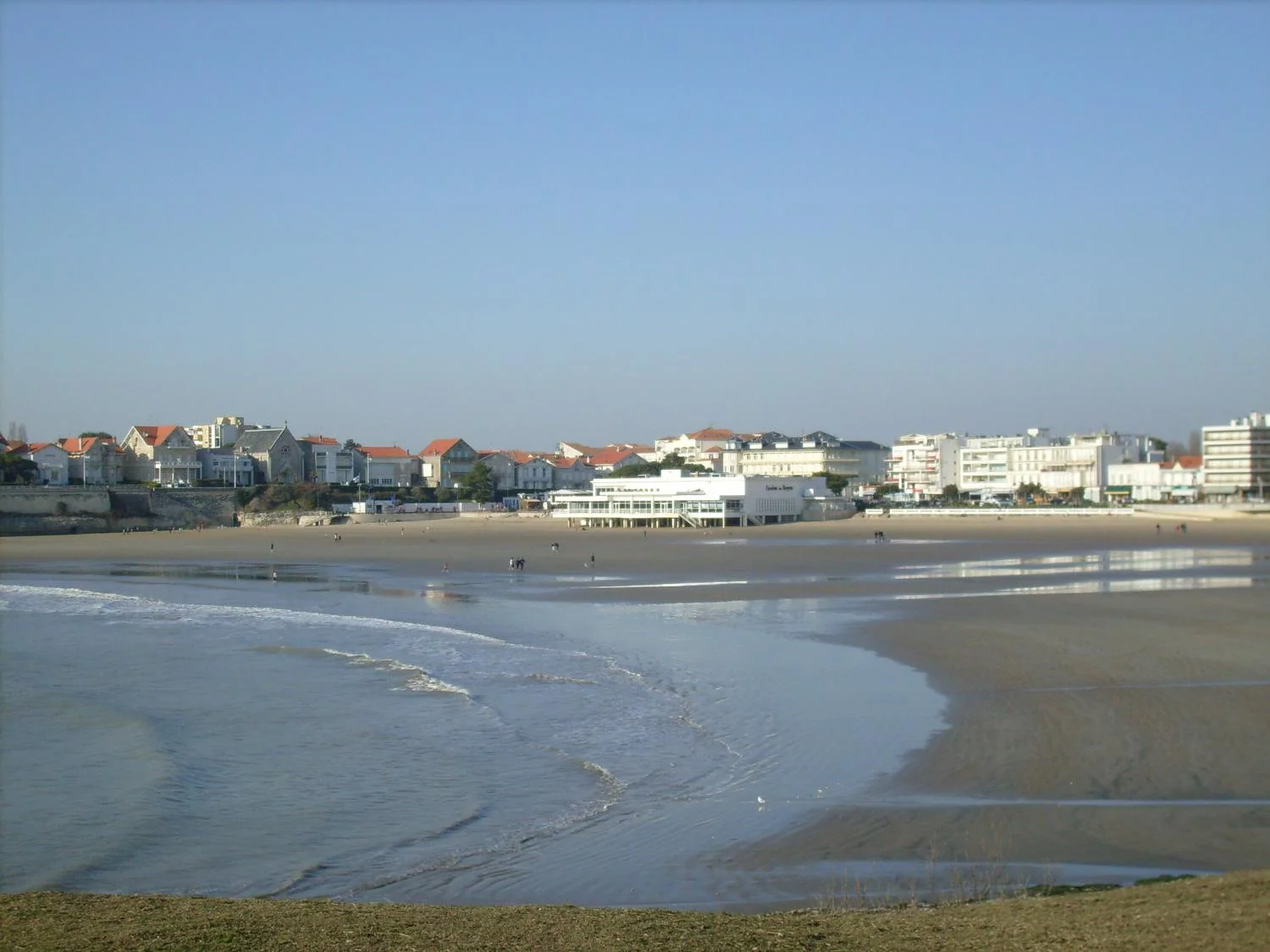
The Grande Conche stretches for over a mile of fine sand facing the estuary. It is the main beach, famous for its 19th-century striped beach tents and modernist waterfront backdrop. Wide and lifeguarded, it is ideal for families with kids.
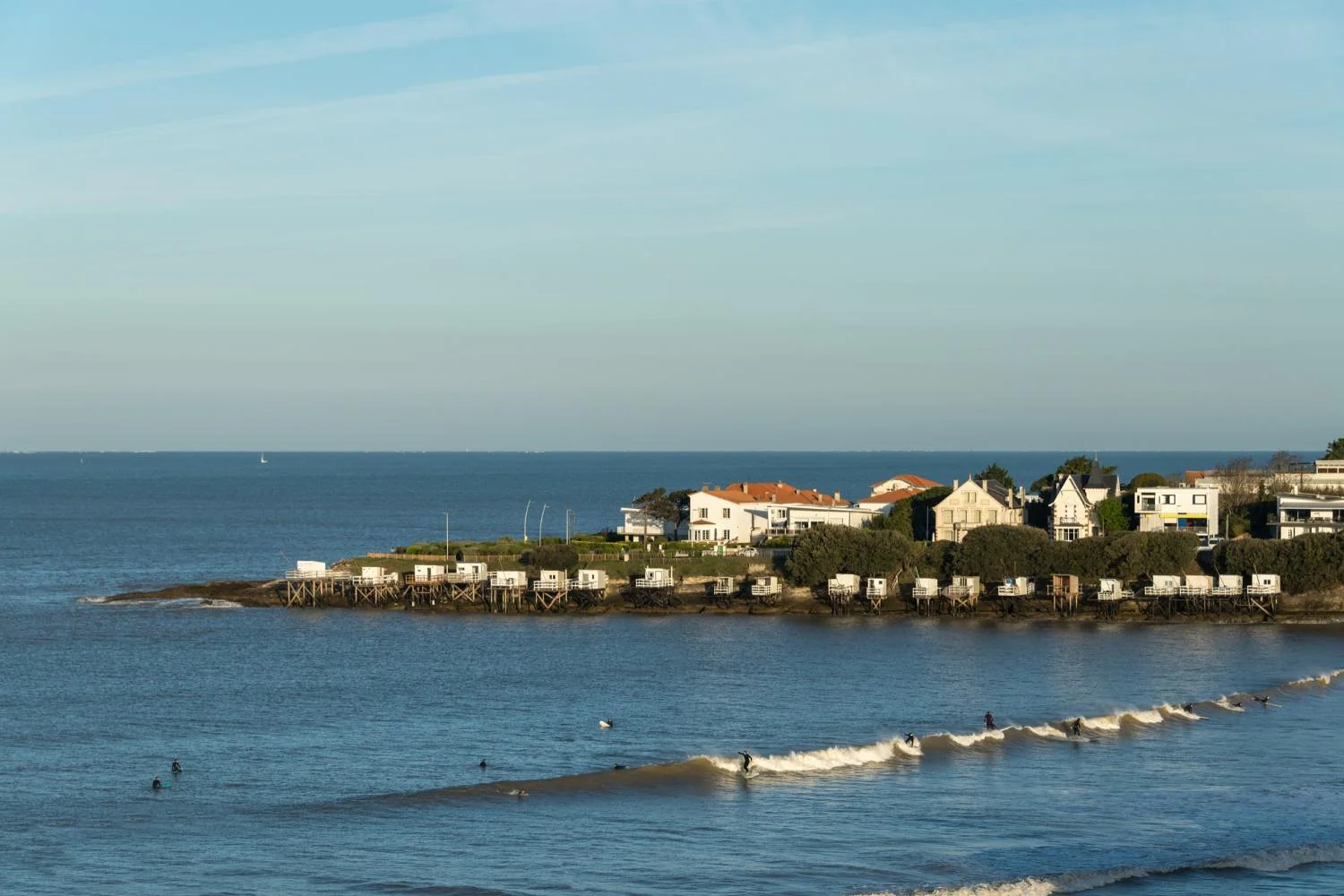
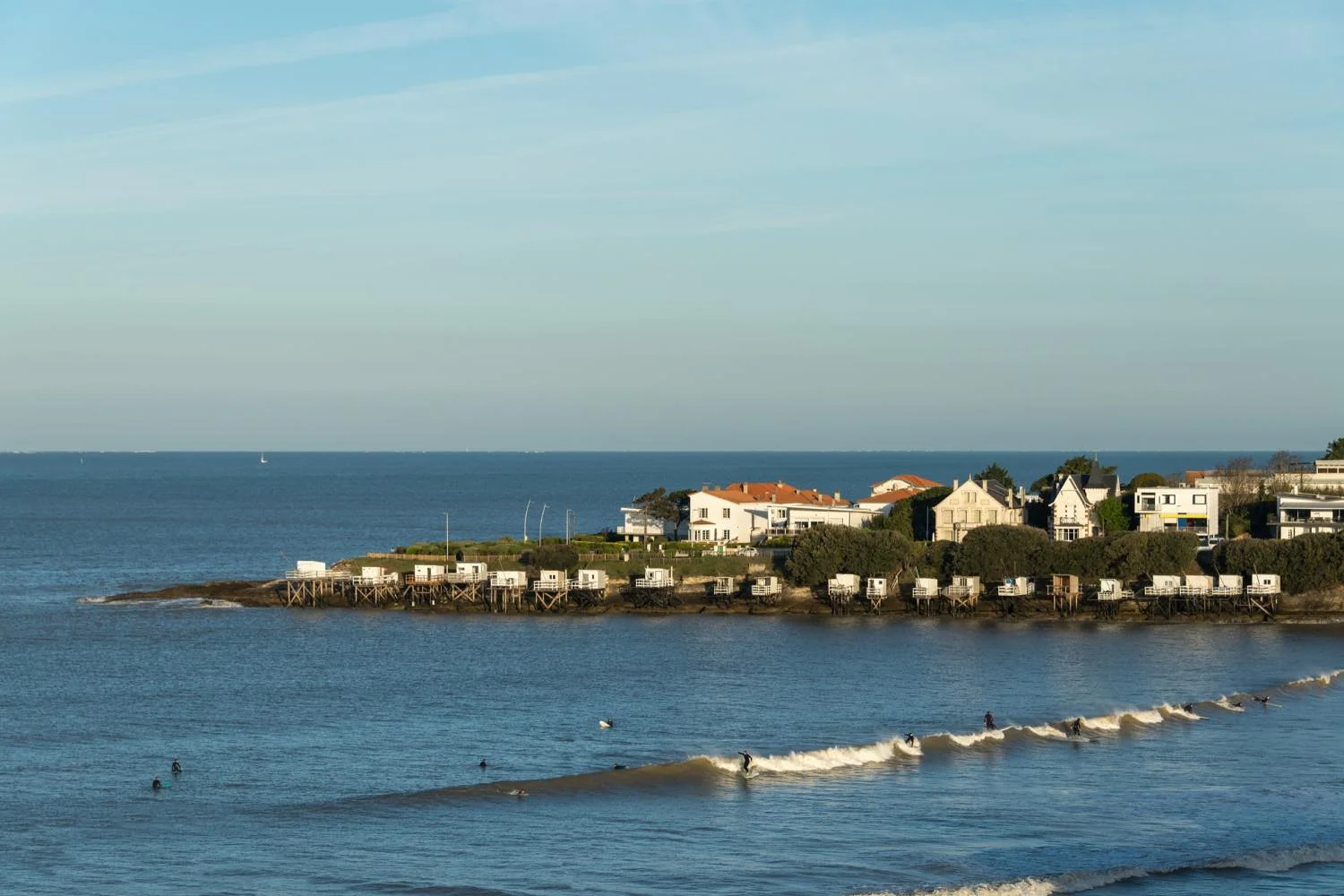
To the west, Pontaillac beach has more character. Wedged between rocky cliffs and wooden fishing shacks known as carrelets, it draws surfers for its steady waves and walkers for its upscale resort village vibe. A casino keeps watch over the sand, and restaurant terraces line the corniche. This is where you will find the finest Belle Époque villas, the ones frequented by Zola, Picasso, and Sacha Guitry back in the day.
For more tranquility, the conche du Chay and conche du Pigeonnier are small coves tucked between rocks, offering a wilder setting. If you want wide-open ocean views without compromise, the Côte Sauvage a few miles north toward La Palmyre rolls out massive Atlantic-battered beaches backed by dunes and pine forests.
Friendly tip: The Côte Sauvage is stunning, but the rip currents are treacherous. Swim only in lifeguarded zones, especially with children.
Fifties heritage, Royan as you least expect it
Notre-Dame Church, opened in 1958, dominates the town at 216 feet tall. Built entirely of raw concrete, its 24 folded V-shaped sails support a saddle-roof that is barely three inches thick. You will either love it or hate it, but you will not remain indifferent. Architect Guillaume Gillet was given a specific mission by the mayor of the time: to make sure the town, knocked down by war, was lifted back up by its church.
The marché central, designed by Louis Simon and André Morisseau, is the other architectural star. Its 164-foot concrete dome resembles a giant umbrella. Listed as a historic monument, it operates every day except Monday. Beyond its striking shape, it is a living market where you can sample Marennes-Oléron oysters on the spot, pick up freshly landed fish, local Charentais goat cheese, and amber Pineau des Charentes.
To understand the town as a whole, the quartier du Parc deserves a careful stroll. Belle Époque villas and fifties builds sit side by side in a quiet residential pine forest. The Villa Ombre Blanche, the Villa Hélianthe, and other historic structures showcase this unique architectural mix. The CIAP, the local architecture and heritage interpretation center, offers free admission and tells the story of the reconstruction through period documents.
Beyond town, excursions worth the trip
The Cordouan lighthouse is an absolute must-see excursion. A UNESCO World Heritage site since 2021, this 16th-century lighthouse stands 4 miles offshore at the mouth of the Gironde estuary. At 223 feet high, featuring a king's apartment on the first floor and a marble-paved royal chapel on the second, it truly earns its nicknames of the king of lighthouses and the Versailles of the sea. You can reach it by boat from the port of Royan via Croisières La Sirène for a roughly 4-hour outing. Expect between $58 and $71* per person depending on the season. Note that you have to wade through water, sometimes up to your knees, to reach the lighthouse at low tide. Book ahead in the summer.
About 10 miles away, Talmont-sur-Gironde is listed among the prettiest villages in France. Its 12th-century Romanesque Sainte-Radegonde church, perched on a cliff facing the estuary, creates one of the most photographed scenes in Charente-Maritime. A bit further on, Mornac-sur-Seudre charms visitors with its cobblestone alleys, colorful doorways, and artisan shops.
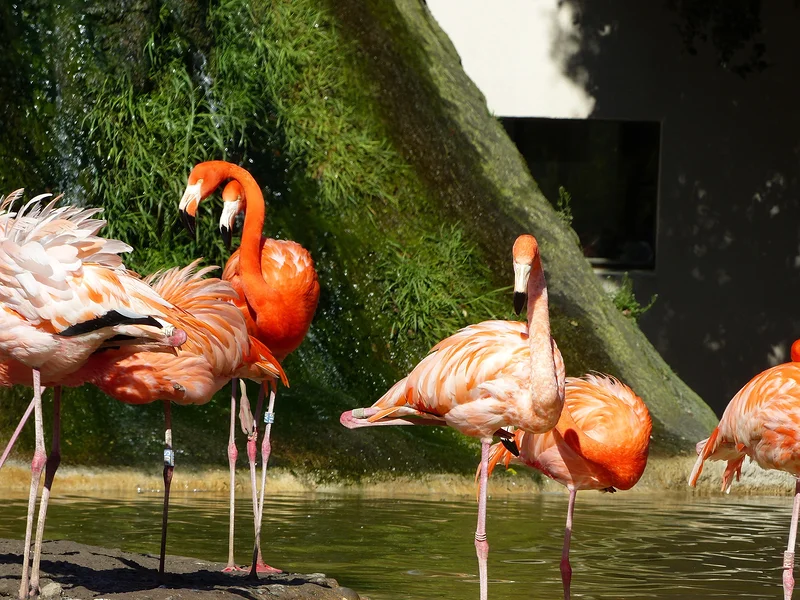
Families head straight for the La Palmyre Zoo, one of the most visited in France, housing 1,600 animals across 44 acres of forest. The Meschers-sur-Gironde troglodyte caves, carved into the limestone cliffs, offer a complete change of pace blending nature and legend. For bike enthusiasts, the Vélodyssée connects Royan to La Tremblade across 28 miles of protected paths through pine forests and ocean views, with a possible stop at the Coubre lighthouse and its 300 steps for a 360-degree panorama.
Friendly tip: The Train des Mouettes, an 1876 steam locomotive, runs between Saujon and La Tremblade along the old oyster transport line. It is a fun trip, especially with kids.
Where to eat and drink in Royan?
Royan's food scene revolves around the sea. Marennes-Oléron oysters, whether fines de claires or spéciales, are best enjoyed at the central market in the morning while standing at a counter with a glass of white Pineau. Estuary shrimp, sole, and line-caught sea bass appear on every respectable menu. On the land side, mogettes, the local white beans, accompany meat and fish, and Charentais galette cookies make for an ideal afternoon snack.
At Le Petit Bouchon on Quai Amiral Meyer, classic French cooking highlights seasonal ingredients with care. La Perle d'Iode, facing the port, offers good value on seafood. In Pontaillac, Le Chalet keeps things traditional. For something off the beaten path, Cave 1950, housed in an iconic reconstruction-era building, serves market-driven dishes paired with over 1,200 wine selections.
Do not leave the region without tasting a glass of Cognac straight from a local producer on the slopes of the Gironde, just a short drive away.
Where to stay in Royan and around?
The Pontaillac neighborhood is the most pleasant place to stay: close to the beach, restaurants, and the casino, with a quiet residential feel. The downtown area around the central market and the waterfront suits those who want to get everywhere on foot. For a unique stay, the Club Royan 50 collective groups rentals inside restored fifties-era homes for a rare architectural immersion.
There are plenty of starred campgrounds nearby, particularly toward Saint-Palais-sur-Mer and La Palmyre, which remain top picks for families in the summer. Plan for $90 to $169* a night for a 3-star hotel in season, $29 to $57* for a campsite pitch, and starting around $68* for a vacation rental outside peak summer.
How to get to and around Royan?
Royan has a train station connected to Bordeaux in about 1 hour and 40 minutes via regional TER train, Saintes in 30 minutes, and La Rochelle in about 1 hour and 30 minutes with a transfer. From Paris, the trip combines a TGV high-speed train to Bordeaux or Angoulême followed by a regional train, taking about 4.5 to 5 hours total. By car, Royan is 1.5 hours from Bordeaux via the A10 and N150, and 1.25 hours from La Rochelle. The closest major airport is Bordeaux-Mérignac.
On the ground, cycling is king. The Vélodyssée and urban bike lanes let you cover everything without a car. The CaraBus network serves neighboring towns affordably. To cross the estuary toward the Médoc and Pointe de Grave, the Royan ferry takes pedestrians, bikes, and cars across in 20 minutes.
When to go?
The best time to visit runs from June to September, with peak crowds and pricing hitting in July and August. June and September offer the best compromise: swimmable beaches, mild weather, and manageable crowds. In July, the Un violon sur le sable festival sets up a classical orchestra right on the Grande Conche for a memorable evening. On August 15, the international pyromusical art festival wraps up the summer festivities.
Skip November through March if you want to enjoy the beaches, as the town slows to a crawl and many addresses close their doors.
Royan is really a beautiful city, ideal for a vacation of a few days. The downtown area is cute, the houses are pretty, and the beach could not be more pleasant. From there, we were able to visit the Palmyre zoo, which we did not know was so big. There are quite a few people in the summer, but that is the case in all seaside resorts. It is not that bothersome, though, given the size of the beach.