
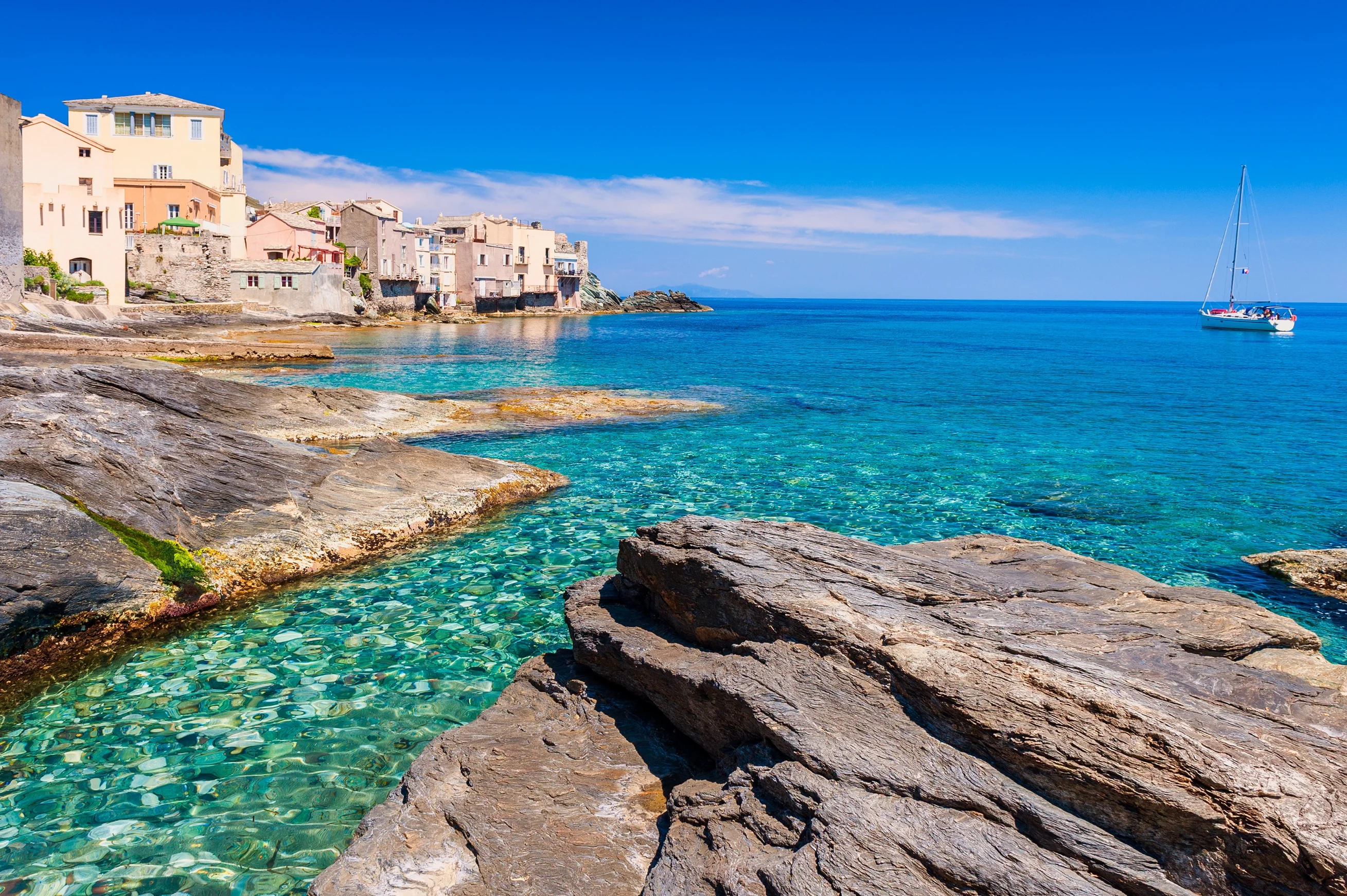
Brando, seven hamlets perched between the maquis and the Mediterranean
Did you know the paving stones of several major European town squares came from right here? The famous Brando stones, quarried from cipolin marble pits active for centuries in the heights of Cap Corse, traveled to the four corners of the globe.
Yet the town itself remains surprisingly under the radar. Seven hamlets spread between the sea and the mountains, once the leading port of Corsica during the Middle Ages, and a fishing village that has drawn painters since the 19th century. Brando never needed hype to exist.
Who is it really for?
Brando is not a destination for anyone looking for crowded sandy beaches or late-night clubbing. It is a place that requires a little effort, rewarding the curious, hikers, and lovers of overlooked Corsican heritage. The proximity of Bastia, just 15 minutes away by car, also makes it a practical base for exploring the entire north of the island.
Ideal destination for:
- Hikers looking to climb Monte Stello, the highest point in Cap Corse at 1,307 meters
- Fans of medieval heritage and Pisan architecture
- Couples seeking a restorative getaway, particularly thanks to the Castel Brando and its pools
- Divers and snorkelers looking for crystal-clear waters
- Travelers who want a quiet base to explore Bastia and Cap Corse
- Travelers drawn to intangible religious heritage, notably the pilgrimage of Lavasina
Not recommended for:
- Vacationers who primarily want a wide sandy beach, since Brando's coastline is rocky
- Travelers without a car, as the hamlets are scattered and public transit is virtually nonexistent
- Anyone trying to escape peak-season Corsican prices, as dining in Erbalunga can be expensive
Corsica on a budget: expect higher prices in July and August
| Expense type | Estimated range |
|---|---|
| Budget lodging (gîte, vacation rental, B&B) | From $57* / night |
| Comfortable lodging (4-star hotel Castel Brando or sea-view villa) | $169 to $340* / night |
| Quick meal (sandwich, takeout pizza, port bar) | $14 to $23* |
| Restaurant meal (Corsican bistro or fresh fish at the port of Erbalunga) | $40 to $79* |
| Activities (free hiking, introductory dive with Calypso Marine, site entry) | to $68* |
| Backpacker daily budget | $90 to $124* |
| Comfortable daily budget | $230 to $430* |
A few realities to know before you arrive
A car is essential. The town's seven hamlets are connected by narrow roads, and the D80, the main coastal artery, is the only real thoroughfare. From Bastia, figure 15 to 20 minutes depending on which hamlet you are heading to. Parking in Erbalunga is limited, so arrive early in the summer. A parking lot is available at the entrance of the village.
Language-wise, French and Corsican blend naturally together. Italian is frequently understood, which makes sense for a port that used to be the island's premier harbor. Corsica remains an exceptionally safe destination for travelers, including solo visitors.
Erbalunga: the village painters never left
It is the most visited hamlet in the town, and for good reason. Tall houses with colorful facades jut straight out into the sea on a rocky point, topped by the ruins of a 16th-century Genoese tower. Listed as a protected site, the village of Erbalunga is pedestrian-only in its center, which spares it the chaos found in many coastal Corsican villages during the summer.
The fishing port, active since the Middle Ages, sets the scene with terrace restaurant tables, the scent of salt air, and bobbing boats. Stroll through the cobblestone alleys where jasmine spills over stone walls and take a look at the Saint-Erasme Church, whose baroque facade has watched over sailors for centuries.
Friendly tip: The Good Friday procession in Erbalunga is one of the most striking religious ceremonies in Corsica. The cerca winds through the hamlets after dark, ending in the granitula, a human spiral of chained penitents. If you are there in late March or early April, do not miss it.
Monte Stello and the inland hamlets: high-altitude Corsica
From the hamlet of Pozzo, the trail climbing toward Monte Stello gains 1,000 meters of elevation. At the summit, 1,307 meters up, the view spans both coasts of the island, the tip of Cap Corse, and on clear days, the Tuscan coastline. Plan for 6 to 7 hours round trip. It is an intermediate-level hike, and hiking boots are mandatory.
The hamlet of Pozzo is well worth a stop on its own. You will find the Ferdinandi house there, dating back to 1487, a rare surviving example of historic Corsican medieval civil architecture, along with the Palazzu Angeli, one of the grand homes built by emigrants who made their fortunes across the Atlantic. The history of Corsican emigration to Puerto Rico and Venezuela starting in the 19th century is written right into these stones.
- The hamlet of Castello houses a 10th-century Romanesque Notre-Dame-des-Neiges chapel featuring classified 14th-century frescoes
- The quarries of Mausoleo, in the Petre-Scritte area, still produce cipolin, the marbled stone exported worldwide
- The hamlet of Silgaghja, sitting at the highest elevation, preserves a stair step with the date 1419 carved into it
Lavasina and the pilgrimage of the miraculous Virgin
Every September 8, hundreds of pilgrims walk toward the church of Lavasina to venerate a painting of the Virgin with a colorful backstory. In the 17th century, a debtor unable to pay back a Genoese merchant offered him the icon instead. When the merchant received it, gold coins reportedly fell out, matching the exact amount owed. The chapel was built in 1671 to house the painting.
Outside of pilgrimage season, Lavasina is a quiet beach hamlet with pebble shores and a noticeably less touristy vibe than Erbalunga. It is where we like to stay whenever we return to the area: fewer crowds, the same sea access, and the D80 gets you to Erbalunga in five minutes.
The sea and water sports: rocks, coves, and marine life
Brando does not have a large sandy beach, and that is by design. Swimmers slip into the polished rocks facing the village of Erbalunga or head up to the sandy beaches of Pietracorbara, 15 minutes north. The marine environments of Cap Corse are among the best preserved in the Mediterranean.
The Calypso Marine dive center, based in Erbalunga, offers first dives, courses, and snorkeling outings. For coastal walkers, the Sentier des Douaniers (the customs officers' path), at the northern tip of the Cape, remains one of the finest walks on the island: it starts at Tamarone and ends at Barcaggio, between cliffs and wild maquis.
Where to eat and drink in Brando?
The port of Erbalunga packs a dozen tables into a small space, from pizzerias to fine dining. Le Pirate, listed in the Michelin Guide, is the village's star address: carefully worked Corsican specialties, red mullet fillet, suckling pig, fish soup. Booking is essential in summer, and the bill adds up. For a more reasonable quality-to-price ratio, L'Esquinade and A Piazzetta are appreciated for their local produce and their welcome.
At the Castel Brando, the restaurant "Les Américains" serves polished island cooking: roasted Cap Corse langoustines, John Dory from the coast, Balagne black chicken with sciacarellu. More unusual, the Cantinalolo is a tiny table tucked into an Erbalunga alley, with a terrace that seats only a handful and a soundtrack chosen with care.
Where to stay in Brando and the surrounding area?
The flagship address remains the Castel Brando, a 4-star hotel set in a 19th-century villa in Erbalunga. Three pools, a spa, and live jazz in summer with well-known artists such as Melody Gardot: this is the discreet retreat of personalities passing through. Expect from $169* a night depending on the season.
For a more affordable stay, weekly holiday rentals are plentiful in the inland hamlets and in Lavasina. They let you find the quiet again as soon as you move away from Erbalunga. Sea-view gîtes get booked several months ahead for July and August.
How to get to Brando?
Bastia-Poretta airport is about 25 km away. Direct flights run from Paris, Lyon, Marseille, and several European cities, above all in season; there is no service from North America, so plan on connecting in Paris. The ferry crossing from Marseille or Nice to Bastia takes 5 to 13 hours depending on the operator. From Italy, Livorno and Savona are the closest ports, with crossings of 4 to 8 hours.
Once in Bastia, Erbalunga is 15 minutes away on the D80, hugging the coast. Car rental is recommended straight from the airport: without a car, the commune is very hard to explore.
How to get around Brando?
The village of Erbalunga can be seen entirely on foot in under an hour. To link the hamlets to one another, a car is essential: the roads are narrow but passable. There is no local bus network in the commune.
Taxis from Bastia serve the area, but Corsican fares are steep. No local ride-hailing app operates in this rural sector. In summer, plan your ride back from Erbalunga if you intend to have dinner by the water.
When to go?
Spring and autumn are the best seasons: the sea is still cool in May, the light turns golden in September and October, and the hiking trails are open. July and August remain pleasant, but Erbalunga is packed in the evening and prices climb noticeably.
Avoid the weekend of the Good Friday procession if you are escaping the crowds, but run to it if intangible heritage interests you.
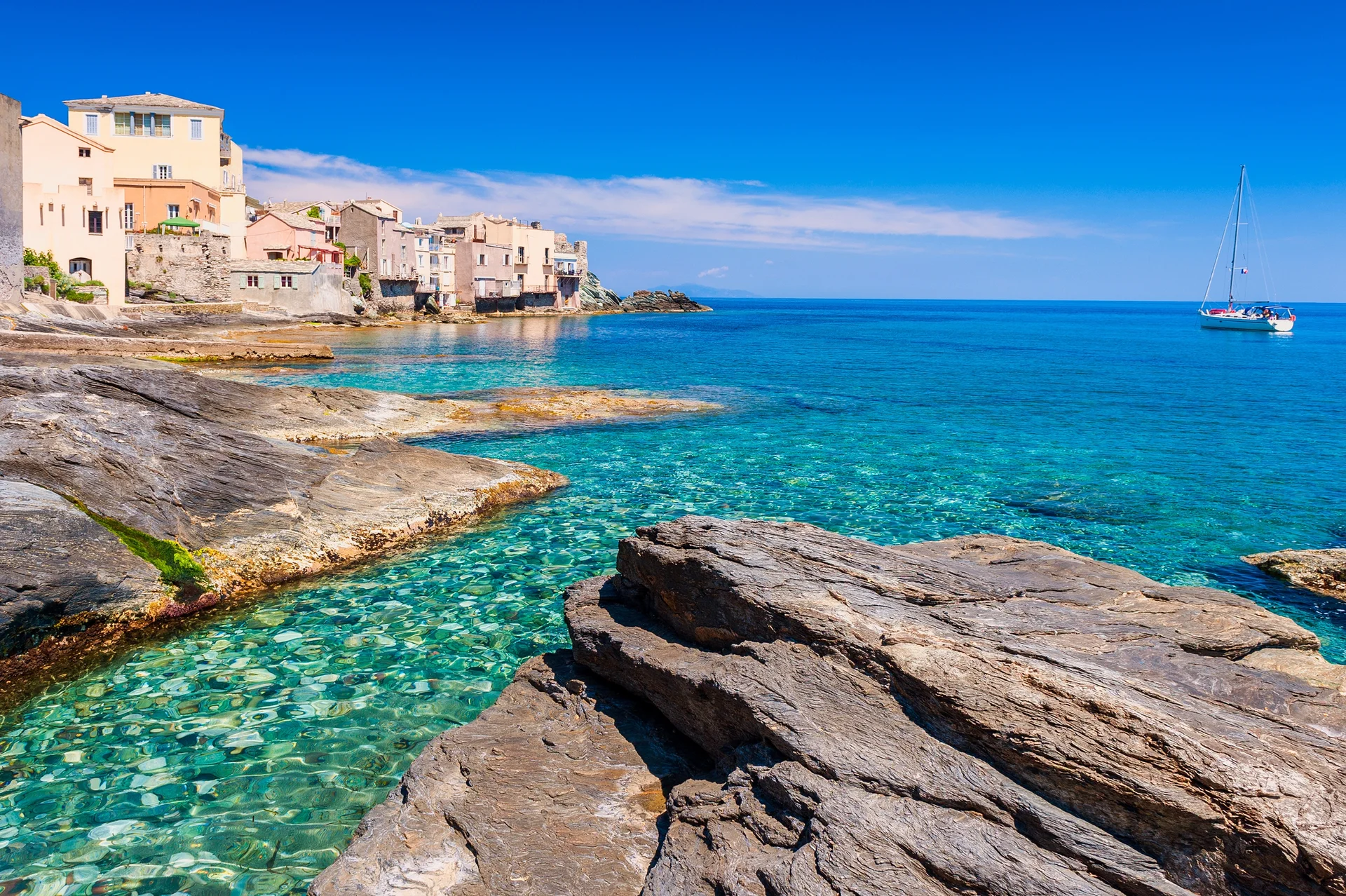
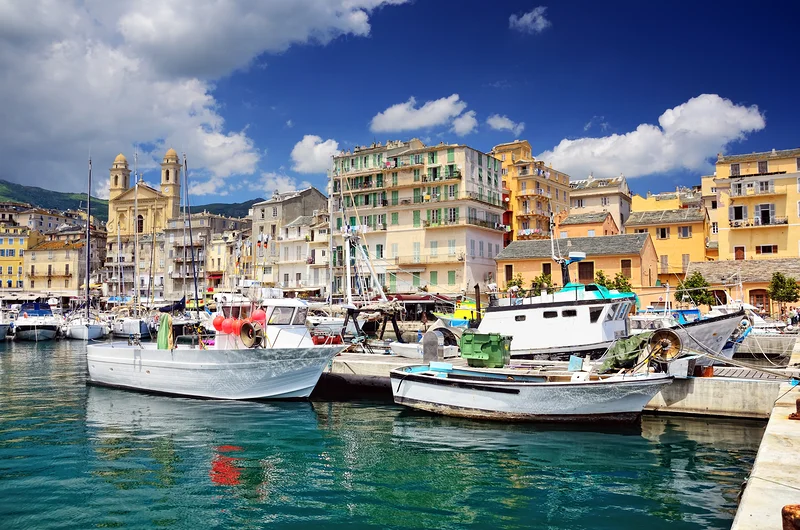
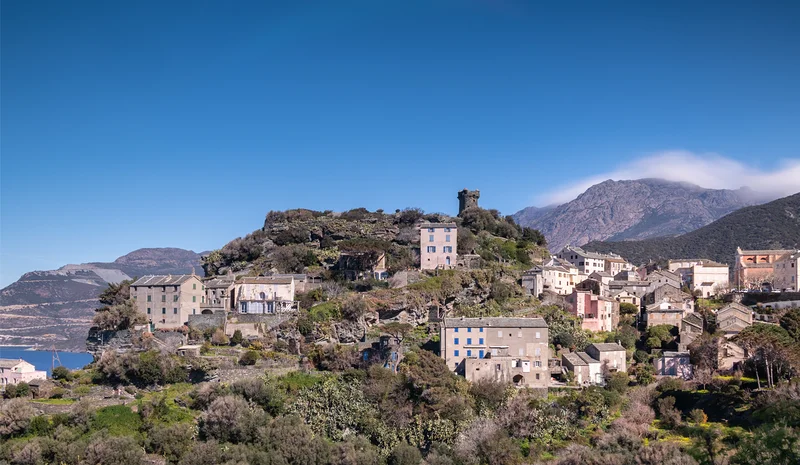
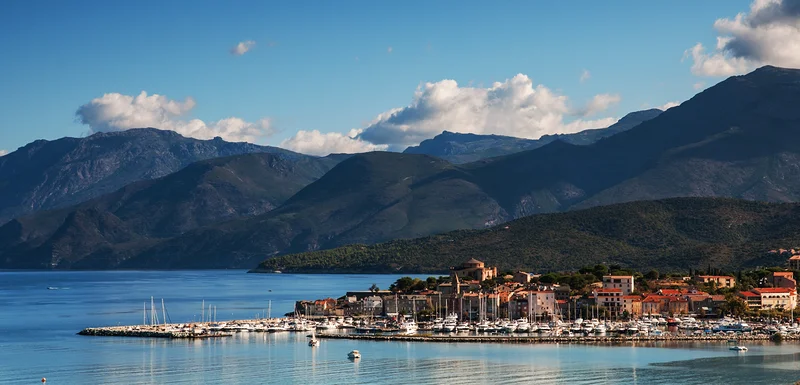
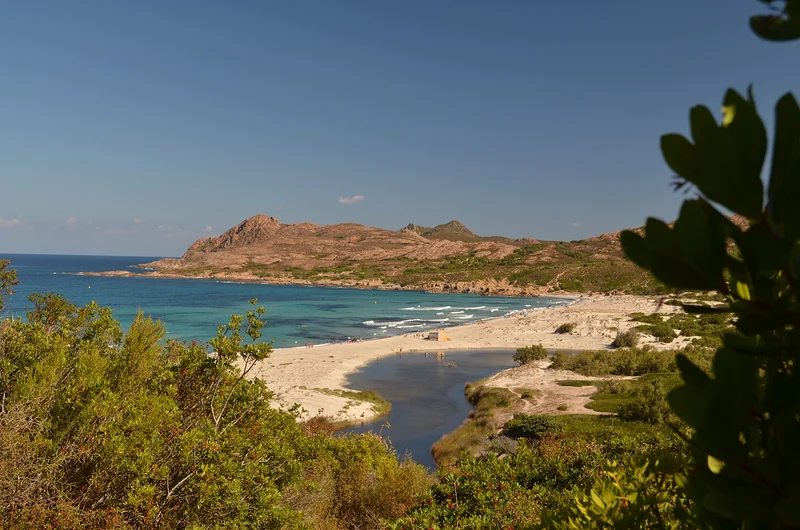
A beautiful place in Cap Corse! I really enjoyed discovering the towers and the old houses. It is a place with a romantic beauty that makes you dream and has kept its soul as a traditional fishing village. Don't miss the Erbalunga marina and its waters with their changing reflections.