
Pont-Aven, the village that invented modern art
In 1888, Paul Gauguin gave a painting lesson to a young artist in the woods along the Aven River. He told him to paint the trees yellow, the shadows blue, and the leaves red. That conversation sparked the creation of the Talisman, a small canvas that would revolutionize Western painting. That wooded area still exists today. It is called the Bois d'Amour, and when you walk through it now, the light filtering between the beech and oak trees has not changed in 140 years.
Pont-Aven: a paradise for contemplative strolls
This village of 3,000 residents attracts art lovers, hikers, and those looking for a Brittany experience without the crowded beaches. The Aven winds between granite boulders, turns the wheels of old mills, and gradually transforms into a maritime estuary. You can easily spend two hours wandering between art galleries and flower-lined bridges, or an entire day following the trails that lead to the sea.
A note of caution: in July and August, the village becomes a victim of its own success. The narrow streets turn into single-file lines of tourists, and the 60 art galleries compete for attention. Visit in May, June, or September to enjoy the quiet that originally drew the painters here. A car remains essential for exploring the surrounding countryside, even if the center is entirely walkable.
A reasonable budget for southern Brittany
Expect to pay $90 to $169* per night for a charming hotel, and $17 to $29* for a meal at a crêperie. Admission to the museum is $5.70* outside temporary exhibitions and $9* during them, and boat cruises on the Aven range from $17 to $29* depending on duration. Parking in the center is paid during the high season, but free on the outskirts.
Following in the footsteps of the painters
The Musée de Pont-Aven occupies the annex of the former Hôtel Julia, where wealthy artists used to gather. Its 850 exhibited works trace the story of the École de Pont-Aven, the movement that broke away from Impressionism to invent Synthetism. One room reconstructs the dining room where Gauguin, Bernard, and Sérusier debated until the early morning hours. A detail that sometimes surprises visitors: the museum does not hold any permanent works by Gauguin. The major canvases are at the Musée d'Orsay in Paris.
As you leave the museum, head down toward place Gauguin. The Pension Gloanec, where broke painters stayed for 60 francs a month, has been turned into a bookstore. Marie-Jeanne Gloanec, the owner, used to accept paintings as payment. Some of those paintings are worth millions today.
Friendly tip: pick up the "Sur les pas de Gauguin" (In the footsteps of Gauguin) guide at the tourist office. Three circuits ranging from 1 to 2.5 hours allow you to find the exact viewpoints that inspired the paintings, complete with reproductions for comparison.
The Bois d'Amour and the Trémalo chapel
The Promenade Xavier Grall runs along the Aven from the center to the Bois d'Amour. The path passes restored wash houses, mill ruins, and wooden footbridges spanning the river. It was here, in these woods where sunlight plays off the granite rocks, that Gauguin taught Sérusier his theory of pure colors.
Above the woods, the chapelle de Trémalo hides behind a curtain of oaks. Its asymmetrical roof descends almost to the ground on the north side. Inside, the 17th-century polychrome wooden crucifix inspired the Christ Jaune (Yellow Christ), one of Gauguin's most famous works. The resemblance is striking.
The mills and the harbor
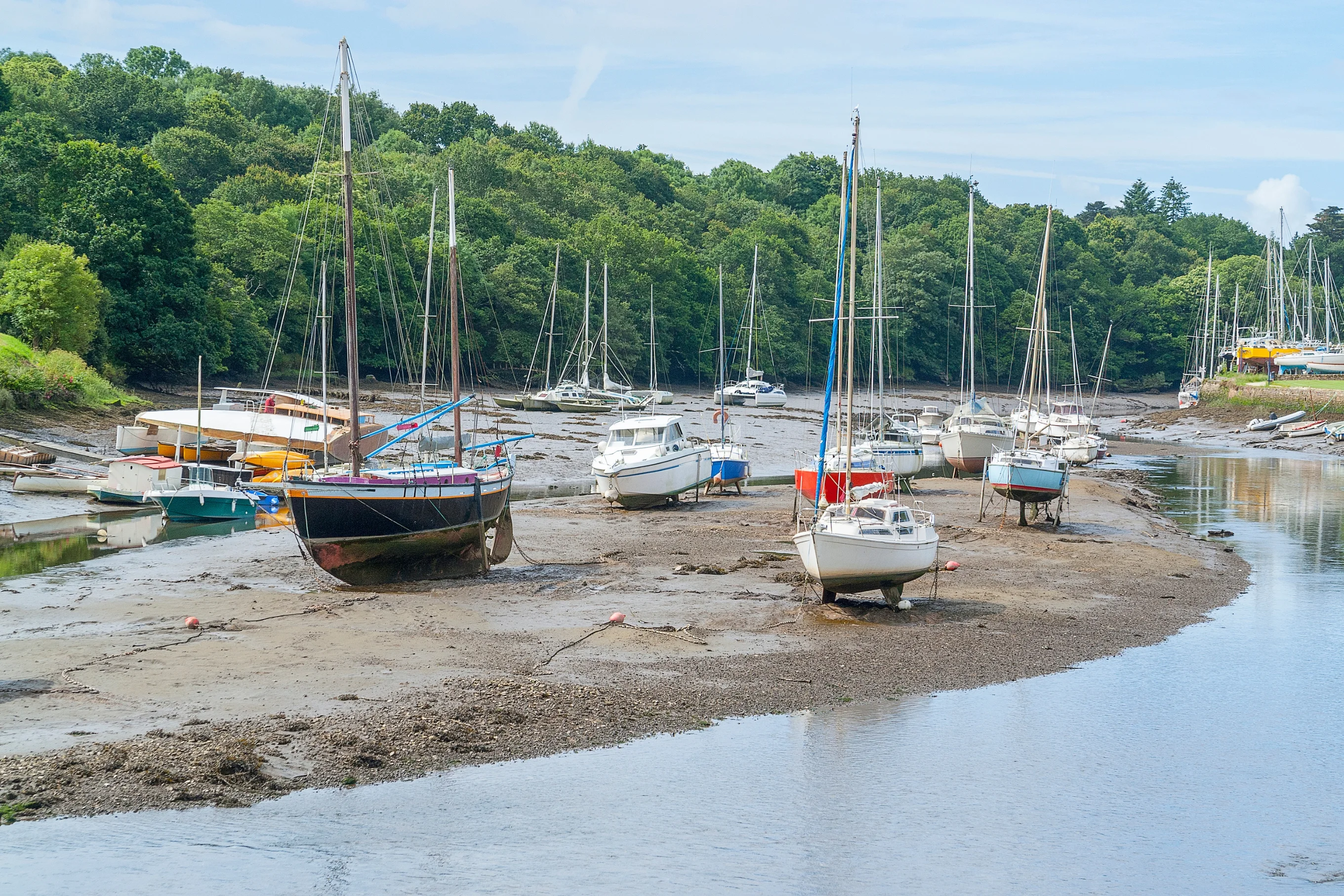
It was once said that Pont-Aven had "14 mills and 15 houses." The water mills, powered by the cascades of the Aven, brought prosperity to the village long before the artists arrived. Four remain, including the Moulin du Grand Poulguin, now a restaurant where you can still see the original wheels and sluice gates. This mill served as a setting for the French film "Les Galettes de Pont-Aven."
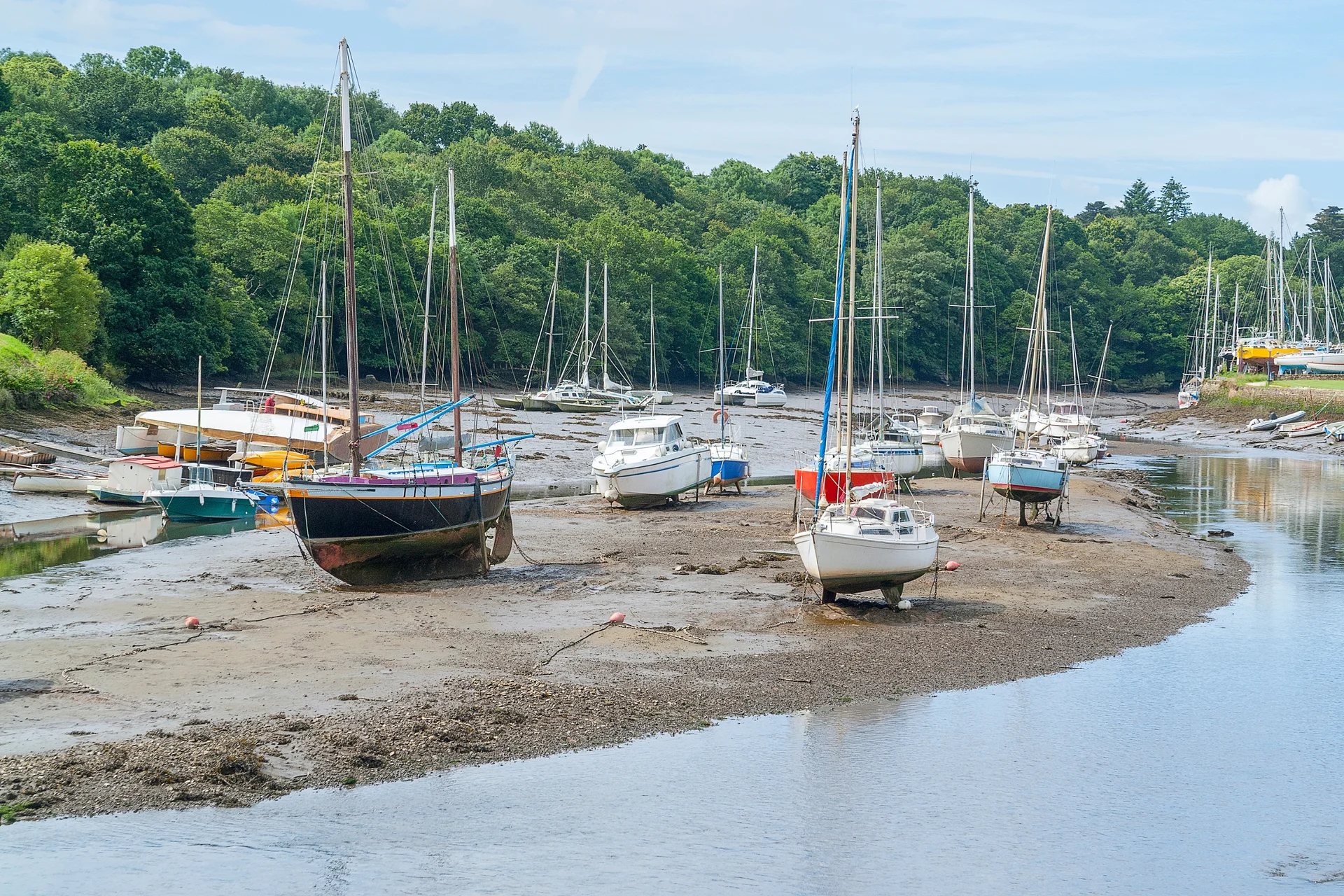
The small marina stretches along the estuary, lined with Belle Époque villas nestled in the greenery. From here, narrated cruises depart for Port-Manech, where the Aven meets the ocean. Schedules depend on the tides. At low tide, a massive rock shaped like a clog emerges in the middle of the channel, known as the Sabot de Gargantua according to local legend.
Surrounding villages
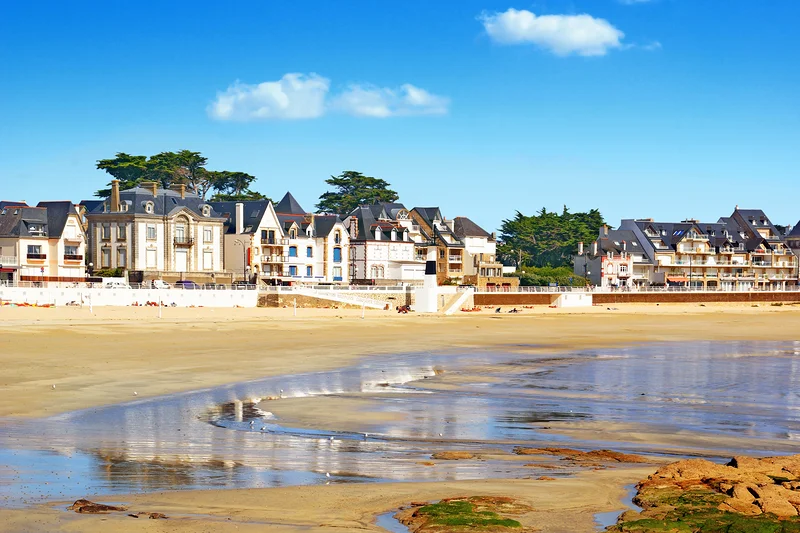
A few kilometers away, Kerascoet features rows of granite thatched cottages in a picture-perfect setting. This preserved hamlet gives a glimpse of what rural Brittany looked like before tourism. Further toward the coast, Port-Manech offers a fine sand beach lined with white bathing cabins, a relic of 19th-century vacationing.
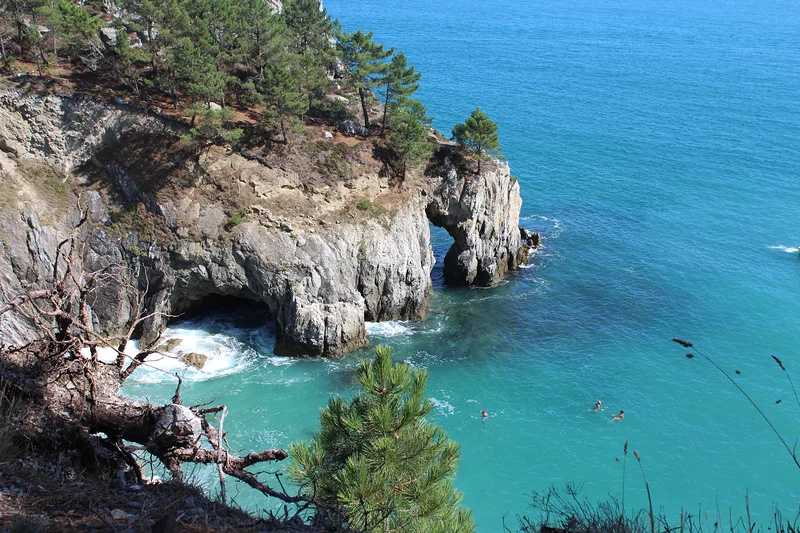
Hikers can follow the GR34, the custom officers' trail, which runs along the Aven for 14 km to the sea. The route crosses woods, fishing hamlets, and coves accessible only on foot.
Where to eat and drink in Pont-Aven?
The Moulin de Rosmadec is the oldest Michelin-starred restaurant in Brittany, having received its first star in 1933. In this 15th-century mill by the water, chef Sébastien Martinez highlights langoustines from Guilvinec and blue lobster. Expect to pay $85 to $169* per person. For more modest budgets, the crêperie Le Talisman serves buckwheat galettes just 30 meters from the port.
The galettes de Pont-Aven are not crêpes but butter cookies, produced here since 1890. The Traou Mad biscuit factory, whose name means "good things" in Breton, has kept the recipe alive since 1920. Its boxes, decorated with reproductions of paintings, make perfect souvenirs. The other historical manufacturer, Penven, is also worth a visit. On Tuesday mornings, the market fills the center with local producers.
Where to stay in and around Pont-Aven?
The Pension du Moulin has recently reopened after renovations. It features 24 rooms, each named after an artist, located in the former Hôtel Gloanec where Gauguin and his friends stayed. Rates start around $169* per night. The Les Ajoncs d'Or hotel, another historic establishment linked to the painters, offers more accessible rooms around $102*.
Outside the village, rural gîtes and bed and breakfasts are plentiful within a 10 km radius. The Domaine de Kerlann and the Domaine de Pont-Aven Art Gallery Resort offer more spacious options for families. In Concarneau, 17 km away, there is a wider and often cheaper selection of hotels.
How to get to and around Pont-Aven?
By car from Paris, expect a 5-hour drive via the A11 and then the expressway toward Quimper. From Nantes, it takes about 2.5 hours. The nearest TGV train station is Quimperlé, 15 km away, with direct trains from Paris-Montparnasse taking 3.5 hours. From there, a taxi or rental car is necessary.
The Quimper-Cornouaille airport receives a few flights from Paris-Orly. The Lorient airport, 40 km away, offers more connections. In the village, everything is reachable on foot. Four parking lots, some paid and some free, surround the center: Hofgeismar, Bel Air, centre-ville, and port.
When to go?
The ideal time to visit is from May to September, with a preference for May, June, and September when the light is beautiful and the summer crowds are thinner. The Fête des Fleurs d'Ajonc, held on the first Sunday of August, celebrates Breton culture with traditional dances and costumes. The Fête de la Belle Angèle, during the last big tide of August, gathers traditional wooden sailing boats in the harbor.
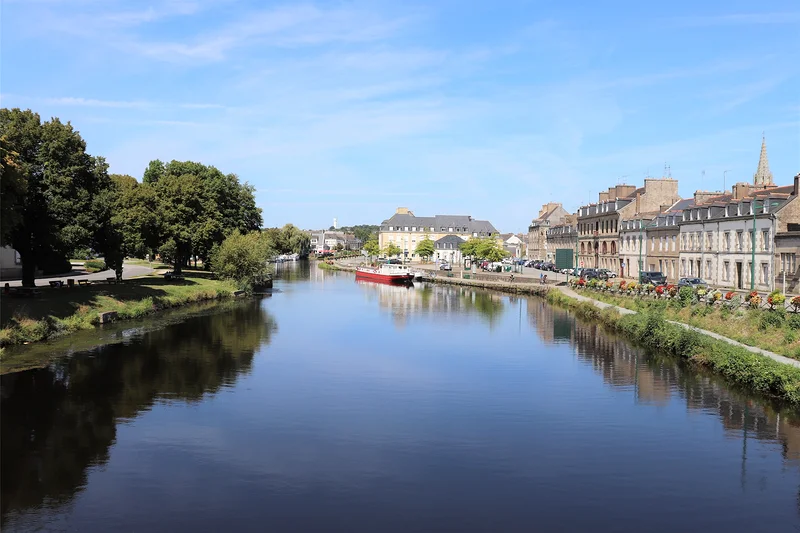
I found the town of Pont-Aven picturesque with a well-preserved old-world charm. The stone buildings and cobblestone alleys are beautiful. It is very pleasant to walk along the river. The town also has many art galleries and a super interesting museum.