
Pontivy, the town that changed its name three times for an emperor
Back in the 7th century, a monk named Ivy built a bridge over the Blavet River. The village that grew up around it took his name: Pont-Ivy, eventually becoming Pontivy. Thirteen centuries later, the town still goes by that name, except for the periods when Napoleon decided it should bear his own.
Renamed Napoléonville three times, this Morbihan town of 15,000 residents remains the only one in France to keep its dual identity entirely intact: on one side, the winding alleys of the Middle Ages, and on the other, the straight avenues laid out by the Emperor.
For history buffs and canal cyclists
If you are looking for beaches or nightlife, keep driving. Pontivy caters to history enthusiasts, families seeking accessible nature, and cyclists rolling along the Vélodyssée bike route beside the Nantes-Brest canal. The town also serves as a convenient base for exploring central Brittany, with the lac de Guerlédan, the region's largest artificial lake, sitting fifteen kilometres away.
A car is practically essential for exploring the surrounding countryside. The BreizhGo bus network connects Pontivy to Rennes in 1 hour and 30 minutes, but the outlying chapels, ironworks, and hamlets demand four wheels. Slow travel fans will feel right at home here, as time seems to stretch out.
A reasonable budget for inland Brittany
Expect to pay $79 to $124* per night for a guesthouse or small hotel, and $17 to $29* for a full meal. Admission to the castle and guided tours hover around $4.50 to $7.90*, but the summer L'Art dans les Chapelles festival is entirely free.
The Rohan castle and the medieval quarter
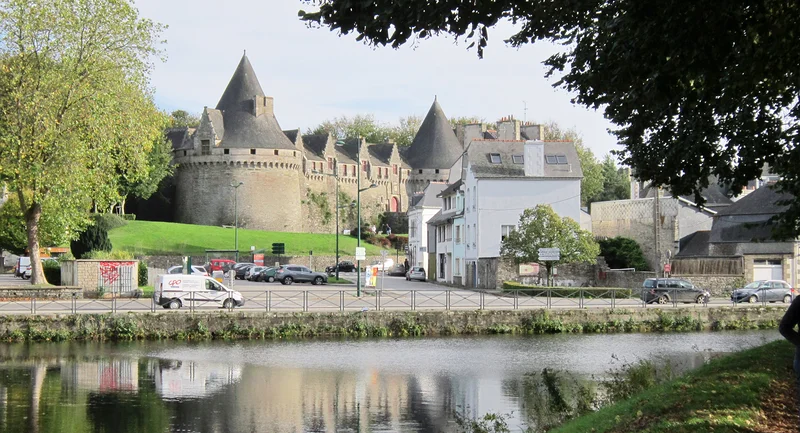
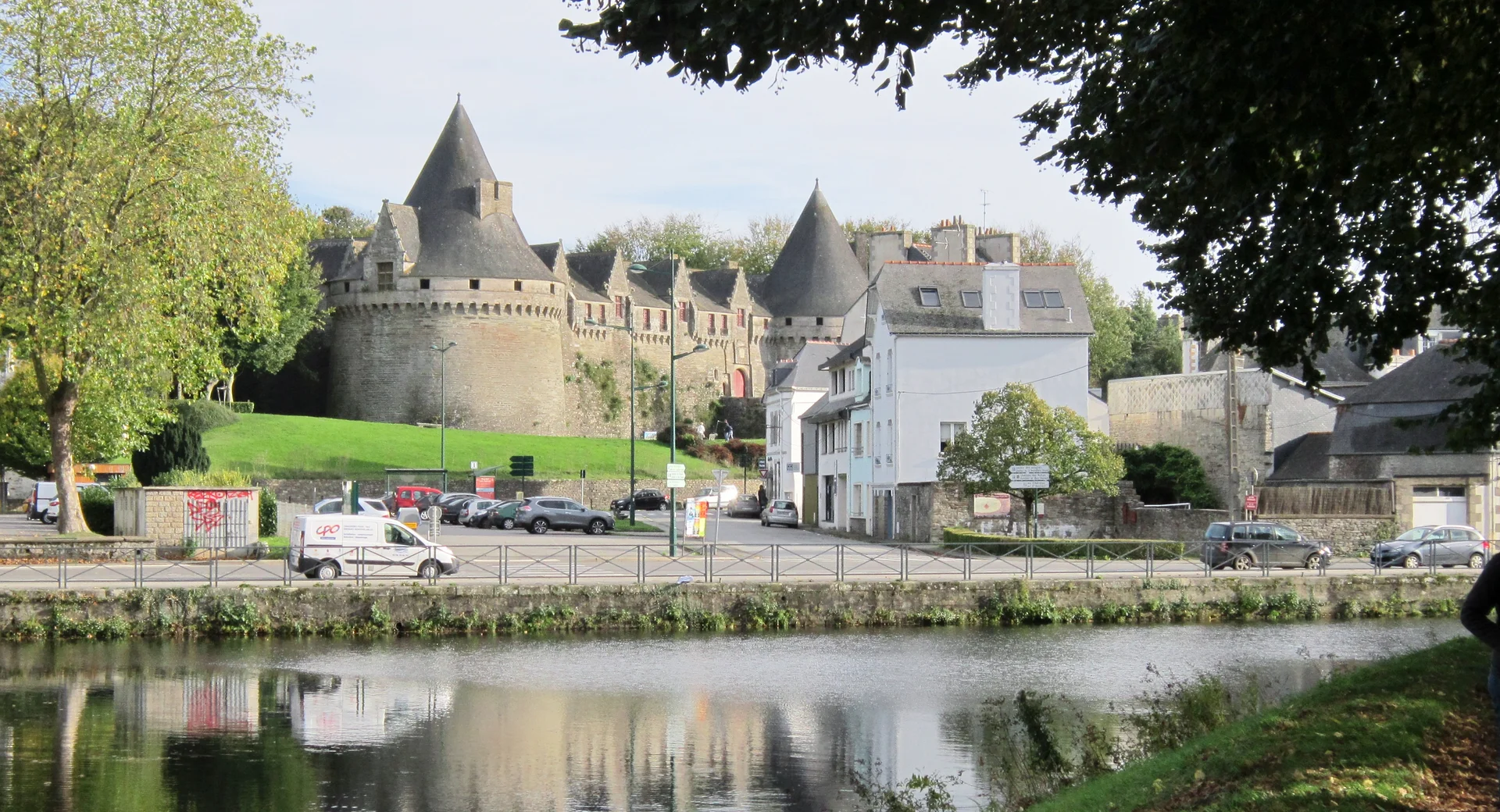
The château des Rohan has towered over the town since 1485. Built by Jean II de Rohan, nicknamed the Grand Viscount, it stands as one of the last fortified castles erected in Brittany. Its massive towers and thick walls reflect an era when artillery changed the rules of warfare. In February 2014, the south curtain wall collapsed following torrential rains. Reconstruction work continues, but guided tours grant access to the courtyard and interiors during school vacations.
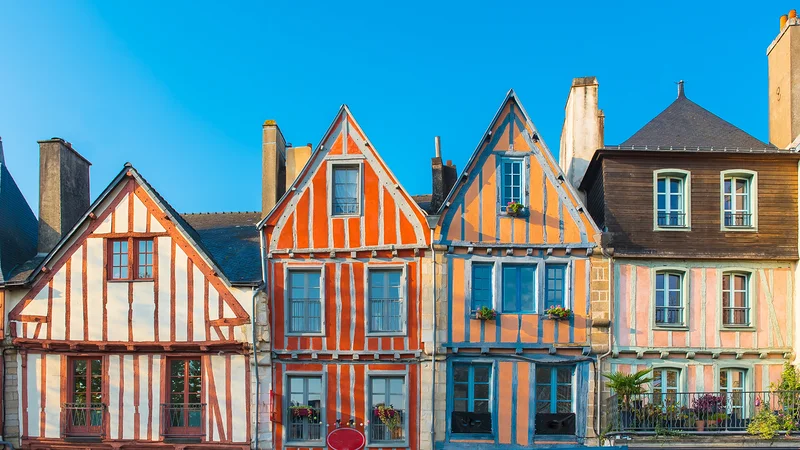
Around the castle, the medieval quarter invites exploration on foot. Place du Martray concentrates the timber-framed houses that date back to when Pontivy prospered from the linen trade. Walk down rue du Fil and rue du Pont, former main thoroughfares that wind much more than the Napoleonic avenues. The basilique Notre-Dame-de-Joie, a 15th-century Gothic church, is worth a stop for its stained-glass windows.
Friendly tip: check the color of the street signs. Red means the medieval quarter, while green points to the Napoleonic district. It is a handy way to keep your bearings while wandering.
Napoléonville and the imperial heritage
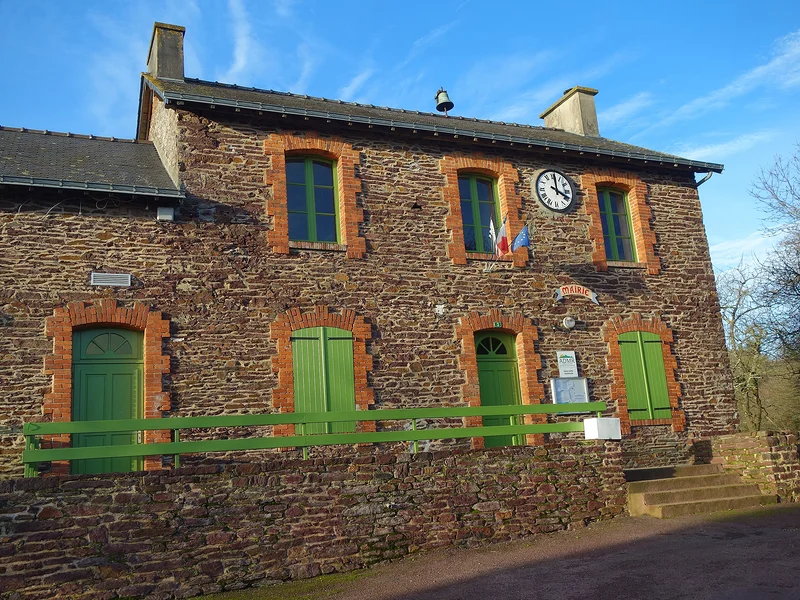
In 1806, Napoleon I launched the construction of the canal de Nantes à Brest to bypass the British naval blockade. Pontivy, sitting squarely in the middle of Brittany, turned into a strategic crossroads. The Emperor ordered a new district built with perpendicular streets designed to house 10,000 soldiers. Place Aristide Briand forms its heart, bordered by the former courthouse, sub-prefecture, and town hall.
The église impériale Saint-Joseph, financed by Napoleon III and Empress Eugénie in 1858, displays a surprising Neo-Gothic style against this Neoclassical backdrop. Its slender bell tower dominates the neighborhood. Ironically, the town reverted to its original name with the fall of every Bonaparte.
The canal and its towpaths
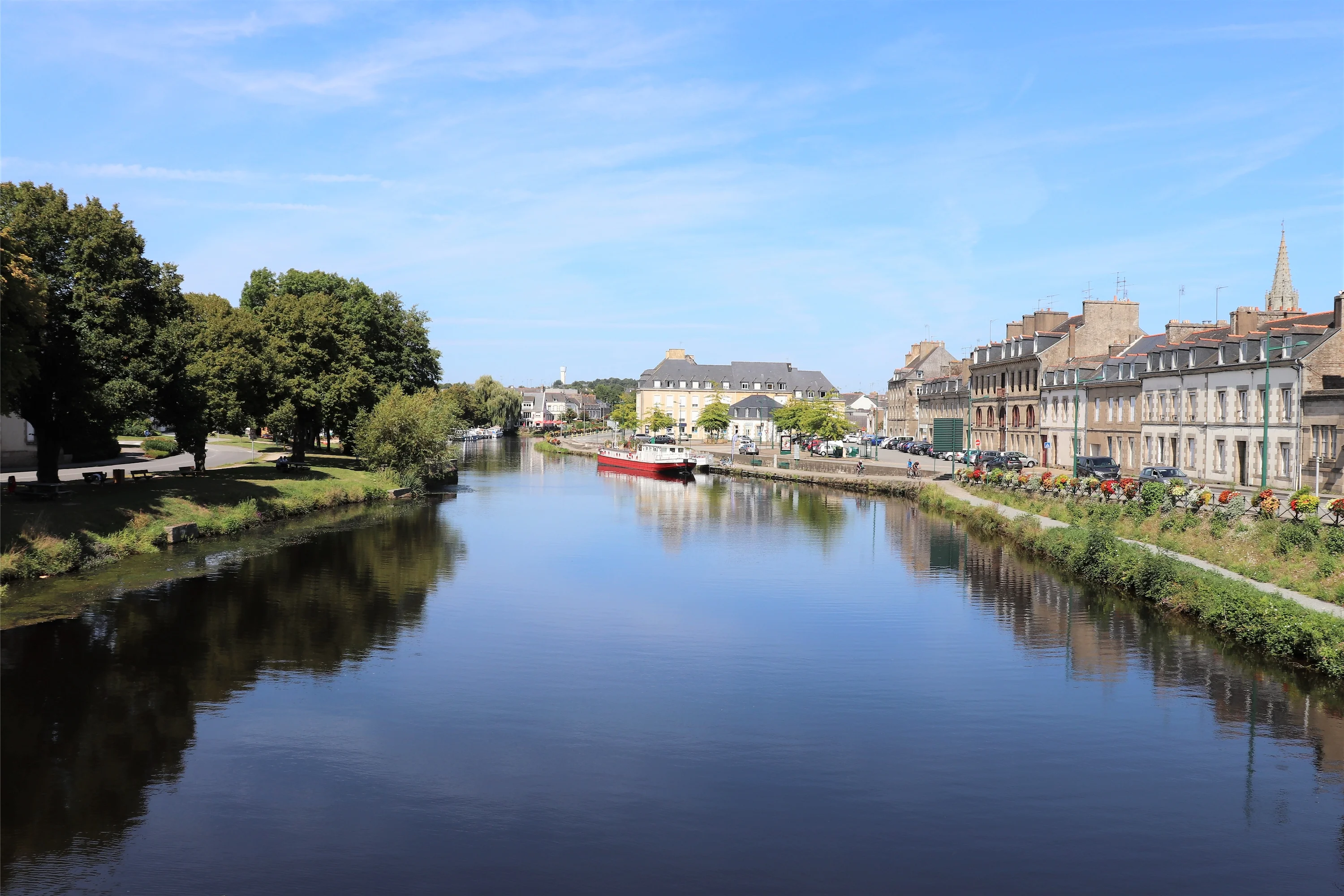
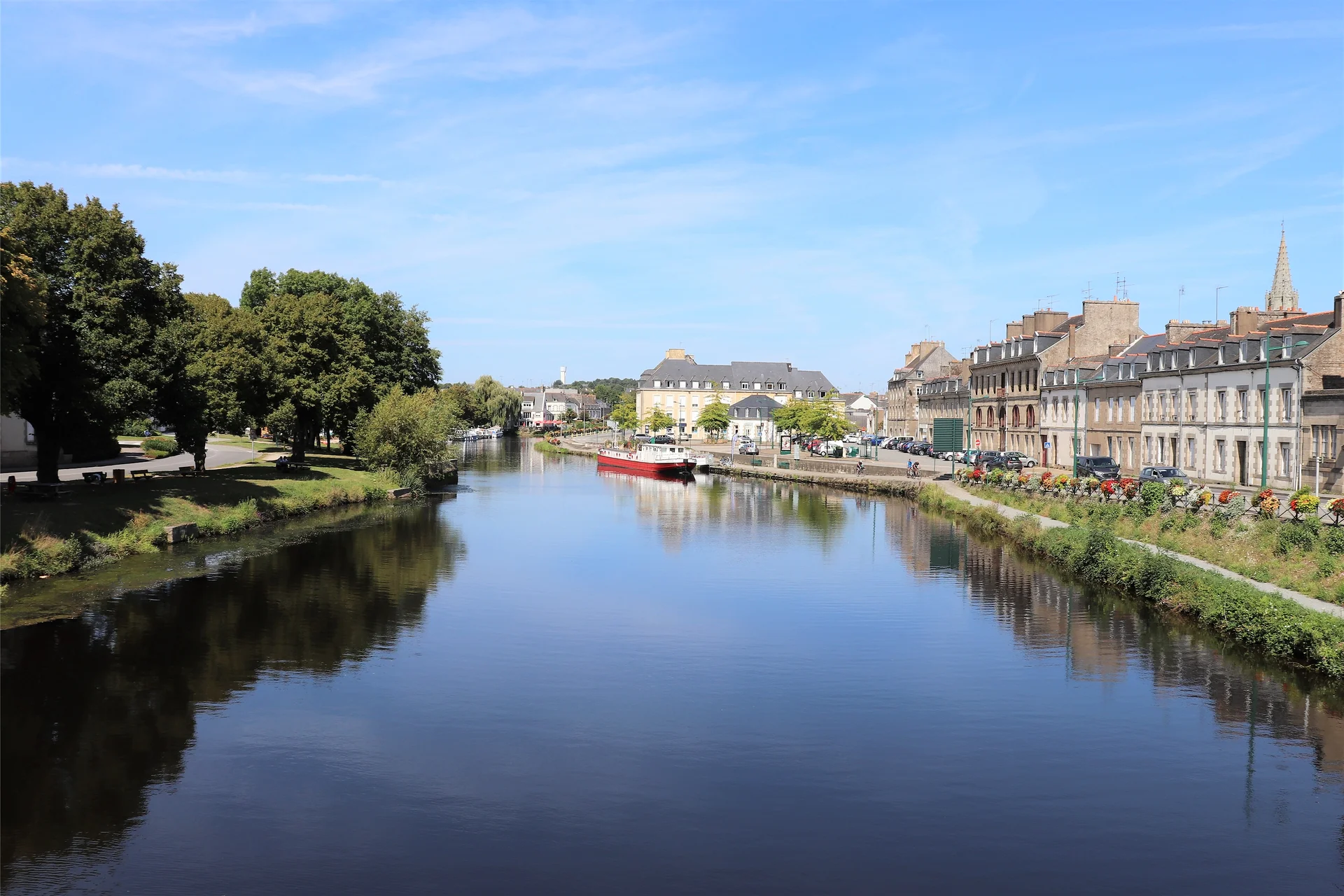
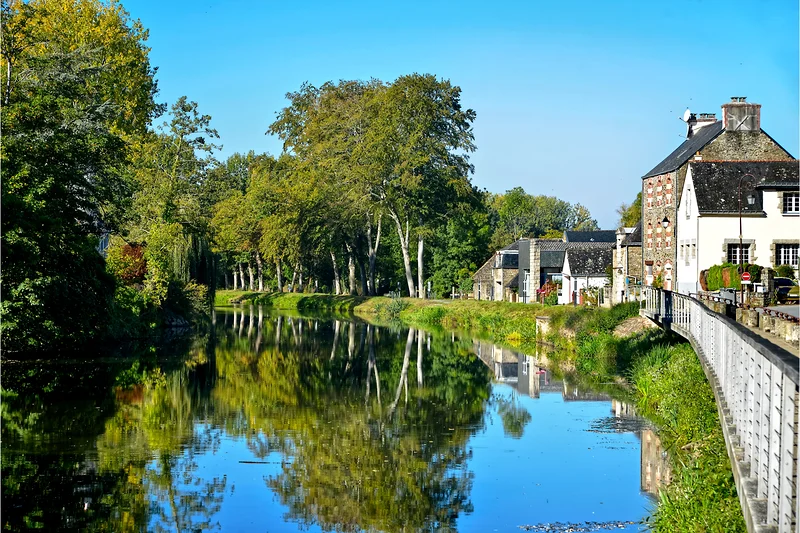
The office de tourisme actually floats. Housed on the Duchesse Anne barge moored at Quai Presbourg, it stands as France's only floating visitor center. The Blavet canalisé cuts through town and links up with the canal de Nantes à Brest, offering miles of towpaths ideal for walking or cycling. In summer, you can rent a kayak right across from the barge.
The Napoléon Express, a vintage 1950s tourist train, runs from July to September between Pontivy and Lambel-Camors. The route hugs the Blavet valley with stops in Saint-Nicolas-des-Eaux and Quistinic. Kids love it. Adults do too, secretly.
L'Art dans les Chapelles: when contemporary art meets the sacred
Every summer since 1992, roughly fifteen rural chapels around Pontivy host contemporary artworks created specifically for these spaces. The L'Art dans les Chapelles festival draws 100,000 visitors annually, yet admission remains free. The chapels, mostly built in the 15th and 16th centuries, provide a striking contrast to the installations, sculptures, and video art inside.
The chapelle Sainte-Noyale in Noyal-Pontivy features a remarkable painted ceiling. The chapelle Saint-Nicodème in Pluméliau and the chapelle Notre-Dame de Quelven in Guern rank among the most spectacular. Four marked driving and cycling loops cover the entire trail.
Friendly tip: the festival runs from July 4 to August 31, every day except Tuesday, from 14h to 19h. Give yourself a full day to complete any given circuit.
Out and about: lake, ironworks, and a medieval village
The lac de Guerlédan, located fifteen kilometres to the north, forms Brittany's largest lake. Beaches, waterskiing, sailing, and fishing round out the activities. In 2015, draining the dam exposed the drowned ruins of the canal and locks, drawing over a million and a half curious onlookers. The abbaye de Bon-Repos in Saint-Gelven hosts a historical sound-and-light show every summer.
Over in Melrand, the Village de l'An Mil recreates rural life around the year 1000 with thatched cottages, a forge, and gardens. The Forges des Salles in Sainte-Brigitte presents a fully restored 19th-century ironworking village complete with worker housing, a school, and ponds. The abbaye cistercienne de Timadeuc in Bréhan still produces cheese sold right on site.
Where to eat and drink in Pontivy?
The restaurant Hyacinthe et Robert, near the train station, has held a Michelin Bib Gourmand since 2022. Chef Damien serves hearty Central Brittany fare, with set menus running between $34 and $57*. His bistro Numéro 100, opened in 2021, offers a more casual take with pastries and a wine cellar.
For homemade burgers built with local ingredients, head to Le Baradoz, which uses French beef, cheese from the Timadeuc Trappist monastery, and vegetables from a Loudéac market gardener. The marché couvert operates on Saturday mornings, while the open-air market sets up on Monday along rue De Gaulle. Traditional buckwheat galettes de sarrasin and farmhouse cidre fermier remain essential classics.
Where to stay in and around Pontivy?
Hôtel Le Rohan, a four-star hotel set in a 19th-century building with a garden, offers rooms starting at $102*. Les Berges de Blavet, right by the canal in the old town, provides ten rooms in a more intimate setting. The Auberge de Jeunesse HI suits budget travelers and passing cyclists.
Around lac de Guerlédan, gîtes and guesthouses are multiplying. Gîtes de Lenvos, situated between Pontivy and Cléguérec, features a swimming pool and two private fishing lakes. For an unusual stay, hébergements de Quénécan offers treehouses and gypsy caravans tucked away in the forest.
How to get to and around Pontivy?
Pontivy does not have a passenger railway station. BreizhGo coaches connect the city to Rennes in 1 hour 20 minutes to 1 hour 40 minutes, with fares ranging from $4.50 to $12* depending on the schedule. Line 620 runs 18 daily trips on weekdays. From Paris, take the TGV to Rennes and catch the connecting bus. The nearest SNCF train stations are located in Vannes (52 km away), Lorient (56 km away), and Saint-Brieuc (67 km away).
By car, plan for 1 hour and 30 minutes from Rennes via the N24 and D764, or under 2 hours from Nantes. Downtown parking is straightforward, with free lots situated around place du Martray and place Aristide Briand. The local PondiBus network serves surrounding towns, though having a car makes exploring the broader region much easier.
When to go?
Summer, from July through August, packs in the most events: L'Art dans les Chapelles, the Napoléon Express, and swimming at lac de Guerlédan. Spring and autumn offer ideal conditions for hiking and cycling without the summer crowds. Winter in inland Brittany can turn gray and damp. The Monday market animates the town year-round.
I really enjoyed my visit to Pontivy, a town with a rich heritage located right on the Nantes-Brest Canal.
The walk along the canal is peaceful and very pleasant.
The historic center, with its old alleyways and half-timbered houses, gives off an authentic charm.
The medieval castle, which is imposing and well-preserved, is a true testament to Breton history.