
Carnac, Where Three Thousand Stones Keep a Seven-Thousand-Year-Old Secret
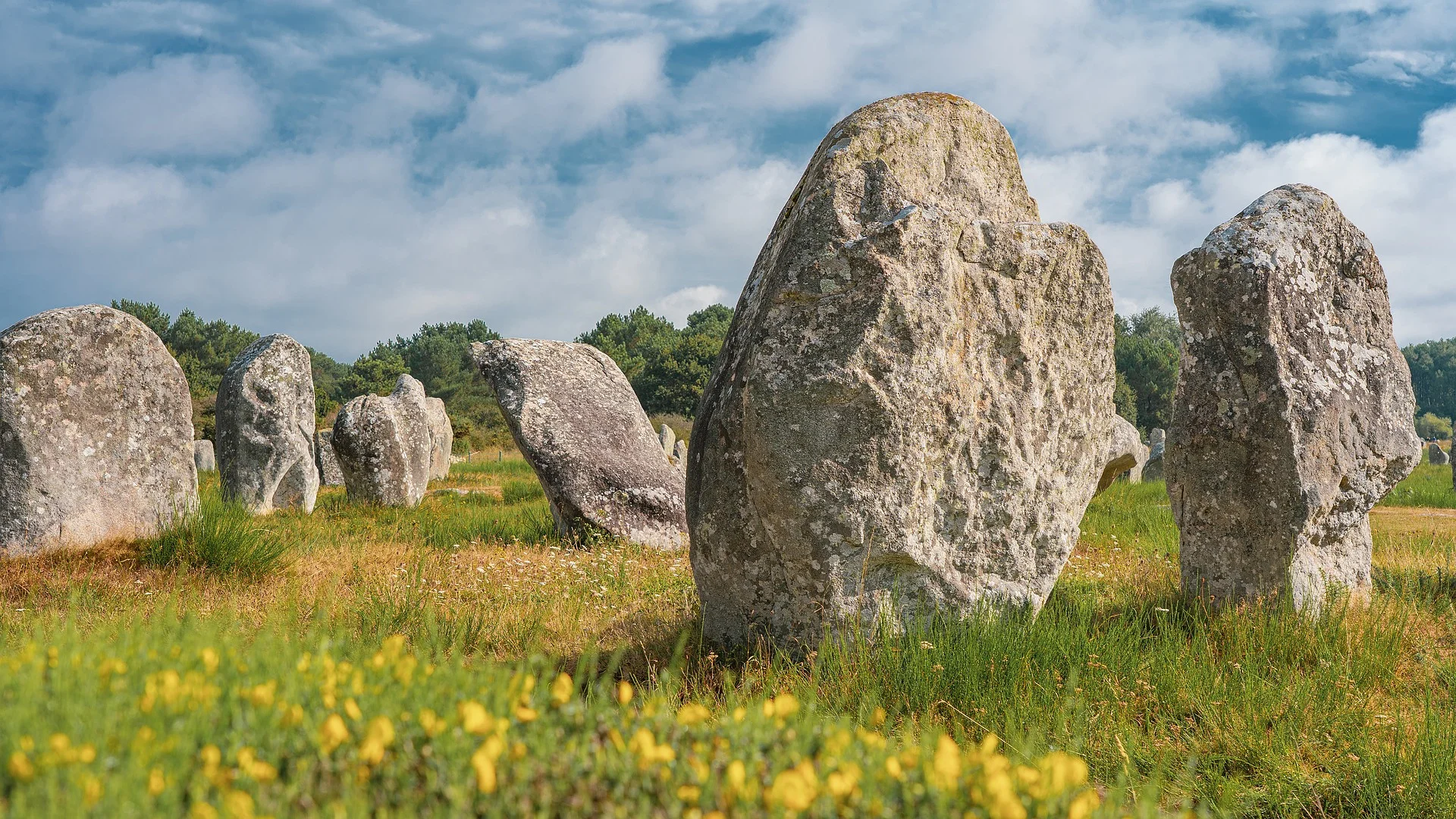
It's 7 a.m., and the mist is lifting off the fields of Ménec. The menhirs emerge one by one, lined up like a petrified army. According to an old Breton legend, they are Roman soldiers turned to stone by Pope Cornelius.
Archaeologists offer other theories: an agricultural calendar, an astronomical observatory, a processional route leading to sacred enclosures. Since July 2025, the megaliths of Carnac and the shores of the Morbihan have been a UNESCO World Heritage Site. Nearly 3,000 standing stones stretch over 4 kilometers, making up the largest megalithic ensemble in the world. And nobody really knows why.
Carnac: A Split Personality That Works in Its Favor
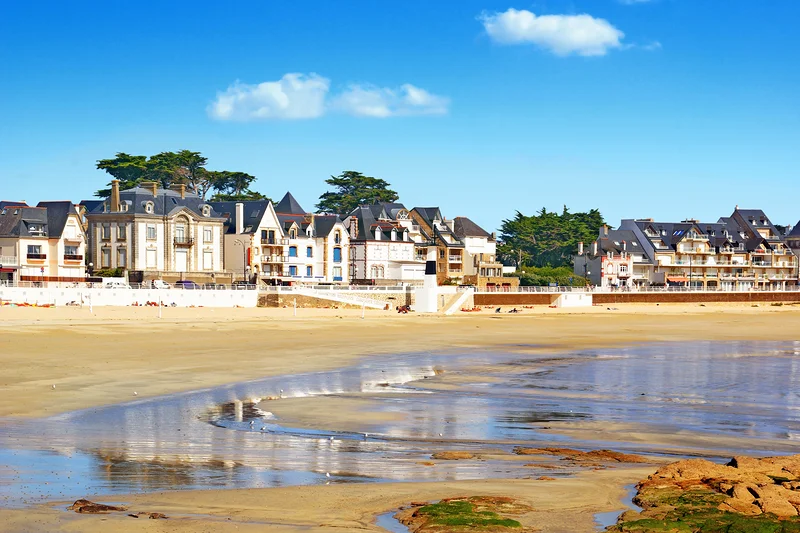
This Breton town has two distinct faces. Carnac-Ville keeps its quiet village charm, with a lively market and granite lanes. Carnac-Plage, founded in 1903, has an almost Mediterranean seaside look, with its upscale villas, maritime pines and five fine-sand beaches. Prehistory buffs and lovers of unsolved mysteries will be happy here. If all you want is a beach day, the swimming may disappoint: the water stays chilly even in summer.
A car makes it much easier to reach the megalithic sites scattered around the region. The Morbihan has more than 550 prehistoric monuments, and the most spectacular ones sit just a few kilometers apart. In summer, the population jumps from 5,000 to 50,000. Parking becomes a real headache, and the tourist train starts to make a lot of sense.
A Reasonable Budget for Brittany
Plan on $88 to $165* a night for a comfortable hotel, more for places with a spa. Guided tours of the alignments cost $15* per adult, and the Musée de Préhistoire runs about $7.70*. A seafood meal at a good restaurant comes to $33 to $55* per person.
The Alignments: Understand Before You Contemplate
Three main sites make up the alignments. Ménec has 1,169 stones in 11 parallel rows. Kermario, the most visited, counts 1,029 menhirs, some taller than 3 meters. Kerlescan, the smallest and best preserved, lines up 555 stones. From April to September, access is by guided tour only, to protect the site. From October to March, you can wander freely among the menhirs.
The Maison des Mégalithes, facing the Ménec site, is the ideal starting point. Its rooftop terrace offers a panoramic view over the alignments. The interactive exhibits show what daily life was like for the Neolithic communities who raised these stones between 5,000 and 3,000 BCE. These people lived in houses of wood and daub, raised livestock and farmed the land.
Friendly tip: go late in the day. The low-angle light makes the stones glow, and the crowds thin out. In summer, the Skedanoz evenings feature artistic light installations on the alignments.
Beyond the Alignments: More Megalithic Treasures
The Géant du Manio, 6.5 meters tall, hides in a patch of woods east of the alignments. It is the tallest menhir in Carnac, set upright again in the early 20th century by local archaeologist Zacharie Le Rouzic. Nearby, the Manio quadrilateral forms a rectangle of granite blocks whose purpose remains a mystery.
The Saint-Michel Tumulus rises over the village at 10 meters high, 125 meters long and 58 meters wide. It is the largest burial mound in continental Europe. A chapel sits on top, with a 360-degree view over the Baie de Quiberon. The burial chambers, excavated in the 19th century, yielded jade axes and blue nephrite beads, materials imported from the Iberian Peninsula.
At Locmariaquer, a 15-minute drive away, three major monuments share one site. The Grand Menhir Brisé stood 20 meters tall before it collapsed. If it was ever raised upright, it would have been the largest prehistoric standing stone in Europe. The Table des Marchands, a passage tomb, preserves carvings of crooks and axes on its inner walls.
Five Beaches, Five Moods
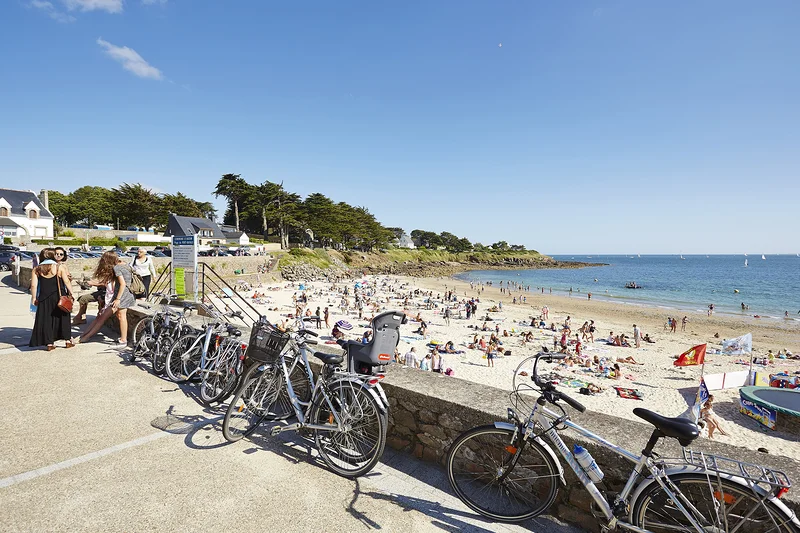
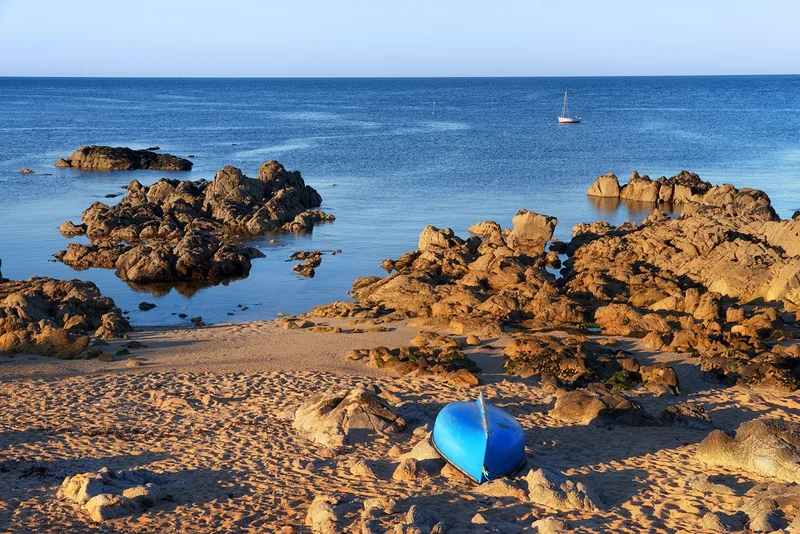
The Grande Plage runs 2 kilometers of fine sand, lined by the yacht club and Belle Époque villas. Families prefer Légenèse, Ty Bihan or Beaumer, which are more sheltered and less crowded. Saint-Colomban draws windsurfers and kitesurfers thanks to its exposure to the wind. A coastal path links all the beaches.
The Salines, former salt marshes turned bird reserve, are worth a stop. The Thalazur thalassotherapy center reopened in fall 2025 after major renovations. With more than 2,000 hours of sunshine a year, Carnac is one of the sunniest stretches of the Brittany coast.
The Village: Markets and Religious Heritage
The 17th-century Saint-Cornély church is worth stepping into. Its porch is topped by a rather spectacular openwork canopy. Two carved oxen on the facade recall that Saint Cornély protects horned animals. Inside, the wrought-iron pulpit shows remarkable craftsmanship.
Markets on Wednesday and Sunday fill the village center. Local producers and artisans sell oysters, buckwheat galettes, kouign-amann and Breton cider. The contrast with the summer frenzy of Carnac-Plage is striking.
Where to Eat and Drink in Carnac
Anse du Pô, a small oyster-farming harbor, is the place to eat oysters with your feet almost in the water. The producers' shacks serve platters with rye bread and white wine. It's simple and good. Cavok, in Carnac-Plage, serves generous boards of mezze, charcuterie and cheese in a relaxed setting.
For crêpes and galettes, the village has no shortage of good addresses. Kouign-amann, a flaky cake made with salted butter and sugar, turns up in every bakery. Igloo, Carnac-Plage's legendary ice cream shop, offers more than 170 flavors and makes its waffle cones in front of you.
Getting to and Around Carnac
The TGV station at Auray, 13 kilometers away, connects to Paris in about 3 hours. Buses run to Carnac year-round. By car from Paris, allow 4.5 hours via the A11 and then the N165. The airport at Nantes is 1.5 hours away, and Lorient is 40 minutes away.
On site, the tourist train runs every 15 minutes in summer between Carnac-Plage, the alignments and La Trinité-sur-Mer. Audio commentary is available in 16 languages, with two versions designed for kids. Biking is the most pleasant way to explore the area, as long as you avoid the summer rush hours.
When to go
Spring and fall strike the best balance between mild weather and manageable crowds. Summer guarantees good weather, but also crowds and parking struggles. Winter gives you free access to the alignments and the quiet of Brittany, though some restaurants close.
The Carnac alignments are one of those magical places you have to see at least once in your life. The landscapes are gorgeous, the surrounding beaches are worth the trip, but above all, the stones remain fascinating. Why such an alignment? For what purpose? Who did it, and how? Contemplating these silent rocks makes you dream, and it stays etched in the memory of every visitor who comes to discover their mystery...