
Toulon, a military port turned Mediterranean terrace
Twenty years ago, the neighborhood right at the foot of the naval arsenal went by a blunt nickname: Chicago. Sailor bars lined the narrow alleyways, and women of the night waited for crew members on shore leave.
Today, those same building facades sport pastel Mediterranean tones and house concept stores, art galleries, and cocktail bars. This transformation sums up the city well. Long ignored by travelers rushing toward Nice or Saint-Tropez, it is reinventing itself without turning its back on its working-class and maritime roots.
Toulon: the Riviera without the glitz
If you are looking for the pure glamour of the Côte d'Azur, look elsewhere. You will not find billionaire yachts or high-end designer boutiques here. Instead, fans of rugby, naval history, and authentic Provençal daily life will feel right at home. The RC Toulon rugby club stirs up intense passion at the stade Mayol, the markets smell of lavender and olives, and the beaches remain within walking distance of downtown.
On the flip side, the architecture still bears the scars of the 1944 bombing raids. Some blocks lack polish, and the city's industrial reputation lingers. For anyone eager to explore the Var region without breaking the bank or dealing with the crushing summer crowds of Saint-Tropez, it makes an ideal base.
A gentle budget for Provence
Expect to spend $79 to $135* per day for two people, which is considerably less than the rest of the French Riviera. Lodging starts at $68* a night, a meal at the covered market runs $14 to $17*, and most museums charge modest admission fees. The Mont Faron cable car costs $9* for a round-trip ticket.
The old town and the port
Every morning, the cours Lafayette hosts a classic Provençal market that locals are fiercely proud of. Olives, herbes de Provence, goat cheese, and sun-drenched fruit fill the stalls with vibrant colors and aromas. On Tuesdays and Saturdays, the market spills over toward place Louis-Blanc.
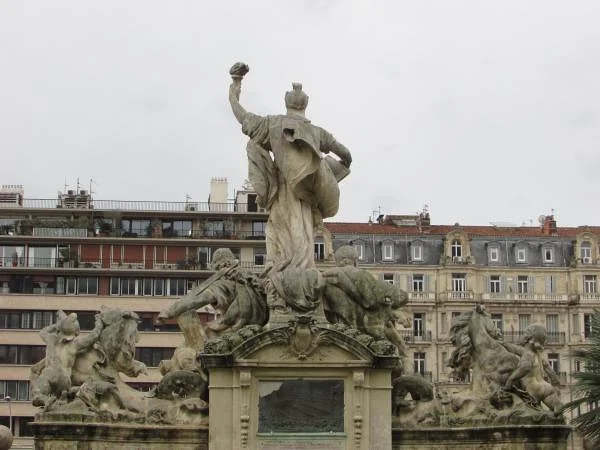
Behind the harbor, the old town reveals a maze of medieval alleyways dotted with shaded squares. place Puget features a unique fountain, the fontaine des Trois Dauphins, half-covered in moss and greenery after two centuries of existence. The cathédrale Notre-Dame de la Seds, founded in the 11th century, holds a surprising historical footnote: Francis I had it converted into a mosque in 1543 to host the Ottoman corsairs allied with France.
Friendly tip: Do not miss the cade stand right across from the Mourillon market. This wood-fired chickpea flour and olive oil galette is best eaten hot for apéritif. It is the ultimate local specialty.
The Arts district and the food hall
The rue des Arts embodies the city's modern revival. Where empty storefronts once sat idle, local makers have opened shops, studios, and galleries. The Design Parade festival, held every summer by the Villa Noailles, helped turn this neighborhood into a recognized creative hub. Even the prestigious Camondo design school opened a branch here.
Just steps away, the Halles municipales Esther Poggio reopened after twenty years of restoration work. This 1929 Art Deco building now houses 21 stalls run by local producers and artisans. You can grab local oysters from the roadstead, wood-fired pizzas, or Mediterranean small plates. The Café Toulonnais rooftop offers panoramic views that make it a prime spot for a drink.
place de l'Équerre, with its lively café terraces, serves as the evening gathering point. The Petit Chicago, a speakeasy-style music bar, nods to the neighborhood's rowdy past with regular jazz and blues nights.
Mourillon and the beaches
This neighborhood east of downtown operates like a village within the city. The Mourillon market brings energy to the mornings, rue Lamalgue lines up quality cheese shops and butcher counters, and the overall atmosphere stays fiercely local despite the summer influx. This is where Toulonnais families who can afford a sea view choose to live.
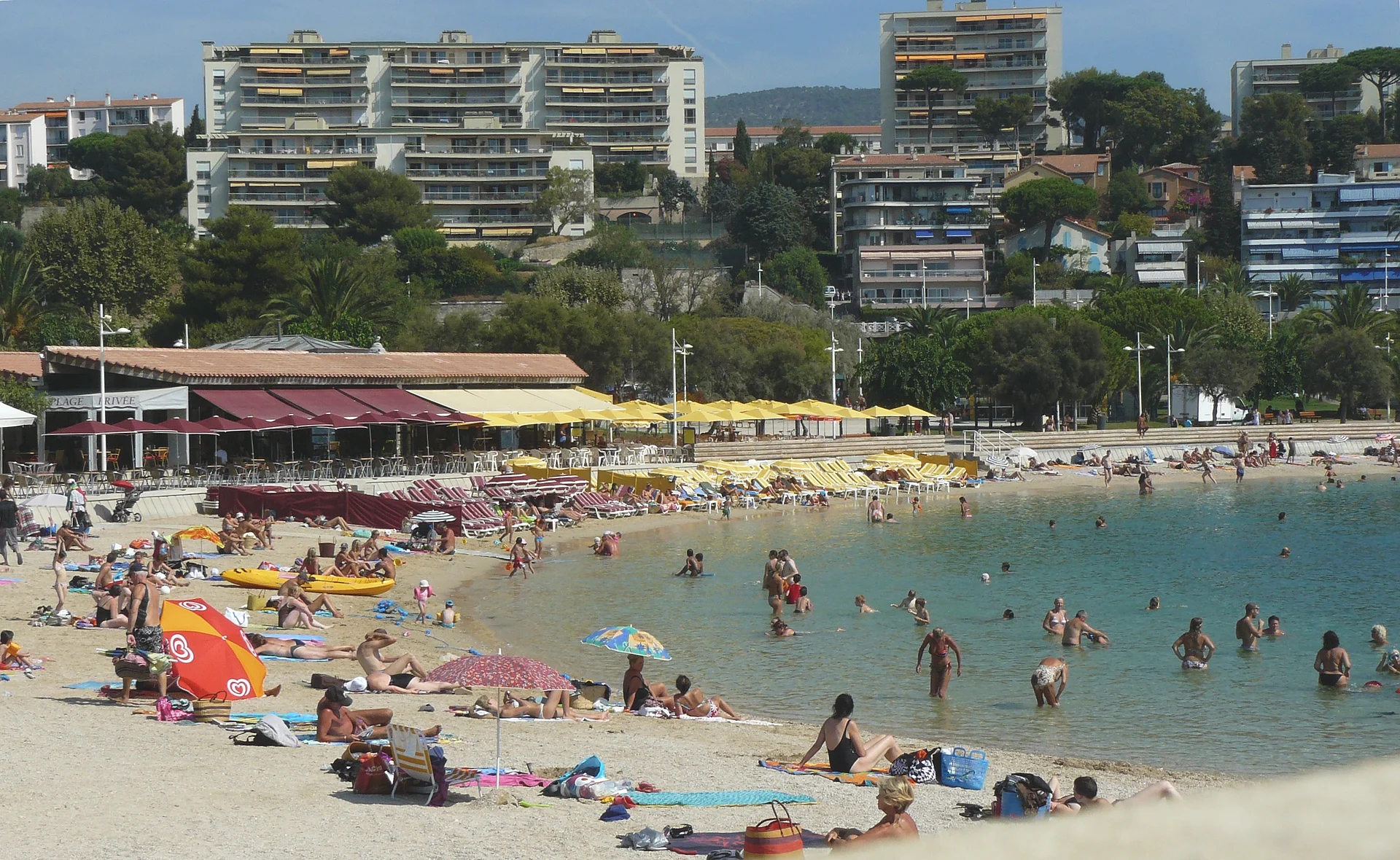
The Mourillon Beaches stretch across seven hectares of sand, framed by landscaped gardens and playgrounds. Four sheltered coves offer calm, shallow waters that are ideal for families. Bars and restaurants line the Frédéric Mistral waterfront promenade. Farther east, the wild creeks of Méjean and Magaud, reached via the sentier des Douaniers coastal path, reward hikers with turquoise water at the base of the cliffs.
Friendly tip: On summer evenings, impromptu games of pétanque pop up on the Mourillon beaches. Locals will gladly invite you to join in with a glass of pastis in hand. Expect to lose.
Mont Faron and military heritage
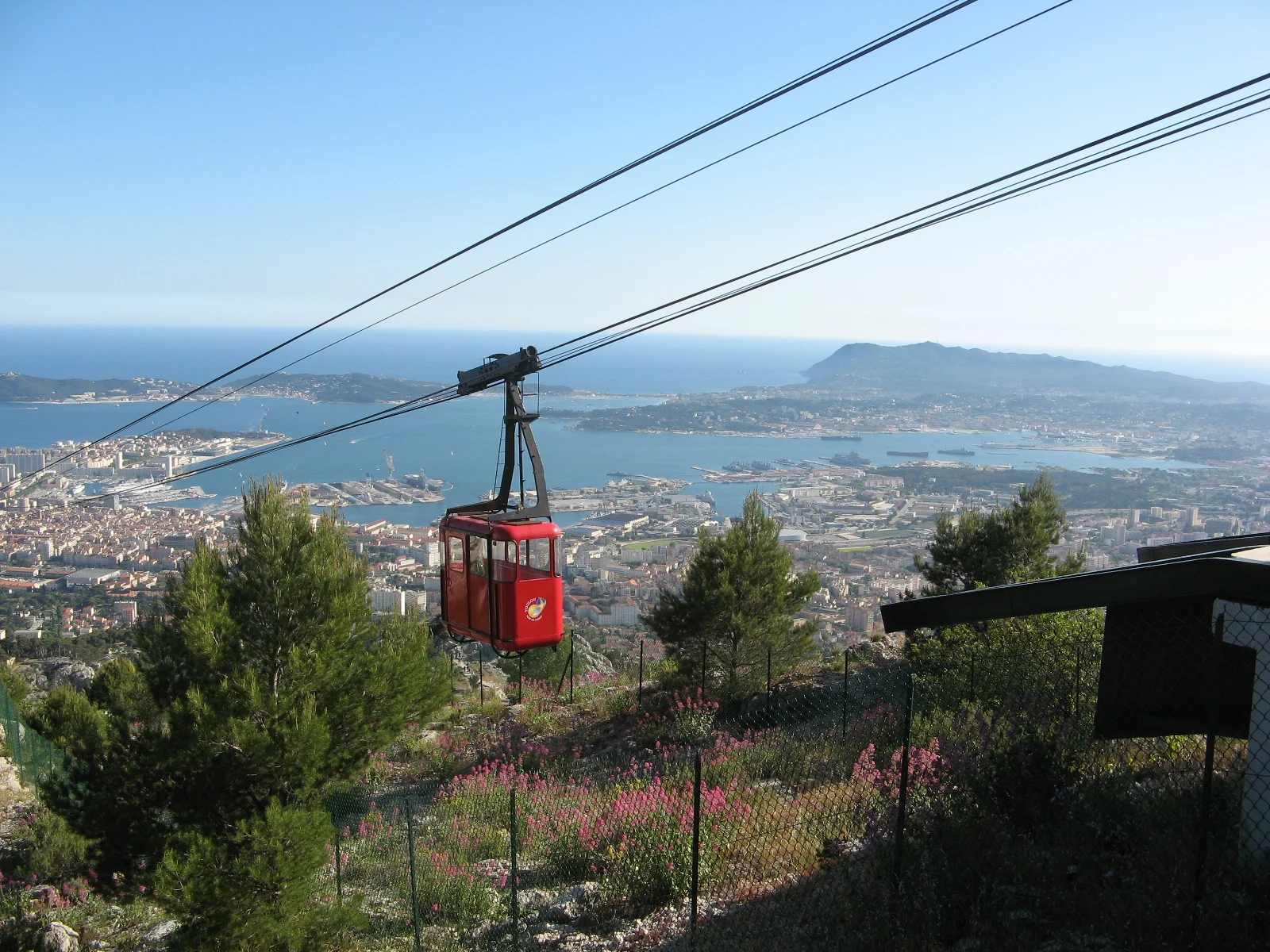
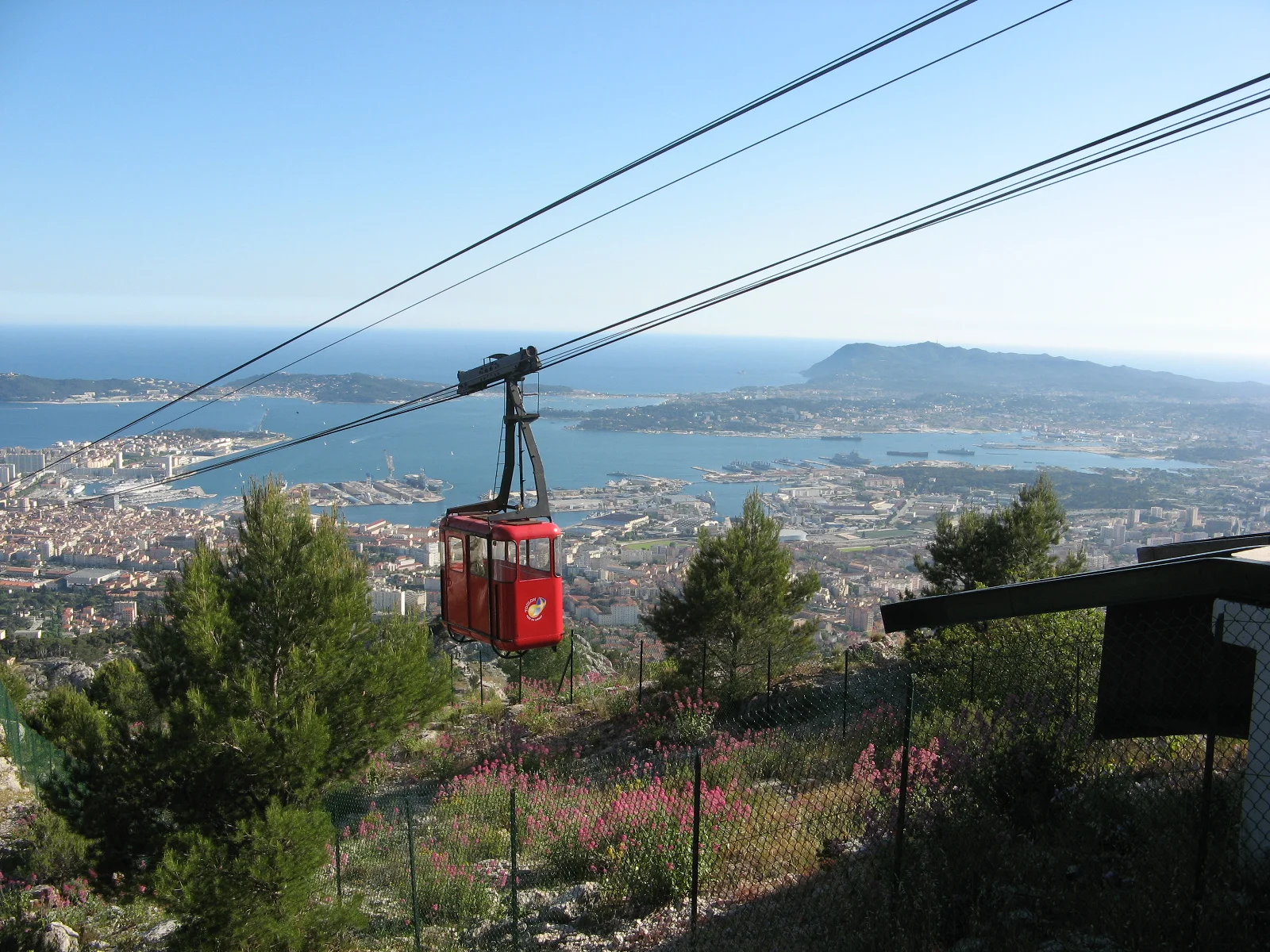
The Mont Faron cable car, launched in 1959, remains the city's signature landmark. The red cabin climbs to 584 meters in a matter of minutes, delivering sweeping views over the naval roadstead, the Hyères islands, and the Massif des Maures. At the summit, the Mémorial du Débarquement details the Allied liberation of Provence in August 1944. There is also a mountaintop zoo featuring big cats.
Further down, the Tour Royale has guarded the harbor entrance since the 16th century. This massive fortification with walls seven meters thick costs $2.30* to tour. The Musée national de la Marine, housed inside the monumental arsenal gate dating back to 1738, displays ship models, antique maps, and navigation tools. Admission is $11*.
The active military port itself remains a major draw as Europe's largest naval base, and shuttle boats let you catch a glimpse of the Charles de Gaulle aircraft carrier when it is docked.
Day trips around Toulon
A twenty-minute drive away, Sanary-sur-Mer keeps its old fishing village charm alive with colorful traditional boats bobbing in the harbor and flower-lined alleys. Le Castellet, perched high on a hill, offers classic Provençal views over vineyards below. Bandol produces some of the most celebrated red wines in Provence.
The Hyères islands, reached via ferry from the port, deserve a full day. Porquerolles and Port-Cros offer pristine beaches and hiking trails winding through protected nature reserves.
Where to eat and drink in Toulon
The cade chickpea galette remains the iconic local street food, found at the Mourillon kiosk or in traditional bakeries. anchoïade, an anchovy paste spread over grilled bread, sets the tone for a proper Provençal apéritif. The roadstead oysters, raised in local waters, are best sampled at the covered market or right by the port.
For a meal right by the water, Côté Jardin along the Frédéric Mistral coastal path serves Mediterranean dishes in a lush setting. La Fabricca di Marco dishes out fresh pasta in a cozy trattoria atmosphere. Over in Mourillon, Le Dolce draws a loyal neighborhood crowd with its fish dishes and sea views.
If you are looking for a drink, O'Boulodrome on rue Chevalier-Paul doubles as a wine shop and indoor pétanque court. Street Bar on place de l'Équerre brings energy to the evenings with its packed terrace. Fans of local craft beer should track down Bière de la Rade, brewed right in the Toulon area.
How to get to and around Toulon
High-speed TGV trains connect Paris to Toulon station in under four hours with no transfers. Regular regional lines link the city to Lyon, Montpellier, and Marseille. The Toulon-Hyères airport, located 20 km from downtown, handles select domestic and European flights. An airport shuttle connects to the train station for $1.60*.
Driving from Paris takes about eight hours via the A7 and A8 highways, though French highway tolls add up quickly. From Marseille, the drive takes an hour.
Once you arrive, downtown is very walkable. Local buses cover Mont Faron, Mourillon, and neighboring towns. Public bateaux-bus ferries cross the harbor to La Seyne and Saint-Mandrier for $2.30* each way.
When to go
May through October offers the best conditions, with over 300 days of sunshine a year and mild temperatures. July and August get busy, but remain far more manageable than the resort towns further east on the Côte d'Azur. The Design Parade festival brings summer energy, and the local jazz festival lands in July. Winters stay mild but can get windy, giving the city back its quiet local rhythm.
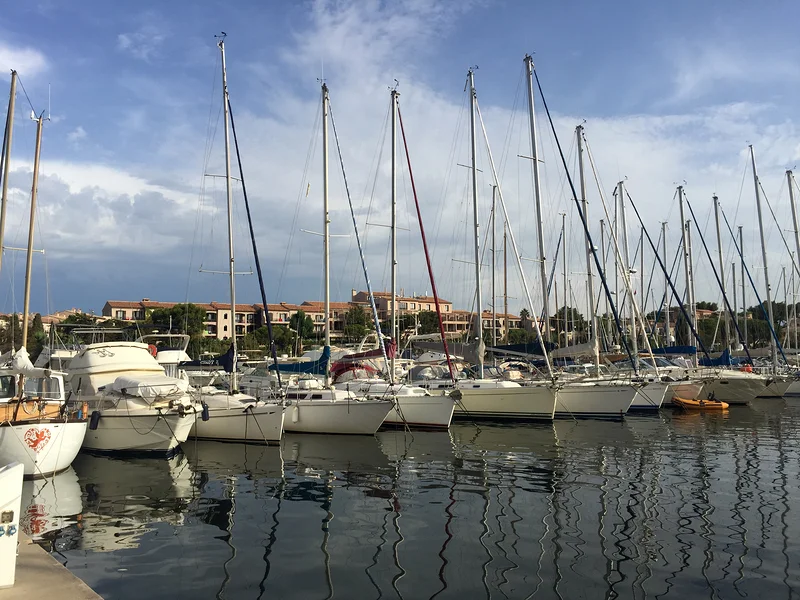
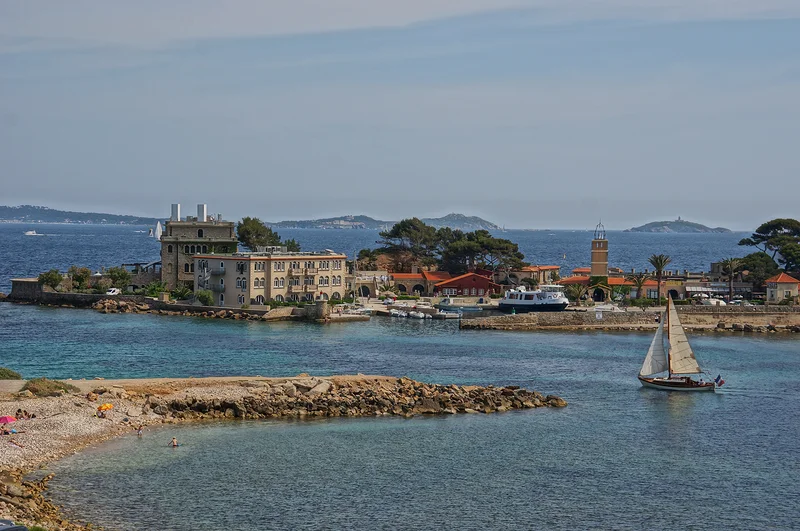
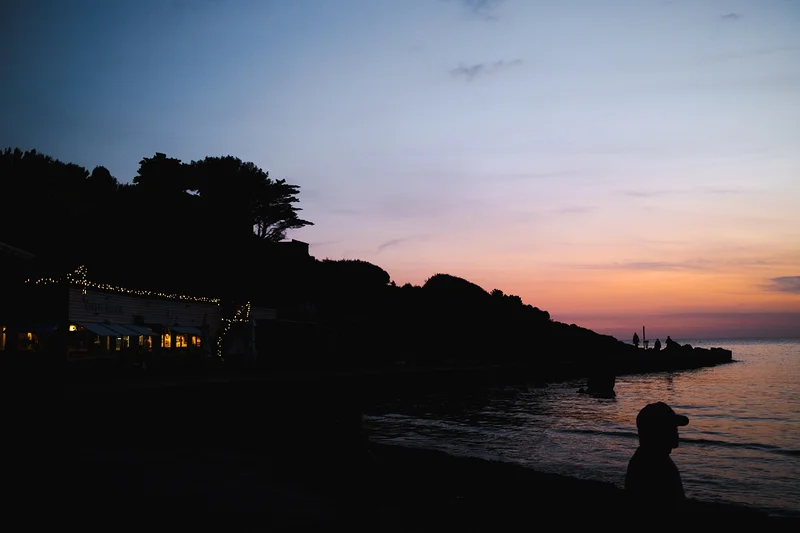
Toulon has a unique geographical setting, a big city right on the Mediterranean.
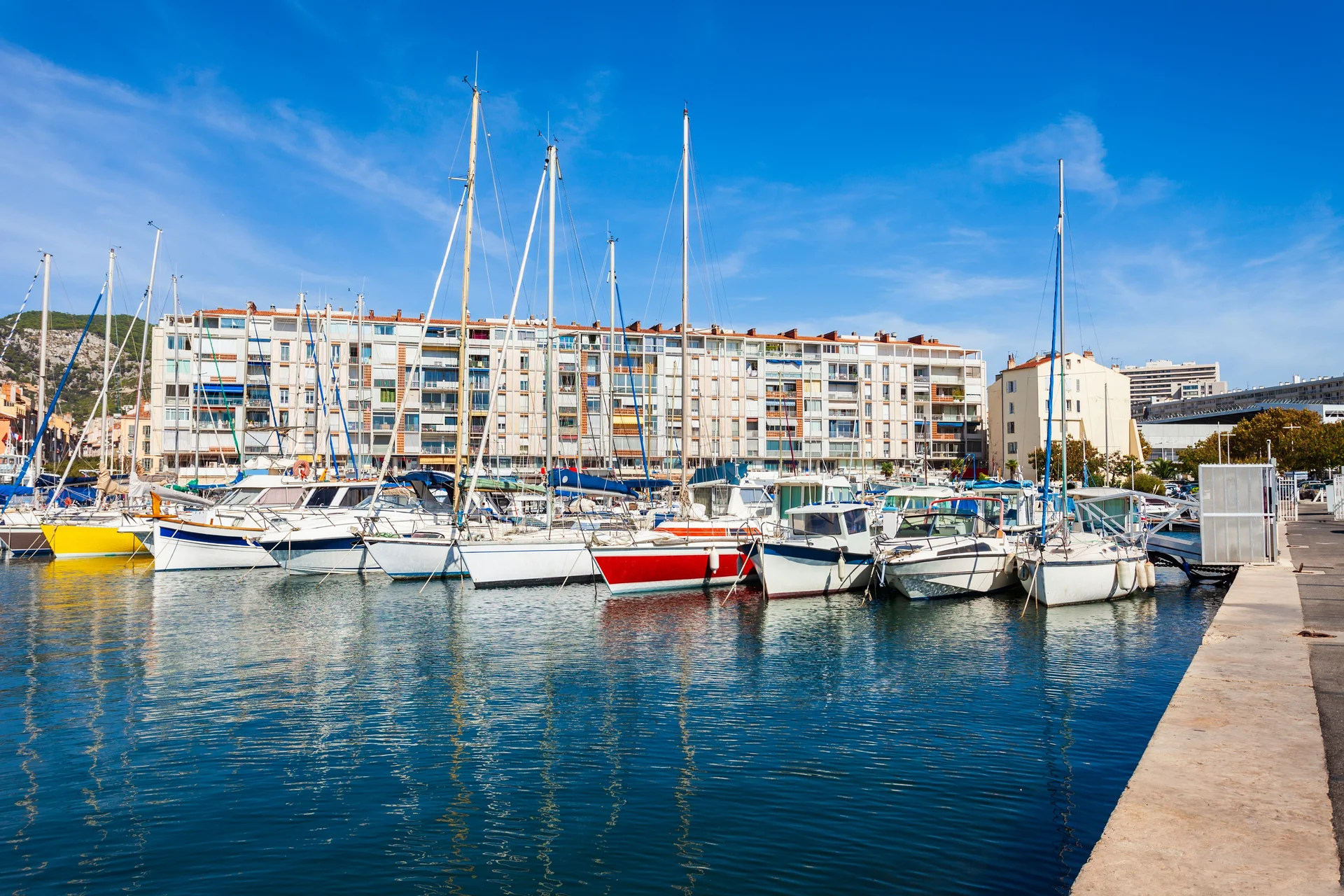
The city develops between its limestone hills and its beautiful bay where its commercial port and active naval base are tucked away.
I love the authentic side of this metropolis that is reinventing itself, and the city offers a nice variety of spots (restaurants, bars, museums). For a trip with friends, head over to the Mourillon beaches.
Toulon is a raw city where diverse influences mix, it is definitely worth a visit!