
Bilbao, where titanium meets txakoli
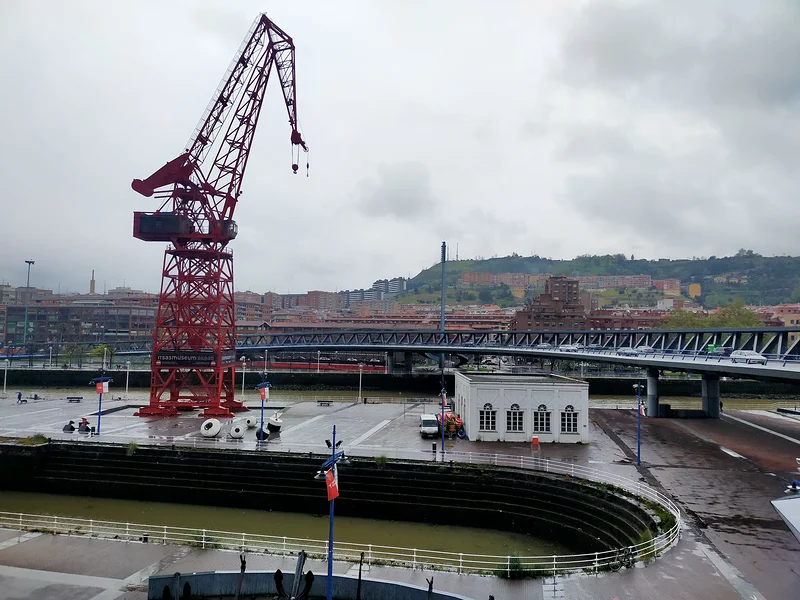
A metallic fish undulates along the edge of a repurposed industrial river. A giant spider stands guard in front of a museum that defies gravity. Just a few streets over, regulars leaning against the zinc bar count their toothpicks to settle the tab for their pintxos.
This unlikely juxtaposition is the daily rhythm of the Basque capital, a city that has pulled off one of the most remarkable urban comebacks in Europe.
The Basque revival
This destination is for those who appreciate human-scale cities, where you can alternate between a world-class museum and a string of authentic bars in the same day. Fans of contemporary architecture, foodies, and travelers looking for a strong cultural identity will find what they are looking for here.
On the other hand, if you are looking for a beach right outside your hotel or high-octane nightlife like in Barcelona, you will not find it here. The oceanic climate also requires accepting a bit of humidity, as rain is part of the scenery, especially between October and April. Plan for two to three days to explore the city and its immediate surroundings at a relaxed pace.
A reasonable budget for Northern Spain
The Basque Country remains one of the most expensive regions in Spain, but prices are still lower than what you would find in France. Budget between 80 and 150 EUR (about $85-160) per day for a couple, including 3-star accommodation (about 70-100 EUR or $75-105/night), meals while hopping between pintxos bars (15-25 EUR or $16-27 per person), and a few museum admissions.
The Casco Viejo: the soul of the Seven Streets
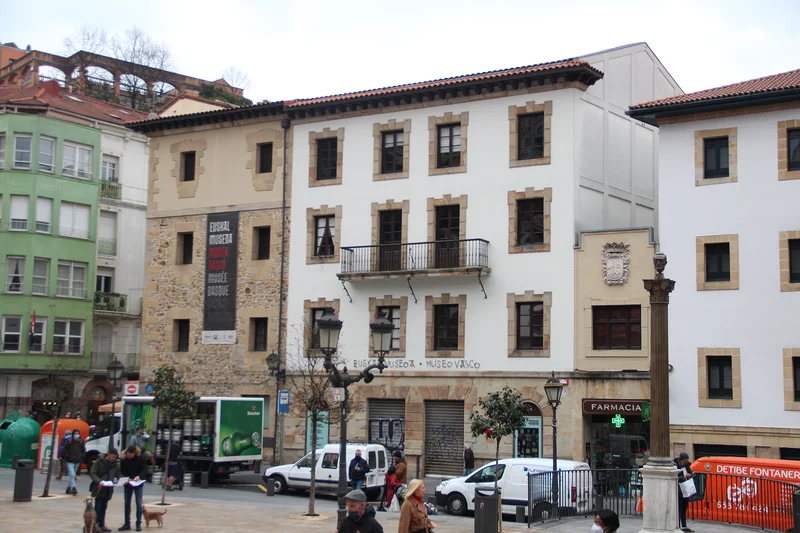
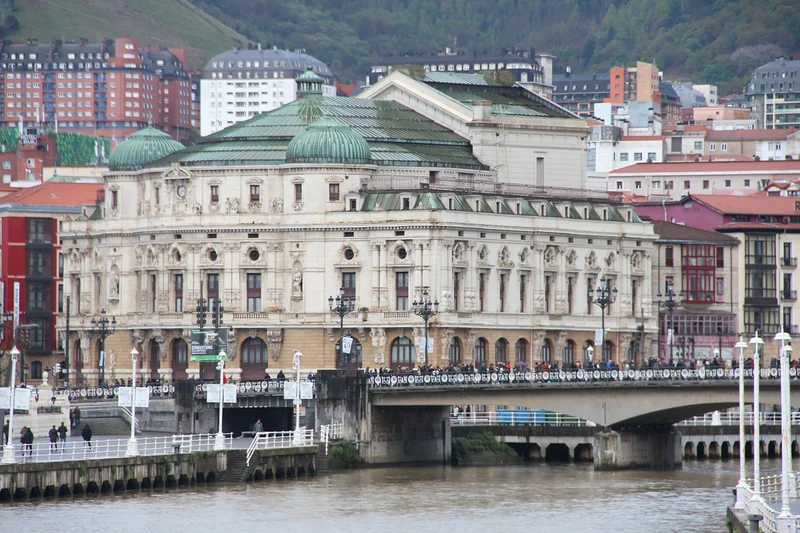
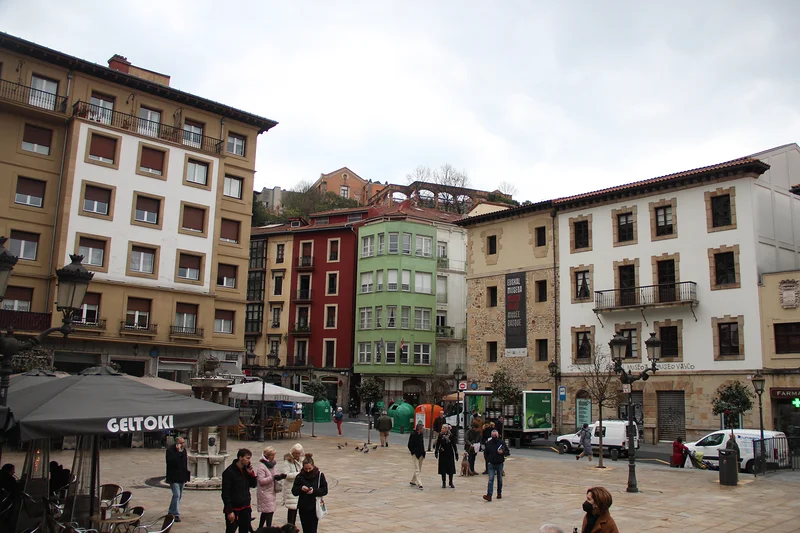
The beating heart of the city is tucked into the maze of the Siete Calles, the seven parallel streets that have formed the historic core since the Middle Ages. The colorful facades of traditional houses sit alongside lively terraces, and the atmosphere shifts dramatically between the quiet of the morning and the buzz of happy hour.
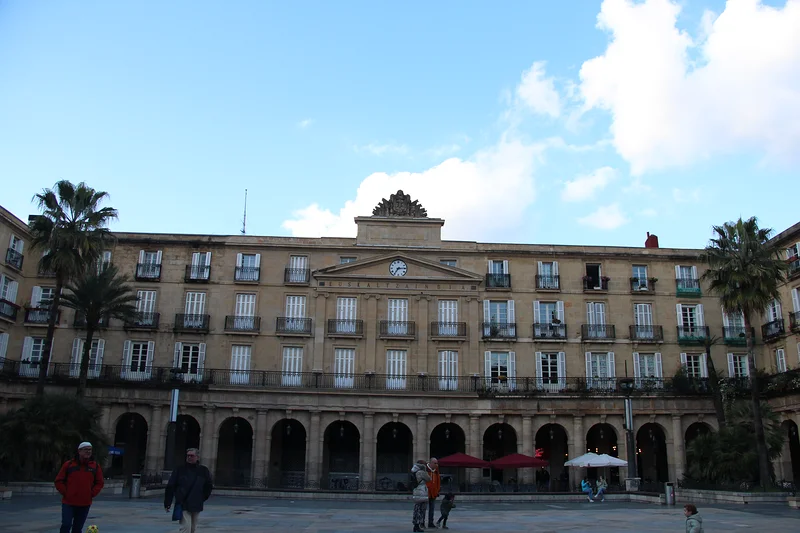
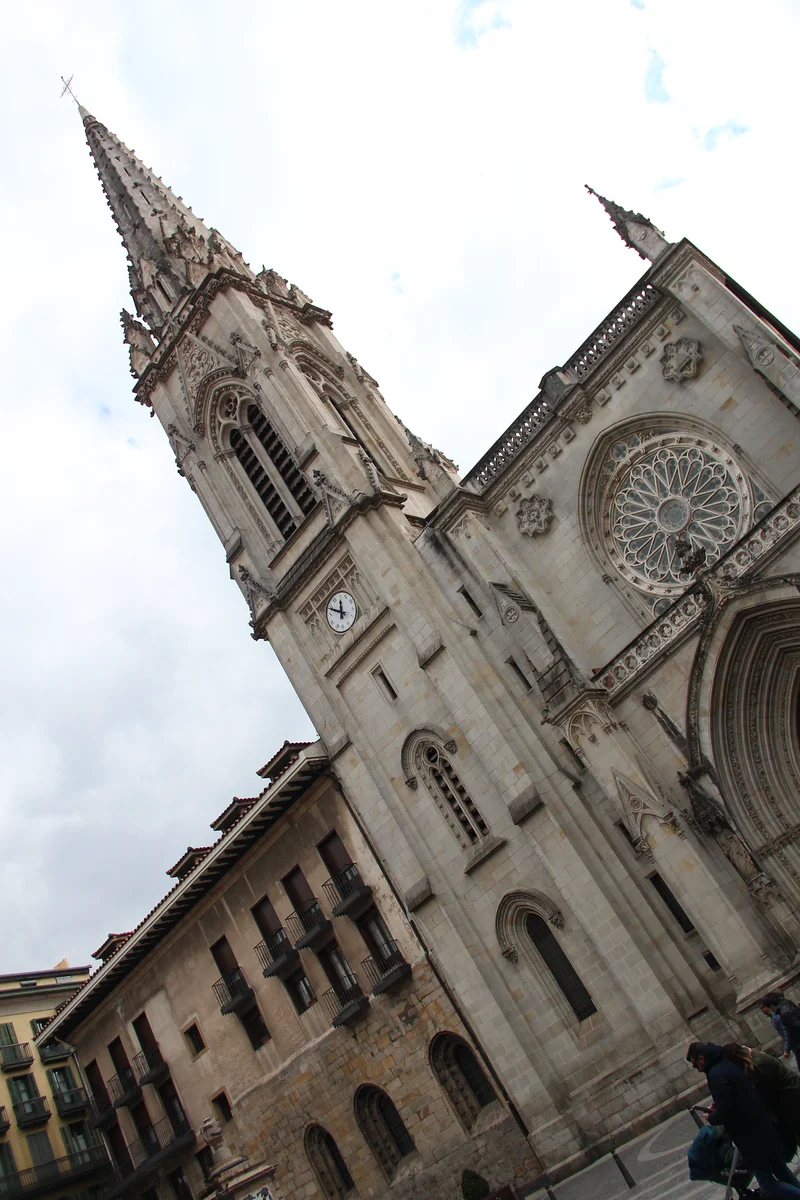
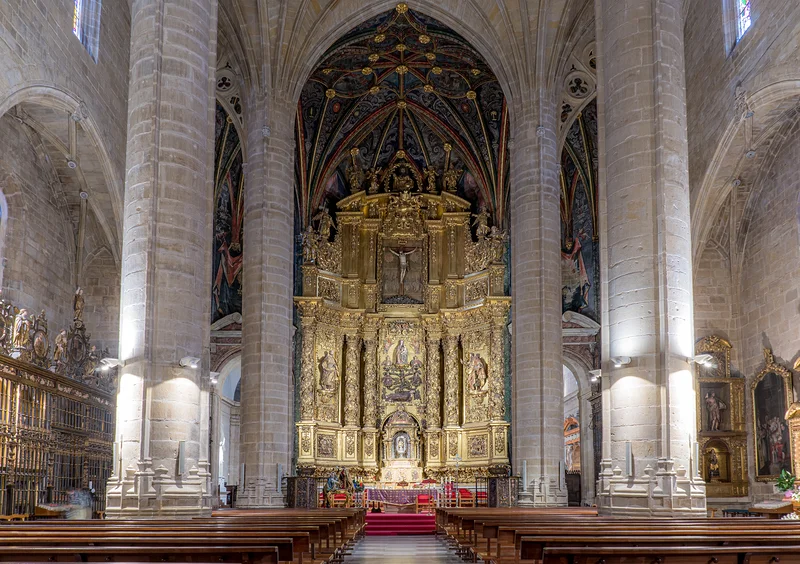
The Plaza Nueva is the epicenter of this joyful commotion. Its neoclassical arches house some of the best pintxos bars in the region. On Sunday mornings, a flea market sets up here, mixing antiques and oddities. A stone's throw away, the Santiago Cathedral reveals a superb Renaissance portal that you have to hunt for within the narrowness of the alleyways.
Friendly tip: Avoid the Plaza Nueva on a Saturday night if you want to escape the crowds. Opt for a Thursday night to enjoy the local vibe without the tourist influx.
The Ribera Market
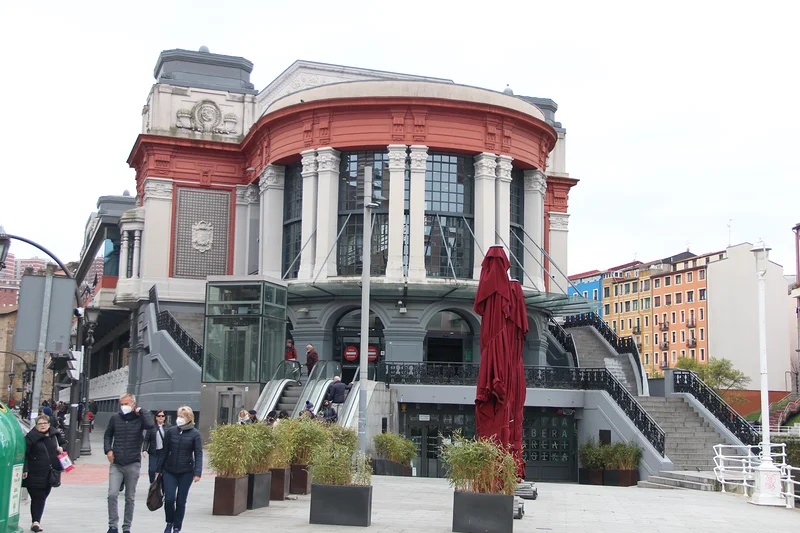
Ranked among the largest covered markets in Europe, the Mercado de la Ribera runs along the Nervión river inside an Art Deco building. You will find the products that are the pride of the Basque region, including fish from the Cantabrian coast, smoked Idiazábal cheese, and Spanish Espelette peppers. The upper floor hosts dining stalls where you can eat on site.
The Guggenheim district: the icon and its neighbors
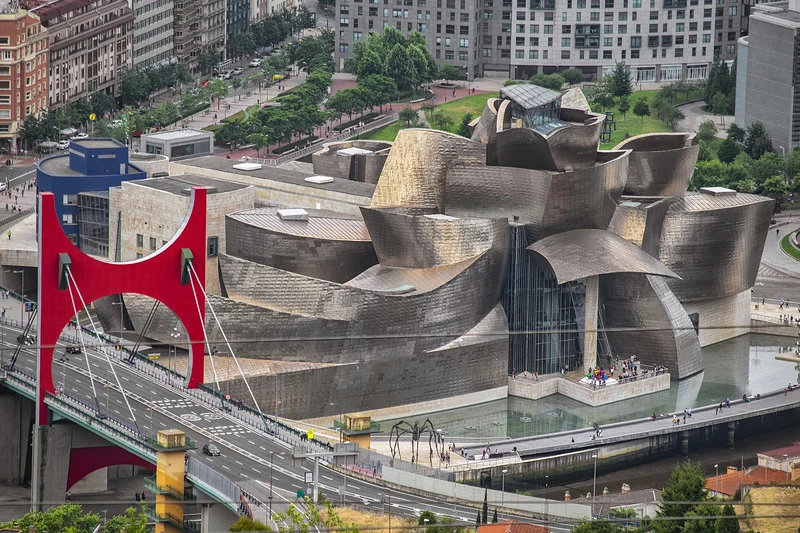
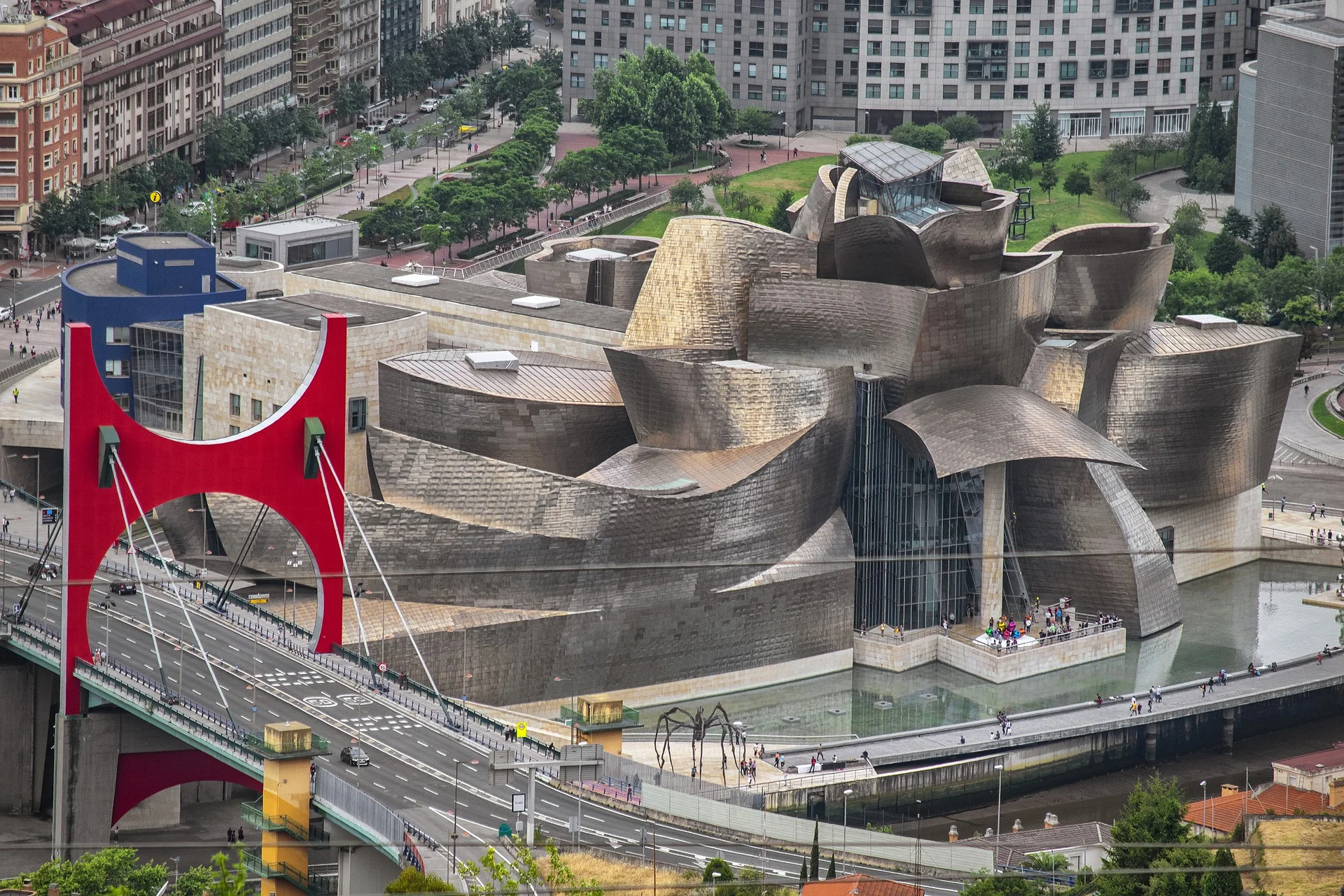
It is impossible to avoid the topic: the Guggenheim Museum literally resurrected this former industrial city in 1997. The building by Frank Gehry, with its titanium curves that seem liquid under the changing light, is worth walking around completely before even stepping inside.
Outside, Puppy, the giant floral dog by Jeff Koons, guards the entrance while the spider Maman by Louise Bourgeois spreads its unsettling legs in the back. The permanent collections feature monumental works by Richard Serra and other figures of contemporary art.
Friendly tip: Book your tickets online to skip the line, and visit in the late afternoon. The grazing light on the building's metallic scales offers a spectacle all its own.
Beyond the museum
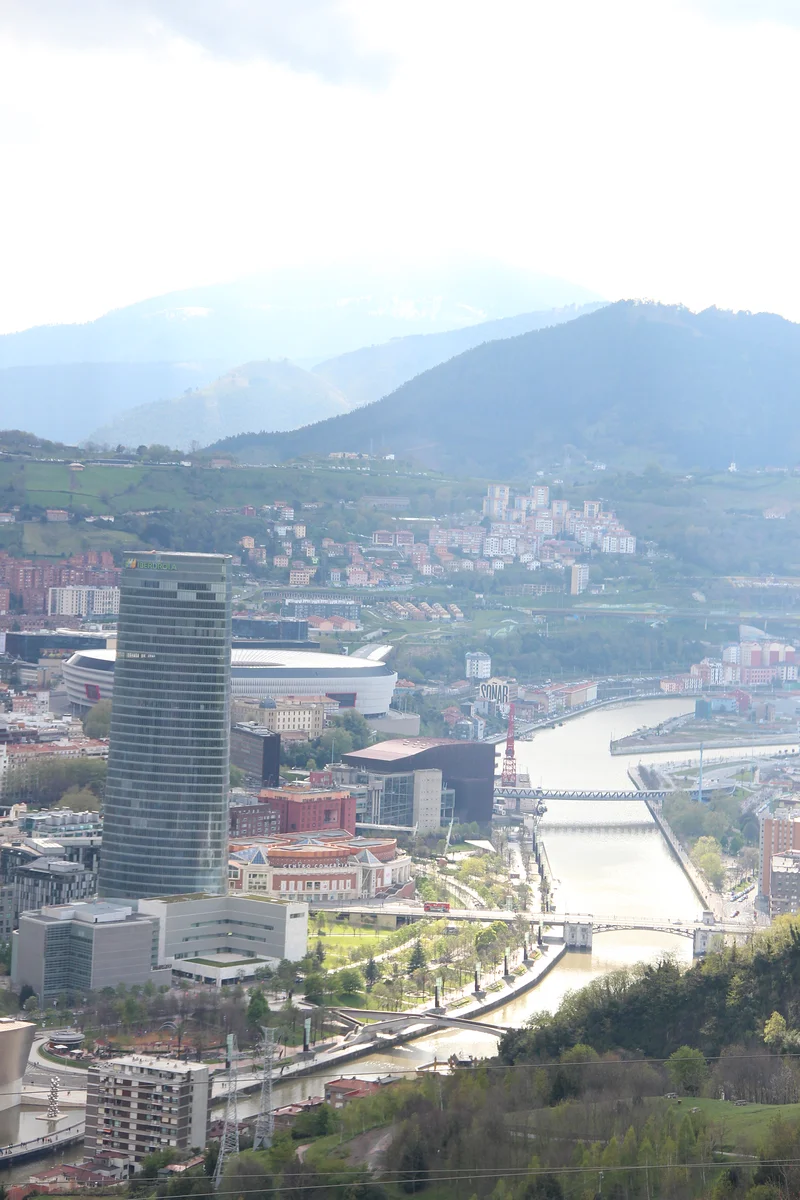
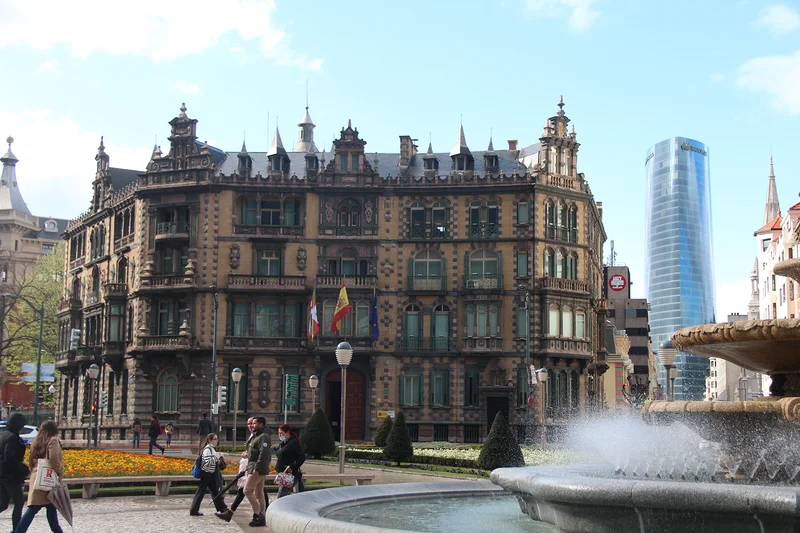
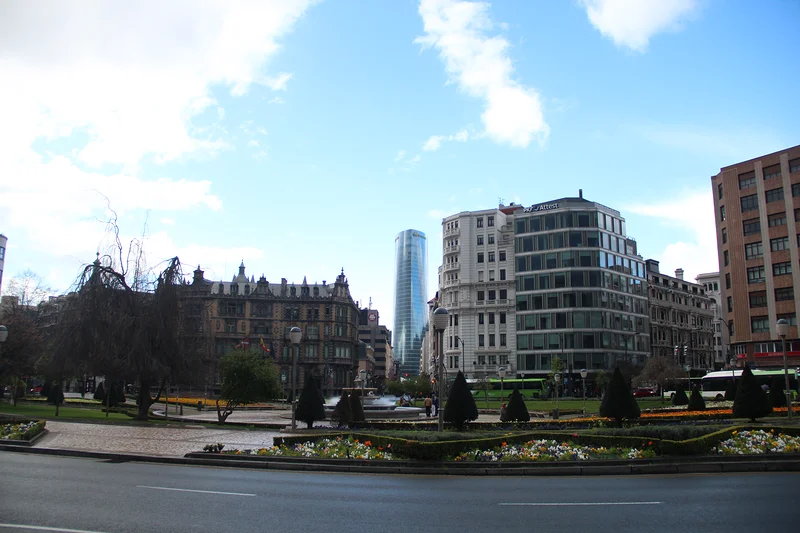
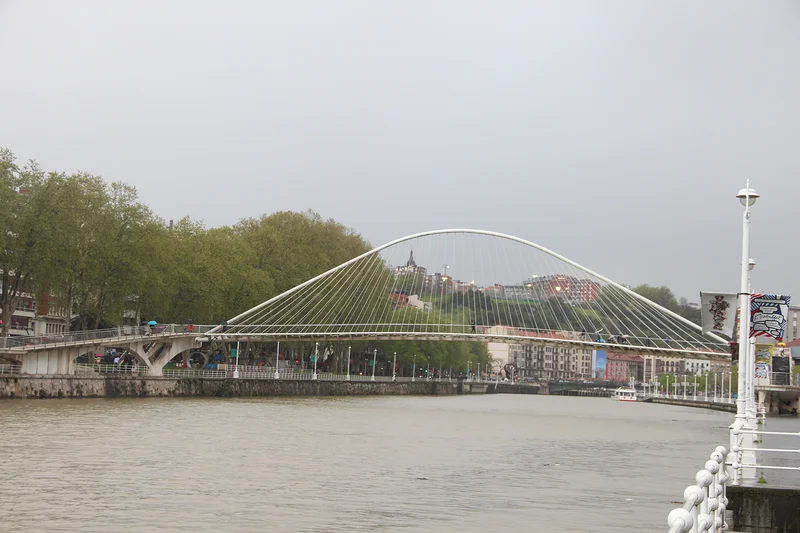
The neighborhood around the Guggenheim hides other architectural treasures. The Zubizuri footbridge, designed by Santiago Calatrava, spans the Nervión with its tilted white arch. The Iberdrola Tower, a 165-meter skyscraper, dominates the República de Abando park, a former industrial site transformed into a green lung.
The Ensanche and the heights of Artxanda
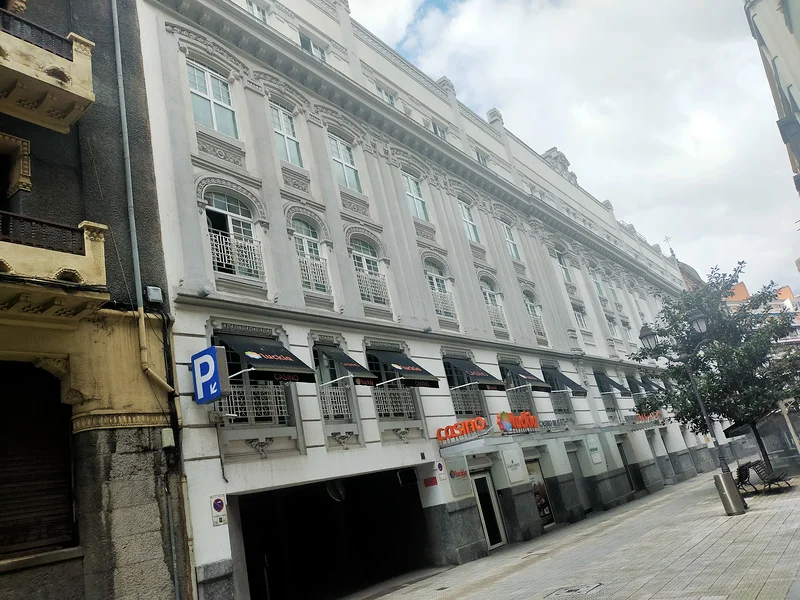
The Ensanche neighborhood features bourgeois avenues lined with stately 19th-century buildings. This is where you will find elegant boutiques and gourmet-style pintxos bars, especially around rue Ledesma and Plaza Moyua.
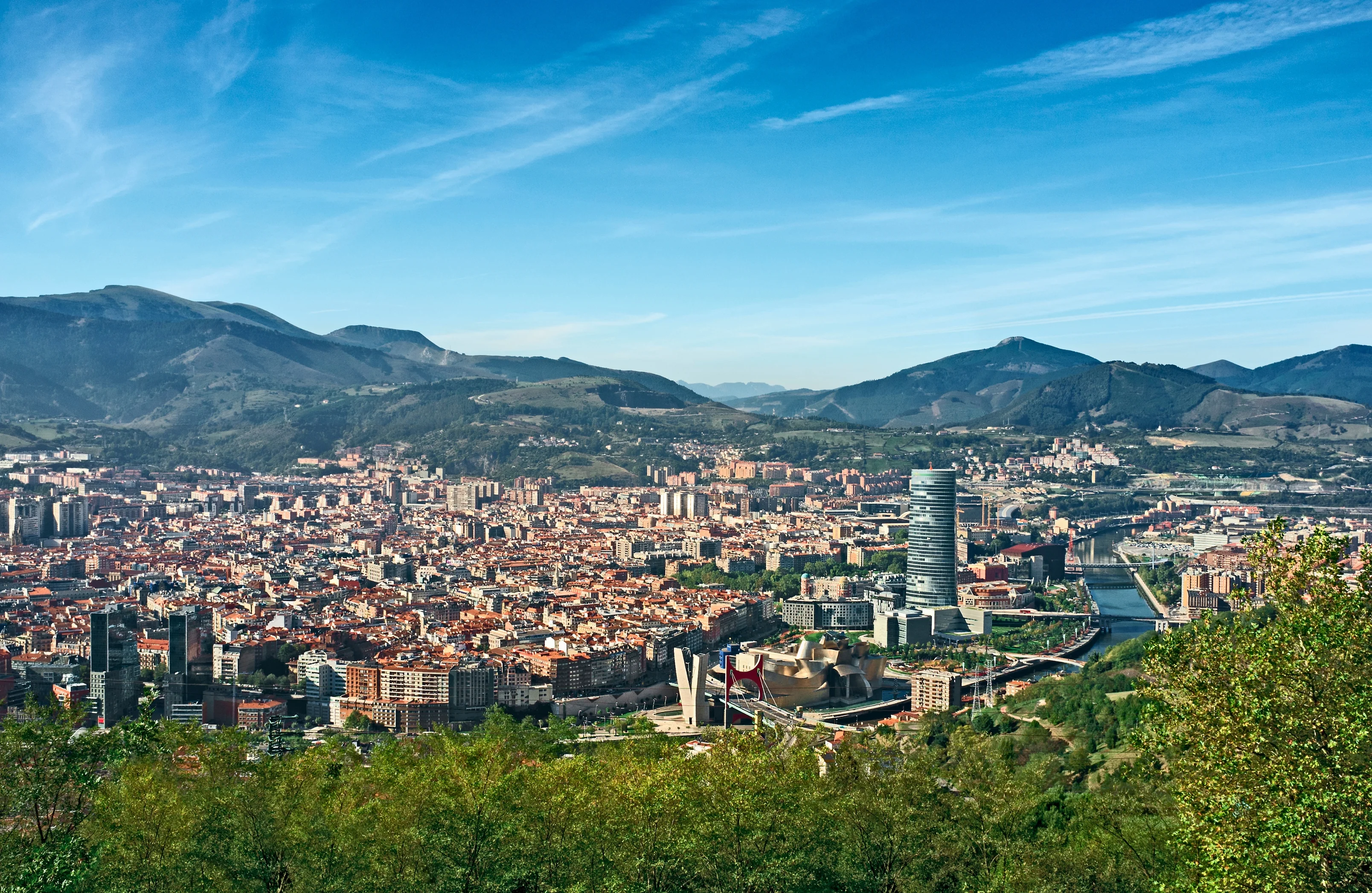
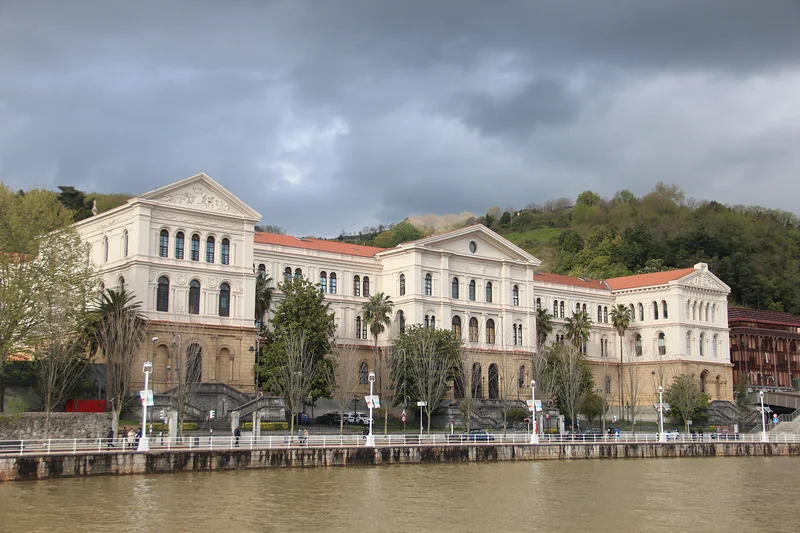
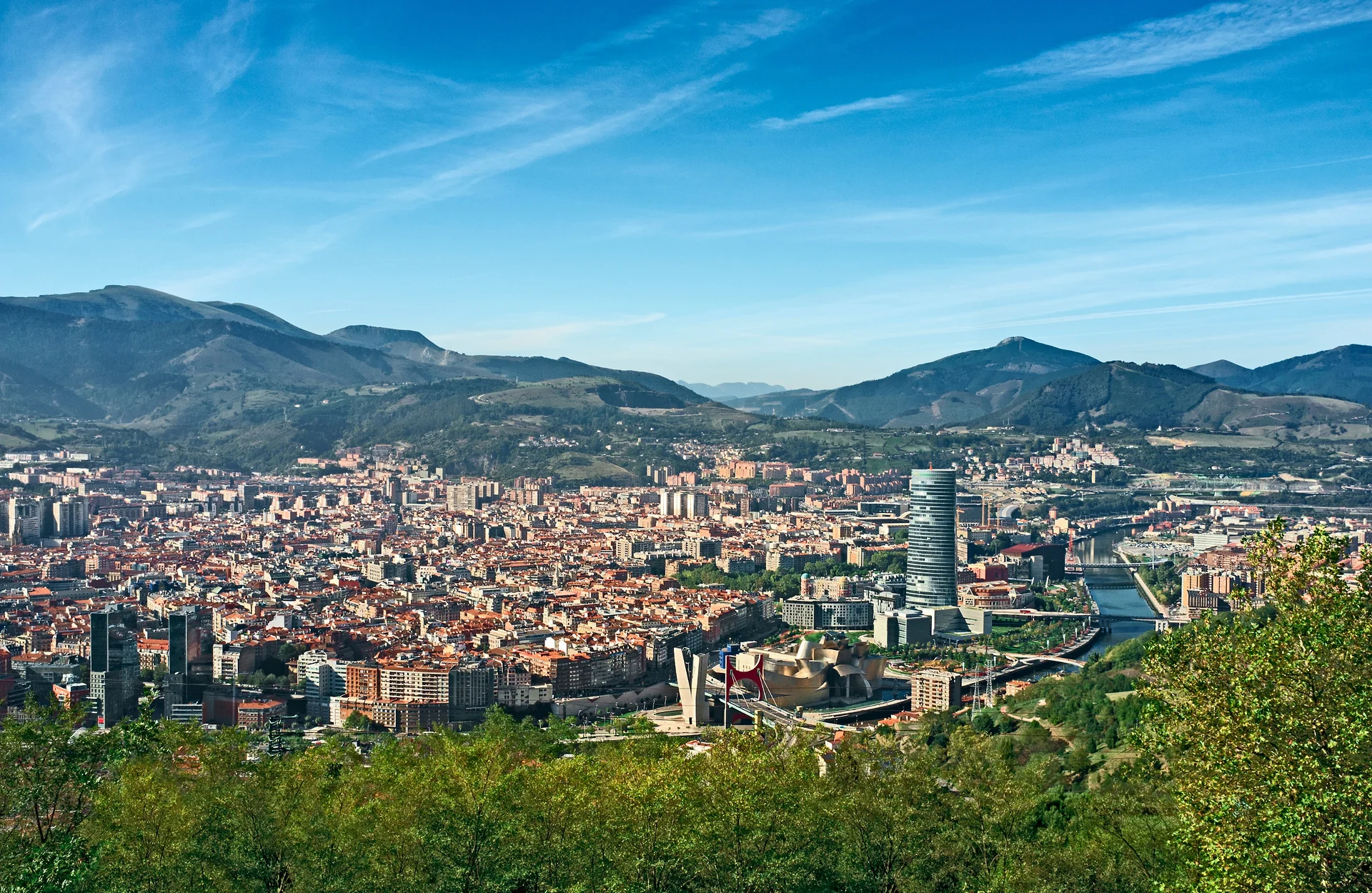
To get some elevation, the Artxanda funicular climbs in three minutes to a lookout point that embraces the entire city. The view helps you understand how the city developed along the Ría, the river that fueled its industrial fortune before becoming its axis of renewal.
Friendly tip: Head up to Monte Artxanda at the end of the day for the sunset, then walk back down via the forest paths if the weather allows.
Escapes around the city
Twenty minutes away by metro, Getxo reveals its beaches, Belle Époque villas, and the Biscay Bridge, the first transporter bridge in the world to be classified by UNESCO. You can cross the Ría suspended in a gondola or walk on the upper footbridge if you are looking for a thrill.
Further north, the fortified rock of San Juan de Gaztelugatxe, made famous by the series Game of Thrones, requires 241 steps to reach its hermitage. Guernica, a martyr city immortalized by Picasso, offers its Peace Museum and the symbolic tree under which Basque assemblies used to meet.
Where to eat and drink in Bilbao?
The culinary scene rests on two pillars: pintxos and haute cuisine. The tradition of bar hopping, known as poteo, consists of moving from place to place while having only one or two bites in each establishment, accompanied by a txakoli (a slightly sparkling local white wine) or a zurito (a small glass of beer).
Among the specialties to track down: the gilda (olive, anchovy, and pepper on a toothpick), cod al pil-pil or a la vizcaína, kokotxas (hake cheeks in green sauce), and txipirones (squid in their own ink). On the Plaza Nueva, Gure Toki offers innovative creations while Victor Montes cultivates century-old tradition.
Where to sleep in Bilbao and its surroundings?
The Casco Viejo offers the advantage of atmosphere and proximity to bars, but the streets can be noisy on weekends. The neighborhood around the Guggenheim and the Ensanche is better suited for those looking for quiet while staying within walking distance of the attractions.
Tight budgets will find youth hostels starting at 20-30 EUR (about $21-32) a night in the San Francisco neighborhood, which is more working-class and multicultural. For a seaside getaway, Getxo offers accommodations with ocean views, accessible by metro in less than half an hour.
How to get there and get around Bilbao?
Loiu Airport is located 12 km from the center and is connected by a shuttle bus (about 3 EUR or $3.25, 25 minutes). From France, direct flights depart from Paris, Marseille, and several other cities. By car, count on about 2.5 hours from Bayonne or Bordeaux via the highway.
Once there, walking is sufficient to explore the center, as thirty minutes separate the two ends of the tourist zone. The metro, with a design by Norman Foster, efficiently serves the outlying neighborhoods and Getxo. A single ticket costs between 1.35 EUR and 1.65 EUR (about $1.45-1.75) depending on the zones.
When to go?
Spring (April-May) and early autumn (September-October) offer the best compromise between pleasant weather and manageable crowds. Summer attracts the masses, peaking during the Semana Grande (late August), a nine-day festival that energizes the entire city. Winter remains mild but humid, with the advantage of more accessible accommodation prices and empty museums.
I knew Bilbao had become a popular and sought after destination.
It is true that the city offers a ton of activities and an ideal location right by the water.
But to fully appreciate the setting, I recommend you take a trip to the Mirador de Artxanda by taking the funicular.
You will get a superb view of the city's treasures, including the Guggenheim museum, the old town, and the many bridges!