
Jaipur, the city that chose pink
Ever wonder why the city is pink? In 1876, Maharaja Ram Singh had the entire old city painted in an ocher-pink sandstone hue to welcome the Prince of Wales. Pink is the traditional color of hospitality in Rajasthan. Nearly 150 years later, the mandate to keep the facades painted in that specific shade is still on the books as a municipal law. Under the midday sun, the buildings seem to glow.
As the capital of Rajasthan and the gateway to the famous Golden Triangle alongside Delhi and Agra, this city is home to more than 3.6 million people. It was India's first planned city, designed in 1727 by astronomer Vidyadhar Bhattacharya according to Vastu Shastra principles. It follows a geometric grid that is rare for the subcontinent. Its palaces, forts, and bazaars make it a stop few travelers regret.
A first-time India experience, and then some
Let's be real: traveling in Jaipur is intense. The noise is constant, the heat can be overwhelming, and the constant attention from vendors or touts can be draining. But that is also what makes the experience so memorable. If you are looking for a first taste of India without diving headfirst into the chaos of Delhi, the Pink City is a solid middle ground.
Good for:
- Fans of Mughal and Rajput architecture and history
- Travelers looking for a total change of scenery on a budget
- Lovers of street food and spicy cuisine
- Photographers: every street is a frame
- Shoppers looking for textiles, jewelry, and traditional crafts
Not for:
- Those who struggle with heat, crowds, and constant noise
- Travelers seeking wilderness or beach time
- Sensitive stomachs: dietary adjustment takes a few days
- Those with zero tolerance for scams or aggressive haggling
Budget-friendly by any standard
The city is remarkably affordable. With 1,350 to 2,250 INR (about $16-$27) per day, a budget-conscious traveler can eat well, sleep comfortably, and visit the main monuments. Boutique stays in haveli houses, those historic Rajasthani mansions with interior courtyards, offer a palace-like experience for a fraction of what you would pay for a standard hotel in the US.
| Expense | Price Range |
|---|---|
| Night in a hostel or basic guesthouse | 450 INR to 1,350 INR ($5-$16) |
| Night in a comfortable hotel or boutique haveli | 2,250 INR to 5,400 INR ($27-$65) |
| Quick meal: street food, dhaba | 45 INR to 180 INR ($0.50-$2) |
| Restaurant meal: full thali or specialties | 270 INR to 900 INR ($3-$11) |
| Transport + one monument entry per day | 450 INR to 1,100 INR ($5-$13) |
| Backpacker daily budget | 1,350 INR to 2,250 INR ($16-$27) |
| Comfortable daily budget | 4,500 INR to 7,200 INR ($54-$86) |
Know before you go
The climate is semi-arid. From May to June, temperatures regularly exceed 104°F (40°C). The monsoon, from July to September, brings heavy rain but also a welcome break from the heat. The best window is October to March, with dry, pleasant days. In December and January, nights can dip below 41°F (5°C).
Hindi is the main language, complemented by Rajasthani. English is understood in tourist areas and hotels. A few words of Hindi go a long way: namaste for hello, dhanyavad for thank you, and kitna for "how much." Life here starts earlier than in the US: forts often open at 8 a.m. and markets come to life at dawn.
Is Jaipur dangerous?
The city does not present a major risk of violence for tourists. The real danger is scams. Rickshaw drivers refusing to use the meter, fake guides at monuments, and touts taking you to commission-based shops are standard setups. Use the Uber or Ola apps for rides, and never follow a stranger who approaches you on the street.
Can a woman travel alone in Jaipur?
Yes, but with caution. Rajasthan remains one of India's most conservative states. Staring is common and can be uncomfortable. Female travelers should dress modestly, keeping legs, shoulders, and chest covered. The C-Scheme and Bani Park neighborhoods are the safest places to stay. Avoid isolated alleys after dark and prioritize app-based transport.
The old pink city: from City Palace to Hawa Mahal
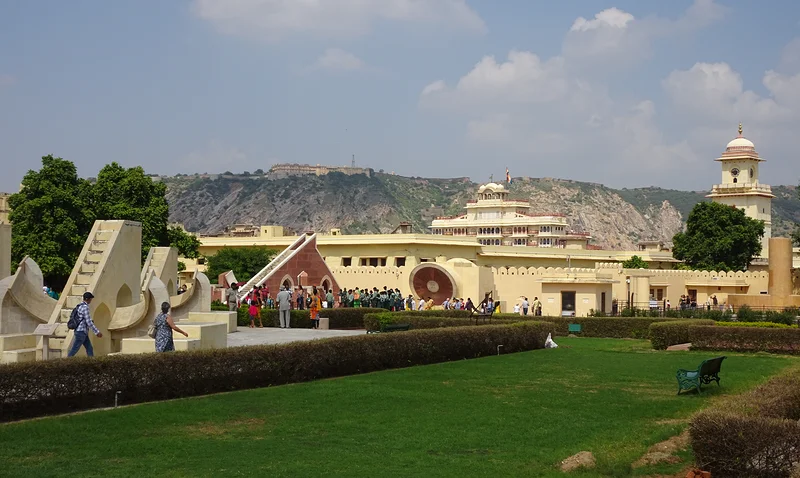
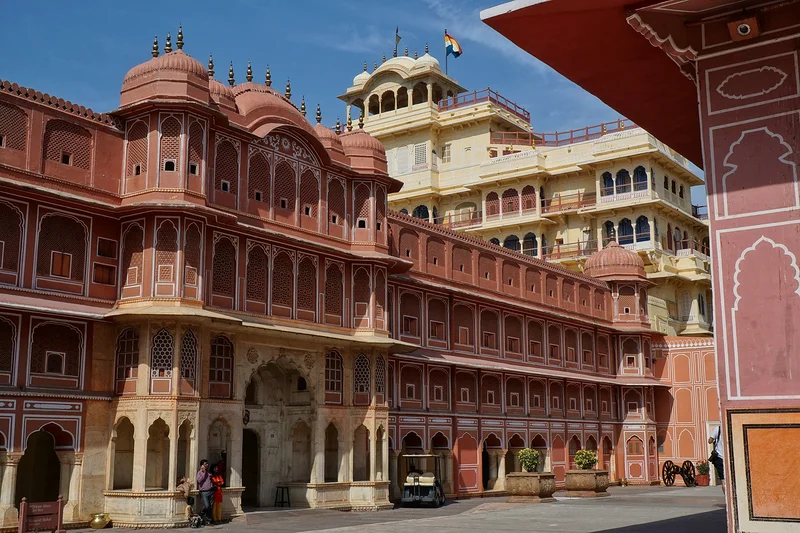
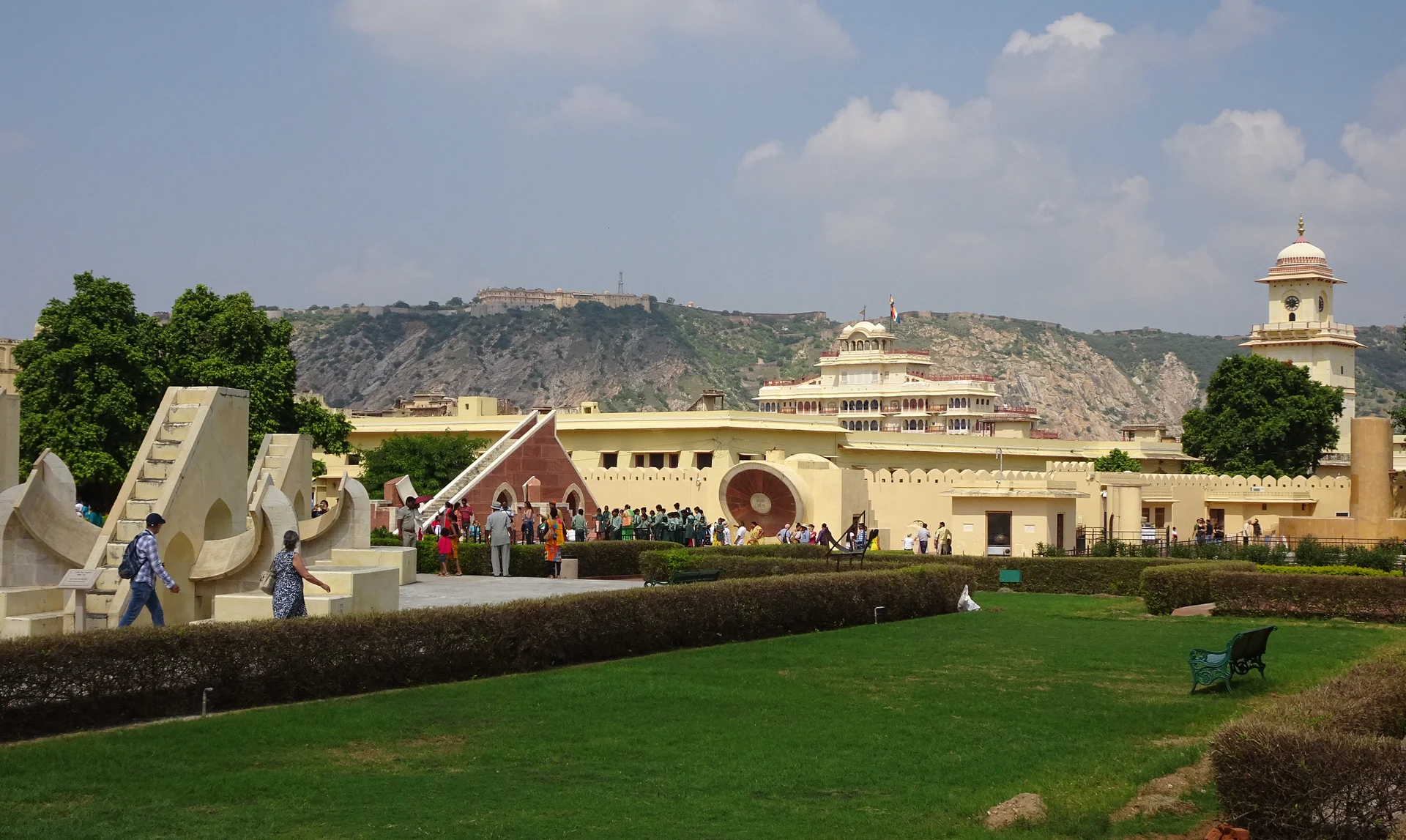
The City Palace is a vast complex of courtyards, pavilions, and gardens where Rajput architecture blends with Mughal influences. The royal family still resides here in part. The rooms open to the public display ancient textiles, weapons, and miniature paintings. Right next door, the Jantar Mantar, a UNESCO World Heritage site, is an 18th-century astronomical observatory with giant instruments used to track time and predict eclipses.
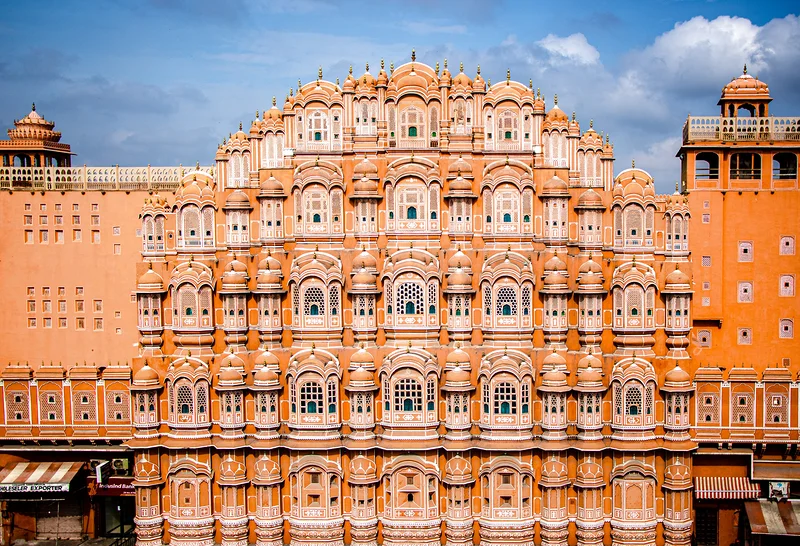
The Hawa Mahal, or Palace of Winds, with its 953 small windows, is the most photographed facade in the city. Built in 1799, it allowed women of the court to observe street life without being seen. The best photo is taken from the cafe across the street early in the morning when the sun hits the pink facade.
Pro tip: a composite ticket covers several monuments in the old city and saves money compared to individual entries. It is available at the Hawa Mahal or Jantar Mantar ticket windows. "Foreign tourist" rates are significantly higher than local prices, which is standard throughout India.
Amber, Jaigarh, and Nahargarh Forts
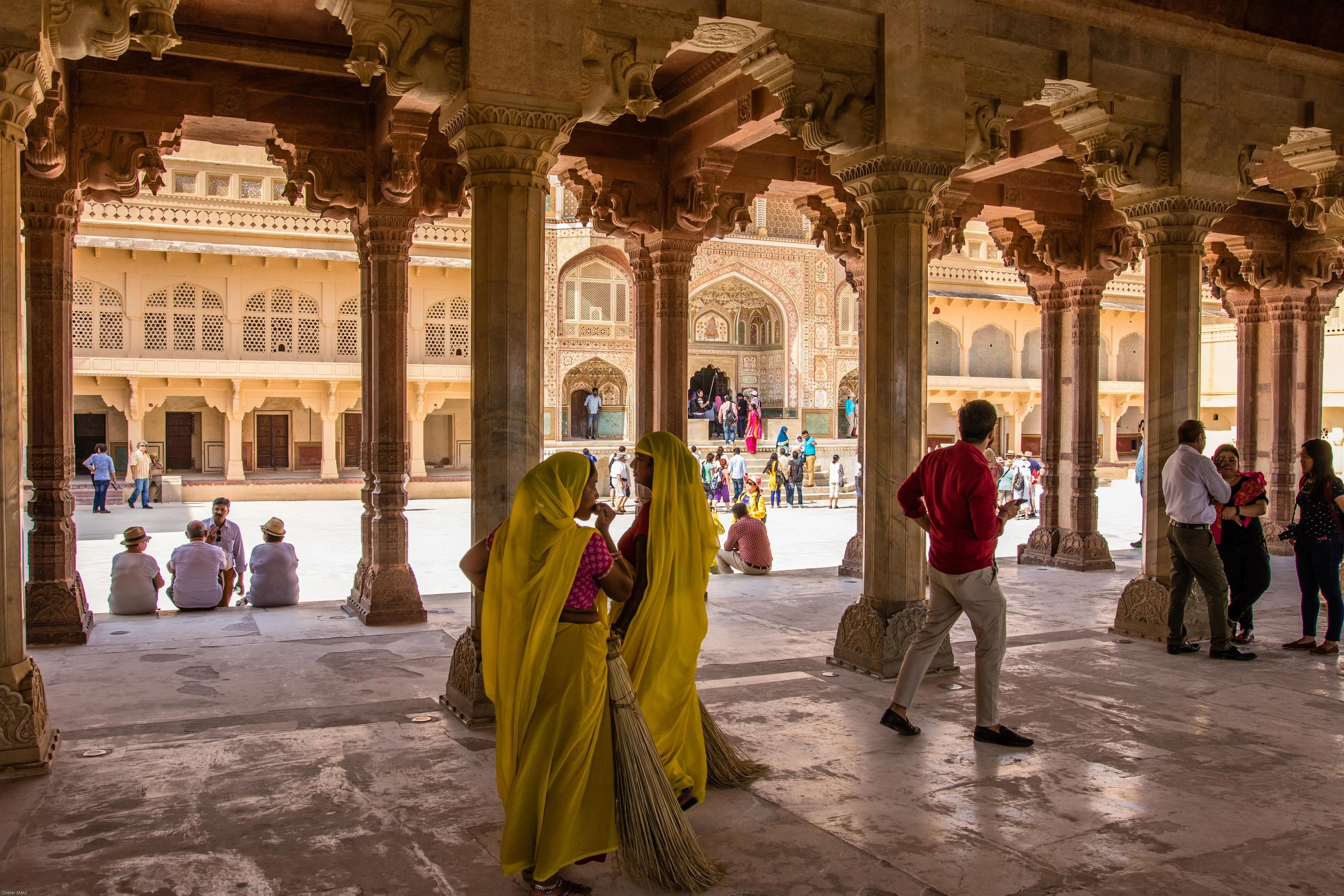
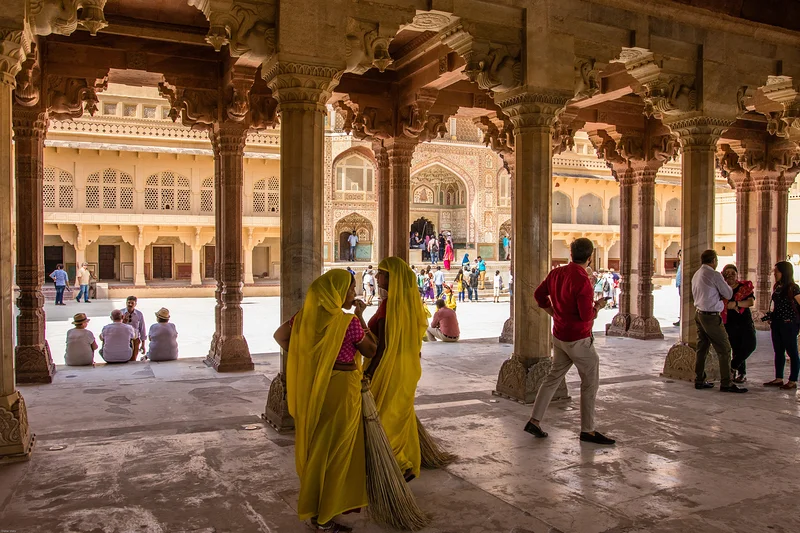
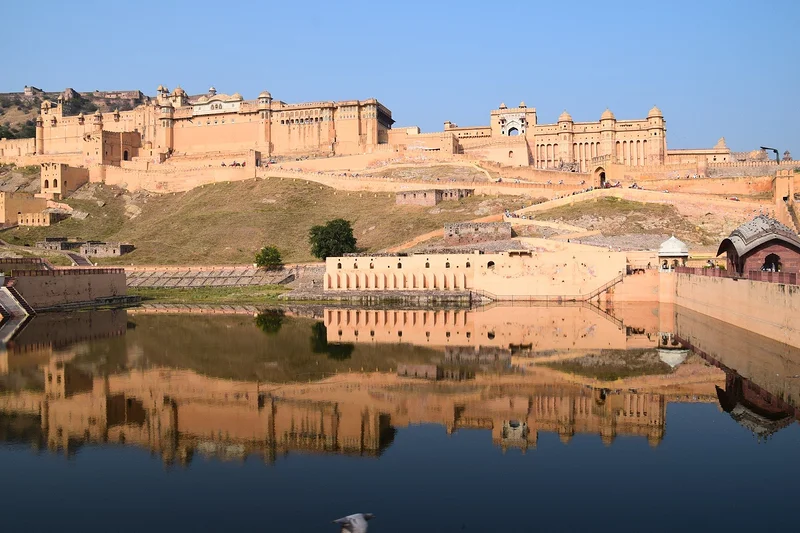
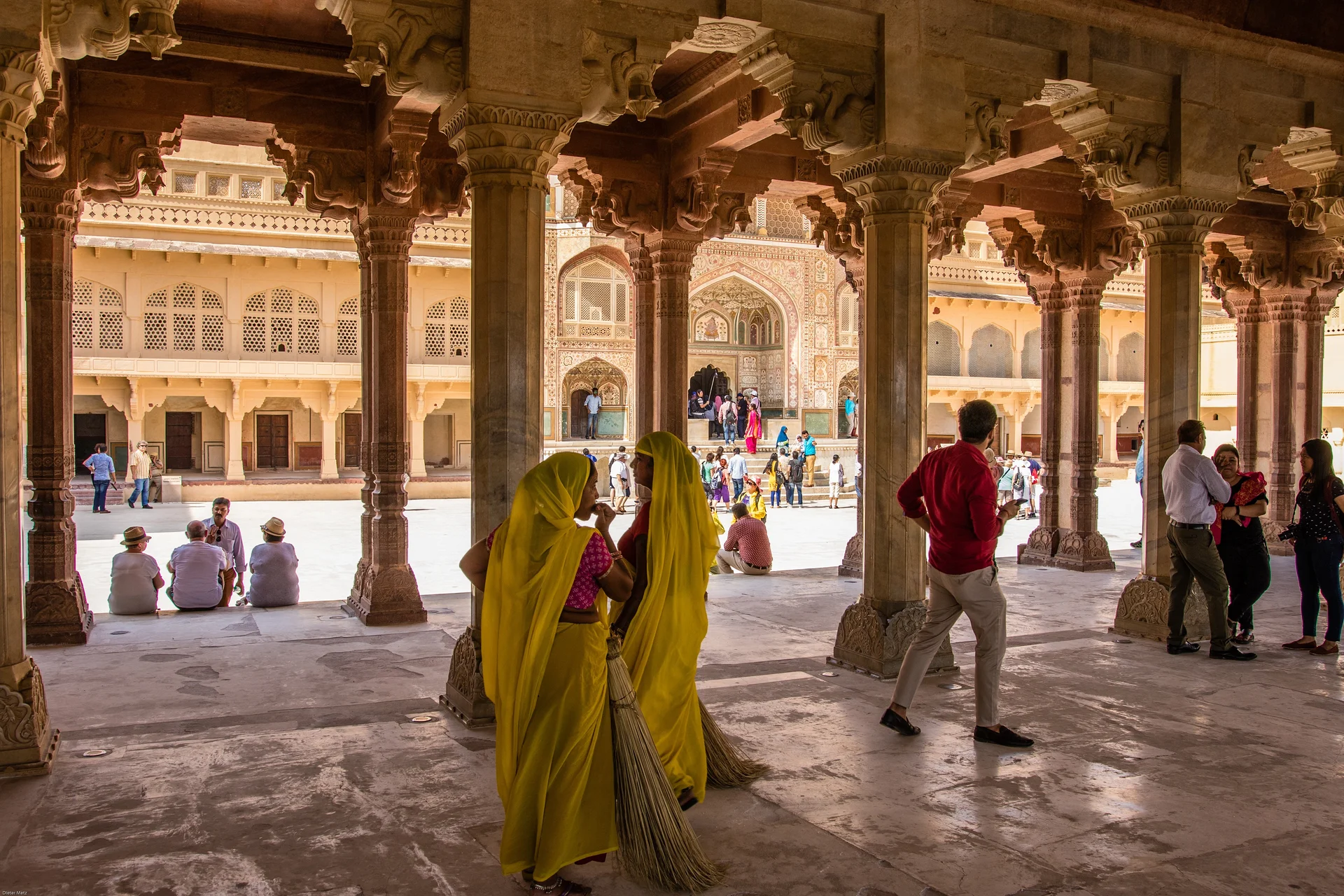
Amber Fort stands 7 miles (11 km) from the center on a hill overlooking a lake. This 16th-century palace complex blends Hindu and Mughal architecture. With its mirror-filled rooms, ornate courtyards, and secret passages, budget at least two hours to explore.
Touts will offer an elephant ride to the top. We strongly advise against this: the treatment of these animals is well-documented and deplorable. The walk up takes five minutes.
From Amber, a path connects to Jaigarh Fort, a military fortress housing the Jaivana, one of the largest wheeled cannons ever built. The views of Amber and the valley are worth the effort. Further south, Nahargarh Fort offers a spectacular panorama of the whole city, especially at sunset. Go in the late afternoon.
Pro tip: arrive at Amber Fort right at opening time, 8 a.m. After 10 a.m., the heat and the crowds make the visit difficult. The local guides you can hire on-site are often excellent and point out details you would miss on your own.
Bazaars and crafts: where India comes alive
The old city is one massive open-air market. Johari Bazaar is the kingdom of jewelers and precious stones. Tripolia Bazaar overflows with block print textiles, an ancient Rajasthani wood-stamping technique. At Bapu Bazaar, you will find saris, embroidered leather shoes, and souvenirs of all kinds.
Haggling is the absolute rule. Start by offering half or a third of the initial price, and do not feel obligated to buy if the price doesn't work for you. For a high-quality artisanal gift, Gem Palace, jewelers to the Kasliwal family for nine generations, is a recognized authority. Prices are fixed and high, but the quality is unmatched.
Off the beaten path
A few less-frequented spots are worth the detour. Panna Meena Ka Kund, a 16th-century stepwell located ten minutes from Amber, is fascinating for the perfect geometry of its zigzagging stairs. Royal Gaitor, which holds royal cenotaphs in carved marble, receives few visitors despite its beauty.
The Anokhi Museum of Hand Printing, in a restored haveli near Amber, tells the story of block print with live demonstrations. It is a refreshing change of pace from the standard forts and palaces.
Indian version of Montjuic: Galta Ji and Jal Mahal
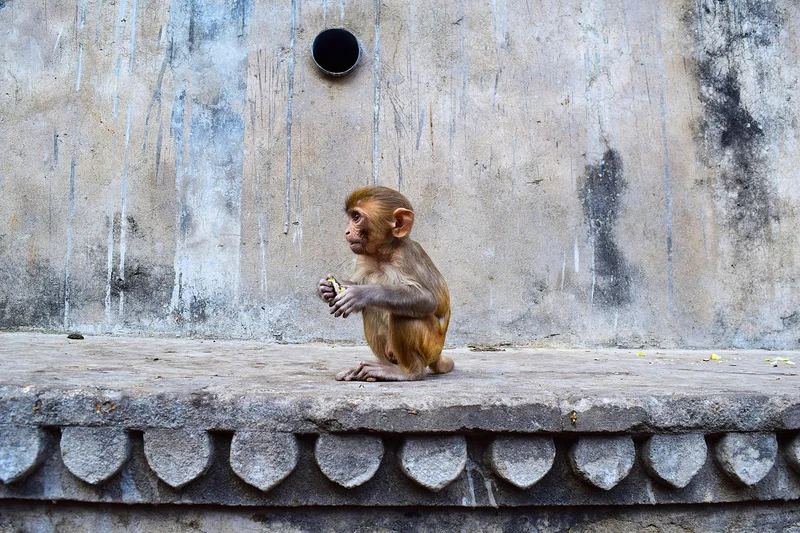
The Galta Ji temple, tucked into a gorge in the Aravalli hills east of the city, is nicknamed the "Monkey Temple." Hundreds of macaques rule the area around pools fed by natural springs. It is a sacred, fascinating, and somewhat chaotic place. Keep your belongings close: the monkeys are skilled thieves.
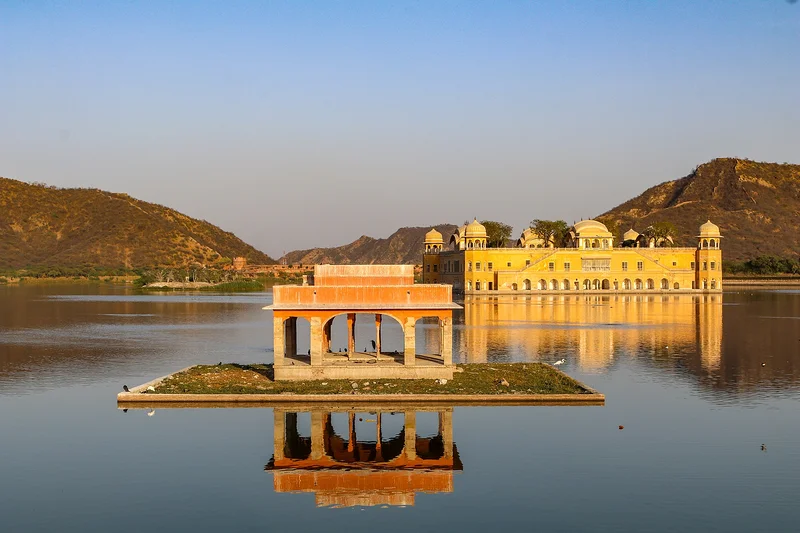
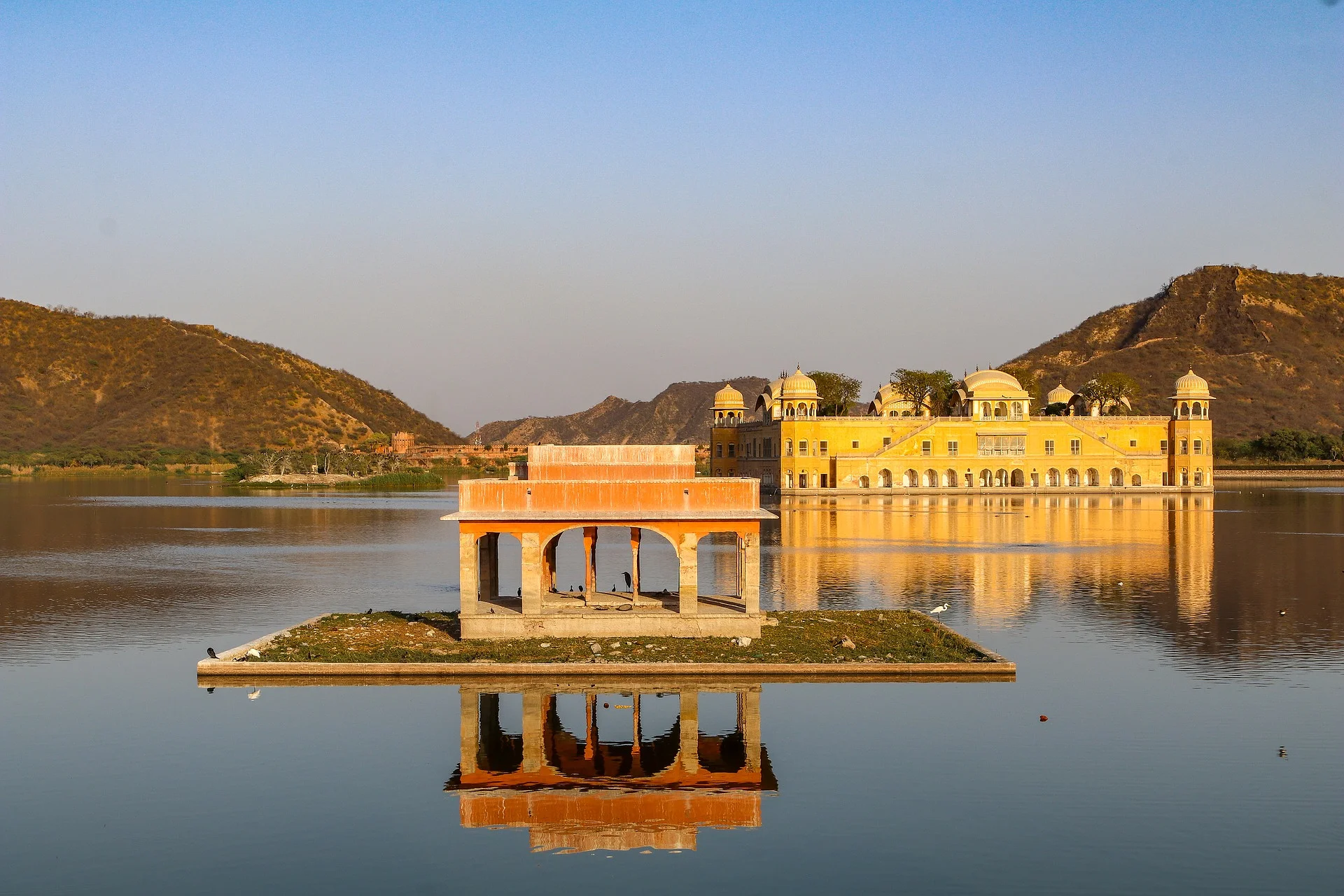
Jal Mahal, sitting in the middle of Man Sagar Lake, is the ultimate postcard image. You cannot go inside, but the view from the shore at sunset, when the palace seems to float on the golden water, makes it worth the trip. The Albert Hall Museum, the oldest museum in Rajasthan, is also worth a stop for its craft collections and Buddhist murals.
Pro tip: if you have time, see a movie at Raj Mandir Cinema, the largest theater in Rajasthan. The Art Deco interior is spectacular, and the atmosphere during a Bollywood screening is an experience in itself. Book online, as shows often sell out.
Where to eat and drink in Jaipur?
Rajasthan is 70% vegetarian. It is a paradise for those who want meat-free meals and a challenge for others. Rajasthani cuisine relies on hearty, spicy dishes adapted to the desert climate: few fresh vegetables, lots of legumes, ghee, and spices.
Specialties to try
- Dal baati churma: spicy lentils served with wood-fired dough balls and a sweet mix of flour and ghee. The signature dish of Rajasthan.
- Pyaaz kachori: a crispy pastry stuffed with fried onions and spices. The best is found at Rawat Mishtan Bhandar on Station Road for under 50 rupees.
- Lassi with saffron or rose: the Jaipur version is thick, creamy, and served in an earthenware cup that is broken after use.
- Ghevar: a honeycomb-textured pastry soaked in sugar syrup, traditional for Rajasthani celebrations.
For a hearty, full meal, order a Rajasthani thali: an all-you-can-eat platter with dal, curry, chapati, rice, pickles, and dessert, starting at 200 rupees in a local restaurant. Peacock Rooftop, on the roof of the Pearl Palace, is popular with travelers for its terrace, live music, and varied menu. The Handi restaurant on M.I. Road is the go-to for tandoori-grilled meats.
Where to stay in Jaipur and the surroundings?
The Bani Park neighborhood, which is residential and quiet, is the best balance between price and proximity to sites. You will find many havelis converted into guesthouses, with rooms around 2,250 INR ($27) per night. For more modernity and peace, C-Scheme offers newer, well-equipped hotels.
For an exceptional stay, Rambagh Palace is a former royal palace turned luxury hotel where Prince Charles and Jackie Kennedy have stayed. Expect to pay at least 25,000 INR ($300) a night. A more affordable option in the same category, Alsisar Haveli offers a heritage experience starting at 4,200 INR ($50). The Zostel and Moustache Hostel chains are solid options for backpackers.
How to get to Jaipur?
The airport receives domestic flights from Delhi, Mumbai, and Bangalore, as well as some international connections to Dubai and cities in Southeast Asia. From the US, you will likely connect through Delhi or Mumbai. The flight from the US to Delhi takes about 14 to 16 hours, followed by a one-hour domestic flight or a train ride.
The train is the most iconic option. From Delhi, the trip takes 4 to 5 hours depending on the train type. Booking online via the IRCTC website is recommended, as tickets sell out quickly. By bus, count on 5 to 6 hours from Delhi or 6 hours from Agra, but comfort is hit-or-miss and Indian traffic can be exhausting.
How to get around Jaipur?
The main attractions are spread out over a 6 to 9-mile (10-15 km) radius. The rickshaw, whether motorized or electric, remains the most common way to get around. A day rate for a tuk-tuk is usually negotiated between 500 and 800 rupees ($6-$10). The Uber and Ola apps work well and save you from potentially frustrating negotiations.
The city is developing its metro network, but lines remain limited. Walking in the old city is possible but tiring due to traffic, noise, and heat. Renting a car with a driver, for about 3,300 to 5,000 INR ($40-$60) a day, is a comfortable option for visiting the forts and outlying sites. Driving yourself is strongly discouraged.
When to go?
The ideal season runs from October to March: clear skies, bearable heat, and golden light on the pink facades. In January, the Makar Sankranti kite festival fills the sky with thousands of colorful kites. If your trip falls during Diwali, the festival of lights, the experience is memorable: candles on every balcony, fireworks, and contagious energy.
Avoid May and June: the heat is unbearable, often exceeding 113°F (45°C). The monsoon from July to September is polarizing. Some travelers enjoy the city washed clean by the rain and the low prices, but travel can be complicated by sudden downpours.
I was pleasantly surprised by my visit to Jaipur. I found the city very pretty with all its facades painted pink. The buildings are pretty well preserved, which is rare enough in India to be worth noting. The Hawa Mahal is an absolute must-see if you visit the city, as is the fort.