Samarkand, where blue became its own religion
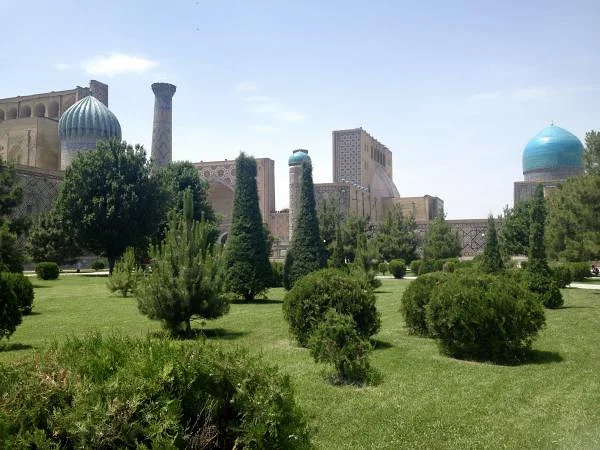
There is a color that only exists here, a turquoise so intense locals simply call it Samarkand blue. It coats six-century-old domes and still commands the Central Asian skyline.
Tamerlane wanted to make this city the grandest in the known world, and for once, the outsized ambition of a conqueror has aged remarkably well.
Is this destination for you?
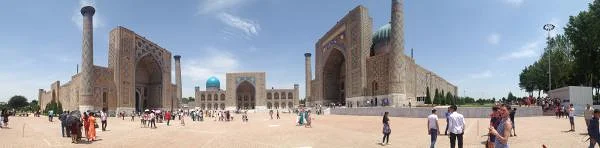
If you crave monumental architecture, hypnotic tilework, and a total cultural shift just a long-haul flight away, Samarkand delivers. This is a city that rewards patience. Sitting in front of the Registan as the sun goes down beats any timed museum ticket.
On the flip side, if you are looking for nightlife, a heavy contemporary arts scene, or a high-octane urban pace, you might find the city winds down quickly after dark.
Best suited for:
- History and Islamic architecture enthusiasts
- Travelers chasing a deep cultural immersion
- Photography hobbyists and pros
- Budget-conscious travelers looking for high-value exoticism
Not suited for:
- Nightlife seekers and late-night revelers
- Anyone looking for beach time or dramatic natural landscapes
- Rushed travelers (this city requires a slow pace)
An accessible budget compared to other travel spots
| Expense | Range |
|---|---|
| Night in a basic guesthouse | $9.20 to $18* |
| Night in a comfortable hotel | $41 to $81* |
| Quick bite (plov, shashlik) | $2.30 to $4.60* |
| Sit-down restaurant meal | $9.20 to $18* |
| Backpacker daily total | $23 to $35* |
| Comfort daily total | $69 to $115* |
Estimated rates subject to change
Practical realities: what to know before you go
English is limited outside of hotels and tourist agencies. Russian is far more widely spoken alongside Uzbek. Learn a few basic phrases or download an offline translation app.
The climate is dry continental, meaning scorching summers touching 104°F in July and August, contrasted with cold winters. Tourism infrastructure has grown significantly over recent years, leaving behind a reliable network of family-run guesthouses in the old town.
The Registan and surrounding monuments
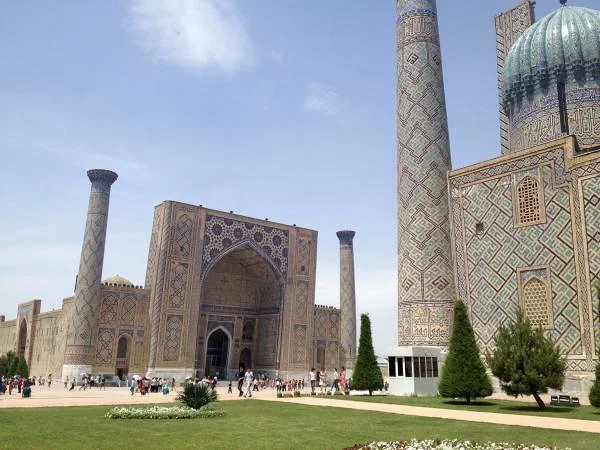
The Registan square brings together three massive 15th- and 17th-century madrasas clad in blue ceramics and gold calligraphy. It is the defining image of Samarkand, and it entirely lives up to the hype.
Friendly tip: Show up once at sunset for the golden hour light, then come back the next morning right at opening (before 8 AM) to have the plaza nearly to yourself without the tour groups.
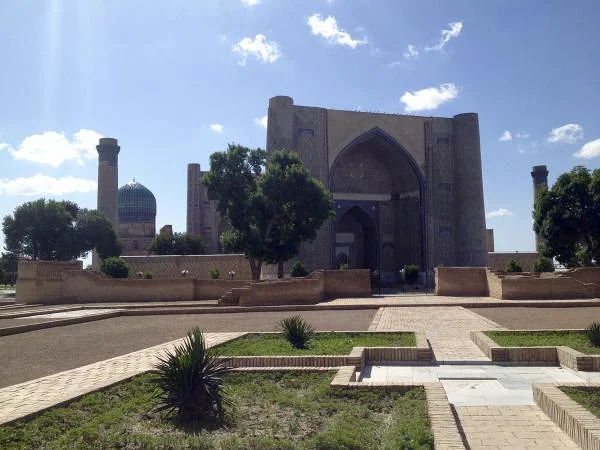
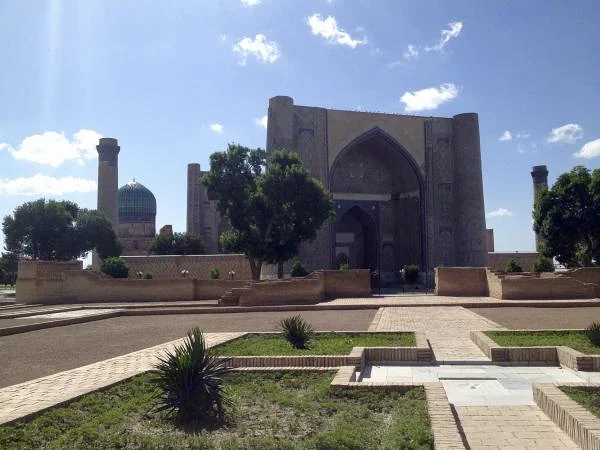
A few blocks away, the Bibi-Khanym Mosque stuns with its colossal scale, commissioned by Tamerlane to eclipse every other structure in the Islamic world at the time.
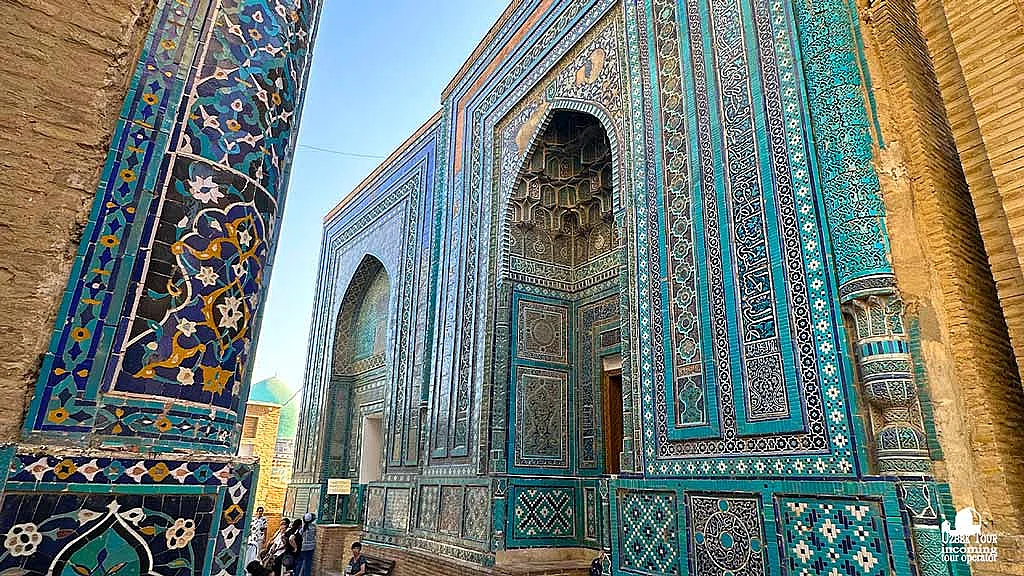
Shah-i-Zinda, the most colorful street of the dead
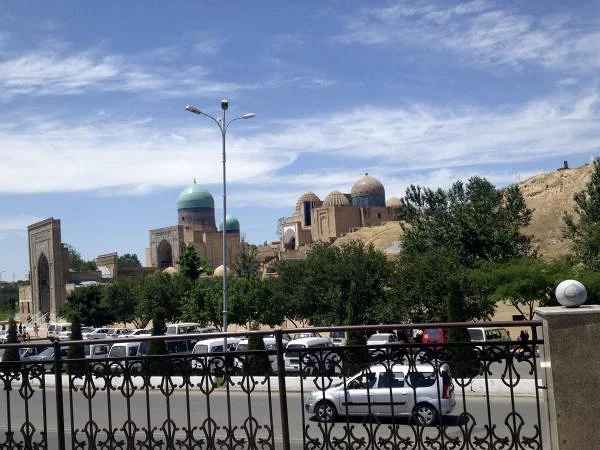
This sloping necropolis packs roughly twenty mausoleums built across centuries, each featuring distinct tile patterns. The sheer density of ornamentation is staggering, a gradient of blues, turquoises, and greens stretching from one tomb to the next.
Local tradition holds that the site shelters the tomb of a cousin of the Prophet Muhammad, keeping it an active pilgrimage site rather than a static museum piece.
Gur-e-Amir Mausoleum and the living neighborhood
Beneath a ribbed turquoise dome lies Tamerlane himself, resting alongside his sons and grandsons. The interior, dripping with gold leaf and carved alabaster, offers a sharp contrast to the austere exterior.
Surrounding these historic monuments, the Siyob Bazaar shows the pulse of modern daily life. Think mountains of spices, traditional round flatbreads (known as non), dried fruits, and spirited haggling. This is where the city breathes in the present tense, far from the ancient stones.
Where to eat and drink in Samarkand?
Samarkand plov stands out for its distinct layers of rice, carrots, and meat, making it different from the Tashkent variation. Seek out neighborhood canteens rather than tourist restaurants, which tend to charge more for less authentic results.
Samarkand non, the stamped round bread, is a local institution that allegedly keeps fresh longer than bread from other regions. Try it hot, straight out of the bazaar's tandoor ovens.
Where to stay in Samarkand and nearby?
The old town around the Registan packs most of the boutique guesthouses housed inside traditional courtyard homes. It is the most convenient base for exploring everything on foot.
The modern districts closer to Amir Timur avenue offer newer, more comfortable hotels just a short taxi ride from the main historical sites.
How to get to Samarkand?
Samarkand International Airport (SKD) handles direct flights from select regional hubs, though many international travelers fly into Tashkent first.
From Tashkent, the high-speed Afrosiyob train connects the two cities in about 2 hours, making it a comfortable ride and the preferred choice over driving.
How to get around Samarkand?
The historic center is best explored on foot, as the major monuments sit close to each other. Be prepared for serious walking under a punishing summer sun.
For longer distances or midday heat, taxis are plentiful and inexpensive. Local ride-hailing apps take the guesswork and price negotiation out of hailing regular cabs on the street.
When to go?
Spring (April to May) and fall (September to October) deliver the best weather with mild temperatures and ideal lighting for photography. Skip July and August, when the heat makes midday sightseeing brutal.