
Saint-Pierre, the city that defied its volcano
Fishermen return with their morning catch while the peak of Montagne Pelée slowly emerges from its crown of clouds. Thousands of locals lived this exact peaceful scene on the morning of May 8, 1902, unaware it would be their final dawn. In three minutes, a 3600°C (6512°F) pyroclastic flow vaporized what was then the most modern city in the Caribbean, killing 30,000 people. Only three survivors escaped the disaster.
Today, this town of fewer than 5,000 residents is rising from the ashes once more, carrying a unique history and a melancholic beauty found nowhere else in the Antilles.
The destination for those looking for something else
If you are coming to Martinique to spend your days on white-sand beaches with poolside cocktails, Saint-Pierre will likely throw you off. This town is for curious travelers, history buffs, scuba divers seeking a thrill, and anyone who prefers the soul of a place over polished tourist infrastructure. The beaches here feature black volcanic sand, the pace is slow, and the remnants of the 1902 disaster permeate every street corner.
The town may disappoint families with young children looking for organized activities. Lodging options remain modest compared to the south of the island. Restaurants close early. However, for those willing to slow down, Saint-Pierre offers a raw Martinican experience, far from the mass tourism of the southern beaches.
Practical info before you go
Martinique is a French department, so US citizens do not need a visa for short stays, though you must have a valid passport. Creole mixes with French everywhere, but you will be understood without difficulty. Public transport exists but is unreliable. Renting a car is practically essential to explore the region. Regarding the climate, prepare for humid heat and sudden tropical downpours, especially between June and November.
Reasonable pricing for the Antilles
Saint-Pierre allows for a more budget-friendly trip than the southern part of Martinique. Expect to pay between 60€ and 120€ ($65, $130) per night for a guesthouse or a local rental. A restaurant meal runs 15, 25€ ($16, $27), and most historical sites are free. The Distillerie Depaz can be visited for free, though the chateau requires a 5€ ($5.50) entry fee.
Exploring the city's ghosts
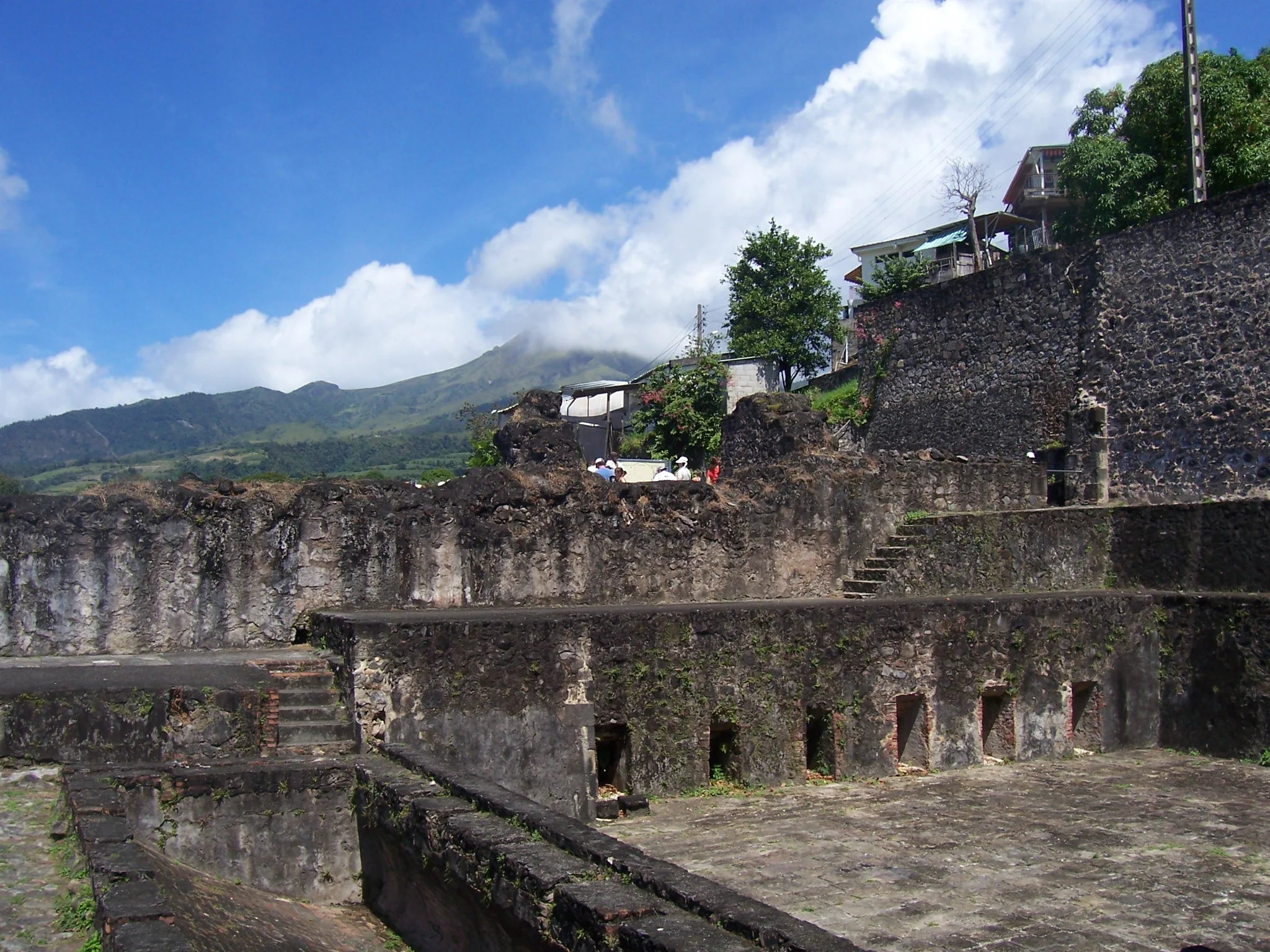
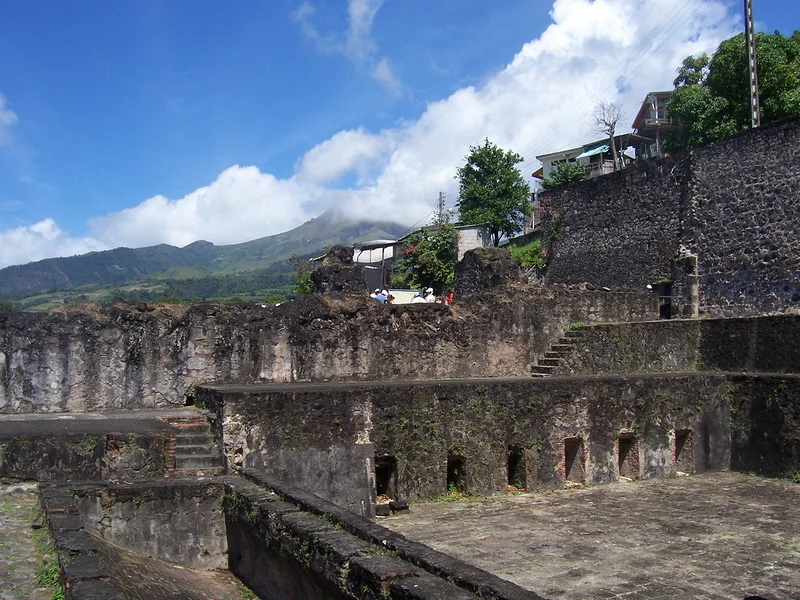
The center of Saint-Pierre can be walked in a few hours, but it deserves a full day. The ruins of the theater, built on the model of the one in Bordeaux, still stand open to the sky. Further along, the Cachot de Cyparis tells the extraordinary story of a prisoner whose stone cell protected him from the pyroclastic flow. Louis-Auguste Cyparis later became an attraction in the Barnum circus, exhibited as the only survivor of the volcano.
Local tip: The Cyparis Express, a small tourist train, offers a one-hour narrated tour through the main sites. It is convenient when the heat becomes oppressive, but remember to reserve at 0596 55 50 92 because departures are not daily.
The Mémorial de la Catastrophe de 1902, installed on the Batterie d'Esnotz that once defended the city, preserves objects deformed by the heat. The cathedral's bronze bell, melted and twisted, remains one of the most striking testimonies to the eruption's violence. Nearby, the Centre de Découverte des Sciences de la Terre offers a more scientific approach to Caribbean volcanism.
Diving into sunken history
The bay of Saint-Pierre hides a secret that only divers can discover: a dozen shipwrecks sunk on the morning of the disaster. These merchant ships, which had arrived from around the world, were waiting for their cargo of sugar and rum when the pyroclastic flow ignited them before sending them to the bottom.
The Roraima, a 120-meter cargo ship from the Quebec Steamship Company, is the most spectacular of these wrecks. Captain Cousteau nicknamed it the "wreck with angel hair" because of the hydroid algae that cover it. It rests between 36 and 55 meters (118, 180 feet) deep, accessible to level 2 divers and above. For beginners, the Amélie, lying at only 9 meters (30 feet), offers a moving first immersion into this marine cemetery.
Local tip: The A Papa D'lo club, facing the fish market on the waterfront, offers outings adapted to all levels. The briefings are detailed and the instructors know every corner of these historical wrecks. Reserve the day before, especially from February to June when visibility is optimal.
The rum route and the heights of Pelée
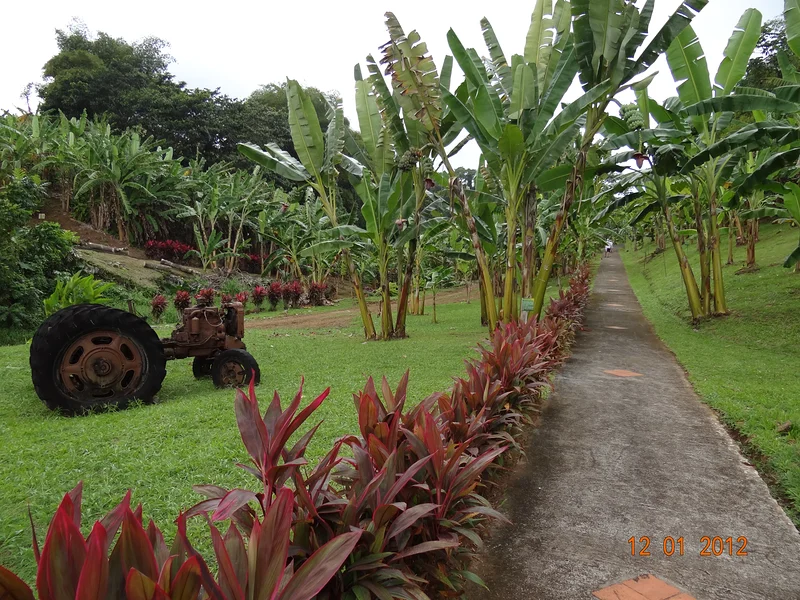
The Distillerie Depaz is worth the trip alone. The alley of royal palms leading to the estate offers one of the most beautiful views in Martinique: sugarcane fields in the foreground, the colonial chateau in the center, and Montagne Pelée in the background. Victor Depaz, the only survivor of his family decimated by the eruption while he was studying in Bordeaux, rebuilt this property starting in 1917. It was an act of faith and defiance against the volcano that had destroyed everything.
The self-guided tour is free and perfectly marked. QR codes allow access to audio guides from your phone. From February to June, the distillery runs at full capacity and the smell of freshly pressed cane juice fills the estate. The Le Moulin à Cannes restaurant, set in an old mill with a sea view, allows you to extend the experience with Creole cuisine revisited by chef Gilles Malidor.
For hikers, the ascent of Montagne Pelée starts from Morne-Rouge, about twenty minutes from Saint-Pierre. The 2 km (1.2 mile) trail to the summit at 1397 meters (4583 feet) is not technical but requires good physical fitness. Start early, as clouds generally invade the summit by late morning.
Wild northern beaches
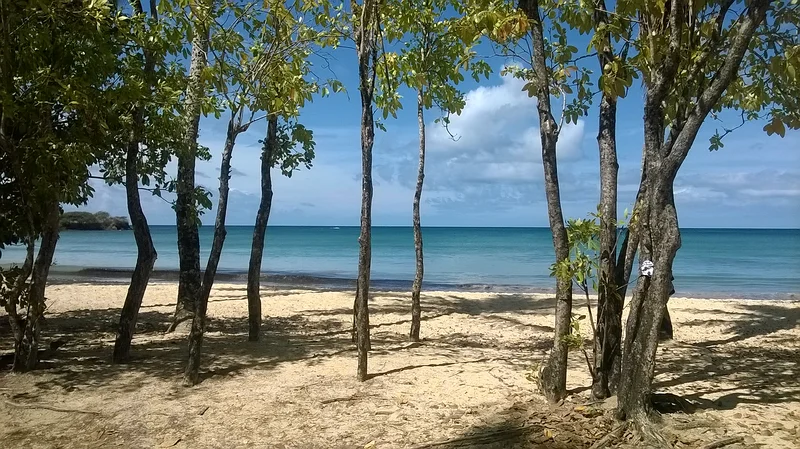
The beaches of Saint-Pierre are nothing like the postcards from the south of the island. The sand here is gray or black and volcanic. The Plage de l'Anse Turin, just south of the city, offers calm waters ideal for snorkeling. Further north, Anse Couleuvre rewards those who accept a chaotic dirt road: black sand, crystal-clear water, leaning coconut trees, and near-guaranteed solitude.
The Saint-Pierre market, housed in a hall facing the sea, brings the waterfront to life every morning. Tropical fruits, spices, and fresh fish make it the ideal place to feel the pulse of local life. The former slave market stood precisely on this site, a reminder of the dark side of Antillean colonial history.
Where to eat and drink in Saint-Pierre?
The local culinary scene is modest but sincere. Chez Arlette, a local staple for over thirty years, serves no-frills Creole cuisine: colombo de poulet (chicken curry), boudin créole (blood sausage), and fricassée de chatrou (octopus stew). The La Vague restaurant, facing the bay since 1951, offers a set menu at 18€ ($20) including a welcome ti-punch. The setting is simple, but the location and generous portions more than compensate.
For a more refined experience, the Moulin à Cannes at the Depaz estate remains the best table in the area. The chef uses local Martinican products: titiris (tiny fish) in fritters, grilled balaous (halfbeak fish), and lambi (conch) in fricassee. Reservations are recommended, especially on Sundays when local musicians provide entertainment for lunch. The Créole Arts Café, installed in an old Creole house, the first building rebuilt after the eruption, offers a warm alternative during the day.
Where to stay in and around Saint-Pierre?
Standard hotel offerings in Saint-Pierre are limited to a few addresses. The Villa Saint-Pierre remains the benchmark for those who want to stay in the town itself. However, the real richness of the sector lies in guesthouses and local rentals. The Résidence Roxelle, 1.5 km (0.9 miles) from the center, offers apartments with a pool facing the Roxelane River. The Martinican owners provide a warm welcome and valuable tips on local hikes.
The neighboring village of Carbet, ten minutes away by car, offers more options. The heights around the Habitation Morne Étoile, in the heart of a sugarcane plantation, will appeal to those seeking Creole authenticity. For tighter budgets, Airbnb offers studios starting at 50€ ($55) per night, often with a view of Pelée or the sea.
How to get to and around Saint-Pierre?
The aéroport international Aimé Césaire in Lamentin serves Martinique with direct flights from Paris in 8.5 hours. Saint-Pierre is a 45-minute drive to the north. Renting a car is essential: expect to pay about 30€ to 50€ ($33, $55) per day depending on the season. Taxis-co, those local minibuses with no fixed schedules, connect Fort-de-France to Saint-Pierre for about 5€ ($5.50), but their random frequency makes them impractical.
From Fort-de-France, the road runs along the Caribbean coast and passes through several fishing villages. The alternative via the Route de la Trace, which winds through the tropical forest, adds an hour to the trip but offers spectacular landscapes and possible stops at the Jardin de Balata or the Basilique du Sacré-Cœur, a miniature replica of the one in Montmartre.
When to go?
The dry season, from December to April, offers the best conditions: fewer downpours, calm seas for diving, and bearable temperatures for hiking. The cane harvest period, from February to June, allows you to see the Depaz distillery in full operation. Avoid September and October, the height of hurricane season, when some establishments close and hiking trails can be impassable.
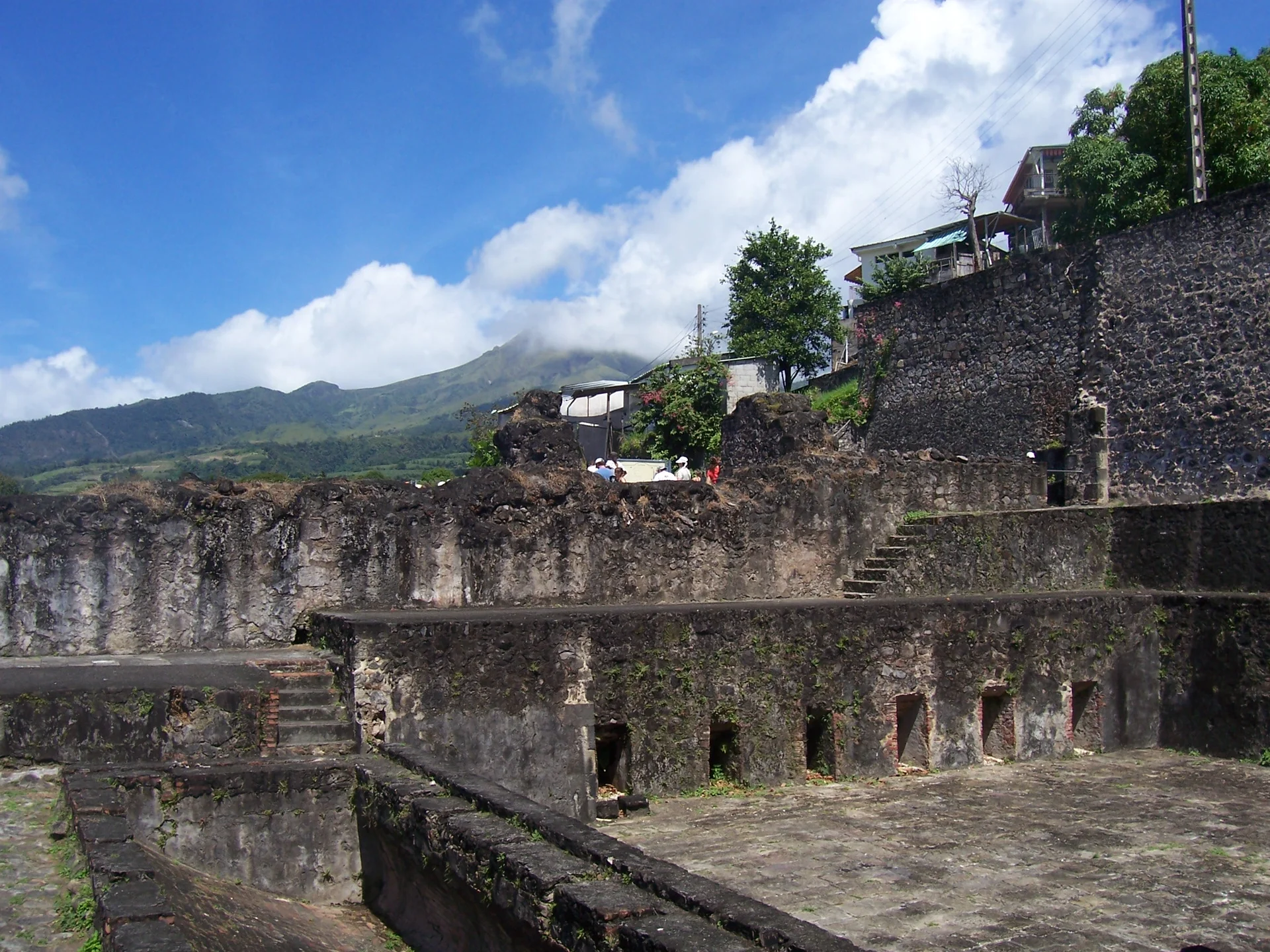
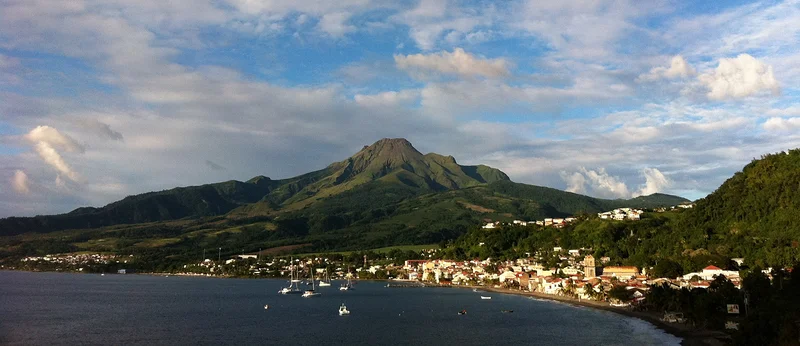
Welcome to Saint-Pierre, the former economic and cultural capital of Martinique.
Between the volcanology museum, the theater ruins (formerly a replica of the Bordeaux theater), the Cyparis dungeon (one of the 2 survivors of the 1902 eruption), and the ruins of the Bethleem asylum, lovers of culture, beautiful stonework, and history will be won over.
Now, let us be honest... the tour of the Distillerie Depaz will have its fans too. And for the foodies, there is the restaurant "la fromagerie" (it is named after the century-old tree in the area). For your info: there is a little dance party on Thursdays with Caribbean music.
Anyway, St. Pierre is not bad, especially since there is obviously a beach where you can take a nap after the sightseeing, the restaurant, and the tasting (or purchasing) of rhum agricole :-)