
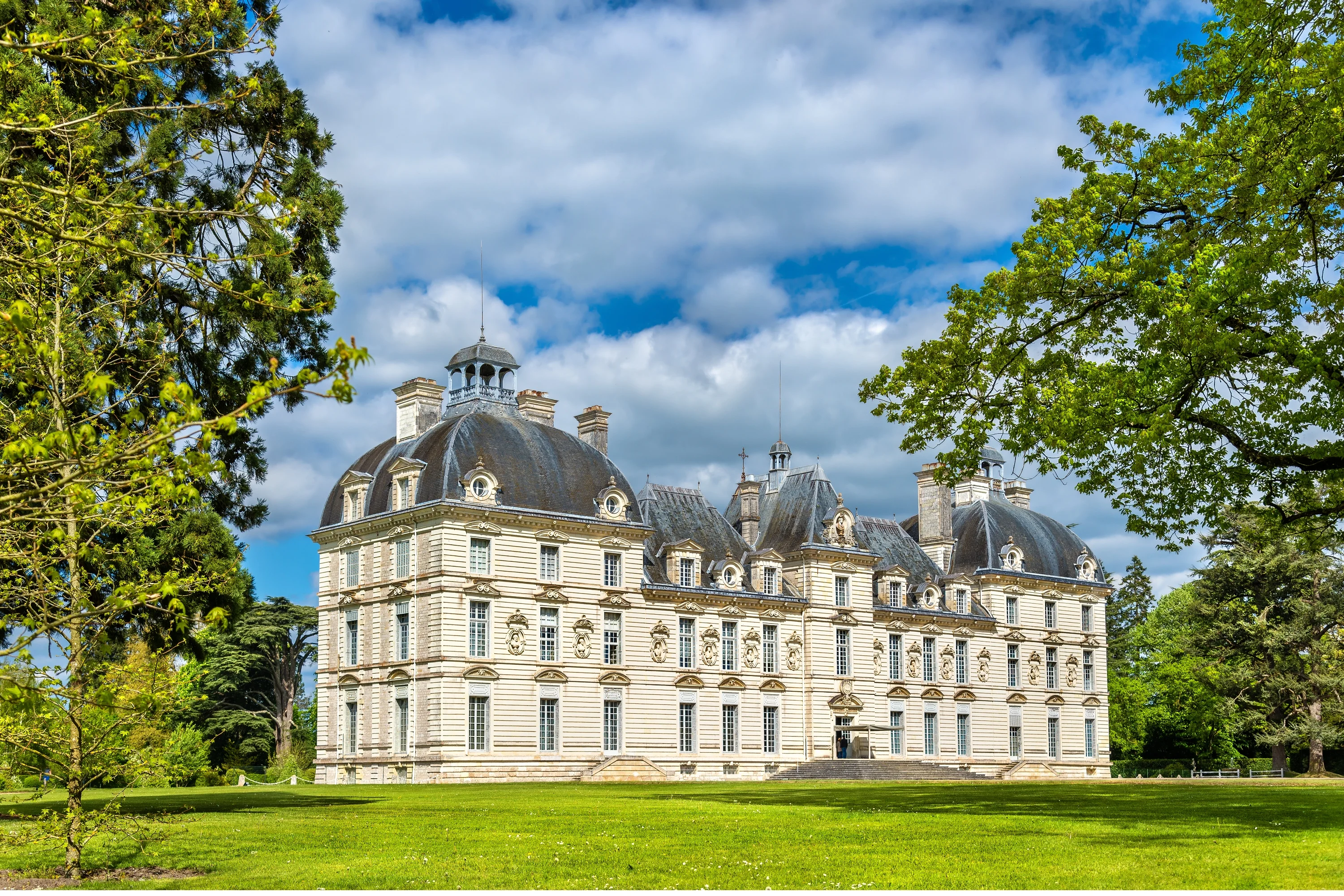
During a summer weekend last year, I headed over to the Loir-et-Cher region to explore two stunning sites: Cheverny and Chambord. Since it was summer, I didn't have to worry about trudging through any mud (you’d have to be an “old-timer” like me to get that Michel Delpech reference…), so I kicked off my tour of the department at the Château de Cheverny.
From the Château de Cheverny to Tintin
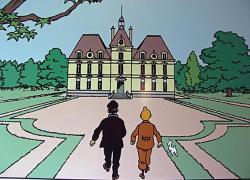 Fans of Tintin’s adventures know that this château served as the model for Moulinsart Castle (or Marlinspike Hall), as drawn by Hergé.
Hergé removed the ends of the two outer wings to simplify it, but the facade and the gardens are a direct inspiration. Both the grounds and the castle are open to visitors.
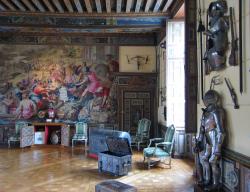
The building is sparkling, constructed from “Bourré stone,” a type of tuffeau limestone from the village of the same name. The owners invite you to explore the interior: you can admire the dining room, the vestibule, the King’s bedchamber (where Henry IV reportedly spent a night), the grand salon, the armory, and the ceremonial staircase, the latter two having clearly been reproduced by Hergé in his albums.
Fans will especially remember the broken step on the staircase, which sparked the plot of The Castafiore Emerald. The owners clearly understood the appeal of the hero beloved by readers from 7 to 77, and they’ve organized a permanent exhibition dedicated to the reporter with the quiff.
It immerses you right into the panels of the albums, bringing the situations invented by Georges Rémi to life. It’s striking and incredibly well done! The exhibition is located next to the trophy room in an annex building.
 But there’s more to the castle than that: you can also enjoy the park and a small vegetable garden featuring medicinal plants and ancient or nearly extinct plant species.
There is also a massive kennel: the estate actually hosts events related to traditional stag hunting.
Finally, there’s the Orangery to discover while strolling through the grounds.
The day after this lovely visit, we headed toward another monument in the region: the Château de Chambord.
Château de Chambord, a Renaissance Masterpiece
Also classified as a historical monument, this superb château is set in the middle of a massive 50 km² park, a renowned hunting estate. A UNESCO World Heritage site, it is inseparable from the reign of Francis I, who acted as its patron.
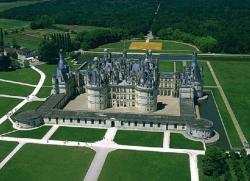
It illustrates the Renaissance in all its splendor.
Whether you’re an architecture buff or not, it’s impossible not to be awestruck by this building’s colossal dimensions and meticulous craftsmanship.
You can see the evolution of Renaissance techniques and ideas, particularly in the work done on the castle’s staircases. One of the most famous is undoubtedly the double-helix staircase, though the helical staircase is just as well-known. The former allowed two people to go up and down without ever crossing paths. It is attributed to the genius of Leonardo da Vinci.
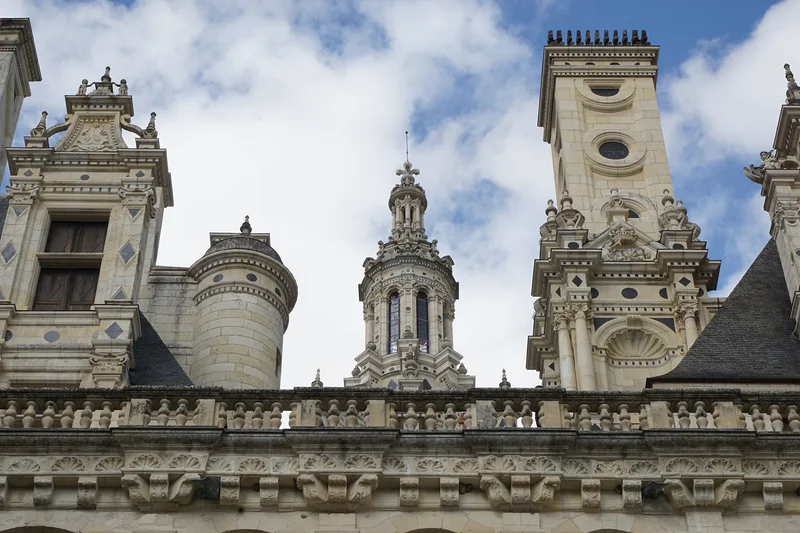
It’s actually via this staircase that you reach the terrace, another innovation borrowed from the Italians. From up there, you can admire the panorama, the park, the water features, and the intricate details of the roof sculptures and chimneys. Back in the day, the Court spent most of its time here when the weather allowed. From this high vantage point, they could watch the start and finish of hunts, admire festivals and performances, and view military parades or maneuvers.
Every level of the staircase leads to grand apartments that you can tour, where the furniture evokes the opulence of the era.
As you walk through the castle, keep your eyes peeled: almost everywhere you look, you’ll see the salamander or the F for Francis I, carved into the stone.
If you can, and depending on the season, try to stay until sunset: the reflection of the final rays on the castle’s white stone is a unique and mesmerizing spectacle. It makes you feel like you’re traveling through time, living for a moment alongside the builders and courtiers who once called this castle home.
Chambord also offers the chance to visit the Museum of Hunting and Nature.
To be thorough and “come full circle” (the name Chambord comes from a Celtic word meaning “passage on the bend”), purists would say I should have also visited the Château de Blois, the third of the most imposing and characteristic castles in the area. But in the end, you’d really need to visit the entire Loire Valley to admire all the wonders that have marked the history of France.


Comments (0)
No comments yet. Be the first!