
Visiting Puente de la Mujer
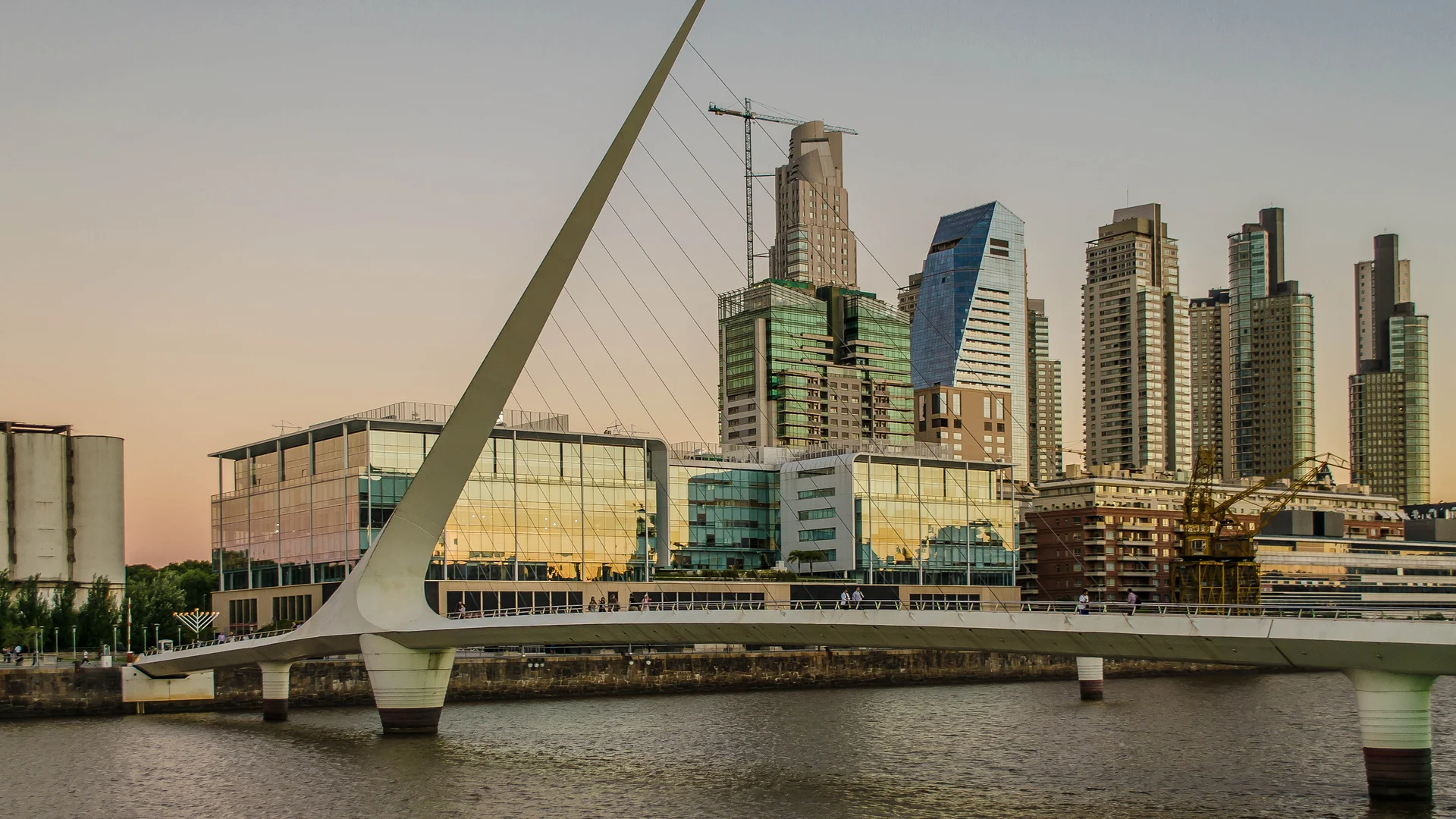
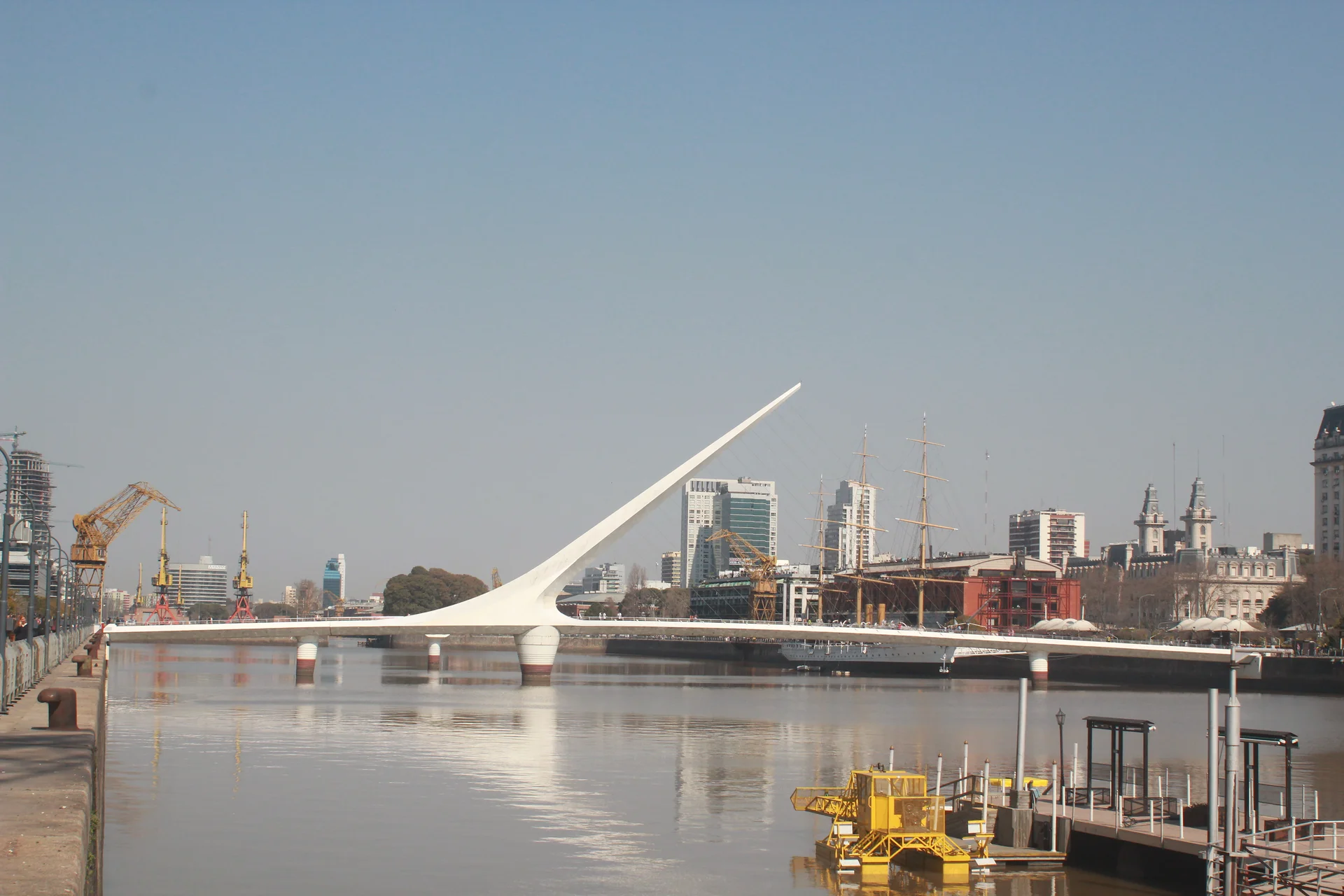
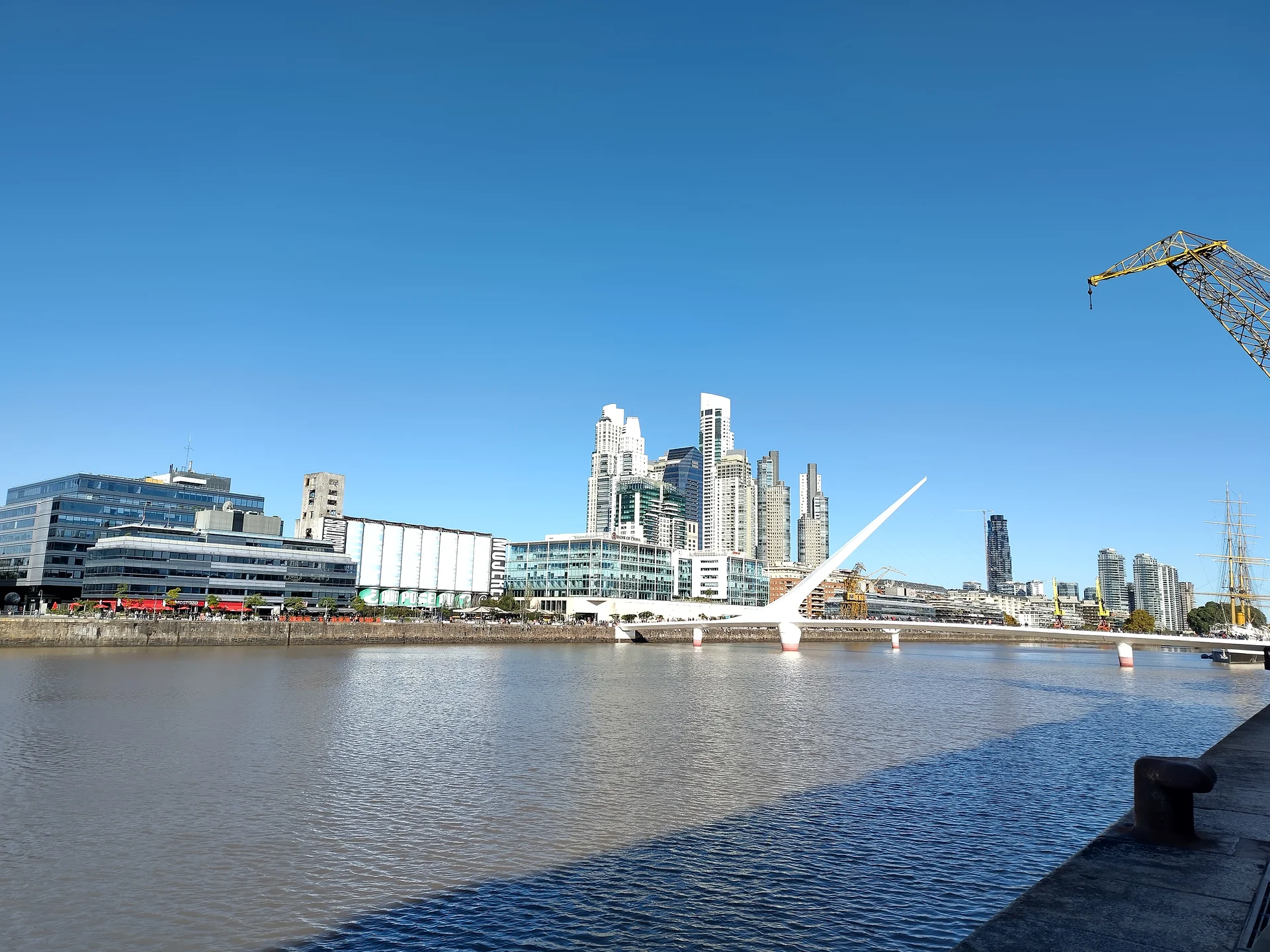
Spanish architect Santiago Calatrava was tasked with honoring the women who shaped the history of Argentina in his own distinct way. Located on dock No. III in Puerto Madero, the structure was built in 2001, making it a relatively recent landmark. From the outside, it is a pedestrian bridge measuring 160 meters long and 6.20 meters wide. It is divided into three sections: two are fixed to the docksides, while the third is a mobile section that rotates on a white concrete conical pillar. This system, supported by a steel needle and a 39-meter-high concrete spine, allows boats to pass through in under two minutes.
Women and Tango First
Puente de la Mujer did not land in this neighborhood by coincidence. Puerto Madero is known for a street naming convention that pays tribute to women who left their mark on the country. As a young district established just a couple of decades ago, this corner of Buenos Aires highlights a modern approach where the symbolic place of Argentine women, such as Azucena Villaflor, takes center stage. Women are not the only inspiration behind this sweeping structure. According to the architect, the bridge also represents a couple dancing the tango. In this interpretation, the white spine represents the man, while the curved deck symbolizes the woman in motion. Beyond its striking silhouette, Puente de la Mujer offers an original way to blend local tradition with modern design.
Opening hours
Open 24/7
*Information subject to change

This bridge, inaugurated in 2001, is convenient and nice to cross in the neighborhood. I wouldn't judge the neighborhood, just the bridge. It fits the spirit of the redevelopment of Puerto Madero, which is growing day by day with new buildings. At the end of the bridge on the Reserva side, you will find a statue of Anne Frank.