
What to know about Feniglia Beach, between nature and relaxation
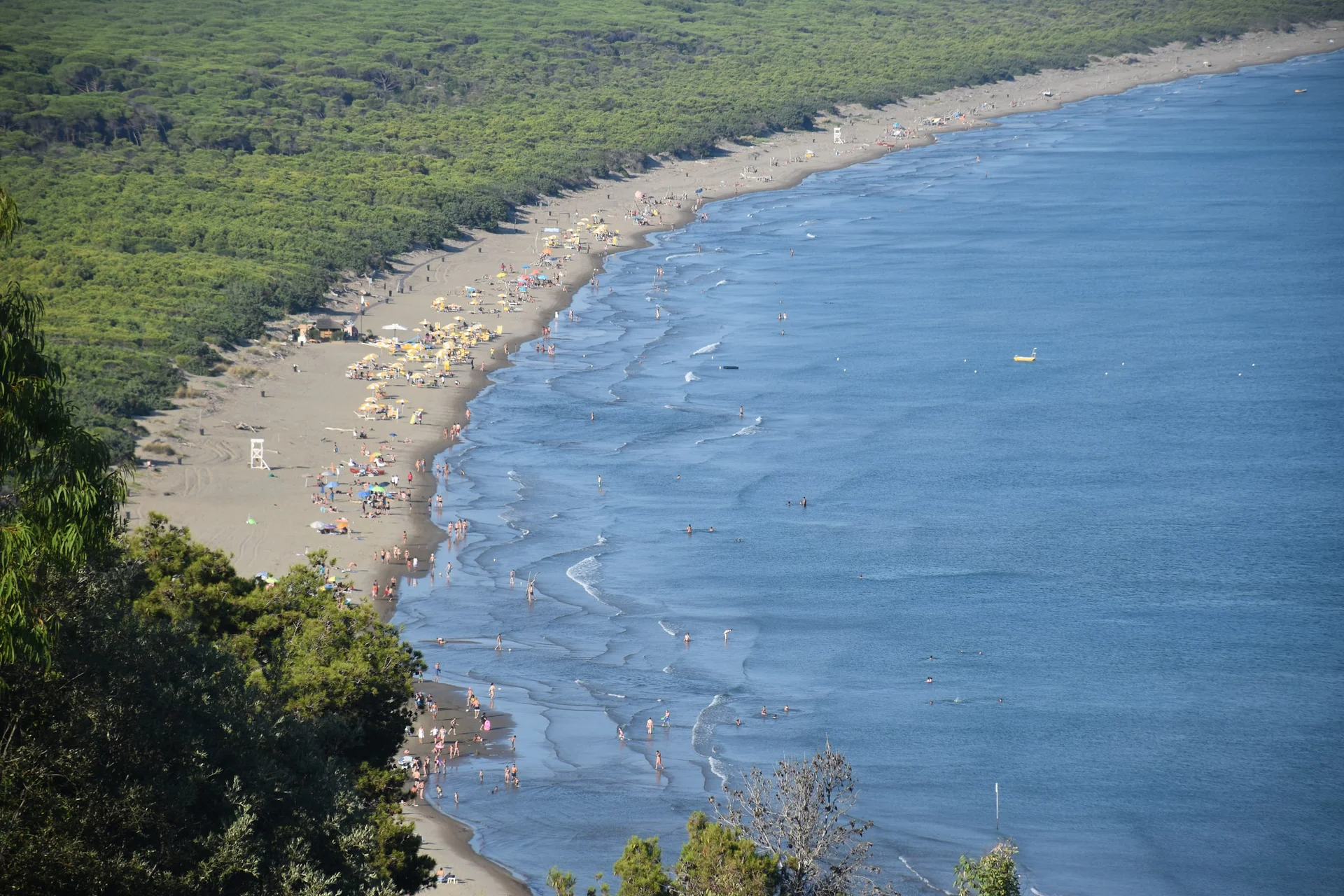
The heady scent of maritime pines mingles with the salty air long before you step onto the sand. Feniglia is more than just a beach, it is a unique ecosystem, a seven-kilometer (about 4.3 miles) golden strip of land that connects Monte Argentario to the mainland, offering a side of Tuscany that feels accessible, family-friendly, and surprisingly wild.
Why is Feniglia Beach so popular?
Unlike the rocky, steep coves of the Argentario peninsula, Feniglia is an invitation to simplicity. It is an immense stretch of soft, fine sand that slopes gently into calm, shallow water. These features make it the preferred beach for families and anyone seeking space and easy access.
Its true character lies in its dual nature. On one side, you have the Tyrrhenian Sea stretching toward the horizon. On the other, there is a dense, protected pine forest called the Riserva Naturale Duna Feniglia (Feniglia Dune Nature Reserve).
A beach for everyone, with space to spare
Spanning seven kilometers, Feniglia has plenty of room for everyone. Near the main entrances, you will find stabilimenti balneari (private beach clubs), where you can rent lounge chairs and umbrellas and enjoy bars and restaurants right on the sand.
However, you only need to walk a few hundred meters to leave the bustle behind and find vast stretches of spiaggia libera (public beach). This is where you truly appreciate the scale of the landscape, with only the sound of the waves and the cicadas from the forest for company.
The nature reserve, the other side of the beach
Right behind the dunes hides the true treasure of Feniglia: a nature reserve crossed by a flat dirt road that runs for several kilometers. The atmosphere here is entirely different. The heat of the sun is filtered by tall pines, and the air is cool and fragrant with resin.
It is an ideal spot for a walk or a bike ride in the shade. The trail is dotted with information boards about the local flora and fauna, along with observation points. If you are quiet and a bit lucky, you might spot fallow deer roaming freely in the undergrowth, a rare experience just steps from the sea.
Friendly tip: Rent a bike at one of the entrances to the reserve, either near Ansedonia or near Porto Ercole. This allows you to easily explore the entire length of the pine forest and pick your perfect spot on the sand, far from the parking lots and the crowds.
A place tied to a tragic history
Beyond its natural beauty, this long stretch of sand carries the weight of a famous and dramatic story. It is on this wild coast that the body of the great Baroque painter Caravaggio was reportedly found in July 1610, while he was desperately trying to reach Rome.
Walking on this beach means treading on the same sand that served as the final scene in the troubled life of one of history's greatest artists. A commemorative plaque, located near Porto Ercole, marks this poignant episode.