
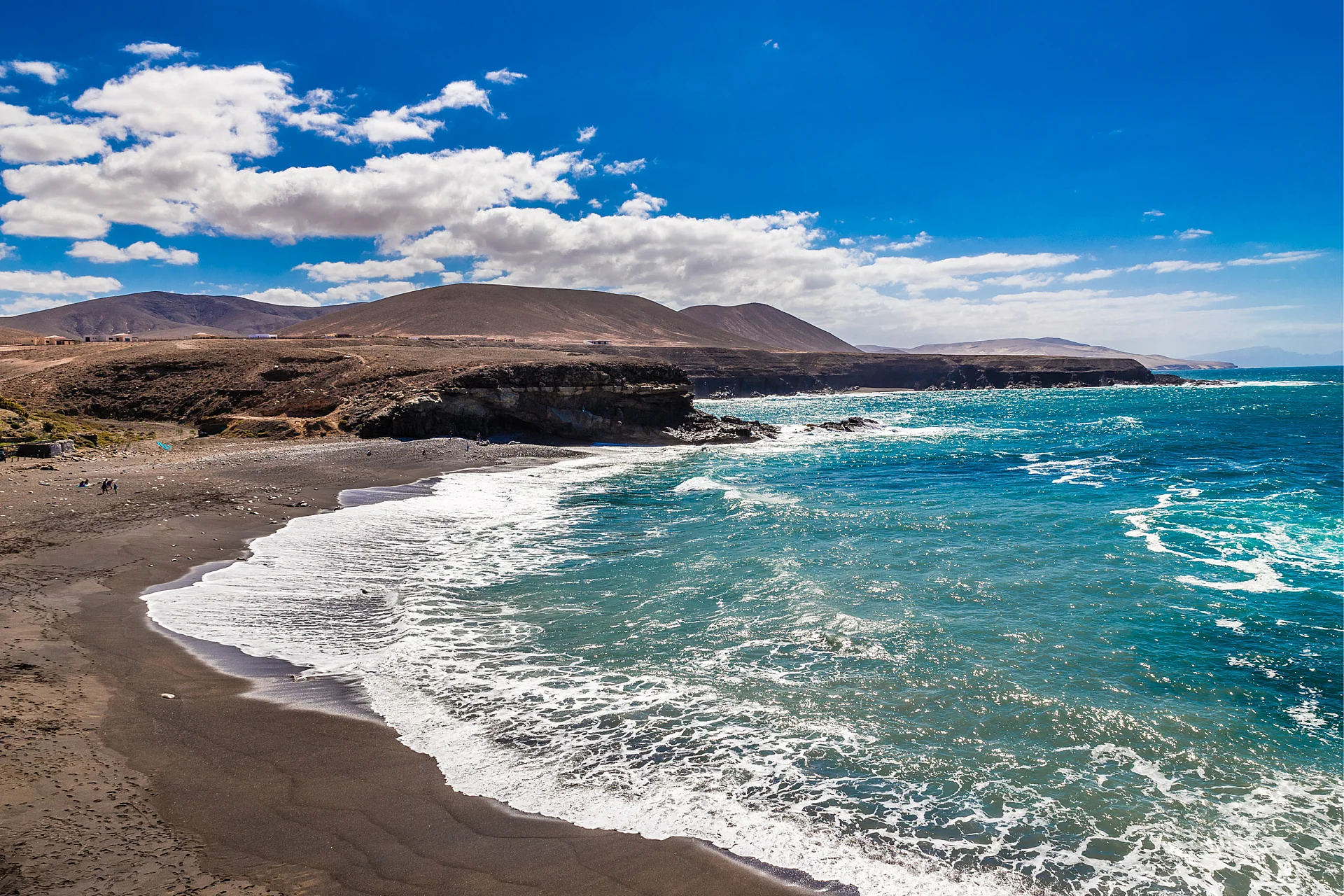
Black sand, ancient cliffs, and fishing boats
The sand is black, mixed with dark pebbles, and the cliffs enclose the beach on either side. Fishing boats rest on the shore, a reminder that Ajuy was primarily a fishing village.
We like this beach for what it does not try to be: very little fine, golden sand, and plenty of volcanic character.
Why visit Plage d'Ajuy
The village belongs to the municipality of Pájara and looks out over the west coast of Fuerteventura, facing the Atlantic Ocean. This exposure explains the landscape: a rugged coastline shaped by the sea.
The neighboring cliffs rank among the oldest rocks in the Canary Islands archipelago. These are ancient seabeds that were lifted up, dating back to the Mesozoic era. You are walking right at the base of a former ocean floor that has turned into a stone wall.
The trail to the caves
The beach serves as the starting point for a coastal path that leads to the Cuevas de Ajuy. These caves are carved into the cliffs by the sea. The trail runs along this coastline, allowing you to see the cliffs up close.
The lime kilns and the waterfront
Near the beach stand the remnants of lime kilns, witnesses to past local lime production. They tell the story of an industry other than fishing in the village.
A boardwalk runs along the beach. There you will find fish and seafood restaurants: enjoying a fresh fish lunch facing the fishing boats is one of the most natural ways to wrap up your visit.
Friendly tip: The west coast is exposed to strong waves and currents. To enjoy Plage d'Ajuy, prioritize the walk, the hiking trail, and a sit-down meal over swimming.
How long for this activity
Allow 30 to 45 minutes to take in the beach and its fishing boats, or half a day if you hike the trail to the caves and have lunch in Pájara.