
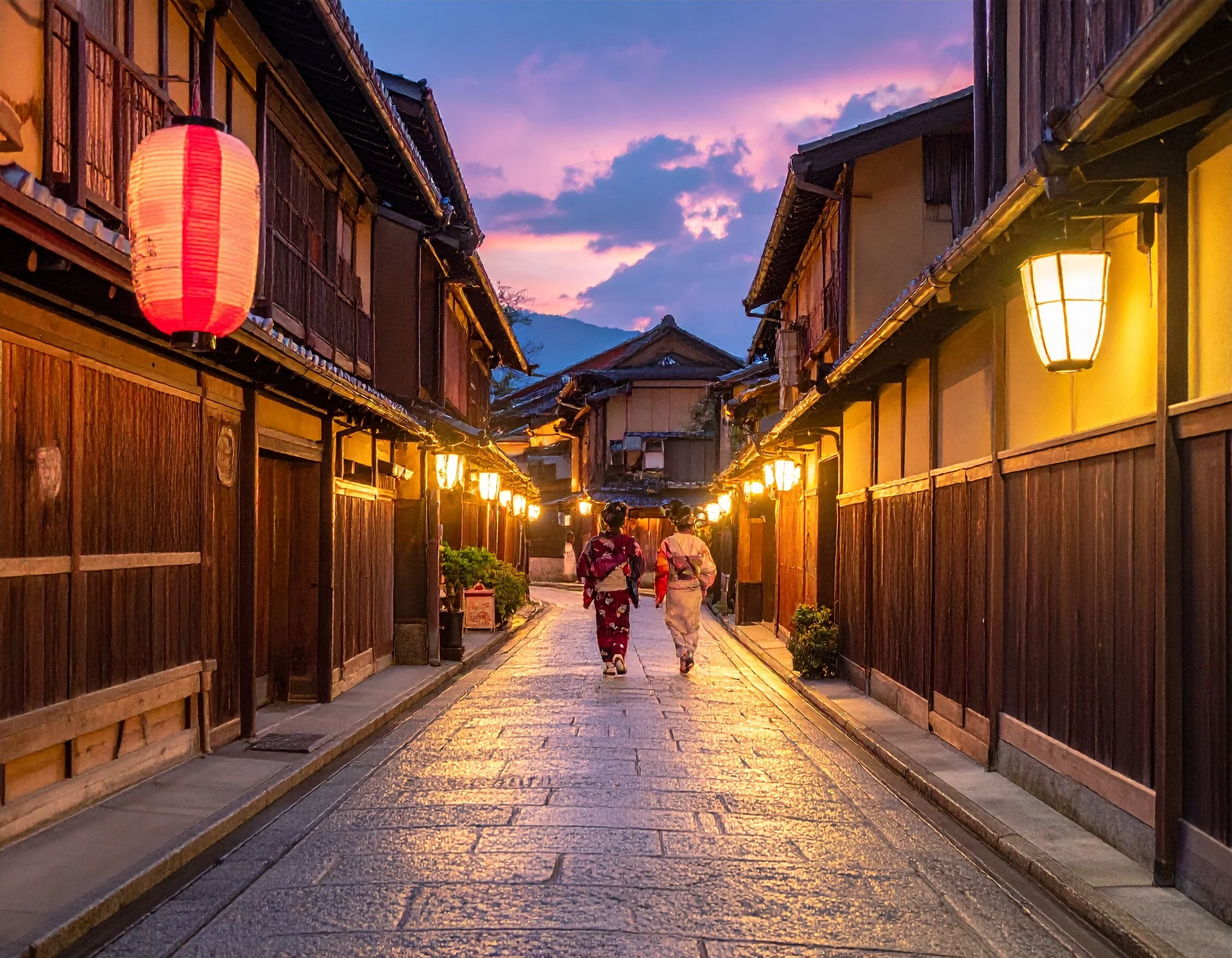
Gion Corner, one hour to experience a millennium of Japanese arts
The shamisen echoes through the dimly lit theater. On stage, two maiko glide with hypnotic grace, their shimmering kimonos catching the light. In exactly sixty minutes, Gion Corner defies time by condensing seven ancestral artistic disciplines. There is no superficiality here. Each sequence captures the essence of a thousand-year-old art, made accessible without losing its soul.
A performance designed for curious travelers
Located in the Yasaka Hall, an annex of the prestigious Gion Kōbu Kaburenjō theater, this venue was created in 1962 to offer visitors a comprehensive overview of traditional Japanese culture. The goal was ambitious. How could they present art forms that normally require hours of appreciation, sometimes eight hours for a full nō performance, in a digestible one-hour format? The answer lies in a careful selection of the most iconic moments from each discipline.
The Gion Kōbu district, the largest of the five geisha quarters in Kyoto, serves as the ideal setting for this theater. Here, the art of the geiko is not just tourist folklore but a living tradition that continues to thrive in ochaya, the teahouses where they entertain their clients.
The seven performing arts
Kyomai dance, elegance embodied
The performance invariably opens or closes with kyomai, a dance style developed in Kyoto during the 17th century within teahouses. Two maiko from Gion Kōbu, belonging to the Inoue school, perform movements with fascinating economy. Every gesture counts, inspired by nō theater and imperial court dances. The dancers maintain a serene expression, leaving the viewer free to interpret the emotions. Their lavish kimonos and the floral ornaments in their hair change according to the seasons.
The tea ceremony, meditation in action
A tea master from the Urasenke tradition prepares matcha on stage. The gestures are ancient, codified down to the angle of the tea whisk. This silent choreography embodies four fundamental principles: harmony, respect, purity, and tranquility. Those who choose the seat with the tea experience can taste the green beverage prepared according to these ancestral rituals.
Ikebana, nature reinvented
Japanese floral art is displayed live. An ikebana master composes a floral arrangement while the koto resonates. Unlike Western floral compositions that aim for abundance, ikebana celebrates empty space, asymmetry, and seasonality. A budding flower or a wilting leaf says as much as a fully bloomed one.
The koto, the voice of thirteen strings
This Japanese paulownia wood zither, 1.80 meters long, produces crystal-clear sounds. The musician uses three plectra to pluck the thirteen strings. The program often features pieces by Yatsuhashi Kengyo, the 17th-century composer who democratized the instrument, which was previously reserved for the aristocracy and gagaku court music.
Bugaku, mysteries of the imperial court
This dance-theater form arrived from China and Korea in the 6th century and remains one of the world's oldest musical traditions. A dancer in a flamboyant costume, often adorned with fantastical designs, executes stylized and powerful movements. The piece presented, Ranryō-ō, tells the story of a handsome general who hid his face behind a fierce mask to terrorize his enemies.
Kyōgen, ancestral laughter
This traditional comic form, performed as an interlude between nō pieces, humorously depicts the flaws of feudal society. The actors speak in archaic Japanese, but the situations remain universal. Even without understanding every word, the audience laughs at the slapstick antics.
Bunraku or nō depending on the season
From March to May and in September, a scene from nō, the medieval masked theater, is featured. The rest of the year, bunraku, the puppet theater recognized as UNESCO intangible heritage, takes over. The one-meter-tall puppets, manipulated by three performers dressed in black, bring poignant dramas to life.
Friendly tip: Definitely avoid the back row of the theater. The seats are not tiered and the view is obstructed. Premium seats, equipped with tablets offering translations and detailed explanations, are worth the extra cost for newcomers eager to grasp every subtlety.
Practical information for your visit
The show runs twice every evening, at 6:00 PM and 7:00 PM, daily from mid-March to late November. During the winter, from December to mid-March, performances are held only from Tuesday to Friday. Book online to guarantee your spot, as the theater often sells out. Tickets can also be purchased at the ticket office on the day of the show depending on availability.
The entrance hall houses a photo gallery dedicated to the maiko, showcasing their hair ornaments, different hairstyles, and photos of annual events from the five geisha districts of Kyoto. It is a perfect introduction before the performance.
Opening hours
March to November: every day
December to mid-March: Tue to Fri
Closed: July 16, August 16, December 29 to January 3
*Information subject to change

These artists are part of the charm and mystique of Kyoto (no, do not harass them for photos if you run into them on the street in Gion). But as a tourist, our chances of attending one of their performances are slim…
Except in this little theater. I really recommend the experience to discover this profession that is misunderstood in the West. You are captivated by the elegance and control of every movement, which gives you a glimpse of the hours of work involved.