
Visiting the Basilica of San Vitale: a brilliant manifesto of Byzantine gold
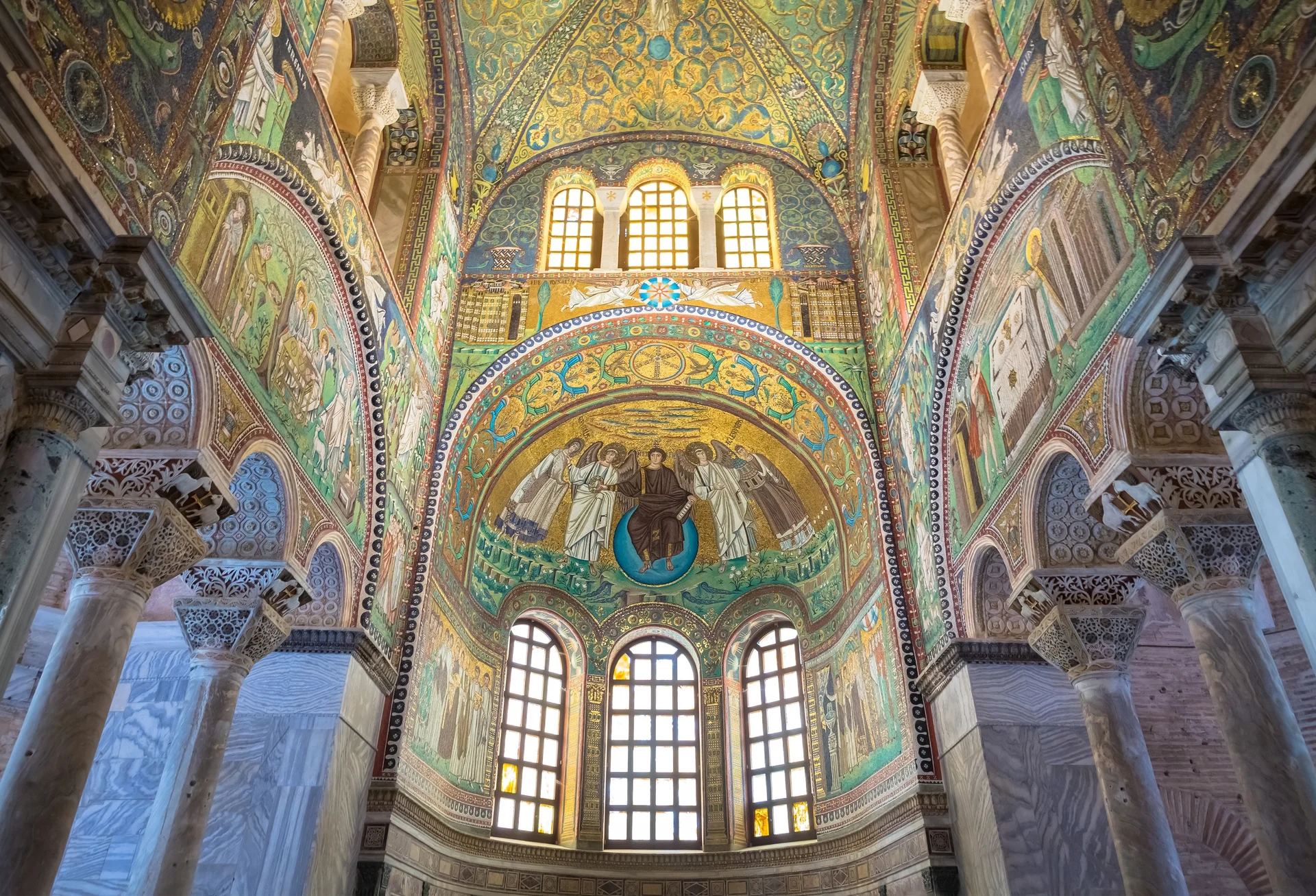
Walking into the Basilica of San Vitale means leaving behind the simple Roman brickwork for an immersion in a swirl of color and light. The space, built on a bold octagonal plan, immediately pulls your eyes upward toward the choir. This is where the art of mosaic explodes, turning the architecture into a monumental canvas where divine and imperial power become one.
Why is the Basilica of San Vitale an absolute masterpiece?
Consecrated in 547, this basilica is the purest and best-preserved example of Byzantine art in Western Europe. Begun in 526 at the initiative of Bishop Ecclesius and completed after the Byzantine reconquest of Ravenna, it represents the pinnacle of an art form where theology meets political propaganda. Its unique architecture, combining a Roman-inspired dome with airy Byzantine capitals and a polygonal apse, creates a spectacular setting for its treasures.
Architecture designed to dazzle
The design of the Basilica of San Vitale breaks away from the longitudinal plans of traditional basilicas. The central octagonal plan, topped by a dome, creates a remarkable sense of space and elevation. Eight massive pillars are pierced by arches that open onto an ambulatory, giving the structure a lightness and complexity that guides the visitor through the building.
The light, which pours in through numerous windows, was specifically engineered to make millions of tesserae shimmer and bring the depicted scenes to life.
The imperial procession frozen in eternity
The true treasure of the Basilica of San Vitale lies in the mosaics of its apse. They are the highlight of the visit. Two panels face each other, both of inestimable artistic and historical value.
The Emperor Justinian panel
On the left, Emperor Justinian, wearing a halo, appears as a Christian sovereign surrounded by his dignitaries, his guards, and Bishop Maximian. The precision of the portraits, the richness of the clothing, and the rigid posture leave no doubt about the power of the Byzantine Empire, both political and religious.
The Empress Theodora panel
Facing him, the procession of Empress Theodora rivals that splendor. Decked in jewels and purple robes, she offers a chalice in a scene of decorative richness and psychological precision that is rare for the period. These two mosaics are not mere portraits. They are a political statement, fixing the imperial couple in the very heart of the sanctuary for posterity.
Friendly tip: Take the time to observe the details beyond the famous imperial panels. Look up at the choir vault to see the Mystic Lamb, then explore the Old Testament scenes, such as the sacrifice of Abraham or Moses, which engage with the central message. Bring a pair of binoculars to appreciate the finesse of the tesserae and the nuances of color, which are impossible to fully grasp with the naked eye.
A symbolic language to decipher
Every element in the Basilica of San Vitale carries meaning. In the center of the apse, a young Christ, beardless, sits on an azure globe, offering the martyr's crown to Saint Vitalis. The entire collection of mosaics forms a coherent discourse on salvation, redemption, and the legitimacy of Byzantine power as the heir to the Roman Empire. It is a genuine Bible in stone, a narrative that continues to fascinate visitors today.
Opening hours
*Information subject to change

I was pretty impressed by the Basilica of San Vitale during my stay in Ravenna. Its majestic architecture and mosaics really show off Byzantine art. If you like art and architecture, this is a place you absolutely have to visit. The tour is pretty quick, so count on spending about an hour there.