
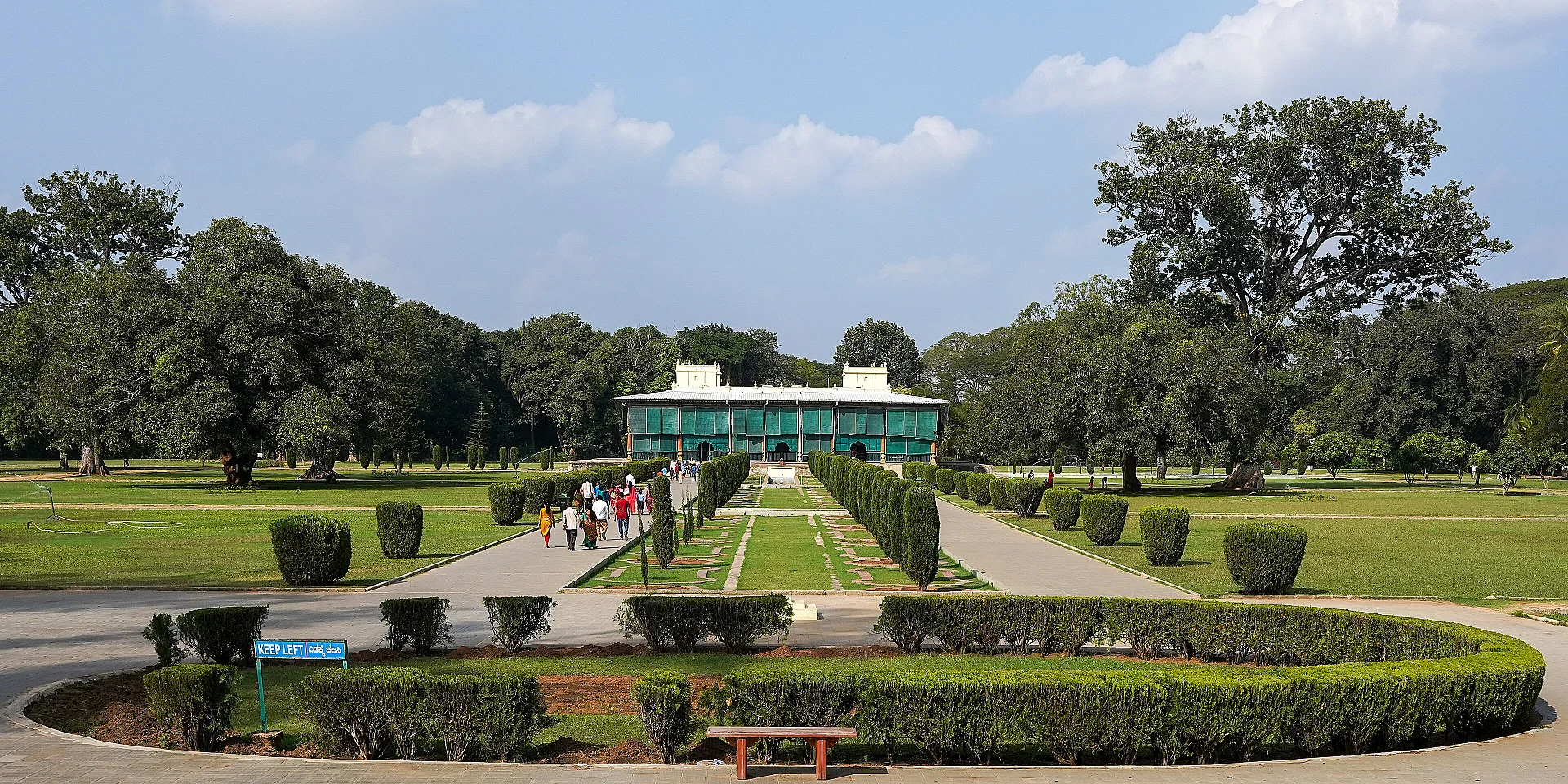
The palace where Tipu Sultan retreated between battles
On the banks of the Kaveri river, in Srirangapatna (about a 20-minute drive from Mysore), a painted wooden palace overlooks a formal garden filled with lawns and geometric paths. The interior walls feature nearly intact murals detailing the wars of a sovereign who long intimidated British colonial forces.
Why visit the Daria Daulat Bagh Palace?
Built in 1784 by order of Tipu Sultan, the Tiger Sultan of Mysore, this summer residence served as a getaway from the intensity of the capital. The name translates roughly to garden of the wealth of the sea, a nod to the kingdom's prosperity at the time.
The structure survived the 1799 sacking of Srirangapatna by British troops almost entirely unscathed, unlike the nearby fortress which was largely destroyed. This rarity makes the site significant, as few Mughal-Hindu royal residences from this period remain with such complete painted decor.
Indo-Islamic architecture in wood
The palace sits on a teak wood frame supported by columns adorned with scalloped arches characteristic of the Indo-Islamic architecture of the Deccan region. A two-story exterior gallery encircles the entire building and provides an open view of the garden.
The ground floor now houses a small museum dedicated to Tipu Sultan, featuring personal items, weapons, and period documents. The upper floor remains closed to the public, though it can be viewed from the courtyard.
The murals are the main event
The interior walls are the most striking feature of the site. They are covered in wall paintings depicting Tipu Sultan's battles against British armies, notably the 1780 Battle of Pollilur, where his forces inflicted a major defeat on the East India Company.
Other frescoes display court scenes, royal processions, and floral motifs typical of Mysore art. While the colors have faded in some areas, they remain clear enough to provide an accurate sense of the period's opulence.
Friendly tip: Arrive in the late morning when the light passes through the arcades and illuminates the murals without creating glare. Combine your visit with the Gumbaz, the nearby mausoleum where Tipu Sultan is buried, just a few minutes away on foot.
Pros
- Rare and well-preserved historical murals
- Pleasant garden for a shaded break
- Short visit, easy to combine with the Gumbaz
Heads up
- Upper floor is inaccessible to the public
- Limited informational signage in English on site
Opening hours
Daily: 9:00 AM to 5:00 PM.
Closed on Fridays.
How long for this activity
Plan on 1 to 1.5 hours to explore the palace and wander through the surrounding gardens. This is enough time to admire the detailed murals and the site's wooden architecture.
*Information subject to change

I really enjoyed visiting this palace, which I did with a guide. The exterior of the palace is quite simple and contrasts with the interior, which is much more decorated. Inside, there are some very beautiful frescoes on the walls. Visiting the garden is also a must. Everything is perfectly maintained. Plan on at least one to two hours to see it all.