
Mysore, the city scented with jasmine and sandalwood
In Mysore, the stalls of the Devaraja market fill the morning air with a blend of turmeric, fresh jasmine, and sandalwood. This city in Karnataka served as the capital of a princely state for generations, and it still wears its slightly faded royal elegance through ochre palaces and wide tree-lined avenues.
Quieter and less congested than Bangalore, sitting about three hours away by road, Mysore keeps a slower pace. Travelers come here for the Amba Vilas Palace, but they often stay for other reasons: traditional yoga classes, the spice markets, and the golden light washing over the Chamundi hills at sunset.
Is this destination right for you?
Mysore suits travelers who like to take their time, wander through busy markets without feeling crushed by mass tourism, and dive into Indian history beyond the standard cliches of Rajasthan or Kerala. It also draws yoga enthusiasts, as the city stands out as one of the modern birthplaces of Ashtanga.
On the flip side, those seeking beaches, high-energy nightlife, or heavily westernized infrastructure might feel let down. Mysore remains a mid-sized Indian city in its daily rhythm, complete with scooter traffic jams and pockets of urban noise.
Best suited for:
- fans of Indo-Saracenic history and architecture
- yoga and wellness enthusiasts
- travelers seeking a calmer stop than Bangalore or Chennai
- curious visitors interested in local markets and crafts like silk and sandalwood
Not recommended for:
- lively nightlife seekers
- beachgoers looking for downtime
- travelers uncomfortable with heavy traffic and Indian urban noise
An accessible budget compared to Europe
| Expense | Range |
|---|---|
| Basic hotel night | $9 to $17* |
| Comfortable hotel night | $29 to $57* |
| Street food meal (thali, dosa) | $1.20 to $3.40* |
| Tourist restaurant meal | $5.70 to $12* |
| Transportation and daily activities | $5.70 to $12* |
| Backpacker daily total | $17 to $29* |
| Comfort daily total | $45 to $79* |
Estimated rates subject to change
Practical realities to know before you go
The heat turns brutal between March and May, with temperatures frequently pushing past 95°F. English is widely spoken in hotels and tourist spots, though less so in local neighborhood markets where Kannada takes over.
General safety is good, and Mysore is known to be calmer than India's major metropolises. Solo female travelers should still follow standard precautions across India, such as avoiding deserted streets at night and relying on tuk-tuks recommended by your accommodation.
The palace and its royal quarter
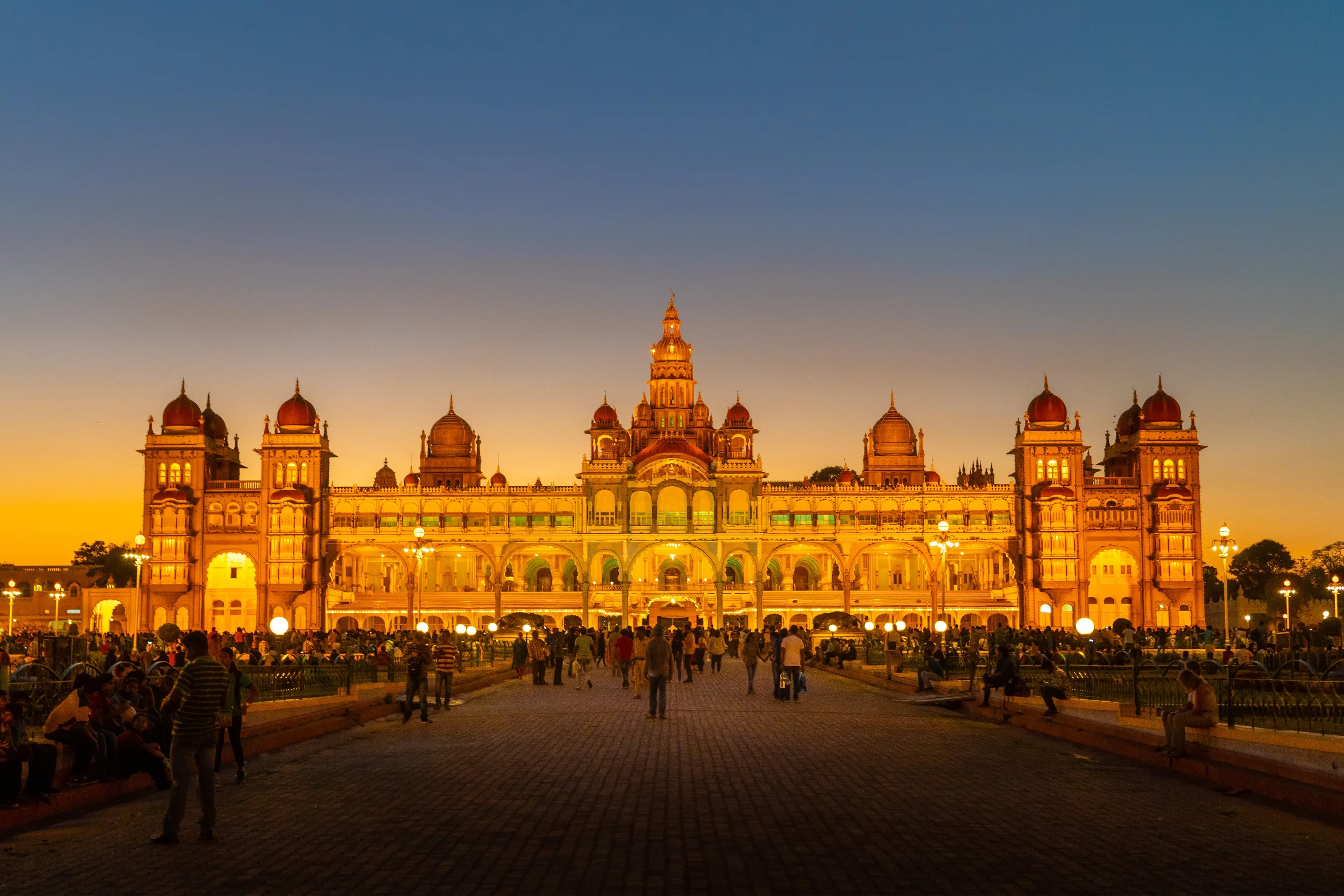
The Amba Vilas Palace, the historic heart of the city, blends Hindu, Mughal, and Gothic influences in a riot of domes and stained glass windows. Its Sunday evening illumination, powered by nearly 100,000 lightbulbs, draws a thick crowd but remains a memorable spectacle.
A network of colonial administrative buildings and quieter temples surrounds the palace, drawing far fewer visitors than the main attraction.
Friendly tip: To skip the Sunday evening crowds, tour the palace during the day on a weekday, then come back to watch the light show from outside the gates without paying for an evening ticket.
Devaraja Market and commercial energy
The Devaraja market is a sensory deep dive into daily life in Mysore. Stalls overflow with flower garlands, pyramids of colored powders used in religious rituals, and sandalwood carvers, making it one of the most photogenic covered markets in South India.
Nearby shopping lanes sell Mysore silk, renowned across the country, along with carved sandalwood items, the region's historic craft specialty.
Chamundi Hill and its panoramic views
Perched roughly 3,300 feet up, the Chamundeshwari Temple looms over the city from atop Chamundi Hill. You can hike up a staircase of more than 1,000 steps guarded by a sacred bull statue, or take the easier route by car.
The view over Mysore and the surrounding countryside, especially at sunset, makes the trip worthwhile even for those less interested in the religious side of the site.
Where to eat and drink in Mysore?
Mysore pak, a rich sweet made from ghee, sugar, and chickpea flour, stands as a local specialty you must try at a downtown sweet shop. For a full meal, a vegetarian thali served on a banana leaf makes a classic and affordable food experience.
Coffee lovers can try the Karnataka filter coffee, served frothy in a small metal container, which is a local institution entirely distinct from a standard espresso.
How to get to Mysore?
Mysore Airport (MYQ) handles limited domestic flights, so most international travelers route through Bangalore, which has direct flights from several major global hubs. From Bangalore, you can reach Mysore in about 3 hours by road or train.
Flights from the US typically require at least one connection, with round-trip fares varying significantly by season.
How to get around Mysore?
The historic center is easy to explore on foot since distances between the palace, the market, and the main temples stay manageable. For longer hops, auto-rickshaws (tuk-tuks) provide the most practical and budget-friendly transport.
Apps like Ola let you book taxis or auto-rickshaws at fixed rates, saving you from sometimes tedious fare negotiations with drivers.
When to go to Mysore?
The sweet spot runs from October to March, when temperatures stay moderate and comfortable for walking around. The Dasara festival in September and October fills the city with ten days of celebrations and light displays, making it a unique time to visit though also the busiest.
Skip April and May if possible, as the heat makes long outdoor sightseeing days tough to handle.
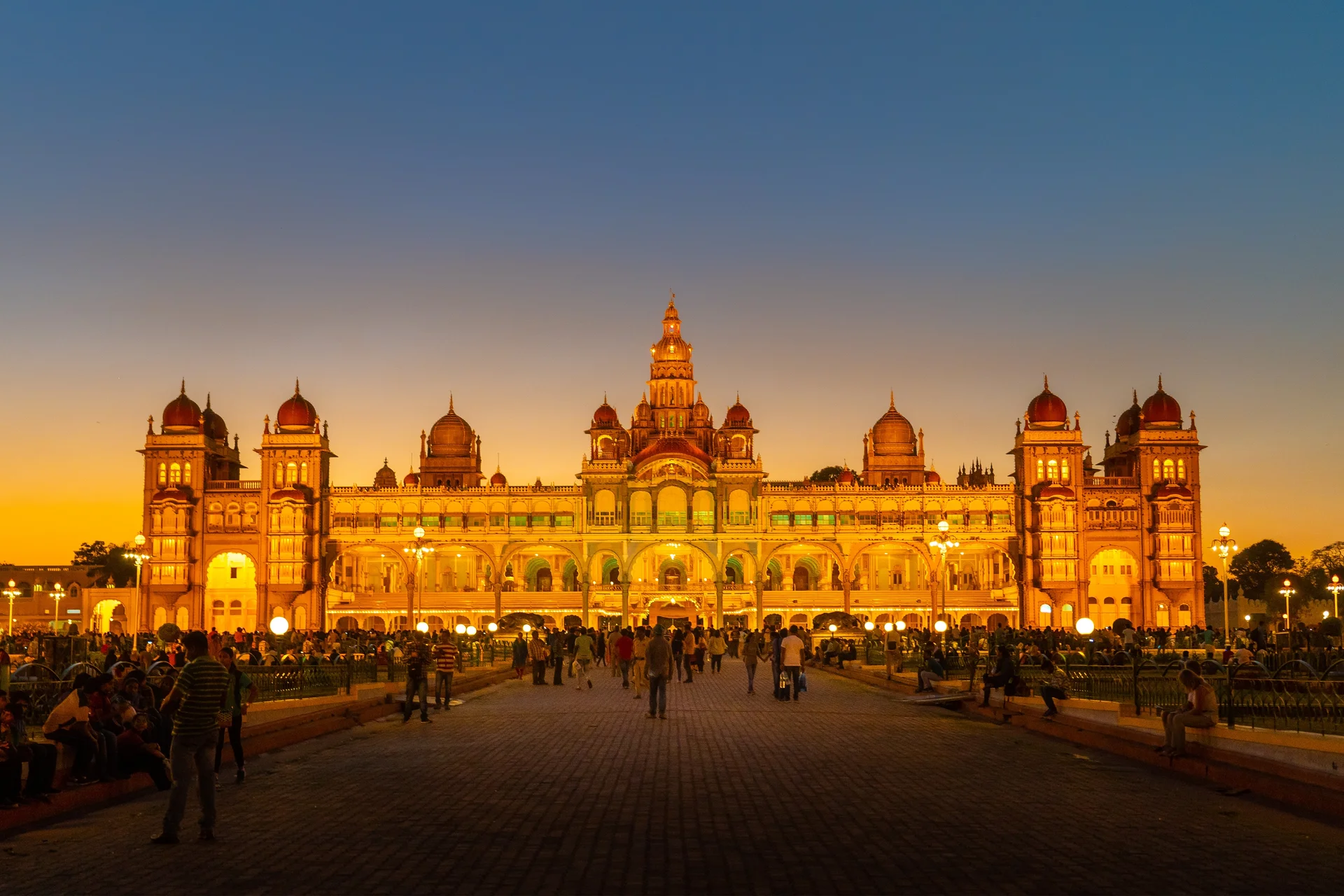
Mysore is a golden city in South India! You eat well there, the city is less hectic than other major metropolises, and you find some unique spots. First off, the must-see site is its opulent palace. Crazy architecture is on the agenda, and if you are lucky like I was, come at the end of the day to watch the illumination as the amazed visitors cheer. Thousands of light bulbs light up the site, splendid! I also loved wandering through the aisles of the Mysore market, a temple for fruits, vegetables, and especially the flowers sold by the thousands, often in the form of garlands, magnificent!