Shangai

Things to do in China: 10 must-see attractions

Discover our members' favorite destinations in China, plus reviews, practical info, and traveler photos...

The 5 most beautiful cities to visit in China

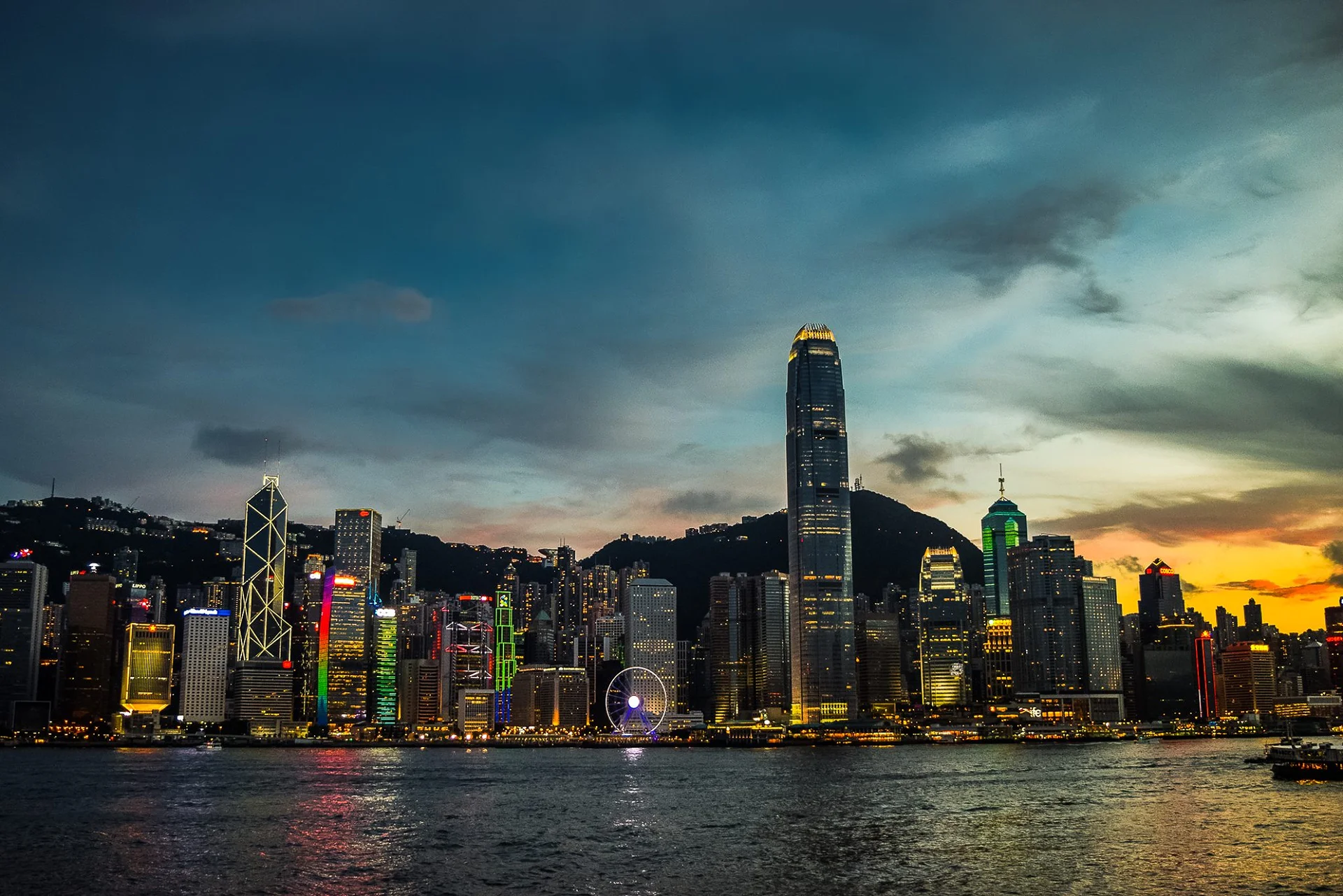
Hong Kong

#1 Hong Kong +8

A legendary destination at the crossroads of the Far East, the island of Hong Kong, literally "the fragrant harbor," is a special administrative region of the People's Republic of China. Centered among an archipelago of 250 small islands, this "Asian Manhattan" cultivates a distinct identity defined by Feng shui, a thriving film industry, and a deep-seated passion for horse racing. Between its high-density urban landscape and bustling commercial port, Hong Kong draws visitors with its atmosphere, heritage, and shopping. The city also offers plenty of room to recharge, thanks to its local beaches and 21 country parks. Don’t miss the local food scene, especially dim sum, those small bites served in round bamboo steamers.

The climate is humid subtropical with an average temperature of 70°F (21°C).

A high-energy megalopolis

Take the famous funicular that has been running since 1888 to reach Victoria Peak (at an altitude of 1,817 feet or 554 meters). The 360-degree panorama is hard to beat. The two main landmarks to spot are the Two IFC tower on the Hong Kong side and the ICC tower over on Kowloon.

Afterward, visit the impressive walk-in aviary at the Edward Youde Aviary in Hong Kong Park. It houses 3,000 birds, including many colorful species. Walking through while listening to the birds is a surprisingly quiet experience.

If you have the time, head south to visit Aberdeen and its tanka boat people. You can take a 20-minute tour of the harbor in a traditional sampan.

Hop on a Star Ferry to cross over to Kowloon. This mini-cruise between the islands happens 450 times a day and is a must-do. Start at the Hong Kong Museum of Art. Nearby, film fans will find the Avenue of Stars, a local take on the Hollywood Walk of Fame.

Stroll down Shanghai Street (near MTR Jordan), where street barbers, traditional herbal medicine shops, and old-school storefronts offer a dense slice of Chinese culture.

When night falls, head to the Temple Street Night Market, a hub for kitsch finds, Cantonese opera singing, and fortune tellers. Alternatively, hit the Lan Kwai Fong district for its countless bars and lively restaurants. If you are in town on a Wednesday, the Happy Valley Racecourse opens its gates from 7:00 p.m. to 10:30 p.m. to thousands of locals. People go to place bets or just soak up the electric atmosphere.

If you want to see the city from above, the 46th floor of Central Plaza in Wan Chai offers a great view of the bay and Victoria Peak. The Sky100 observation deck is another good option.

Nature and spirituality

Twice as large as Hong Kong Island, Lantau features stunning natural landscapes, including white sand beaches and quiet hiking trails. It is accessible in 40 minutes by ferry from the Central pier. While there, do not miss the Tian Tan Buddha and the Po Lin Monastery.

If you are traveling with kids, Disneyland, which features plenty of Toy Story-themed attractions, is located in the northeast of the island. Ocean Park is a solid alternative.

Lamma Island, a 30-minute ferry ride from Central, is a mountainous island where you can enjoy a peaceful, car-free environment.

To relax, head to the beaches at Repulse Bay or Deep Water Bay. Further south, Stanley is a favorite spot for locals looking for a quiet, laid-back atmosphere.

When to go

The best times to visit are early spring between March and April, and late autumn from October through November.

Getting there

Air China flies to Hong Kong with a layover in Beijing. Other airlines offering service with connections include Air France, Cathay Pacific, China Eastern Airlines, Qatar Airways, and Turkish Airlines.

Getting around

The MTR (subway), bus, and ferry networks serve the city perfectly. A practical tip: pick up an Octopus prepaid card to use on all public transport.

Shanghai

#2 Shanghai +8

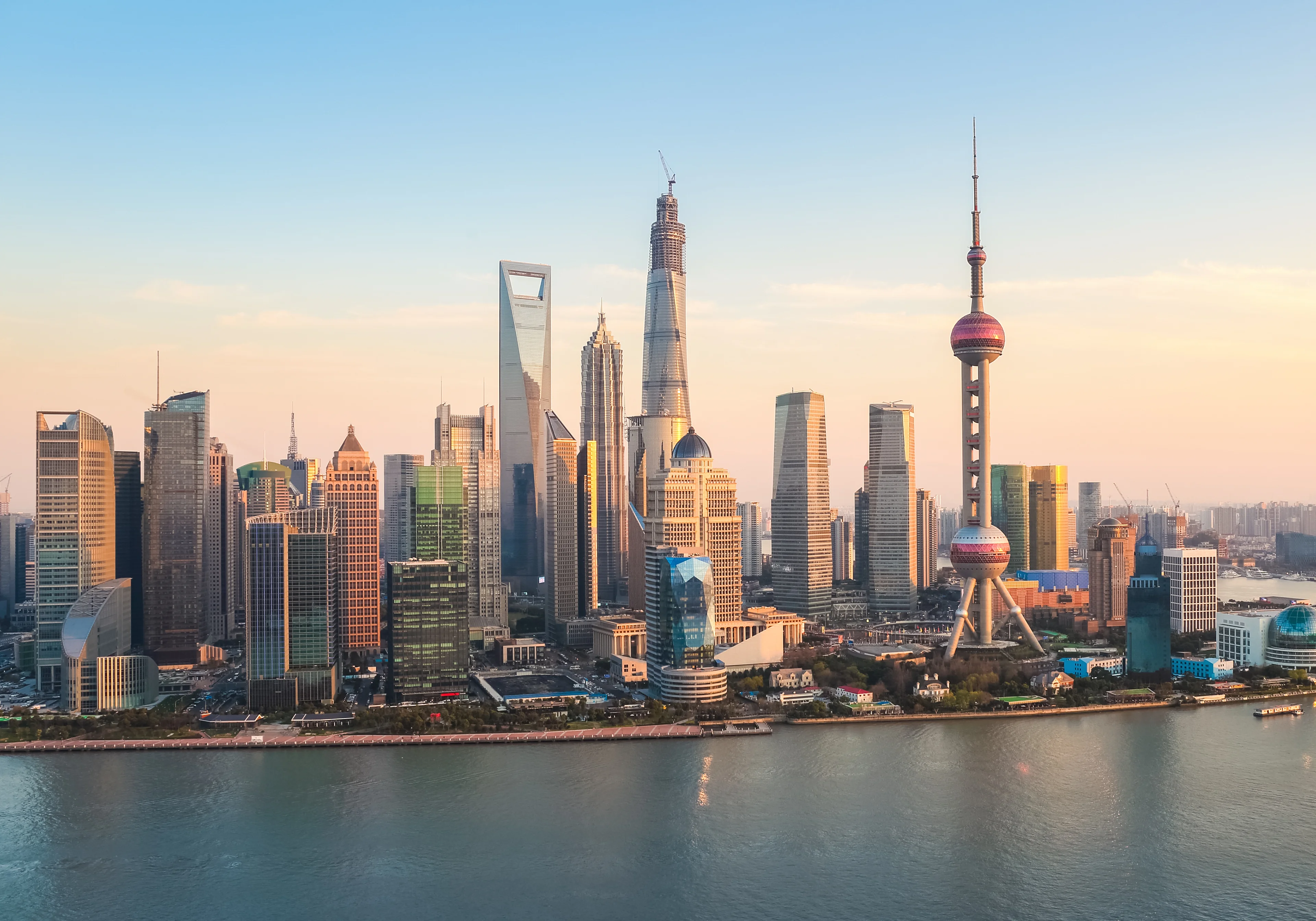
Once a quiet fishing port, Shanghai has transformed over the last 30 years into the financial powerhouse of China. The city name literally translates to "on the sea," and its sheer scale is nothing short of overwhelming. Split by the Huangpu River, the city offers two distinct faces: the high-rise, Manhattan-style skyline of Pudong and the more grounded, authentic character of Puxi. Along the Bund and in the charming former French Concession, you can still find remnants of the old foreign settlements. Today, Shanghai is a cosmopolitan hub for young professionals, packed with museums, shopping districts, and an energy that keeps you moving. Expect a subtropical climate here, with mild winters and hot, humid summers.

Its climate is subtropical: winters are mild and summers are very hot and humid.

The Bund, at a relaxed pace

The Bund, which translates to "muddy embankment," remains one of the most iconic walks in China. Its collection of Art Deco and neoclassical facades might remind you of 1930s Chicago or the waterfront in Liverpool. Early in the morning, you will see crowds of locals practicing tai-chi along the promenade.

Step inside the magnificent Pudong Development Bank, built by the British. You will notice the heavy bronze doors, fierce stone lions, Carrara marble, and intricate mosaics. Nearby, the Customs House features a clock modeled after Big Ben. About 750 meters away, the Waibaidu bridge is a popular spot for newlyweds to take photos.

For a view of the skyline, hop on a night cruise along the Huangpu River, which is three times wider than the Seine. The city lights stay on until 11:00 PM. Head to the Shiliu Pu pier (level B1, ticket window 1) for a 30 to 50-minute trip. Alternatively, grab a drink on the 32nd floor of the Hyatt or the 66th floor of the Royal Meridien. The outdoor terrace at Bar Rouge is another solid choice.

A short walk away, the old town stretches over less than 2 kilometers. Visit the Confucius Temple for a quiet escape from the city, or wander through the Yu Garden, designed to represent peace and comfort. If you are feeling adventurous, check out the Wan Shang Market, a cricket market where insect fighting is a popular form of betting.

Pudong, the showcase of China's rapid rise

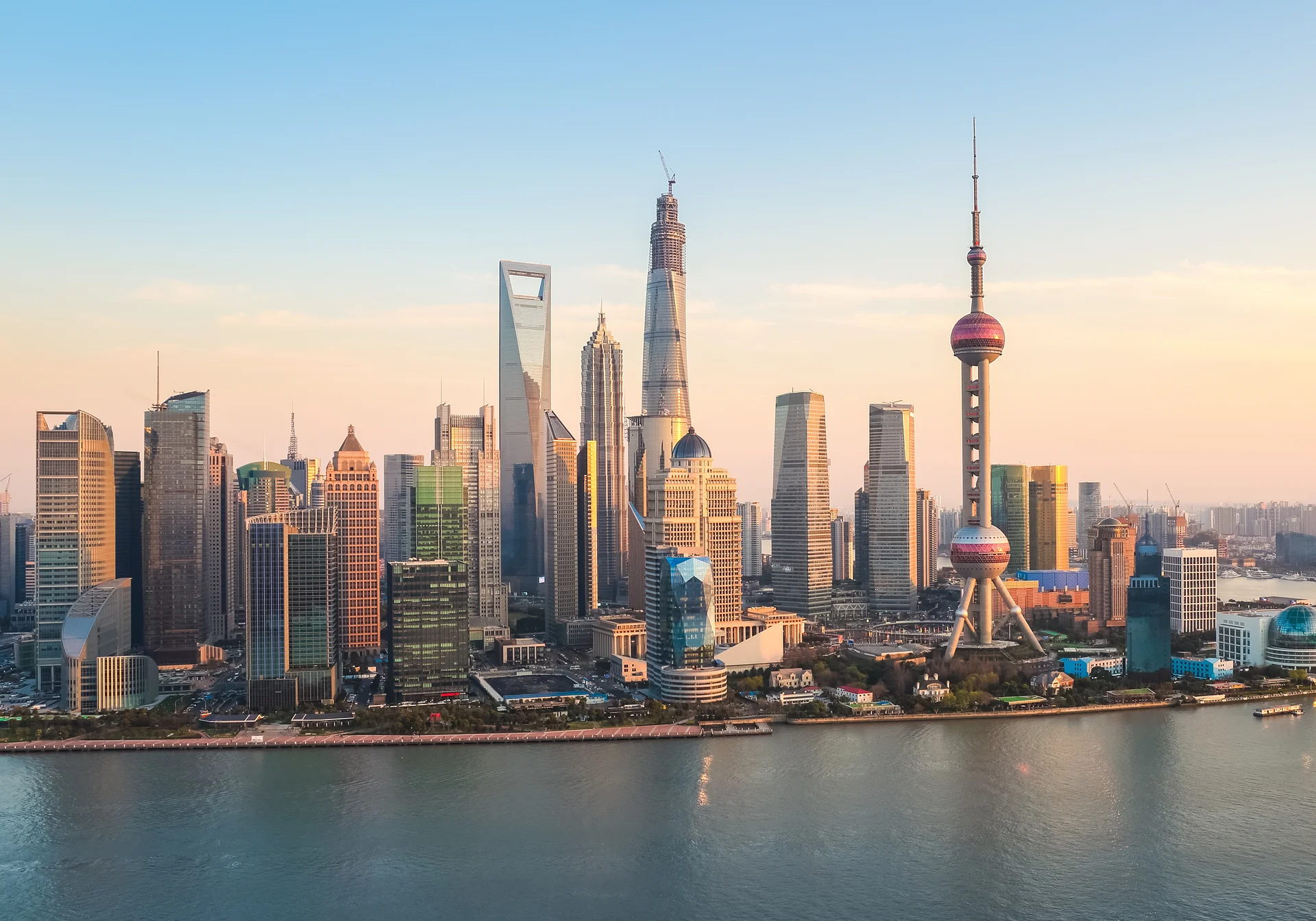
Head to one of the giant glass towers for a bird's-eye view of the city. Your options include the Shanghai Tower, the third-tallest building in the world; the Jin Mao Tower, which bears a resemblance to the Empire State Building; the Financial Center Building, locally nicknamed the "bottle opener" and a crowd favorite; or the Oriental Pearl TV Tower with its three pink spheres. The latter also houses the Municipal History Museum and an aquarium.

Renmin Guangchang, the People's Square

Nanjing Donglu is the primary pedestrian shopping street in Shanghai, and it stays packed until stores close at 10:00 PM. The most notable shops include the Shanghai n°1 Department Store, the neighboring Xin Shi Jie, and Fashion Store. For a meal, head to the Shanghai First Foodhall. As you walk up the street, you will hit Renmin Guangchang (People's Square), a massive open space that opens onto a green park. It is a local tradition for parents to gather here on Saturday mornings for a unique "marriage market" to find partners for their children.

The massive Shanghai Museum is free to enter. If you have extra time, check out the futuristic Opera House, designed by a French architect, or the Urban Planning Exhibition Center, which displays a massive scale model of Shanghai on the second floor. A small tourist train at the intersection of Henan Zhonglu offers an easy way to see the neighborhood without walking.

The former French Concession

Start on Huaihai Avenue, lined with plane trees, and stroll toward Taikang Lu. The best time to visit is late afternoon, once the offices have cleared out, as the narrow, shop-filled alleys feel much more relaxed. If you have time, step into the Okura Garden Hotel. This was once the French Sports Club and later served as the People's Cultural Palace. The gardens are beautiful, and on weekends, locals gather here to fly kites, a favorite pastime alongside mahjong.

At night, the Xiantiandi and Huaihai Lu districts are the most active.

On the outskirts, the Jade Buddha Temple, home to a 2-meter-tall statue, is the most famous Buddhist site in the city. Also worth a visit is Lu Xun Park, located in the former Japanese Concession, which features a lotus-filled lake.

If you have children

Visit Disneyland or the Science and Technology Museum. Finally, the Shanghai Circus is recognized as one of the best in the world.

When to go?

The best times to visit are during the spring, from late April to early June, or in the fall during September and October.

How to get there?

Air France, Air China, and China Eastern Airlines provide daily direct flights from Paris Charles de Gaulle. Airlines such as Emirates, Etihad Airways, KLM, Lufthansa, and Thai Airways offer flights with layovers in Dubai, Abu Dhabi, Amsterdam, Frankfurt, Munich, Zurich, and Bangkok.

From the airport, take the Maglev, a high-speed magnetic levitation train, and transfer to metro line 2. The total trip to the city center takes about 45 minutes to an hour.

How to get around?

The best way to see the city is by walking and using the metro. You can purchase a one-day unlimited pass for about 18 CNY (about $2.50) or a three-day pass for 45 CNY (about $6.30).

Juyong Pass

#3 Juyong Pass +6

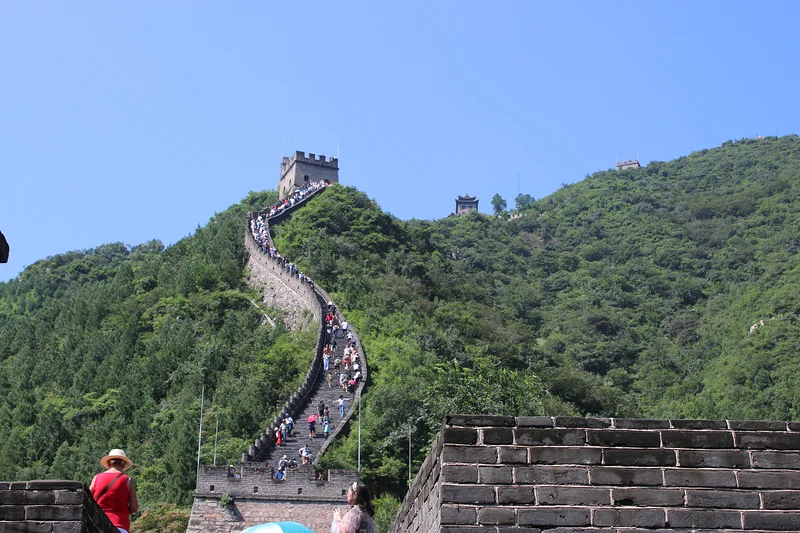
Located northwest of Beijing, Juyong Pass is a historic section of the Great Wall of China once vital for defense. It sees fewer crowds than Badaling, offering a more immersive look at the original fortifications and the Cloud Platform. The steep climb is challenging, but the mountain views are worth it, especially in autumn when the foliage turns deep shades of red and gold.

Beijing

#4 Beijing +4

As the capital of the People's Republic of China, Beijing commands attention. It is a rapidly evolving political and cultural center that will challenge your perspective. While the city is hyper-globalized, marked by futuristic skyscrapers and flashy shopping malls, it remains deeply rooted in tradition through its ancient architecture and Hutong alleyways. From locals practicing Tai chi in the parks at dawn to the curious medicine shops lining the streets and the distinct flavors of its local cuisine, this is an ancient civilization that demands your full attention.

The climate is continental with extreme temperature shifts. Expect very cold, dry winters and hot, humid summers.

Exceptional heritage

A major political and historical hub, the massive 100-acre Tian'Anmen square is flanked by Soviet-style architecture, including the Mausoleum of Chairman Mao, the Great Hall of the People with the Chinese flag flying out front, and the National Museum of China, which is the largest of its kind in the world. Nearby, the Beijing Opera House features a bold, unconventional design that contrasts sharply with the solemnity of its surroundings.

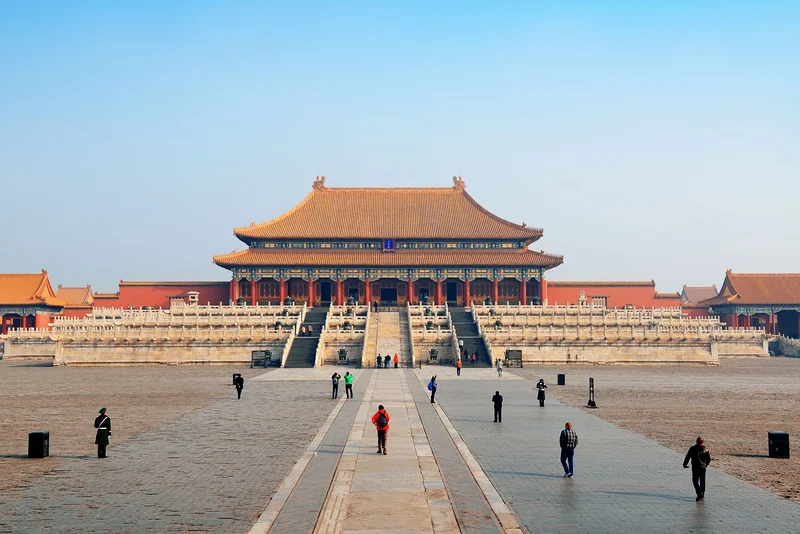
The Gugong, or Forbidden City, served as the imperial residence for five centuries and contains 9,000 rooms filled with elaborate materials: stone from Beijing, marble from Shanghai, wood from Yunnan and Sichuan, and bricks from Shandong. Designed according to traditional Chinese residential principles, the symmetry is precise. Doors, courtyards, statues, palaces, and gardens are filled with symbols of longevity, prosperity, and harmony. Just beyond the Forbidden City, Jingshan Park offers a sweeping panoramic view and a lively atmosphere, especially on weekends when street performers gather.

Climb the steep stairs of the Drum Tower and then lose yourself in the surrounding traditional hutongs for a genuine change of pace. In the evening, the Red Theatre hosts a high-energy show featuring monks and kung-fu.

The Temple of Heaven, or Tiantian, is a city icon set within a park of 4,000 cypress trees. Look closely at the delicate patterns on its triple-tiered blue roof and the circular wooden rotunda that symbolically connects the heavens to the earth.

The Niujie Libaisi, the city's largest mosque, is another fascinating stop. You will only recognize it as a place of worship by the Arabic Quranic verses on the walls. It sits in the heart of a modern neighborhood that remains home to a significant Muslim community.

Compare the Tibetan Yonghe gong Lama Temple to the other religious sites you visit. The highlight here is the massive bronze statue of the founder of this Lamaist movement.

Enchanting spaces

If you want to experience the true atmosphere of the Summer Palace, arrive early (daily 6:30 a.m. to 6 p.m.) and avoid the weekends. Built at the edge of an artificial lake and surrounded by 420,000 trees, including over a thousand that are more than a century old, the scale is massive.

If time allows, check out the Tibetan frescoes, the Island of Hydrangeas, and the white dagoba in Beihai Park. For a pleasant walk, head to the Qianhai and Houhai lakes in Shichahai, the lakes of the 10 monasteries. The vibe here is social, filled with majong players, folk dancers, and the distinct sound of erhu, a two-stringed instrument known for its piercing, high-pitched notes.

Chang Cheng, the Great Wall, is the ultimate symbol of China's architectural ambition and scale. With a length estimated between 5,600 and 13,000 miles, walking a section is an unforgettable experience. The Badaling section is the most accessible and crowded, equipped with a cable car. For a more rugged alternative, try the Mutianyu section, where you can ride a toboggan back down.

When to go?

The best times to visit Beijing are during the spring and fall.

How to get there?

Air France, Air China, and China Eastern Airlines operate two daily flights from Paris Charles de Gaulle to Beijing, specifically arriving at Shoudu Jichang, an airport with a terminal design that mimics a dragon. Emirates, Etihad Airways, KLM, Lufthansa, Thai Airways, and others also offer connections with layovers in Dubai, Abu Dhabi, Amsterdam, Frankfurt, Munich, Zurich, or Bangkok.

How to get around?

Public transit is the most efficient way to see the city. You pay for the ditie subway based on the distance traveled. Purchasing a prepaid Yikatong transit card will quickly pay for itself.

Xi'an

#5 Xi'an +3

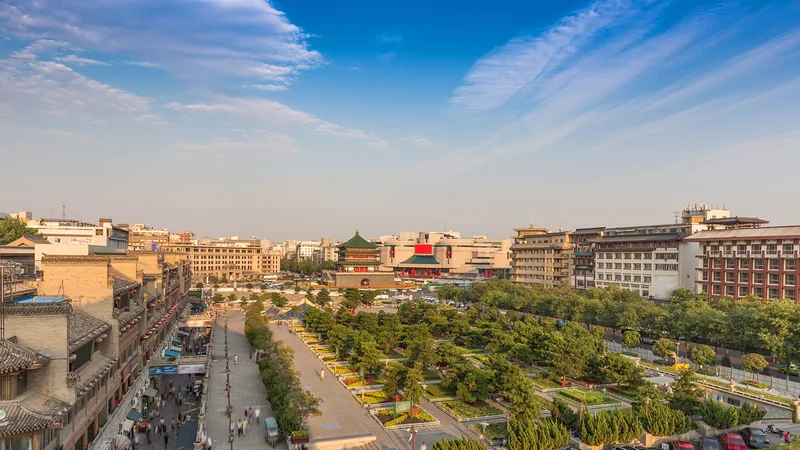
Xi'an balances its role as a modern city with a deep commitment to preserving imperial history. While the Terracotta Army is the main draw, the true character of this former capital reveals itself in the narrow alleys of the Muslim Quarter over a bowl of steaming soup. Between the ancient city walls and the local street food scene, Xi'an offers a grounded, authentic experience that feels distinct from the polished coastal megacities.

Ranking of the 5 activities selected by our editors in China

#1 Great Wall of China (Juyong Pass) +3 4

What is the most massive structure in human history? The Great Wall of China. Spanning 6,700 kilometers and dotted with towers and bastions, it remains the largest project ever built. Construction took over 2,000 years to complete. Originally designed to protect northern borders, it now welcomes 15.5 million visitors annually in Asia.

See the guide See deals

#2 Terracotta Army (Xi'an) +3 4

Discovered by farmers in 1974, the Terracotta Army was built over 2,000 years ago to protect Emperor Qin Shi Huang in the afterlife. The site in Xi'an features three massive pits housing thousands of unique soldier and horse statues, plus an interactive museum. It provides a direct look at the craftsmanship of the Qin dynasty.

See the guide See deals

#3 Forbidden City (Beijing) +2 4.5

The Forbidden City, in the heart of Beijing, is a sprawling imperial palace complex built in the 15th century. Spanning 178 acres with nearly 980 buildings, it once served the Ming and Qing emperors. Explore the opulent, strictly ordered life of the imperial court through its ceremonial halls and historical treasures. This UNESCO site features the Gugong Bowuyuan (Palace Museum) and offers panoramic views from nearby Jingshan Park.

See the guide See deals

#4 Shanghai Ocean Aquarium (Shanghai) +2 5

Located in Lujiazui, the Shanghai Ocean Aquarium explores global ecosystems through themed zones like Australia and the Arctic. Its 155-meter underwater tunnel is the longest in Asia, offering immersive views of sharks, rays, and reefs. With interactive spaces and feedings, it is a top destination for families and marine life enthusiasts.

See the guide See deals

#5 Leshan Giant Buddha (Leshan) +1 5

The Leshan Giant Buddha stands as a masterpiece of ancient China. Built between 713 and 803 by the monk HǎiTōng to calm dangerous river currents, the 233-foot statue remains a marvel after 12 centuries. Overlooking the Min River, the figure is currently undergoing vital conservation work to combat weather damage and pollution.

See the guide See deals

Visiting China: Where 4,000 Years of History Meets the Future

Giant pandas munching bamboo while bullet trains blur past at 220 mph. Ancient temples standing in the shadow of skyscrapers that make Manhattan look modest. China covers 3.7 million square miles and 4,000 years of recorded history, and it operates on a scale that genuinely resets your sense of what's possible. This is a civilization that didn't abandon its past to modernize, it built the future on top of it.

Is China the right trip for you?

China rewards curious travelers who are comfortable with unpredictability. If you need everything mapped out and frictionless, this probably isn't your destination. The language gap is real, buying a train ticket can turn into a 20-minute adventure, major tourist sites get genuinely overwhelming crowds, and air quality in some cities will catch you off guard. But that complexity is exactly what makes the memories stick.

History buffs will find more than they can process, from the Terracotta Army to the Great Wall. Food lovers will quickly realize that what gets called "Chinese food" back home barely scratches the surface. And anyone who appreciates landscape and architecture can lose entire afternoons in the classical gardens of Suzhou or drifting along the karst peaks of Guilin.

Beijing: power, memory, and a city telling two stories at once

Beijing hits you the moment you leave the airport. Wide ceremonial boulevards cut through the city, while the hutongs (traditional alleyway neighborhoods) that survived the wrecking ball tell a completely different story. Tiananmen Square is bigger than you expect, 440,000 square meters of open space where tour groups and stone-faced guards coexist in an atmosphere unlike anything else on earth.

The Forbidden City, officially called the Gugong, is the one place you absolutely cannot skip. Its 980 buildings with golden-tiled roofs housed 24 emperors over five centuries. Get there early: the site draws 80,000 visitors a day, and the bottleneck near the Dragon Throne is something to behold.

Beijing beyond the obvious

The Temple of Heaven (Tiantan) offers one of the best free shows in the city. By 6 a.m., locals are already out practicing tai chi, performing traditional dances, and singing Peking opera, completely unselfconsciously. No museum ticket gets you closer to daily Beijing life than this.

Insider tip: Skip the Badaling section of the Great Wall, it's the most accessible and the most packed. Head instead to Jinshanling, where a 3-hour hike between watchtowers gives you sweeping views without the selfie-stick traffic jams.

Shanghai: China's laboratory for what comes next

Twenty-four million people live in Shanghai, and the city moves like it knows it. The Bund, a waterfront promenade lined with Art Deco colonial buildings, faces the Pudong skyline across the river, a lineup of towers that rivals Chicago or Hong Kong. The contrast between the two banks captures Shanghai in one glance: the 20th century on one side, the 21st century on the other.

The Former French Concession has held onto its character, plane trees shading the sidewalks, cafes that actually know how to make a croissant. It's a strange and pleasant pocket of European-style calm that makes for a good afternoon of wandering.

Shanghai after dark

The night markets show you a different side of the city. Dongtai Road mixes questionable antiques with genuine finds in a sensory overload of spice smells, Mandarin bargaining, and unexpected discoveries. It's the kind of place where you go looking for one thing and leave with something completely different.

Xi'an and the wonders of Shaanxi

Xi'an served as the capital for thirteen dynasties, and its most famous secret has been buried underground for most of recorded history. The Terracotta Army of Emperor Qin is one of those things that photos genuinely cannot prepare you for: thousands of soldiers, each with a unique face, sculpted by craftsmen 2,200 years ago whose names we'll never know.

The city's ancient walls, preserved across 14 kilometers (about 9 miles), are best seen by bike. Riding the perimeter gives you a clear view of how dramatically the historic center contrasts with the modern sprawl pushing in from every direction.

Insider tip: The Muslim Quarter of Xi'an is one of the best eating neighborhoods in China. The night market on Beiyuanmen Street serves xiaochi (small bites), including hand-made dumplings that have nothing in common with the frozen kind, that hold their own against anything you'll find in Beijing.

The landscapes of southern China

The Guilin-Yangshuo region looks like a painting because it literally is one, those limestone karst peaks rising out of rice paddies are the image that has defined Chinese landscape art for centuries. A boat cruise along the Li River delivers that scenery at full scale, especially when early-morning mist settles around the peaks. Think of it as the Ha Long Bay of inland China, minus the ocean.

Yunnan province, which borders Tibet and Myanmar, feels like a different country. In Dali and Lijiang, ethnic minority communities have kept their architectural traditions intact, carved wooden houses and stone-paved canals that stand in sharp contrast to the concrete uniformity of China's megacities.

Chengdu: the giant panda capital

The Giant Panda Breeding Research Base outside Chengdu is worth the trip. Watching these animals go about their bamboo-heavy lives while millions of visitors point cameras at them is oddly moving, and it gives you a real sense of why giant pandas occupy the place they do in Chinese national identity.

Food in China: forget everything you think you know

Chinese cuisine isn't one thing, it's dozens of distinct regional traditions that share almost nothing except chopsticks. Beijing-style cooking leans on dark sauces and the famous Peking duck. Sichuan food is built around chili heat and the numbing tingle of Sichuan peppercorn, a flavor combination that has no real equivalent in American cooking. Cantonese cuisine (the style most Chinese-American restaurants are loosely based on) prioritizes fresh seafood and lighter preparations.

Dim sum in Hong Kong, served in stacked bamboo steamers, turns breakfast into a social event that can last two hours. Sichuan hot pot, a bubbling spiced broth at the center of the table where everyone cooks their own ingredients, is the kind of communal meal that makes you understand why Chinese food culture is so fundamentally social.

Street food is where you get closest to how people actually eat. Jianbing (savory stuffed crepes) are the classic breakfast on the go. Baozi (steamed buns with various fillings) show up at all hours. And the grilled skewers at night markets, lamb, tofu, vegetables, fill the air with smoke and draw crowds that tell you everything you need to know about their quality.

When to go to China

Spring (April through June) and fall (September and October) are the sweet spots. Temperatures are comfortable, rainfall is manageable, and the scenery is at its best in both seasons.

Summer brings serious heat and monsoon rains to the south, but it's actually the best window for visiting Tibet and other high-altitude regions. Winter turns northern China genuinely cold, think Minneapolis-level cold in Beijing, but the Great Wall under snow is a real sight.

Avoid the two Golden Week holidays at all costs: the first week of October and the Chinese New Year (late January or February, depending on the year). When 1.4 billion people take vacation at the same time, every tourist site in the country becomes a slow-moving crowd. Trains sell out weeks in advance and prices spike across the board.

Getting to China from the US

Direct flights from the US to Beijing or Shanghai run roughly 13 to 14 hours from the West Coast and up to 16 hours from the East Coast. Air China, United, and American all operate nonstop routes. Gulf carriers like Emirates and Etihad offer one-stop connections via Dubai or Abu Dhabi, often cheaper, but add 3 to 5 hours to your total travel time.

Hong Kong is worth considering as an entry point if you're planning to explore southern China. US passport holders can enter Hong Kong visa-free for stays up to 90 days, which gives you a soft landing before crossing into mainland China (where a visa is required, apply well before departure through the Chinese consulate or a visa service).

Getting around China

China's high-speed rail network is the best argument for train travel you'll ever encounter. Trains connect major cities at speeds up to 186 mph with a reliability that puts Amtrak to shame. Beijing to Shanghai takes 4.5 hours, roughly the distance from New York to Chicago, done in less time than most domestic flights once you factor in airport hassle.

Within cities, the subway systems in Beijing, Shanghai, Chengdu, and other major metros are modern, cheap, and surprisingly easy to navigate. Signs and announcements are in English, and apps like Alipay or WeChat (worth setting up before you leave home) handle ticketing seamlessly even without Chinese language skills.

For remote regions like Xinjiang or Tibet, domestic flights are the practical option. China's internal air network is extensive, and tickets booked in advance are reasonably priced, though Tibet requires an additional permit on top of your standard Chinese visa.
Find the best deals to travel to China

Hotels and stays Flights Car rentals Custom trips

Top photos posted by members

Shangai
Canal du Venetian
coucher de soleil