
The oldest commercial street in North America
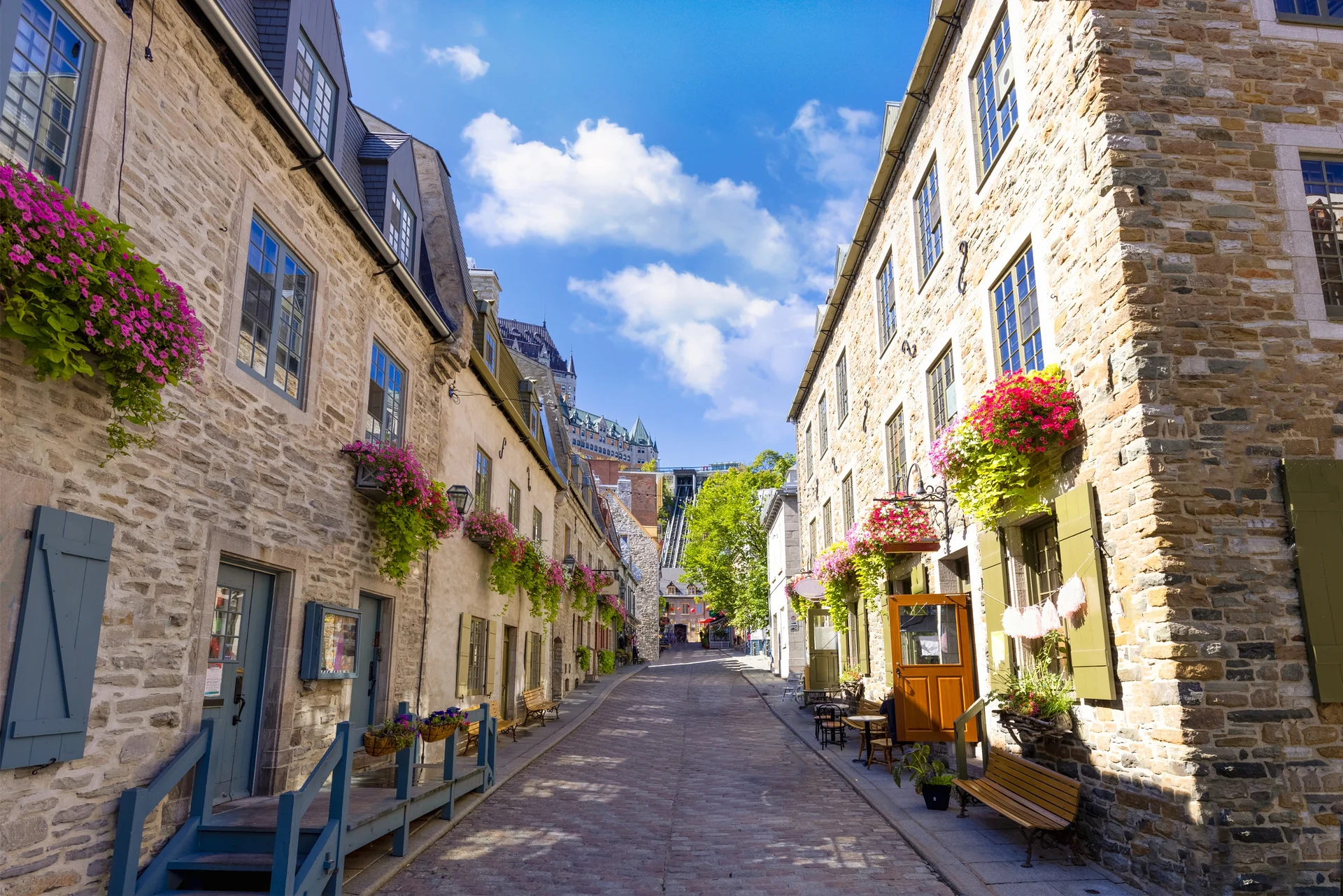
Tucked at the foot of Cap Diamant, the Petit Champlain District unfolds its cobblestone streets like an open-air history book. Every stone here tells the story of four centuries of life in Quebec, from the site of L'Habitation de Champlain to the modern storefronts of local artisans.
A historic cradle turned premier destination
It was on this land that Samuel de Champlain established his fort, trading post, and residence in 1608. The rue du Petit-Champlain itself, stretching 275 meters, ranks among the oldest commercial arteries on the continent. Known as the rue des Meulles in the early 1700s, it adopted its current name in the 19th century to distinguish it from the neighboring boulevard Champlain.
The history of the district took a dark turn in the mid-19th century. Decay, poor sanitation, and the risk of rockslides turned the area into a hazard zone. It was not until the 1970s that a bold revitalization project, led by entrepreneur Gérard Paris and architect Jacques de Blois, breathed new life into the neighborhood. They gradually acquired seventeen heritage buildings and pioneered a new approach to historic renovation.
In 1985, artisans and merchants formed a cooperative and purchased these buildings, becoming the proud guardians of a heritage saved from oblivion.
The unique atmosphere of a miniature Europe
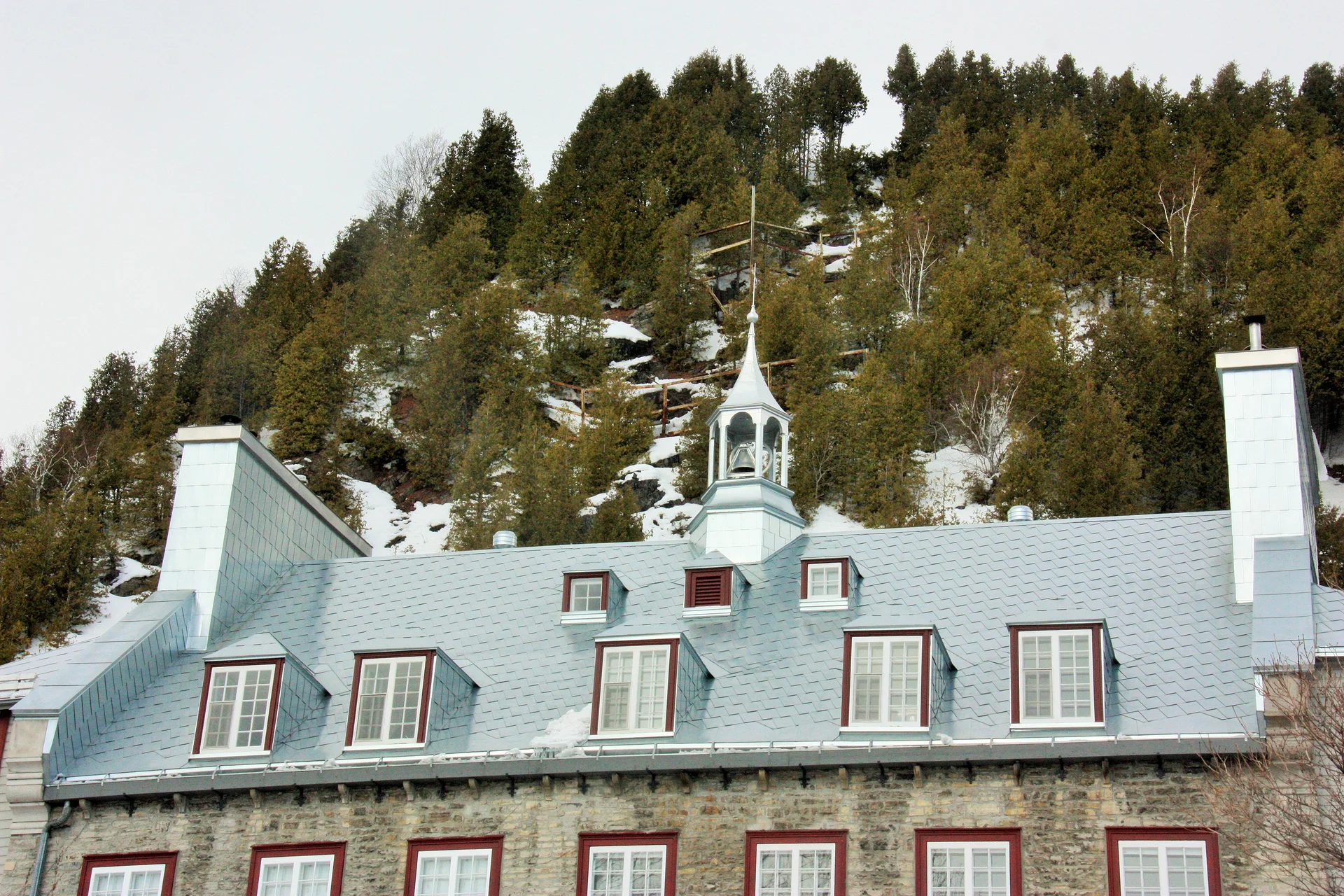
The architecture of the Petit Champlain feels like a direct transport to 18th-century France. The plaster-covered stone houses, raised party walls serving as firebreaks, prominent dormer windows, and gabled roofs recreate the feel of European towns. In winter, when snow blankets the historic buildings and the lights twinkle from late November to mid-February, the scene becomes truly magical.
Insider tip: Visit the district early in the morning or in the evening to avoid the daytime tourist crowds. The atmosphere is more authentic, and you will be able to enjoy the terraces and shop windows without the hustle.
Local shops and creators on every corner
The cooperative now brings together 45 businesses housed in 29 historic buildings. You will find a remarkable concentration of handmade goods, including locally crafted boots and moccasins, sculptures, jewelry, regional food products, and clothing from Quebec designers.
The shops generally spill out onto the pedestrian streets, creating a friendly and warm ambiance. The district also features cafes, restaurants, and even the Théâtre Petit Champlain, a true cultural institution housing the Maison de la Chanson (House of Song).
Two spectacular access points between the lower and upper town
The Escalier Casse-Cou, the oldest in the city
Its 59 steps have connected the côte de la Montagne to the rue du Petit-Champlain since the 17th century. Built between 1685 and 1689 to replace a path so steep it caused numerous accidents, it has carried several names over time, such as the Champlain staircase, the Beggar's staircase, and the Lower Town staircase.
It was only in the mid-19th century that London guidebooks gave it the nickname Breakneck Steps, which was translated into French as Casse-Cou. Despite this intimidating name, no serious accidents have ever been reported there. Renovated in 1893 by engineer Charles Baillairgé, who divided it into four flights, and restored in 1968, the staircase offers landings where boutiques and restaurants with terraces are now located.
The historic funicular, in service since 1879
Inaugurated over a century ago, this spectacular elevator climbs Cap Diamant and connects the Petit Champlain to la terrasse Dufferin (Dufferin Terrace). Access is through the maison Louis-Jolliet, the former residence of the famous explorer who discovered the Mississippi. During the ascent, the view sweeps over the Saint Lawrence River and the entire historic district.
The monumental murals, an open-air museum
Two massive trompe-l'oeil paintings enrich the walk. The Fresque des Québécois, inaugurated in 1999, covers 420 square meters on a wall on rue Notre-Dame. Created by twelve French and Quebec artists over nine weeks, it features fifteen major historical figures such as Samuel de Champlain, Jacques Cartier, Marie Guyart, and Félix Leclerc, while incorporating iconic architectural elements of Quebec.
More subtle but just as impressive, the Fresque du Petit-Champlain at 102 of the eponymous street tells the story of Cap-Blanc, a working-class and port neighborhood. You can spot Captain Bernier, a Quebec navigator who set out to explore the North Pole, Lord Nelson who fell in love with a Quebecer, log drivers transporting wood by flotation, and moving details like the cannonball embedded in the brick, which recalls the English bombardment of 1759.

I loved walking around this neighborhood during my visit to Quebec City. With its small, colorful streets, it is really typical and well preserved. The neighborhood is lively and bustling. There is always a crowd. It is the perfect place to go shopping and have a drink. There are a huge number of different shops. You can easily spend the whole afternoon there.