
Visiting the Strasbourg Opera
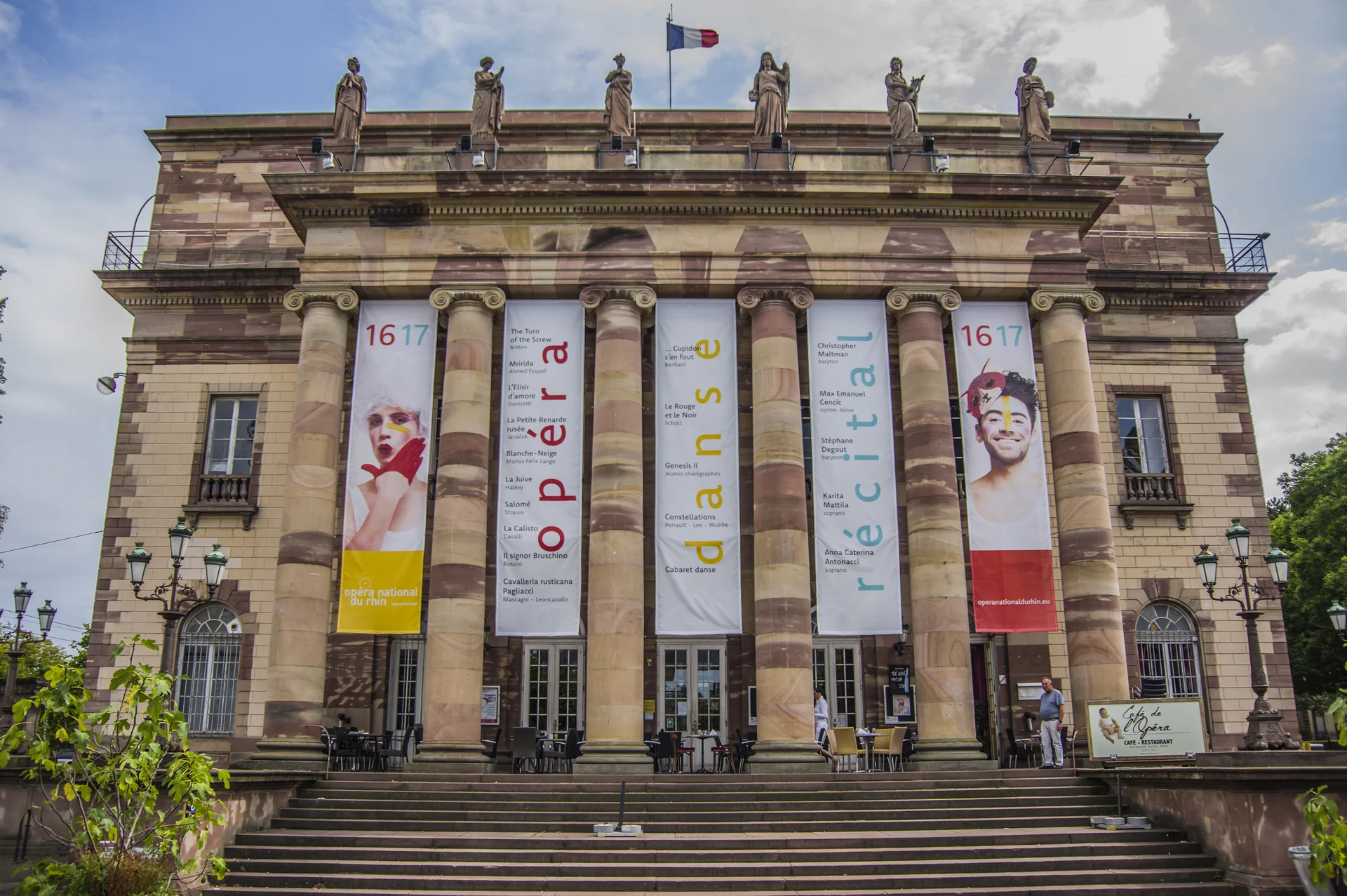
In Strasbourg, located in the Bas-Rhin region, you will find an opera house as famous for its performances as it is for the six muses adorning its facade. The building was officially designated a monuments historiques (historic monument) in 1921.
History
Originally, a performance hall stood at the northeast end of the Place Broglie (Broglie Square). Unfortunately, a fire completely destroyed the structure on May 30, 1800.
Construction on the current opera house began in 1804. The blueprints were drawn by architect Nicolas Jean Villot, and engineer Casimir Robin oversaw the project. Work wrapped up in 1821, though the project was a financial disaster. The initial budget of 300,000 francs ballooned to over 2 million, forcing the city to sell off land to cover the costs.
The famous muses decorating the facade columns were commissioned from the Alsatian sculptor Landolin Ohmacht.
Following a significant donation from Jean-Guillaume-Louis Apffel, the opera underwent renovations in 1854.
Prussian cannons partially destroyed the Strasbourg Opera on the morning of September 10, 1870. Reconstruction began in 1872, and the building was restored to its original state under the supervision of Jean Geoffroy Conrath.
In 1962, the Opéra National du Rhin (National Opera of the Rhine) was established, merging ensembles from Strasbourg, Mulhouse, and Colmar.
At one point, there was a proposal to build a new opera house. However, due to the high costs, the city decided in 2011 to invest 40 million EUR in a complete renovation of the existing facility.
The Strasbourg Opera
The Strasbourg Opera offers a varied program designed to appeal to a wide audience. The schedule features great classics, often with contemporary interpretations, alongside ballets et des opéras aux thèmes et mises en scène plus modernes (ballets and operas with modern themes and staging).
It is a destination for anyone who appreciates dance and lyrical performance.

Beautiful building that you absolutely have to visit. And if you do not have time, but you are near place Kléber, take the side street that is opposite the Fnac relative to the statue. You will stumble upon it in a 5 minute walk, just to admire the exterior, which is also very beautiful.
The performances have "normal" prices, but also a good number of seats at extremely reduced prices! Likewise, there are often cheap tickets available the day of the performances.
Don't hesitate: