
Visiting the Church of the Gesù
The opulence of Sicilian Baroque is often overwhelming. Within this architectural style, the Church of the Gesù stands out for its incredible extravagance, refined continuously from 1658 through the 18th century. The result is masterful. At the heart of the historic center of Palermo, this religious building hides an unforgettable interior behind a surprisingly sober facade, perfectly capturing the flamboyant spirit of Sicily. Inaugurated in 1577, it underwent numerous expansions, including a critical one in 1636, and remains one of the most notable structures in the city.
Breathtaking marble and art behind a plain facade
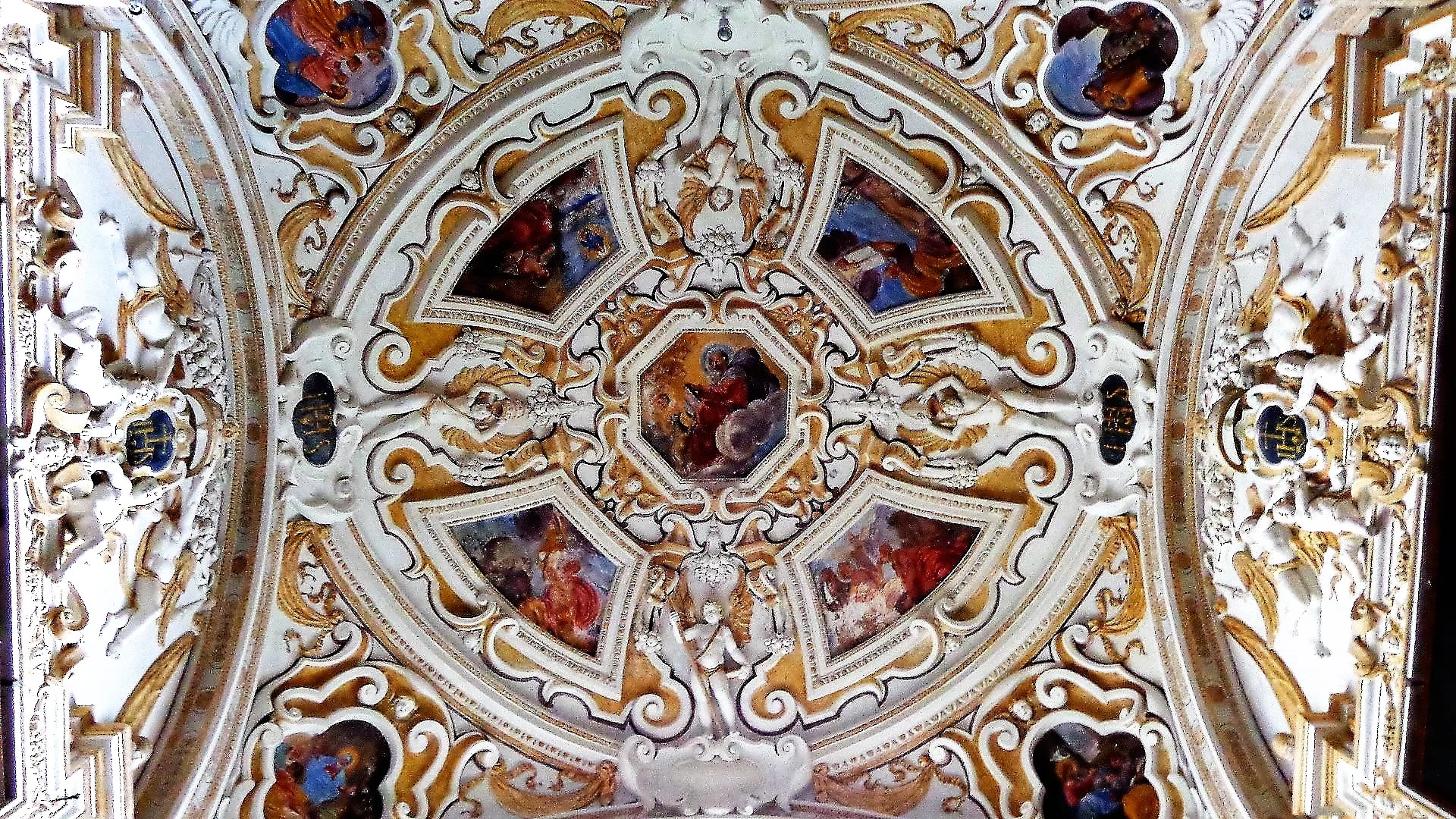
Bordered by the former Casa Professa (Jesuit Professed House), which now serves as a municipal library, the Church of the Gesù grew alongside the Jesuit congregation. The interior features a Latin cross layout with three naves and eight side chapels. From the moment you enter, the sheer volume of Baroque decoration from floor to ceiling is striking. Marble is everywhere, found in the bas-reliefs of the apse sculpted by Gioacchino Vitagliano and across the walls in intricate arabesques and floral patterns. Whether white or colored, the stone illuminates the space. Frescoes by Pietro Novelli adorn the dome, and many other artists contributed to the splendor of this interior. The accumulation of stucco, marquetry, sculptures, and niches makes this a prime example of Sicilian Baroque, where opulence dictates the aesthetic over austerity. The 4000 pipes of the organ almost go unnoticed amidst the infinite richness of the ornaments. A museum displaying elements from the original church, paintings, and various works from private collections completes the site. From the crypt to the sacristy, it remains one of the most remarkable locations in the city. The church has been officially recognized as part of the artistic heritage of Sicily since 1892.
Opening hours
| Monday | 07:45-13:30 |
|---|---|
| Tuesday | 07:45-13:30 |
| Wednesday | 07:45-13:30 |
| Thursday | 07:45-13:30 |
| Friday | 07:45-13:30 |
| Saturday | 07:45-13:30, 15:30-18:30, 20:30-23:30 |
| Sunday | 09:30-12:45, 18:00-20:00 |
On public holidays, hours are from 9:30 AM to 12:45 PM and from 6:00 PM to 8:00 PM.

I almost missed it because it was closed on Sunday afternoon when I first stopped by, but luckily, I forced myself to go back. It is just splendid! The style is very ornate, but that is exactly what makes it so impressive. The colorful ceiling contrasts with the rather white walls, and every vault is a lovely discovery! I did the museum and the crypt, but that is not the most interesting part. The church itself is a must!