
Visiting the Palatine Chapel
While it currently serves as the seat of the Sicilian Regional Assembly, the Palazzo dei Normanni (Norman Palace) is primarily an architectural masterpiece balancing refinement and power. The original Punic fort from the 7th century BC has evolved through various reigns, drawing on a blend of Arab and Norman influences. Once a fortress and later a royal residence, this structure that lights up the historic center of Palermo houses an even greater treasure: the Palatine Chapel. Tucked within the palace walls and designated a UNESCO World Heritage site, its visual impact is for many the highlight of any trip to the city.
Christian tradition elevated by Byzantine art
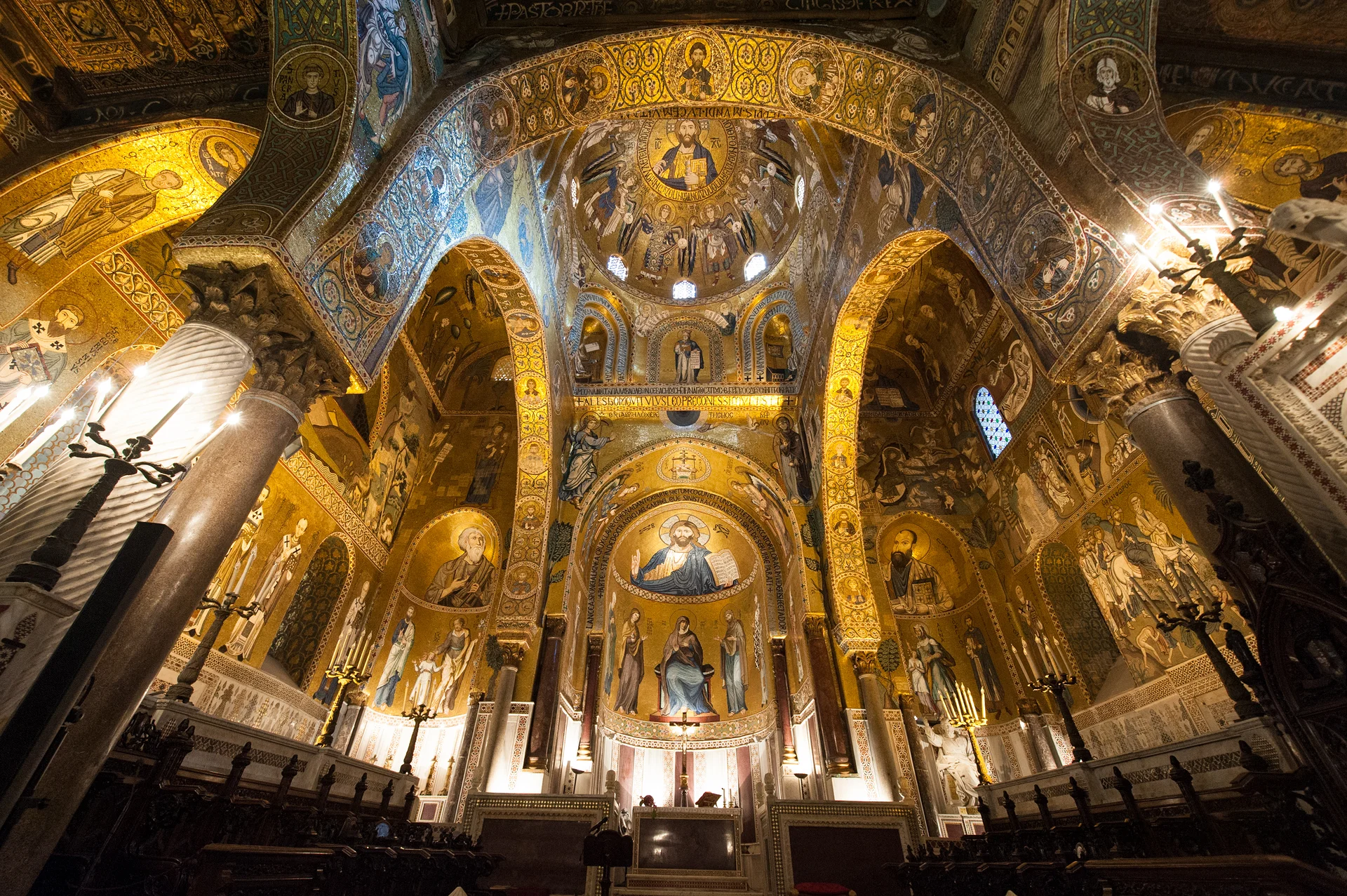
Commissioned by Roger II, the first Norman king of Sicily, the Palatine Chapel was completed in 1143. Dedicated to saints Peter and Paul, the interior is disorienting in its beauty. Three naves separated by two rows of six columns made of Egyptian marble and granite define the space. While this layout is standard for Christian churches, the Byzantine artistry makes it singular. The ceiling and walls are covered in delicate mosaics that catch the light from every angle. Against gold backgrounds, scenes from the lives of saints and friezes depicting Genesis decorate the walls, interspersed with stained glass windows that bathe the space in color. The ceiling is a rare marriage of Muslim aesthetics and Christian tradition, featuring muqarnas (ornamental vaulting) where stars and crosses intermingle, while the marble floor displays intricate geometric patterns. The density of the decoration is difficult to process. Guy de Maupassant famously called the Palatine Chapel the most surprising religious jewel ever dreamed of by human thought and executed by the hands of artists, and that sentiment holds true today.
Opening hours
| Monday | 08:30-16:30 |
|---|---|
| Tuesday | 08:30-16:30 |
| Wednesday | 08:30-16:30 |
| Thursday | 08:30-16:30 |
| Friday | 08:30-16:30 |
| Saturday | 08:30-16:30 |
| Sunday | 08:30-12:30 |
Visiting hours can change depending on services.

Included in the tour of the Norman Palace, the chapel is indeed magnificent! I was a little annoyed when I saw the "no photos" sign while I was waiting in line to get in, but once inside, everyone was taking them anyway, so it was fine! The gilding, the frescoes, the mosaics, basically the decor in general is worth the trip. Only small downside: the entrance fee for the Norman Palace which is still a bit expensive (€17 that day).