
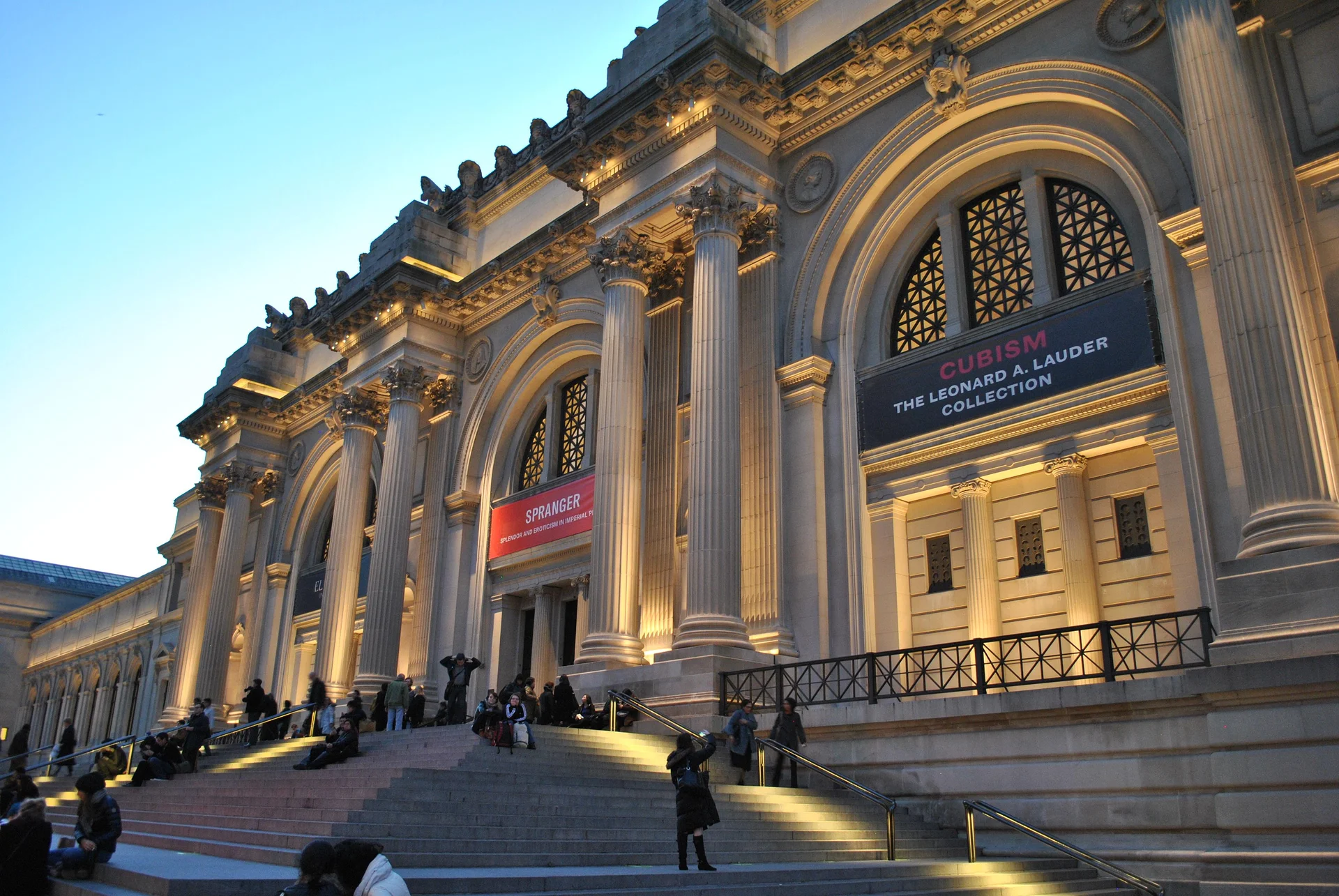
The Met, two million works and 5,000 years of humanity on Fifth Avenue
In the Grand Hall, five massive floral arrangements freshly assembled by the head florist team greet visitors each week under stone arches. The scent of lilies mingles with the hushed hum of footsteps on marble.
Founded in 1870 by a group of financiers, industrialists, and artists determined to provide Americans with a museum to rival the great European institutions, the Metropolitan Museum of Art opened its doors in 1872 and has not stopped growing since.
Why visit the Metropolitan Museum of Art?
With more than two million works spread across 280 galleries and 17 departments, this museum covers a staggering timeline. Egyptian sarcophagi three millennia old sit alongside canvases by Pollock and samurai armor. The Met also holds one of the largest collections of Greco-Roman antiquities outside of Greece and Italy, a fact that often surprises European visitors.
Your entry ticket provides same-day access to the main building on Fifth Avenue and the Met Cloisters, a complex of five medieval European cloisters reconstructed in Fort Tryon Park, at the northern tip of Manhattan. This second site, overlooking the Hudson River, is worth the trip alone for anyone interested in Medieval art.
Galleries and works to prioritize
The Temple of Dendur and the Egyptian Wing
Built around 15 B.C. during the reign of Augustus, this Nubian temple was gifted to the United States in 1965 to thank the country for helping save monuments threatened by the Aswan Dam. Its 600 tons of sandstone were reassembled piece by piece in a wing specifically designed by architects Kevin Roche and John Dinkeloo, featuring a glass wall looking out over Central Park and a reflecting pool.
It is the only complete Egyptian temple in the Western Hemisphere. For a surprising perspective, head to the second floor of the Asian art section, gallery 232. The temple appears below, bathed in natural light.
Impressionists and European painting
Galleries 800 to 826 tell the story of Impressionism with a density rarely found outside of France. The Haystacks by Monet, the dancers by Degas, the Self-Portrait with Straw Hat by Van Gogh: even visitors less familiar with art history will recognize these canvases. Further on, gallery 632 houses several Vermeer paintings, and gallery 621 holds The Denial of Saint Peter by Caravaggio.
The American Wing and period rooms
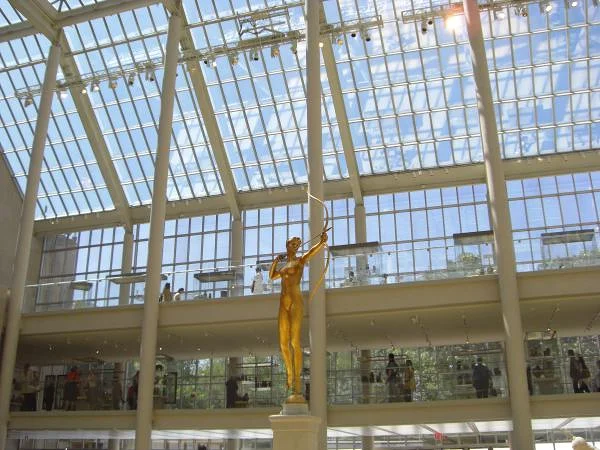
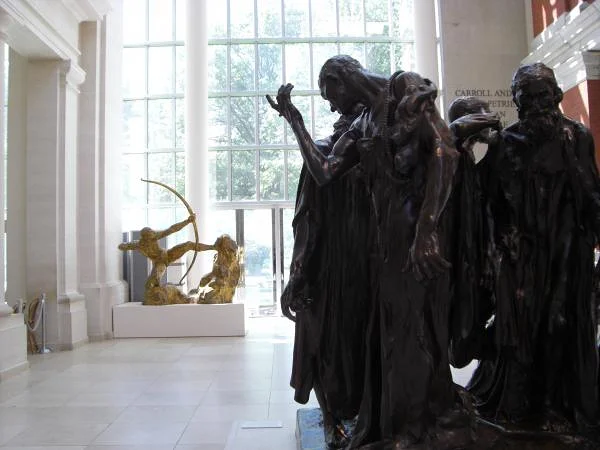
The Charles Engelhard Court, a vast atrium bathed in overhead light, displays monumental sculptures. All around it, entire rooms have been reconstructed: a living room designed by Frank Lloyd Wright for the Little family, a colonial interior, and a Federal-style bedroom. The stained glass collection by Louis Comfort Tiffany warrants a pause, particularly the large panel titled Autumn Landscape.
Lesser-known spaces that change the experience
The Astor Chinese Garden Court, on the second floor, replicates a scholar's garden from the Ming Dynasty. With pools, sculpted rocks, and open-work wooden screens, the silence is striking after the bustle of the large galleries. In the Islamic art galleries, the Damascus Room features painted 18th-century Ottoman woodwork, recreating the parlor of a wealthy Syrian merchant.
The Arms and Armor gallery also fascinates visitors who are not typically drawn to art. Full jousting armor, gold-chased muskets, and Japanese katanas share the space. Children tend to love it.
Friendly tip: arrive right at opening time at 10 a.m. on weekdays. In the morning, the large galleries are nearly empty. Leave your backpacks at your hotel to avoid the coat check line, and locate the works you are interested in on the official website before you come. Every object is listed there with its gallery number.
Friday and Saturday late nights
On Fridays and Saturdays, the museum stays open until 9 p.m. The atmosphere changes significantly at the end of the day. The light fades in the glass-walled galleries, the crowds thin out, and the Balcony Bar overlooking the Grand Hall serves cocktails and wine with a view of the columns and the visitors below. It is the best time to wander through the European painting galleries in rare quiet.
Opening hours
| Monday | 10:00-17:00 |
|---|---|
| Tuesday | 10:00-17:00 |
| Wednesday | Closed |
| Thursday | 10:00-17:00 |
| Friday | 10:00-21:00 |
| Saturday | 10:00-21:00 |
| Sunday | 10:00-17:00 |
Closed on Thanksgiving Day, December 25, January 1, and the first Monday in May.
*Information subject to change

I really loved visiting this museum, which is very comprehensive. You will find very ancient works dating back to the Egyptian era as well as more contemporary pieces. Artists from all over the world are on display, including French painters like Monet. This museum felt huge to me. You will need at least 3 to 4 hours to explore it. Bonus, the view is really top notch with a beautiful panorama of Central Park.