
Visiting the Neue Galerie
In the Upper East Side of New York, there sits a distinct art gallery dedicated to German and Austrian works from the early 20th century.
History
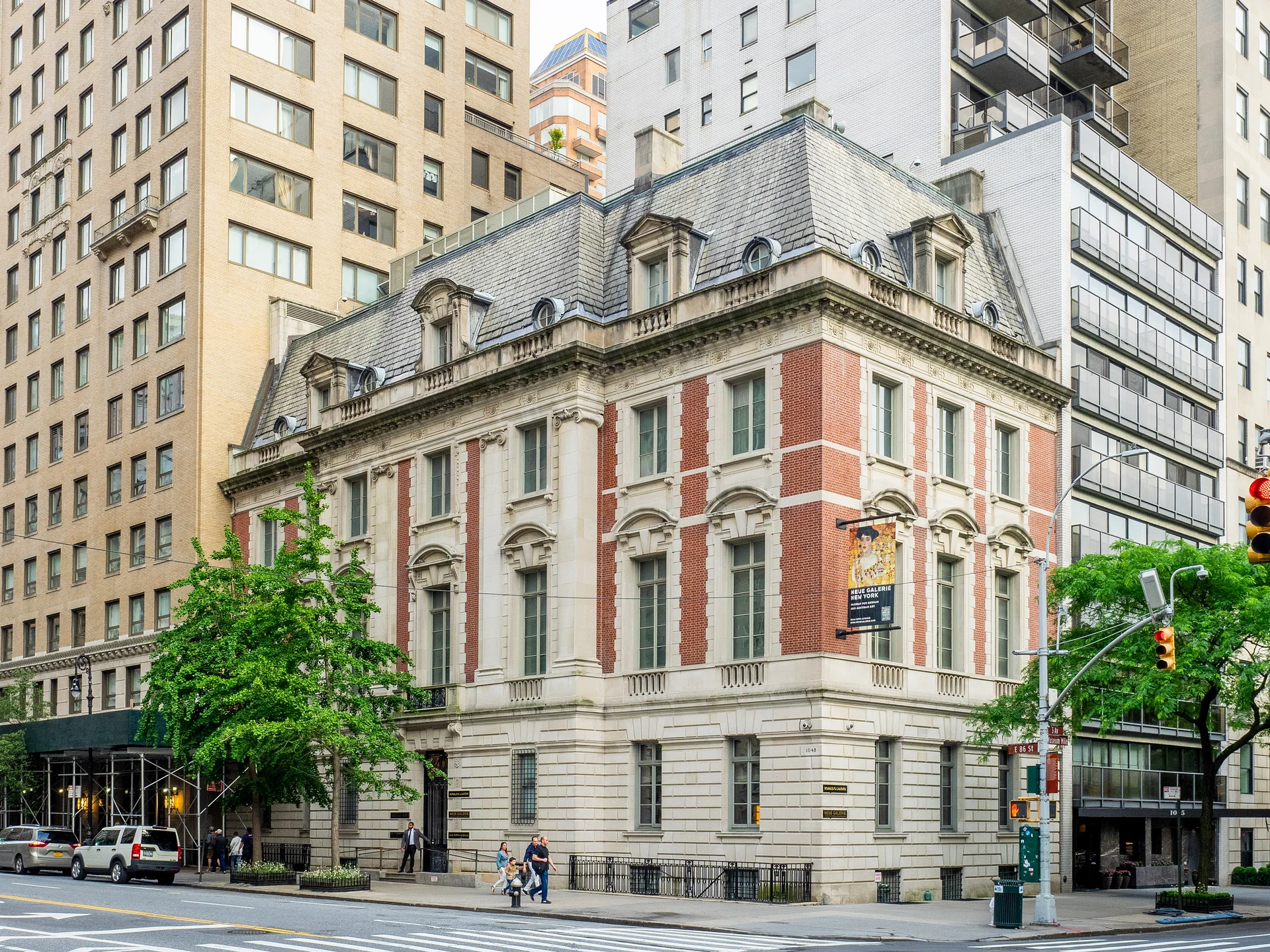
The building housing the Neue Galerie was constructed in 1914 by architects Carrère & Hastings. Located on Manhattan, just steps from Central Park, it occupies a prime spot within a cultural corridor. It sits at the heart of the Museum Mile, tucked between the Solomon R. Guggenheim Museum and the Metropolitan Museum of Art. This structure, designated by the New York Landmarks Commission (a city agency responsible for protecting historic properties), is considered one of the finest on Fifth Avenue.
When billionaire Ronald S. Lauder, son of Estée Lauder, and his friend and art dealer Serge Sabarsky acquired the building in 1994, they commissioned a complete restoration by German architect Annabelle Selldorf. Despite the passing of Serge Sabarsky in 1996, his friend continued their mission to assemble the finest German and Austrian expressionist works. This dedication reached a high point with the purchase of a Gustav Klimt painting for 135 million USD.
The gallery officially opened its doors to the public in 2001.
The Neue Galerie
The Neue Galerie holds a collection spanning from 1890 to 1940. Its holdings include sculptures, paintings, drawings, photographs, and various decorative arts from Germany and Austria.
Naturally, at the heart of the Austrian section, it is impossible to overlook the Portrait of Adele Bloch-Bauer by Gustav Klimt. This piece is an icon of the period, blending oil paint and gold leaf.
Works from over 40 artists are represented in the gallery, showcasing the intensity of this movement.
A visit is best finished with a stop at Café Sabarsky or Café Fledermaus, which recreate the atmosphere of early 20th-century Viennese coffee houses.
This is a singular gallery in an exceptional setting that art enthusiasts will want to include on their itinerary.
Opening hours
| Monday | 11:00-18:00 |
|---|---|
| Tuesday | Closed |
| Wednesday | Closed |
| Thursday | 11:00-18:00 |
| Friday | 11:00-18:00 |
| Saturday | 11:00-18:00 |
| Sunday | 11:00-18:00 |

It is a small mansion, tucked between more impressive buildings. As soon as you walk in, you are transported to the beginning of the 20th century. The decor has hardly changed since 1911.
They host dinners, shows, and ceremonies there, which gives the place a useful charm.
Plus, you can find many testaments to the Irish heritage of New York City.
An excellent surprise.