
What to know about the Estadio Azteca
Located on the grounds of the Universidad Nacional Autónoma de México (National Autonomous University of Mexico, UNAM), the Estadio Azteca stands as a landmark of mid-century modern design. Built for the 1968 Olympic Games, it remains a focal point for soccer, track and field, and various cultural events in Mexico City.
A venue steeped in history
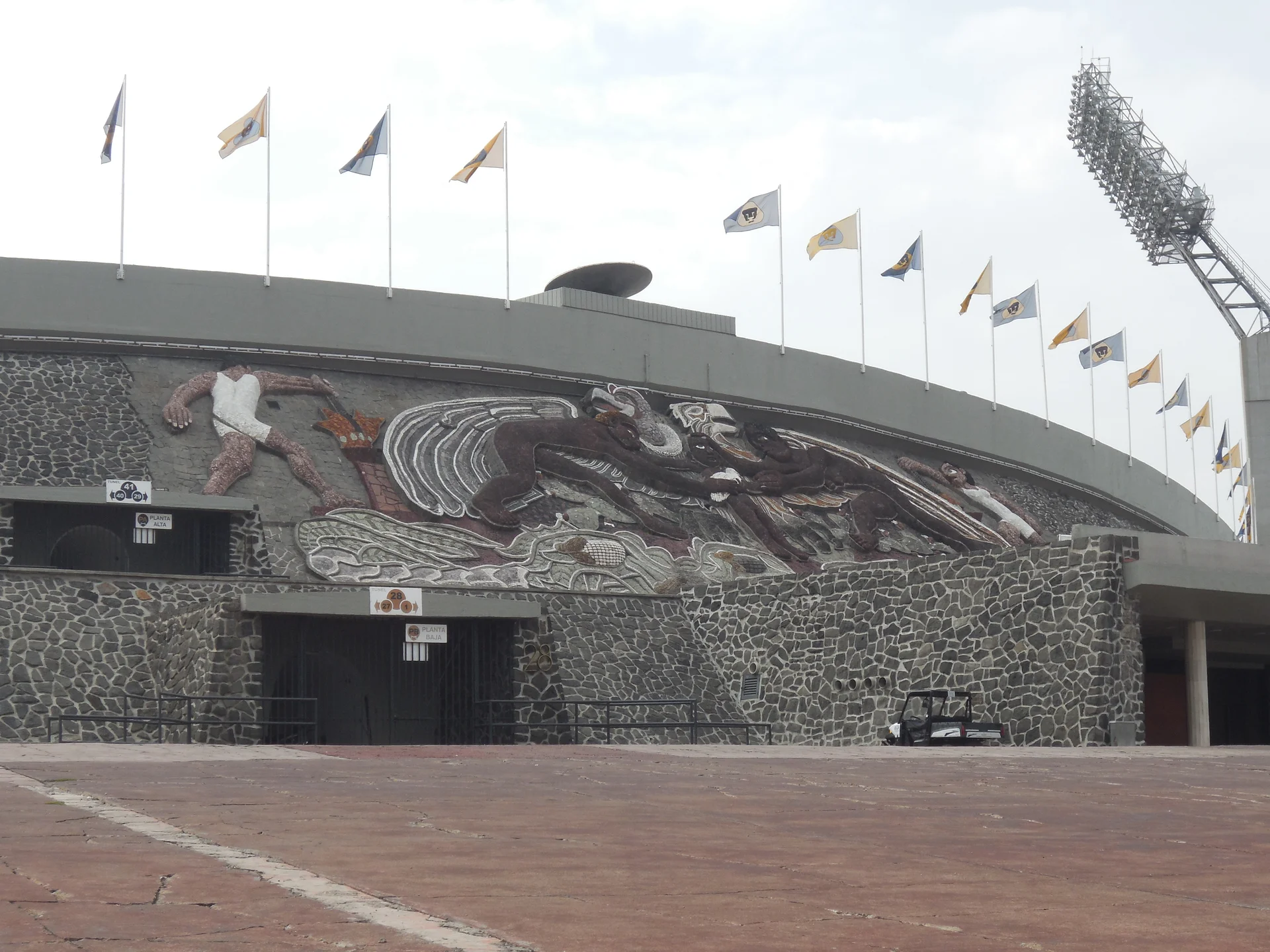
Inaugurated in 1952, the stadium hosted the 1968 Olympic Games, an event defined by iconic moments like the protest of the African American athletes on the 200-meter podium. It also served as a venue during the 1986 FIFA World Cup. Its design draws from pre-Hispanic architecture, featuring a facade adorned with a massive mural by the renowned Mexican artist Diego Rivera.
A hub for sports and entertainment
Today, the stadium serves as the home field for the Pumas UNAM university team, where they play soccer matches in front of a dedicated fanbase. Beyond athletics, it occasionally hosts concerts and academic gatherings. With a capacity of over 60,000 spectators, it ranks among the largest stadiums in the Americas.
Integrating with the UNAM campus
The stadium sits within the campus central de l'UNAM (UNAM Central Campus), a UNESCO World Heritage site. It is surrounded by structures of notable architectural merit and green spaces that are well-suited for walking. Nearby, the UNAM Botanical Garden and the University Museum of Contemporary Art offer worthwhile additions to a visit to the stadium.

I saw a first division Mexican league match there, UNAM (the home club) against I do not remember who.
Nice and friendly atmosphere, but it is still an Olympic stadium, with its track that keeps the stands far from the field, low seating, and no roof. In short, no proximity to the players, no acoustics, no intensity. If you have to attend a soccer match in Mexico City, I highly recommend Estadio Azteca much more.