
Two thousand years beneath the Fourvière hill
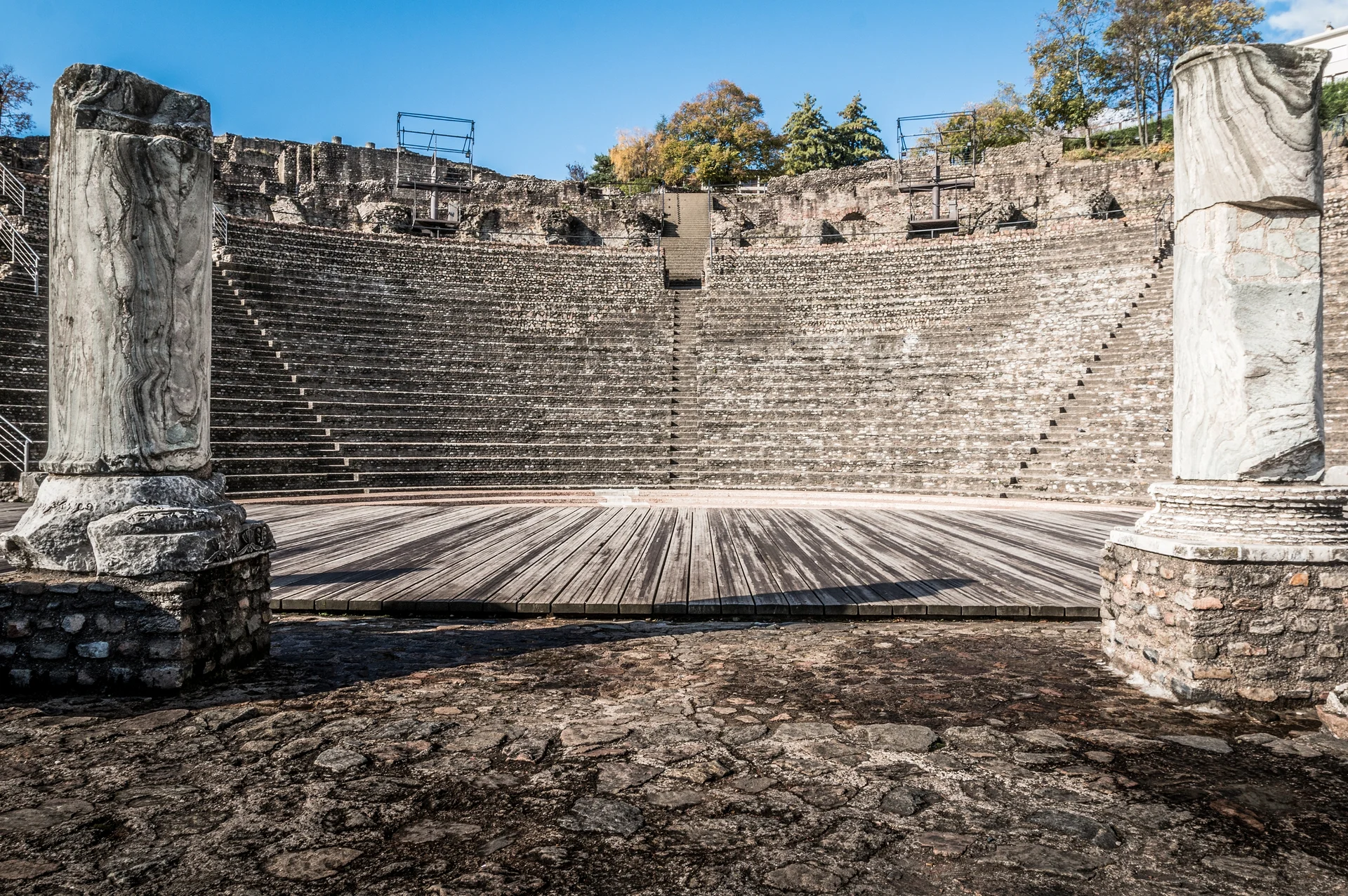
Take a seat for a moment on the stone tiers and look out at the city spread below. The Roman Theaters of Lyon, carved into the hillside in the 1st century BC, stand as some of the oldest surviving Roman vestiges in France. The acoustics remain remarkably crisp, the limestone warms up gently under the late afternoon sun, and all of Lyon stretches out at your feet.
Why visit the Roman amphitheaters of Lyon?
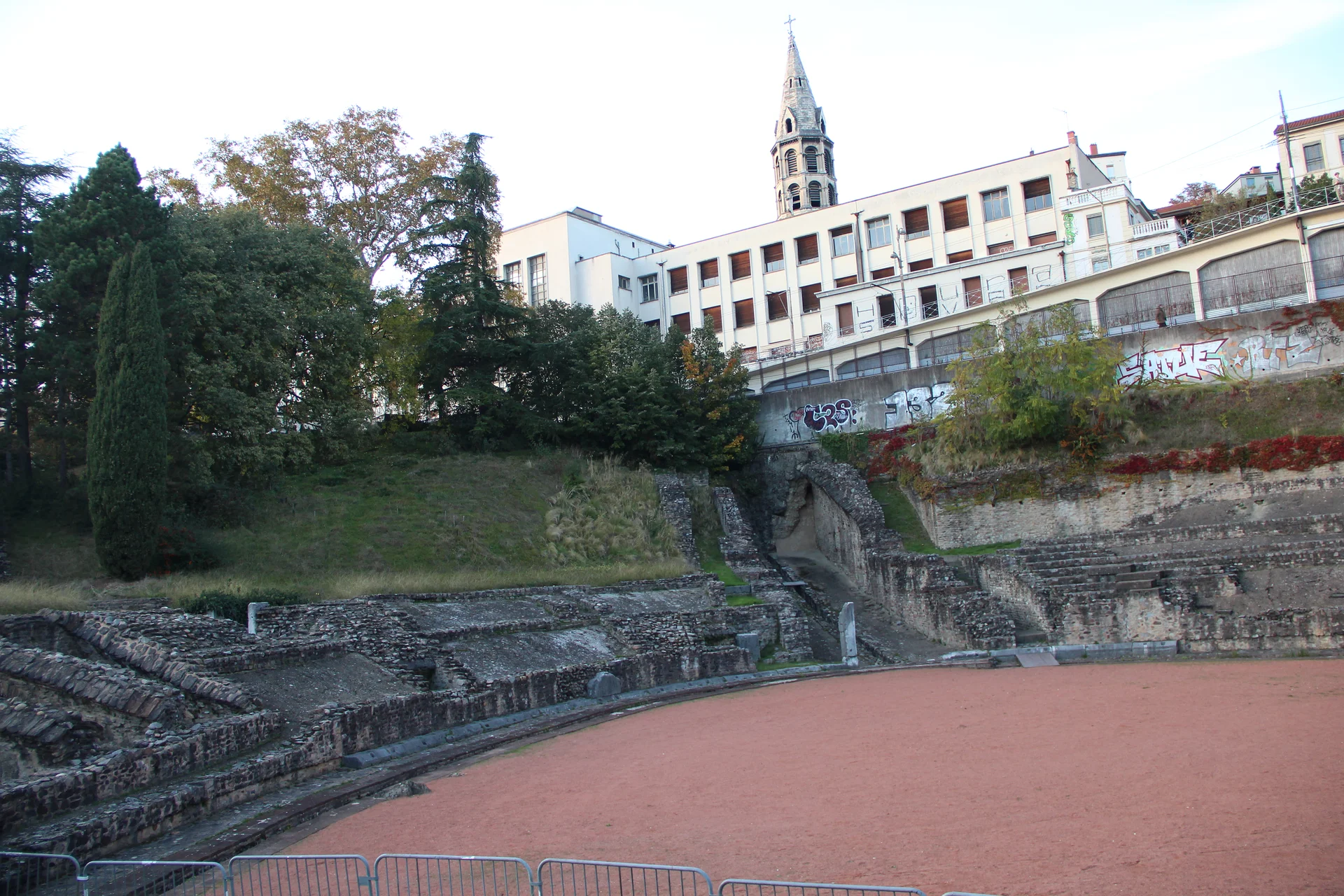
Lyon, known in antiquity as Lugdunum, served as the capital of Roman Gaul. This was no ordinary provincial outpost, but rather the administrative, commercial, and religious center for three Gallic provinces. These two theaters, the main theater and the adjacent odeon, represent the most tangible evidence of that era. The main theater once seated up to 10,000 spectators. The odeon, smaller and originally covered, was reserved for musical concerts and rhetorical contests.
What strikes visitors most is the exceptional state of preservation. The tiers of the grand theater are largely original. The mosaics of the odeon have been carefully restored to bring back the vivid colors that once coated these marble and colored stone floors.
The museum and excavations: what the hill yielded
The musée gallo-romain de Lyon-Fourvière, located right next door, houses artifacts recovered during archaeological digs conducted since the 1930s. Both sites work in tandem: the theaters provide the grand scale, while the museum provides the fine details. You can tour the theaters without entering the museum, but combining both vastly enriches the experience.
Friendly tip: The theaters offer free access year-round. If you visit Lyon in June or July, check the schedule for Nuits de Fourvière, a multidisciplinary festival that has taken over the main theater every summer since 1946. Catching a performance in this setting is an unforgettable experience.
The climb up to the theaters
You can reach the theaters from the Fourvière neighborhood either by taking the funicular from Old Lyon or by walking up the steep cobblestone alleyways climbing from rue Cleberg. The view progressively opens up over the Saône River and the rooftops of the Presqu'île. The main entrance to the theaters is located on rue de l'Antiquaille.
Highlights
- Free access year-round
- Panoramic views of Lyon from the upper tiers
- Two distinct historic monuments on a single site, including the theater and odeon
- Direct proximity to the Gallo-Roman museum
- A lively atmosphere in summer thanks to the Nuits de Fourvière festival
Things to keep in mind
- Access closed or restricted during festival setup periods from May to June
- A demanding uphill walk from the base of the Fourvière hill
- Limited informational signage on the grounds without an audioguide or guided tour
Estimated pricing
| Access | Rate |
|---|---|
| Ancient theaters (outdoor site) | Free |
| Musée gallo-romain de Lyon-Fourvière (standard admission) | $4.50* outside temporary exhibitions, $7.90* during |
| Gallo-Roman museum (reduced rate) | $2.90* outside temporary exhibitions, $5.10* during |
| Visitors under 18 / First Sunday of the month | Free |
Prices are estimates and subject to change
Opening hours
The Roman Theaters of Lyon are open to the public daily.
Typical hours: 7:00 AM to 9:00 PM (extended hours in summer, reduced in winter).
Access is restricted or closed in May and June during the setup for the Nuits de Fourvière festival.
How long for this activity
Plan on 45 minutes to 1.5 hours to explore the Roman Theaters of Lyon site. If you include a visit to the nearby Lugdunum (Gallo-Roman museum of Lyon-Fourvière), allow for a full half-day.

Discovered these a bit by chance while wandering around the Fourvière neighborhood, and I do not regret my find. Many people talk about the Basilique Notre-Dame de Fourvière as the must-see spot when you climb the many stairs from Vieux Lyon, but these two Roman theaters are definitely the second place to check out once you are up there! The grand theater is huge, and the Odéon, right next door, is just as impressive! Visiting the site is free, and there is a paid museum that makes for a nice addition to the visit.